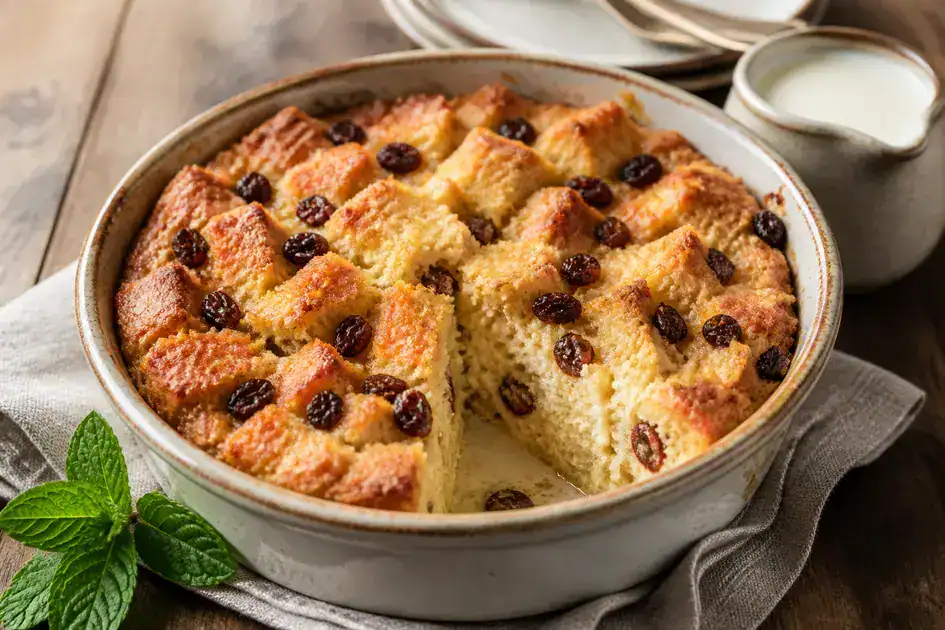

Stale bread pudding transforms day-old bread into a custardy, baked dessert by soaking cubes in a milk-and-egg custard, adding sugar, spices, and mix-ins, then baking until set; it reduces food waste, adapts to sweet or savory flavors, and reheats well when stored properly.
stale bread pudding turns yesterday’s loaf into something unexpectedly delicious—have you ever rescued bread this way? Read on for simple steps, flavor ideas, and chef tricks to make it shine.
Ingredients of stale bread pudding
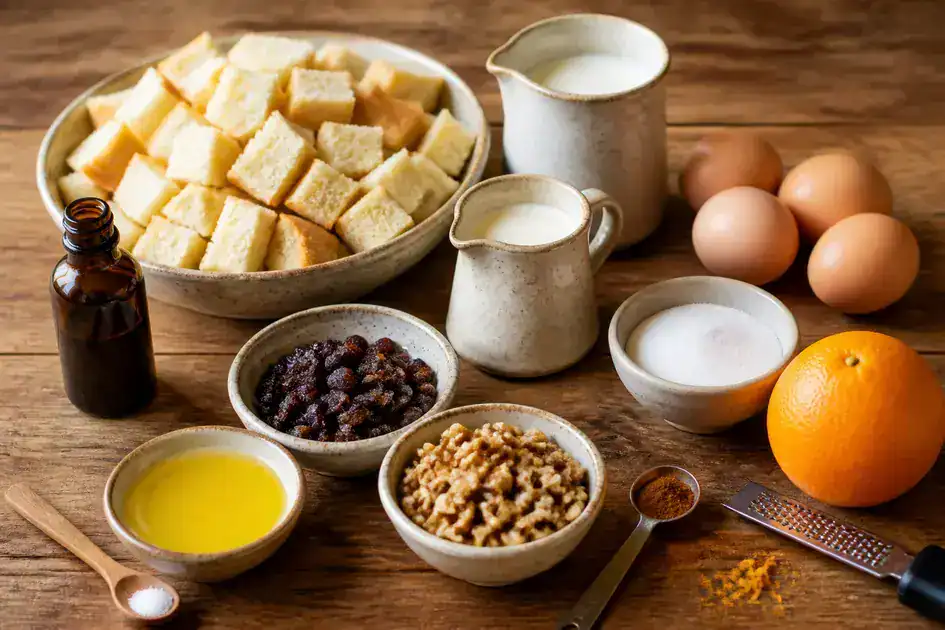
- 6 cups stale bread, cubed (about 8–10 oz / 225–280 g) – day-old white, brioche, challah, or sourdough; if bread is fresh, dry cubes in a 300°F (150°C) oven for 10–15 minutes.
- 2 cups whole milk (480 ml) – provides a creamy custard base; substitute unsweetened almond or oat milk for dairy-free (texture will be slightly thinner).
- 1/2 cup heavy cream (120 ml) (optional) – makes pudding richer; substitute evaporated milk or omit for a lighter version.
- 3 large eggs – bind the custard and set the pudding; for extra richness use 2 eggs + 1 yolk.
- 1/2 to 3/4 cup granulated sugar (100–150 g) – adjust to taste; substitute light brown sugar or 1/3 cup maple syrup (reduce other liquids slightly).
- 4 tablespoons unsalted butter, melted (60 g) – adds flavor and moistness; substitute neutral oil if needed.
- 1 teaspoon vanilla extract – for aroma; substitute the seeds of 1 vanilla bean or 1/2 teaspoon almond extract (use sparingly).
- 1 teaspoon ground cinnamon – warming spice; optional 1/4 teaspoon grated nutmeg for depth and a pinch of salt to balance sweetness.
- 1/2 cup raisins or chopped dried fruit (75 g) (optional) – soak in hot water or rum for 10 minutes to plump; substitute chocolate chips or fresh berries depending on flavor.
- 1/3 cup chopped nuts (optional) – walnuts, pecans, or almonds for crunch; toast lightly for extra flavor. Also consider the zest of 1 orange for brightness.
Substitutions and quick tips
Tip: For a custard that sets firmly, use full-fat milk or add the optional heavy cream. If you prefer less sugar, reduce the sugar to 1/3 cup and add a splash of orange juice or vanilla to boost flavor.
Tip: To make this gluten-free, use stale gluten-free bread and keep the soaking time short so the texture stays pleasant. For vegan pudding, replace eggs with 3/4 cup silken tofu blended until smooth and use plant-based milk plus vegan butter.
How to prepare stale bread pudding step by step
- Preheat the oven: Set the oven to 350°F (175°C) and place a rack in the middle. Lightly butter a 9×13-inch (23×33 cm) baking dish or a similar-size casserole.
- Prepare the bread: Cube 6 cups of stale bread into roughly 1-inch (2.5 cm) pieces and put them in a large mixing bowl. If your bread is fresh, spread cubes on a baking sheet and dry at 300°F (150°C) for 10–15 minutes.
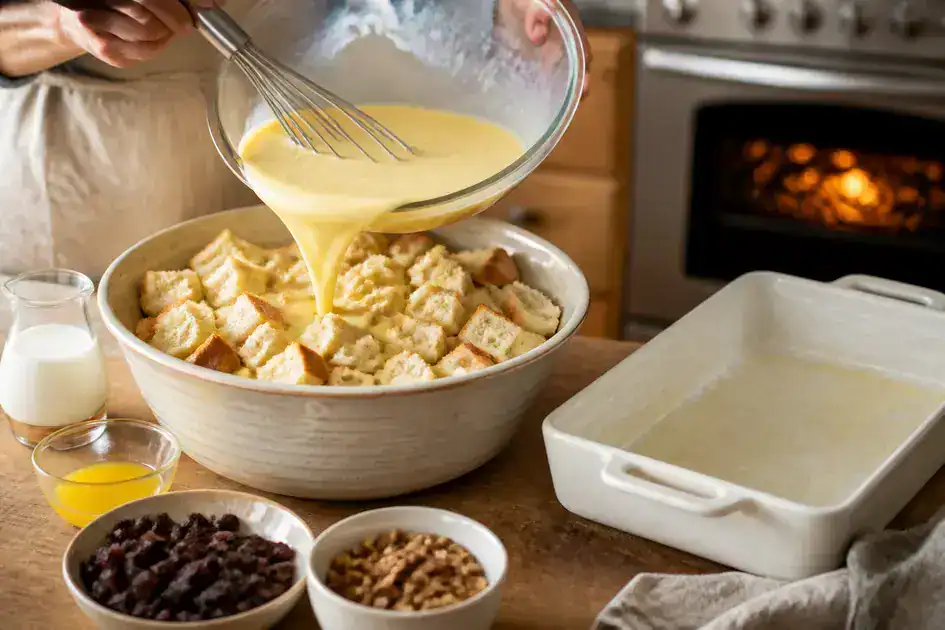
- Make the custard: In a separate bowl, whisk 2 cups (480 ml) whole milk, 1/2 cup (120 ml) heavy cream (optional), 3 large eggs, 1/2–3/4 cup (100–150 g) granulated sugar, 1 teaspoon vanilla extract, 1 teaspoon ground cinnamon, and a pinch of salt until smooth.
- Combine bread and custard: Pour the custard over the cubed bread. Stir gently to coat every piece, then press the bread down so it soaks evenly. Let sit for 10–20 minutes so the bread absorbs the custard; stir once halfway through if pieces float.
- Add mix-ins and butter: Fold in 1/2 cup (75 g) raisins or dried fruit if using, and 1/3 cup (35 g) chopped nuts or chocolate chips if desired. Drizzle 4 tablespoons (60 g) melted butter over the top or dot with small butter pieces for a golden crust.
- Transfer and bake: Spoon the soaked mixture into the prepared dish, smoothing the top. Bake uncovered for 35–45 minutes until the center is set and the top is golden brown. A toothpick inserted in the center should come out mostly clean.
- Optional water bath for creaminess: For a creamier pudding, place the baking dish inside a larger pan and pour hot water into the outer pan to reach halfway up the sides before baking.
- Cool and serve: Let the pudding rest 10–15 minutes before serving so it firms slightly. Serve warm with cream, caramel sauce, or ice cream. To reheat, cover and bake at 300°F (150°C) for 10–15 minutes or microwave single portions for 30–60 seconds.
Quick substitutions and simple tips
Dairy-free: Use unsweetened almond or oat milk and a plant-based cream. Less sweet: Reduce sugar to 1/3 cup and add orange zest or a splash of maple syrup for flavor. Vegan: Replace eggs with 3/4 cup blended silken tofu or a commercial egg replacer and use vegan butter.
Variations: sweet, savory and international twists

Try different styles to turn leftover bread into exciting dishes—sweet, savory, or inspired by global flavors—using easy swaps and small tweaks.
Sweet variations
Classic caramel-vanilla: Add a rich caramel sauce or a warm vanilla custard drizzle for extra sweetness. Use light brown sugar for a deeper flavor.
- Caramel sauce: 1/2 cup brown sugar and 2 tbsp butter, simmer until syrupy.
- Fruit and nuts: 1/2 cup mixed berries or 1/3 cup chopped pecans for texture.
- Chocolate twist: 1/3 cup dark chocolate chips folded in before baking.
Tip: For a lighter sweet pudding, swap half the milk for plain yogurt to add tang and reduce overall sugar by 25%.
Savory variations
Cheese and herb bread pudding: Replace sugar with 1/4 tsp salt, fold in 1 cup grated Gruyère or cheddar, and add 2 tbsp chopped fresh herbs like thyme or chives.
- Bacon and onion: 4 slices cooked and crumbled bacon plus 1 small sautéed onion.
- Mushroom and thyme: 1 cup sautéed mushrooms and 1 tsp fresh thyme.
- Custard swap: Use 1 3/4 cups milk + 1/4 cup chicken stock for a savory custard.
Tip: Reduce baking time by 5–10 minutes if using high-moisture vegetables, and sprinkle extra cheese on top for a golden crust.
International twists
Cardamom‑saffron (Middle Eastern/Indian): Add 1/4 tsp ground cardamom, a pinch of saffron steeped in 1 tbsp warm milk, and 1/3 cup chopped pistachios.
- Mexican style: Use 1/3 cup piloncillo or brown sugar, fold in cinnamon and 1/4 cup chopped dried figs or raisins.
- French brioche bread pudding: Use brioche, extra yolks (replace one egg with an extra yolk), and serve with warm crème anglaise.
- Portuguese/Latin: Stir in citrus zest (orange or lime) and a splash of sweet wine or port for depth.
Serving idea: Match the sauce to the twist—cardamom pudding pairs with rosewater syrup, savory versions work with a light pan sauce or herb oil, and French-style puddings shine with vanilla custard.
Tips for storing, reheating and serving leftovers
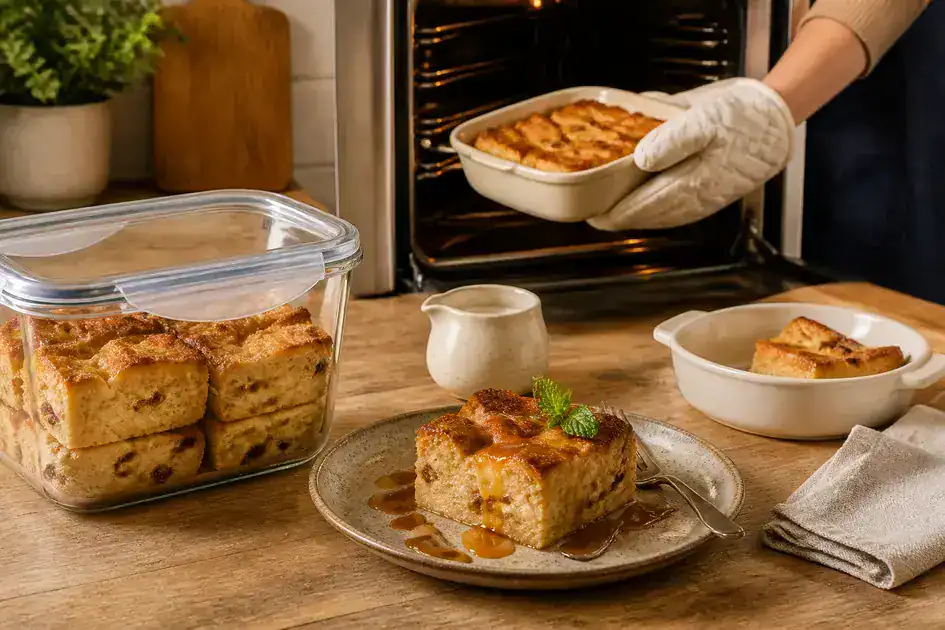
Storage guidelines
- Refrigerate within 2 hours of baking to prevent bacterial growth; place in an airtight container or cover the baking dish tightly with foil.
- Fridge life: Keep for 3–4 days at 40°F (4°C) or below.
- Freezing: Freeze portions for up to 2 months; wrap individual slices in plastic wrap and place in a freezer-safe container.
- Label and portion: Portion before freezing so you can thaw only what you need. Mark the container with the date on a removable sticker.
- Thawing: Thaw overnight in the refrigerator for best texture; avoid thawing at room temperature.
Reheating methods
- Oven (best for even heat): Preheat to 325°F (160°C). Place pudding in an oven-safe dish, add a splash of milk or cream, cover with foil, and bake 15–25 minutes until heated through.
- Microwave (quick single portion): Put a single slice in a microwave-safe dish, add a teaspoon of milk, cover loosely, and heat 45–90 seconds in 15–30 second intervals until warm. Let rest 30 seconds before serving.
- Water bath for creaminess: For extra-smooth texture, set the baking dish inside a larger pan and pour hot water halfway up the sides before baking in the oven.
- Skillet (to crisp top): Heat a nonstick skillet over low heat with a little butter. Cook a slice covered for 3–5 minutes per side until warm and slightly crisp.
- From frozen: Bake covered at 325°F (160°C) and add 15–25 minutes to the reheating time; check that the center is hot.
- Food safety: Reheat until the center reaches 165°F (74°C) or is steaming hot throughout.
Serving leftover pudding
- Warm sauces: Serve with warm caramel, crème anglaise, or a spoonful of warmed preserves to add moisture and flavor.
- Cold toppings: Vanilla ice cream or whipped cream contrast nicely with warm pudding.
- Texture boost: Sprinkle toasted nuts, a dusting of cinnamon, or orange zest for brightness.
- Savory leftovers: Reheat gently and pair with a fresh salad or herb oil to balance richness.
- Portion tips: Reheat single servings for best texture and avoid repeatedly reheating the whole dish.
Choosing the best breads and add-ins
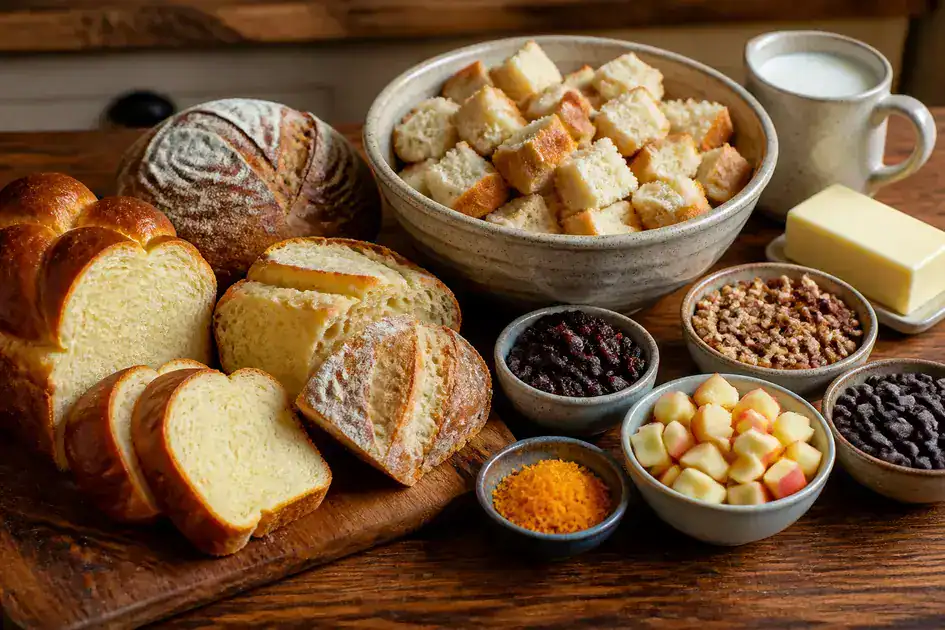
Picking the right bread and add-ins decides whether your pudding is custardy, crunchy, or somewhere in between. Use textures and flavors that match the style you want.
Best breads to use
- Brioche or challah – very rich and buttery; best for sweet, luxurious puddings. Use for recipes that call for extra yolks or cream.
- French baguette or country loaf – open crumb and chewy crust; gives a nice contrast between soft interior and crisp top. Great all-purpose choice.
- Sourdough – mild tang that brightens sweet fruit or savory cheese versions; use if you want an acidic note.
- Whole-grain or rye – adds nuttiness and structure; pairs well with savory add-ins like cheese and herbs.
- Sandwich white – neutral and absorbent; good for simple, classic puddings or when you want a very soft texture.
- If bread is fresh: cube and dry at 300°F (150°C) for 10–15 minutes so it soaks without turning mushy.
Best add-ins and suggested amounts
- Raisins or chopped dried fruit: 1/2 cup (75 g), soak briefly in warm water or rum to plump.
- Chopped nuts (walnuts, pecans, pistachios): 1/3 cup (35–45 g), toast lightly for extra flavor.
- Chocolate chips: 1/3 cup (55 g), fold in just before baking to keep pockets of chocolate.
- Fresh fruit (apples, pears, berries): 1 cup chopped; drain juicy fruit or lightly toss with flour to prevent sinking.
- Citrus zest: 1–2 tsp orange or lemon zest to brighten flavors.
- Cheese (Gruyère, cheddar): 1 cup grated for savory puddings; balance with 1/4 tsp salt less in custard.
- Bacon, mushrooms, or caramelized onions: 1/2–1 cup cooked and drained, use in savory versions only.
- Spices and extracts: 1 tsp vanilla, 1 tsp cinnamon, or 1/4 tsp cardamom depending on the twist.
- Ratio tip: Aim for about 1–1.5 cups total add-ins per 6 cups bread so the pudding stays balanced.
Practical mixing and texture tips
- Cube size: Cut bread into ~1-inch (2.5 cm) cubes so pieces absorb custard evenly.
- Custard ratio: For 6 cups bread use roughly 2 cups milk + 1/2 cup cream + 3 large eggs as a guideline; adjust for richer or lighter results.
- Soak time: Let the bread sit in custard 10–20 minutes; press gently to help it absorb evenly.
- Avoid soggy add-ins: Drain soaked fruits and cook high-moisture veg before folding in.
- Top for texture: Sprinkle extra nuts, coarse sugar, or dot with butter to get a golden, crunchy top.
- Bake check: The center should be mostly set; a toothpick may come out with a few moist crumbs but not liquid.
- Serving balance: Match sweet puddings with creams or sauces and savory ones with a fresh herb salad or pan sauce.
Fun facts about stale bread and bread pudding
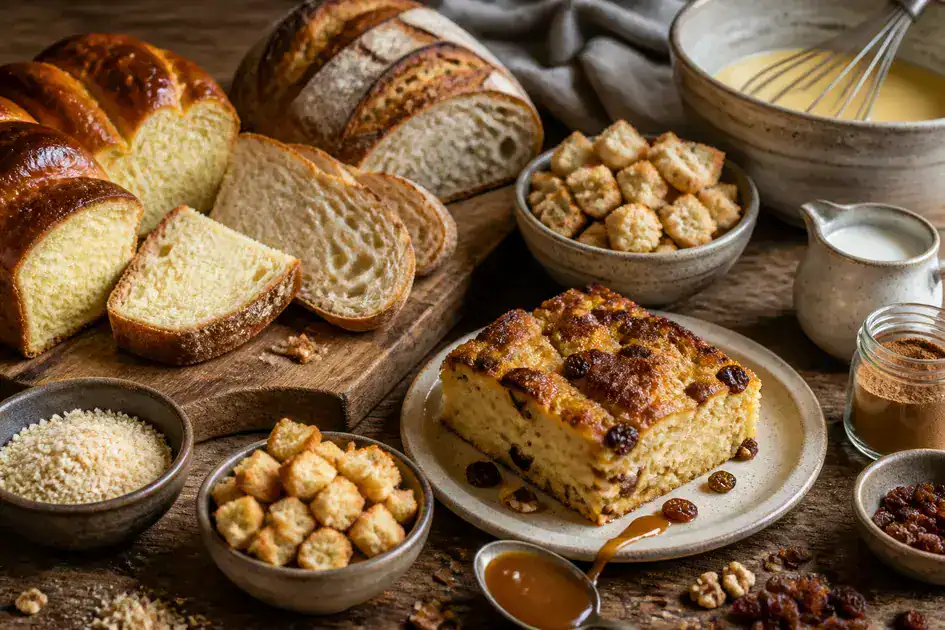
stale bread doesn’t have to be trash. It can become tasty dishes, pantry staples, or even tell a story about food traditions and chemistry.
Science of staleness
When bread goes stale, the starches change structure in a process called retrogradation. That makes the crumb firmer but doesn’t mean the bread is unsafe. Only visible mold or a sour smell means it’s spoiled. You can refresh slightly stale bread by warming it in a hot oven for a few minutes to regain some crustiness.
Cultural tidbits
- Bread pudding began as a frugal British way to use leftover bread, later becoming a beloved dessert across Europe.
- Pain perdu (French) and rabanadas (Portuguese/Latin) are older cousins: fried or soaked slices that rescue stale loaves.
- Panzanella (Italian) uses day-old bread soaked in dressing to make a fresh, rustic salad.
Creative uses
- Breadcrumbs: Grind stale bread to coat, bind, or thicken sauces.
- Croutons: Cube, toss with oil and herbs, and bake for salads and soups.
- French toast: Stale bread soaks custard without falling apart.
- Stuffing: Combine cubes with aromatics and stock for savory sides.
Quick fun facts
- Using stale bread in recipes saves money and reduces food waste.
- To plump dried fruit for puddings, soak it briefly in hot water, juice, or a splash of liqueur.
- Different breads change texture: brioche makes a rich pudding, while country bread gives a chewy contrast.
- To test freshness safely, press the crumb—firm but not moldy is OK to use.
Wrapping up
Stale bread pudding is an easy, low-waste dish that turns day-old bread into a warm, comforting treat. Use the tips above to pick bread, add flavors, and store leftovers.
Thanks for reading — we hope you try a version soon. Follow us on social media for quick tips, new recipes, and cozy ideas. And don’t forget to visit and follow the Master of Recipes Blog for more recipes and tricks.
Happy baking!
FAQ – Frequently Asked Questions about Stale Bread Pudding
Is stale bread safe to use for bread pudding?
Yes. Bread that is stale but not moldy or foul-smelling is safe. Staleness affects texture, not safety. Discard any bread with mold or an off odor.
How can I prevent my bread pudding from becoming too soggy?
Use slightly drier bread or toast fresh bread cubes briefly. Press the bread into the custard and let it soak 10–20 minutes, then bake until the center is mostly set.
Can I make bread pudding dairy-free or vegan?
Yes. Substitute plant milks (almond, oat) for milk and use vegan butter. Replace eggs with blended silken tofu (about 3/4 cup) or a commercial egg replacer, and adjust texture as needed.
What are good substitutes for sugar or add-ins?
Swap part of the sugar with maple syrup or honey (reduce other liquids slightly). For add-ins, use chocolate chips, fresh fruit, or toasted nuts instead of raisins or dried fruit.
How should I store and reheat leftovers?
Refrigerate within two hours in an airtight container for 3–4 days. Reheat single portions in the microwave for 45–90 seconds or bake covered at 325°F (160°C) with a splash of milk for 15–25 minutes.
Can I freeze bread pudding and how long will it keep?
Yes. Freeze portions wrapped tightly in plastic and placed in a freezer-safe container for up to 2 months. Thaw overnight in the fridge and reheat as directed.