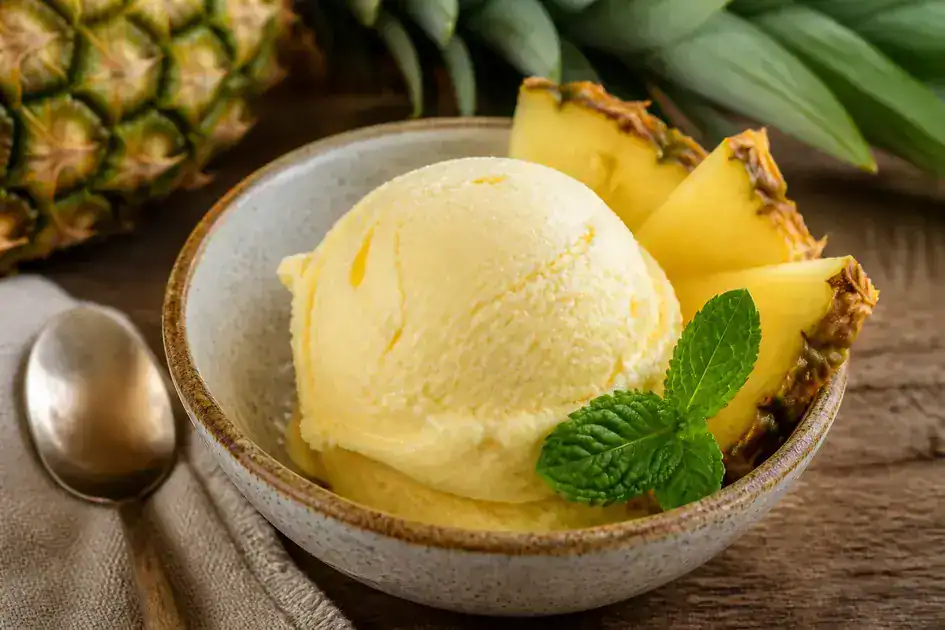

Pineapple ice cream is a homemade frozen dessert that combines ripe pineapple puree, dairy or coconut cream, and sweetener to deliver bright tropical flavor; use maceration, chilling, and proper churning or no‑churn techniques to ensure smooth texture, and consider stabilizers or invert sugars to prevent ice crystals.
pineapple ice cream wakes up the taste buds with bright tropical sweetness — have you ever made it at home? I’ll share a simple natural recipe, hands-on tips and a few tricks to get creamy texture without artificial additives.
Ingredients of natural pineapple ice cream
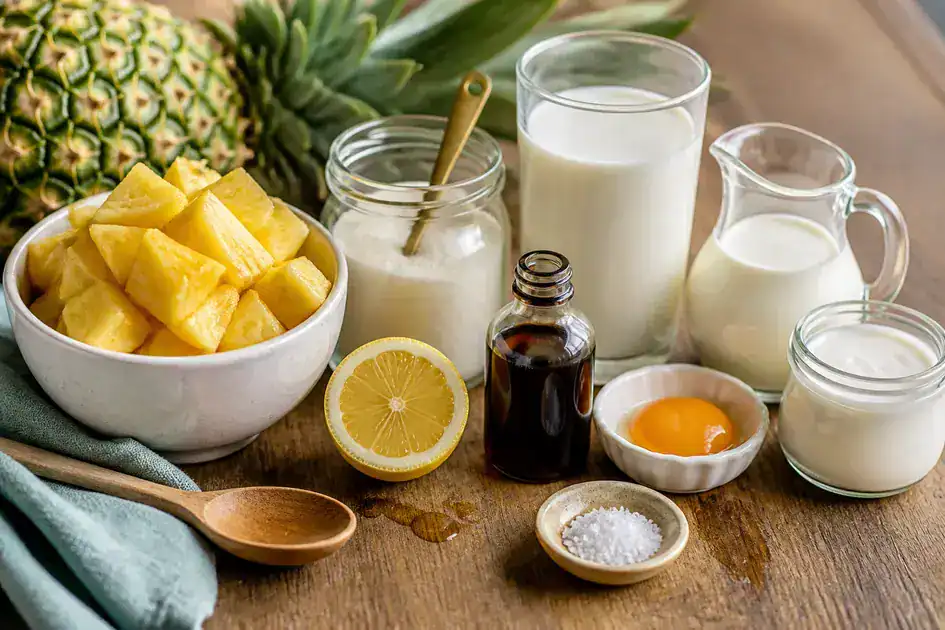
To make Natural Pineapple Ice Cream, gather the freshest ingredients below. All measurements yield about 1 quart.
- 2 cups (about 1 medium) ripe pineapple, chopped – fresh, core removed; substitute: canned crushed pineapple (well drained) if fresh is unavailable.
- 3/4 cup granulated sugar – adjust to taste; substitute: 2/3 cup honey or maple syrup (reduce other liquids slightly).
- 1 cup whole milk – for body and creaminess; substitute: full-fat coconut milk for a dairy-free option.
- 1 cup heavy cream (or 1 cup coconut cream for dairy-free) – adds richness and a smooth mouthfeel.
- 2 tbsp freshly squeezed lemon juice – brightens flavor and balances sweetness.
- 1 tsp vanilla extract – enhances aroma; optional but recommended.
- Pinch of fine sea salt – heightens flavor and rounds sweetness.
- Optional: 1 large egg yolk – for a custard-style base and silkier texture; omit for an eggless version.
Tips for choosing and preparing pineapple
Pick a pineapple that smells sweet at the base and yields slightly to gentle pressure. Remove the tough core and chop into even pieces so the blender makes a smooth puree. If using canned pineapple, pat it dry to avoid extra water that can make the ice cream icy.
How to prepare natural pineapple ice cream
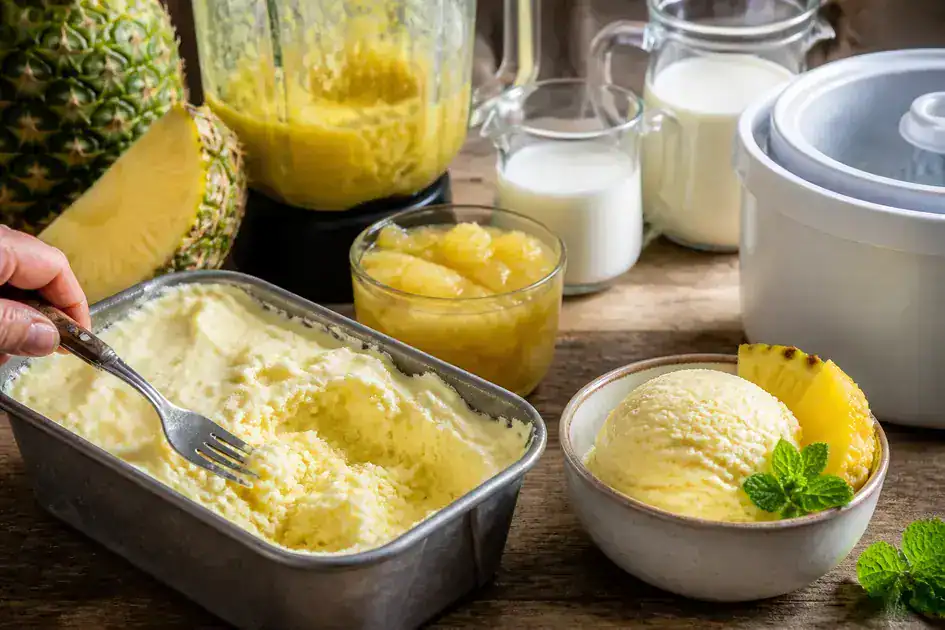
- Prepare the pineapple: Remove crown and core, then chop until you have 2 cups (about 1 medium pineapple) of fresh pieces.
- Macerate with sugar: Toss the chopped pineapple with 3/4 cup sugar and let sit 10–15 minutes so the fruit releases its juices.
- Puree and strain (optional): Blend the macerated pineapple with 2 tablespoons lemon juice until smooth; strain if you want a silkier texture or leave fibers for more tropical bite.
- Make the no-cook base: Whisk 1 cup whole milk, 1 cup heavy cream, 1 teaspoon vanilla, and a pinch of salt until sugar dissolves; fold in the pineapple puree.
- Optional custard for creaminess: Whisk 1 large egg yolk with 1/4 cup milk, warm 3/4 cup milk until steaming, slowly temper the yolk mixture, cook until it thickly coats a spoon (170°F/77°C), cool, then mix with puree and cream.
Using an ice cream maker
- Chill the mixture: Refrigerate the combined base for at least 2 hours or until very cold.
- Freeze the bowl: If your machine requires it, ensure the freezer bowl is fully frozen (per manufacturer instructions).
- Churn: Pour the cold base into the ice cream maker and churn 20–30 minutes until it reaches soft-serve consistency.
- Firm up: Transfer the ice cream to a shallow airtight container and freeze 3–4 hours for scoopable texture.
No-churn and quick-freeze options
- No-churn fold method: Whip 1 cup heavy cream to soft peaks, fold gently into 2 cups pineapple puree sweetened to taste, then freeze in a loaf pan until firm, about 4–6 hours.
- Quick-freeze stirring method: Pour the full base into a shallow metal pan, freeze 30–45 minutes, stir vigorously with a fork to break ice crystals, repeat every 30 minutes until creamy (3–4 hours).
Serving and storage tips
- Soften before scooping: Let frozen ice cream sit 5–10 minutes at room temperature for easier scooping.
- Prevent ice crystals: Press a piece of plastic wrap directly onto the surface before sealing the container to limit air contact.
- Storage: Keep in an airtight container in the coldest part of the freezer for up to 2 weeks for best flavor.
Variations of natural pineapple ice cream
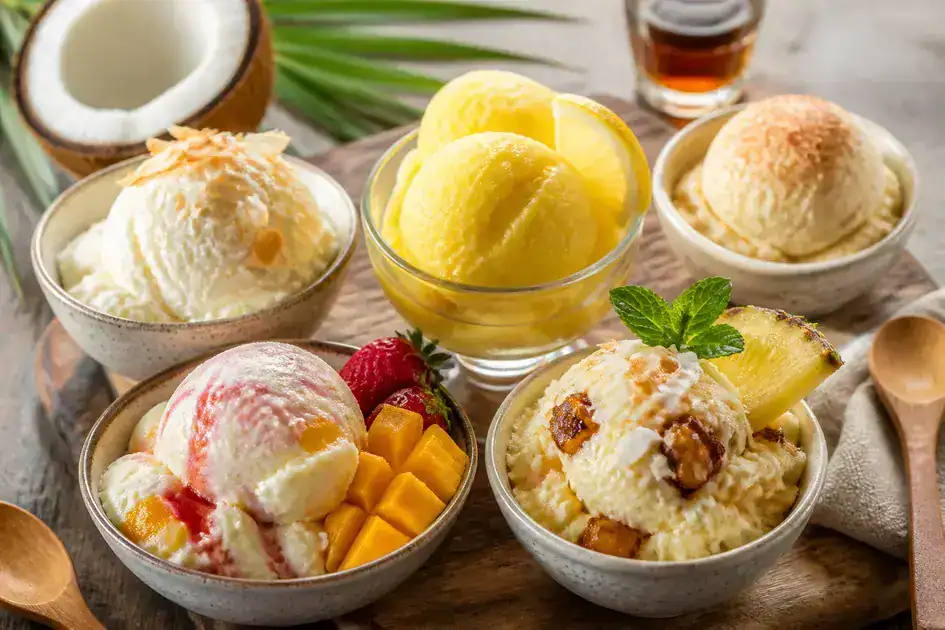
Explore practical ways to change texture, flavor, or diet without losing the bright pineapple character of Natural Pineapple Ice Cream.
Dairy-free coconut pineapple
Use 1 cup full-fat coconut milk plus 1 cup coconut cream instead of dairy milk and cream. Sweeten with 2/3 cup granulated sugar or 2/3 cup maple syrup for a cleaner flavor. Omit egg yolk; churn as usual or use the no-churn whipped-cream method with chilled coconut cream for a fluffy texture.
Pineapple sorbet (light, intensely fruity)
Blend 3 cups chopped ripe pineapple with 1/2 cup simple syrup (equal parts sugar and water warmed until dissolved) and 1 tablespoon lemon juice. Chill, then churn until set. Note: sorbet freezes firmer—serve slightly softened for scoopable texture.
Rum-spiced pineapple
Add 1–2 tablespoons dark rum or rum extract and a pinch of ground cinnamon to the base. Alcohol lowers freezing point, so either reduce rum to 1 tablespoon for easier scooping or firm the mix in the freezer longer. For a custard base, temper one yolk to retain silkiness.
Pineapple with fruit swirls (mango or strawberry)
Make a thin fruit purée: 1 cup ripe mango or strawberries, blended with 1–2 tablespoons sugar and a squeeze of lemon. After churning the pineapple base to soft-serve, swirl in the fruit purée in layers and freeze to set. This keeps distinct fruit ribbons and bright color.
Chunky pineapple & toasted coconut
Reserve 1/2 cup finely chopped pineapple and 1/4 cup toasted coconut. Add these mix-ins after churning by folding them gently into the soft ice cream before firming in the freezer. For extra depth, lightly caramelize the reserved pineapple in a pan with 1 tablespoon sugar first.
Quick tips and substitutions
- Eggless option: skip egg yolk and rely on cream or coconut cream for richness.
- Lower sugar: reduce sugar by 20% and add 1 tablespoon lemon juice to maintain brightness.
- Dairy-free swap: whole milk → cashew or oat milk; heavy cream → coconut cream for best texture.
- Storage note: sorbets best used within 1 week; creamy versions keep 2 weeks for peak taste.
Texture and freezing tips for smooth pineapple ice cream
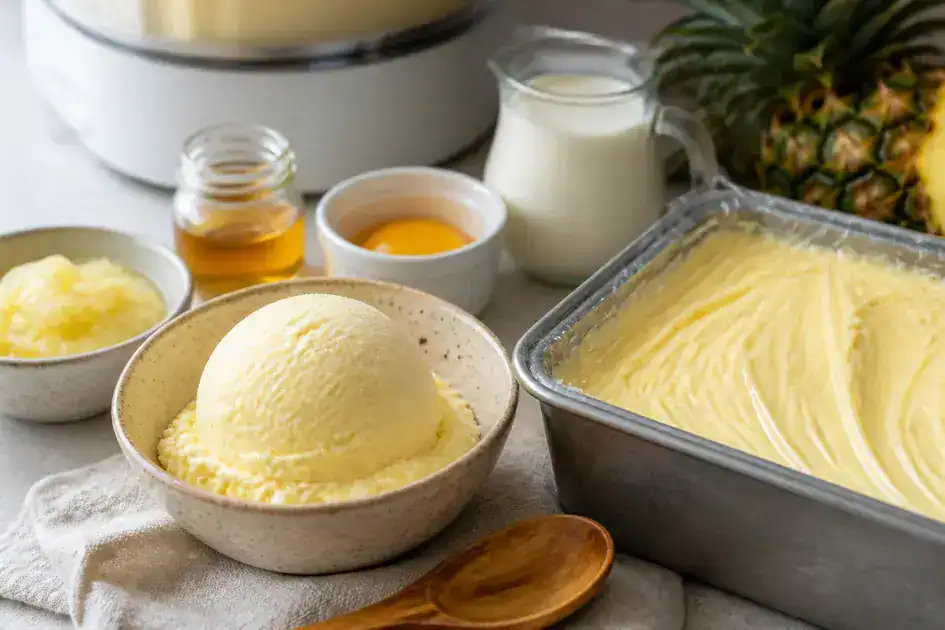
- Control water: remove the tough core and drain excess juice from macerated or canned pineapple so the mixture has less free water.
- Raise total solids: add a touch of powdered milk, egg yolk, or a small amount of sugar syrup to help the mix freeze creamier.
- Use fat wisely: include heavy cream or coconut cream for a richer mouthfeel that fights iciness.
- Chill thoroughly: cool the base in the fridge for at least 2 hours so it reaches a low starting temperature before churning.
- Strain if needed: strain the pineapple puree for a silkier base and fewer ice-forming fibers if you prefer a smooth finish.
Preventing ice crystals
- Sweeteners that help: use part granulated sugar and part invert sugar (light corn syrup, honey, or glucose) to keep crystals small.
- Stabilizers: consider 1 tsp powdered milk, 1 tsp cornstarch slurry, or a tiny pinch of gelatin for small batches to improve scoopability.
- Custard option: temper and cook an egg yolk custard for a silkier texture—cool it completely before adding pineapple puree.
- Alcohol trick: add 1 tablespoon rum or liqueur if desired; it lowers freezing point slightly and keeps the texture softer.
- Proper churning: churn until soft-serve consistency; under-churning leaves ice, over-churning adds air but can still be fine if done correctly.
Freezing and storage best practices
- Firm up in a shallow container: transfer churned ice cream to a shallow metal or glass pan to cool quickly and evenly.
- Press plastic wrap: lay plastic wrap directly on the surface before sealing the lid to limit air and prevent freezer burn.
- Freeze fast: place the container in the coldest part of the freezer and avoid frequent temperature changes.
- Thaw before scooping: remove 5–10 minutes before serving so scoops form cleanly without melting too fast.
- Storage time: keep creamy pineapple ice cream up to 2 weeks for best texture; sorbets are best within 1 week.
Quick fixes if your batch turns icy
- Re-whip: let the ice cream soften slightly, then pulse in a food processor or blender for a few seconds to break crystals and re-emulsify.
- Add fat or syrup: fold in a little sweetened condensed milk or a spoon of corn syrup to softened ice cream, then refreeze to improve creaminess.
- Serve differently: use icy batches as a granita topping, blend into a milkshake, or heat gently and re-churn if you have an ice cream maker.
Simple checks for success
Before you freeze, taste the cold base. If it seems too thin or watery, reduce liquid or add a stabilizer. After churning, the texture should be creamy and slightly soft; if not, follow the quick-fix steps above.
Fun facts about pineapple and selecting ripe fruit
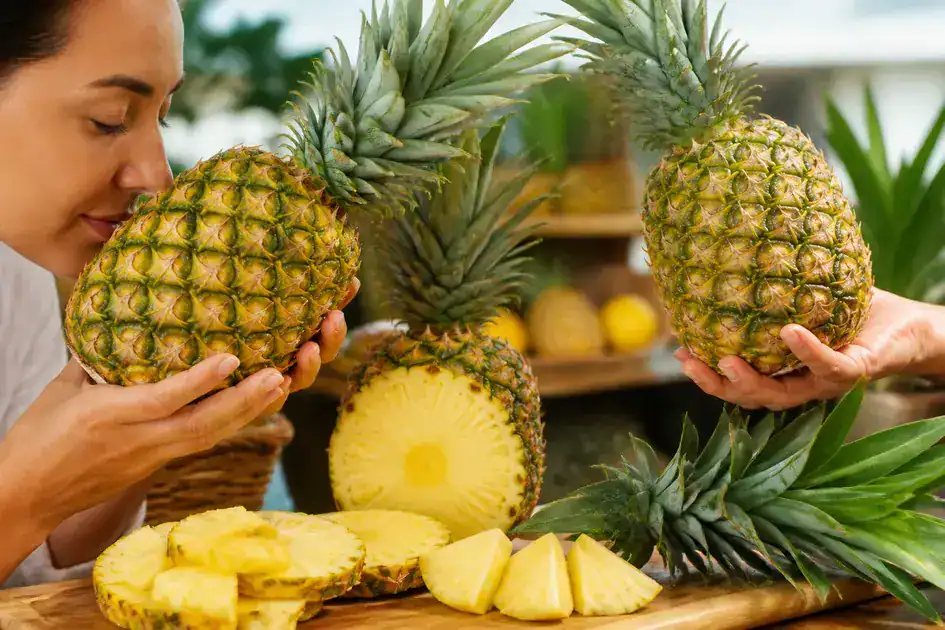
Pineapple is full of surprises—both tasty and interesting. Below are easy-to-read facts that make this tropical fruit special.
- Multiple fruits in one: a pineapple grows from many small flowers that fuse into one large fruit.
- Bromelain enzyme: pineapple contains bromelain, which can tenderize meat and gently break down proteins.
- Not super-ripe after harvest: pineapples stop gaining much sweetness once picked; they may get softer, but sugar content won’t increase a lot.
- Native roots: the plant comes from South America and was spread worldwide by sailors and traders.
- Good source of vitamin C: it offers a bright, refreshing dose of vitamin C and natural sweetness.
Selecting ripe pineapple
- Smell the base: a sweet, fragrant aroma at the stem end usually signals ripeness; no smell often means underripe.
- Check weight: choose a pineapple that feels heavy for its size—this often means it’s juicier.
- Look at color, but don’t rely on it: golden tones can help, yet some ripe pineapples stay green. Color is one clue, not the only one.
- Feel the firmness: the fruit should be slightly firm with a little give, not mushy or rock-hard.
- Inspect the leaves: fresh green leaves that pull out with gentle tug may show ripeness, but this is a guideline, not a rule.
- Avoid soft spots or fermentation: dark, wet spots or a fermented smell mean the fruit is overripe or spoiled.
Quick storage tips
- Short-term: store whole pineapple at room temperature up to 2 days to keep flavor.
- Longer storage: refrigerate whole pineapple for up to 5 days, or cut pineapple in an airtight container for 3–5 days.
- Freeze for later: cut into chunks and freeze on a tray, then bag for smoothies or longer storage.
Conclusion
Natural pineapple ice cream is a bright, simple treat you can make at home with fresh fruit and a few clear steps. Small changes—like using coconut cream or adding a fruit swirl—give big flavor without extra fuss.
Thanks for reading! If you enjoyed this guide, follow us on social media for quick tips, behind-the-scenes tricks, and new recipes. Also visit the Mestre das Receitas Cooking Blog for more tasty ideas and step-by-step recipes.
Give it a try, share your photos, and come back for more inspiration. Happy scooping!
FAQ – Natural Pineapple Ice Cream
Can I use canned pineapple instead of fresh?
Yes. Use well-drained canned crushed pineapple and pat dry to remove excess liquid. You may need to reduce added sugar slightly and adjust chilling time to avoid a watery texture.
How do I make this recipe dairy-free?
Swap whole milk and heavy cream for full-fat coconut milk and coconut cream. Use coconut cream for richness and skip the egg yolk for a simple vegan option.
How can I prevent ice crystals and get a smooth texture?
Reduce free water by draining macerated pineapple, chill the base thoroughly before churning, add a bit of fat (cream or coconut cream), and consider a small amount of invert sugar (honey or light corn syrup) or an egg yolk custard to keep crystals small.
Do I need an ice cream maker to make this?
No. Use the no-churn method: whip cold heavy cream to soft peaks and fold into pineapple puree, or freeze in a shallow pan and stir every 30 minutes until creamy. Both yield good results with patience.
How should I store leftover pineapple ice cream and how long does it keep?
Store in an airtight container with plastic wrap pressed onto the surface to limit air. Keep in the coldest part of the freezer; creamy versions are best within 2 weeks, sorbets within 1 week for peak flavor.