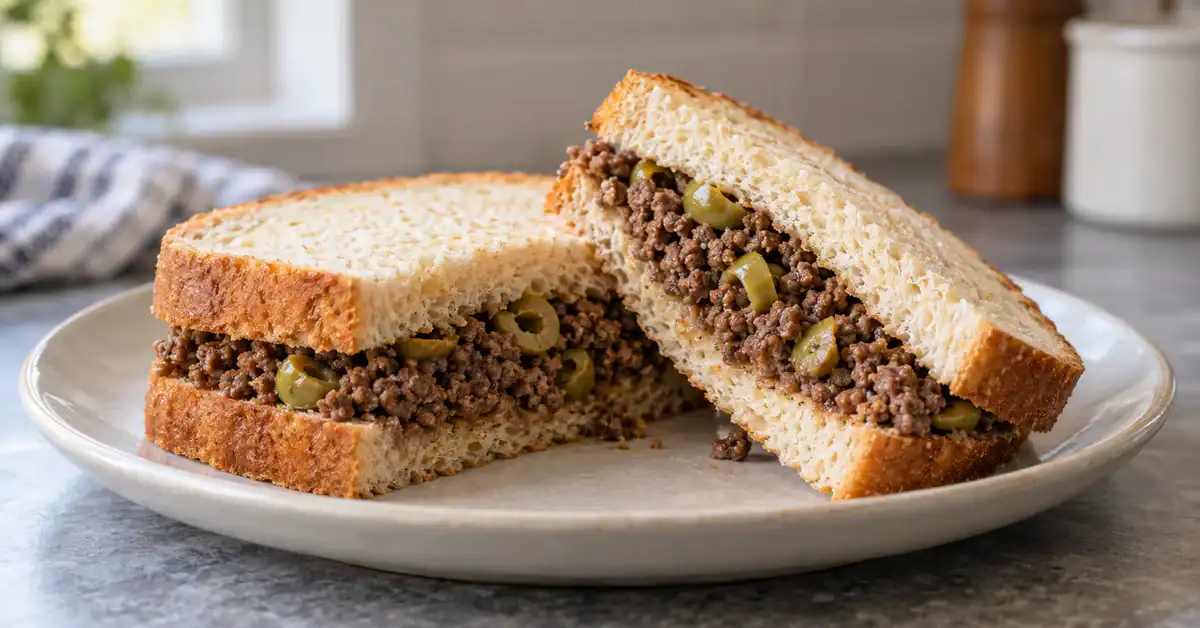

These homemade rolls are filled with minced beef, olives and tomato sauce. Cook the filling in a frying pan until juicy but free of excess liquid. The recipe makes about four sandwiches and explains when to stir in the olives and how to keep the crusty rolls from getting soggy.
Olives give these homemade beef rolls plenty of flavour. Start on the hob, cooking the mince until it is juicy without being watery, then spoon it into the rolls.
Ingredients and quantities
For about 4 sandwiches, you’ll need the following ingredients.
- 500 g of minced beef
- 1 tablespoon (15 ml) oil
- 1 medium onion, finely diced
- 2 garlic cloves, chopped or crushed
- 1⁄2 cup (120 ml) tomato sauce
- 1⁄2 cup of pitted olives, drained and sliced
- Salt and black pepper to taste
- 4 crusty French-style rolls
Sauté the meat and prepare the filling
Get the ingredients ready
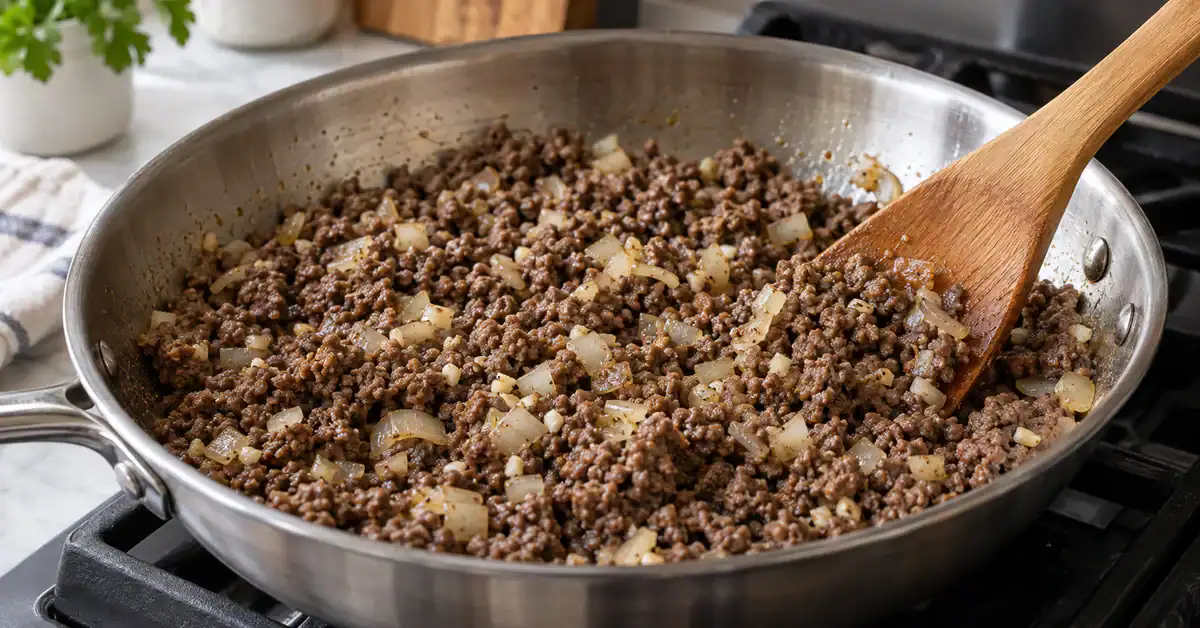
Dice the onion into small cubes and chop or crush the garlic. Drain and slice the olives, measure the tomato sauce, and have the meat, oil, salt, black pepper, and bread rolls ready. Use a wide frying pan to spread the meat without piling it up.
Cook the beef until no pink remains
- Sauté the onion and garlic: heat the oil in the frying pan over medium heat. Add the onion and stir for about 3 to 4 minutes, until it is tender and starts to become transparent. Add the garlic and stir for another 30 seconds, without letting it brown.
- Add the meat: increase the heat to medium-high, add the minced meat, and season with salt and black pepper to taste. Using a spoon or spatula, break up the larger pieces and stir occasionally to ensure even cooking.
- Cook the mince for 6 to 8 minutes, or until it is cooked through with no pink patches. If any liquid collects in the pan, keep cooking and stir until it reduces. Take the pan off the heat before the meat dries out. The sauce and olives go in next.
Add the olives and adjust the filling
When to add the olives
Stir the tomato sauce into the cooked mince. Cook over a medium-low heat for about 3 minutes, stirring occasionally, until the sauce is hot and starts to coat the meat. Add the sliced olives and cook for another 1 to 2 minutes to warm them through without losing their texture.
Check the moisture level before taking the pan off the heat
The filling should be juicy and hold together with no pool of liquid at the bottom of the pan. If it is watery, stir over a low heat for a few more minutes until the excess evaporates. If the meat starts to dry out before the sauce coats it, turn down the heat and stir gently. Taste before adding salt as the olives already contribute some.
Assemble the sandwiches
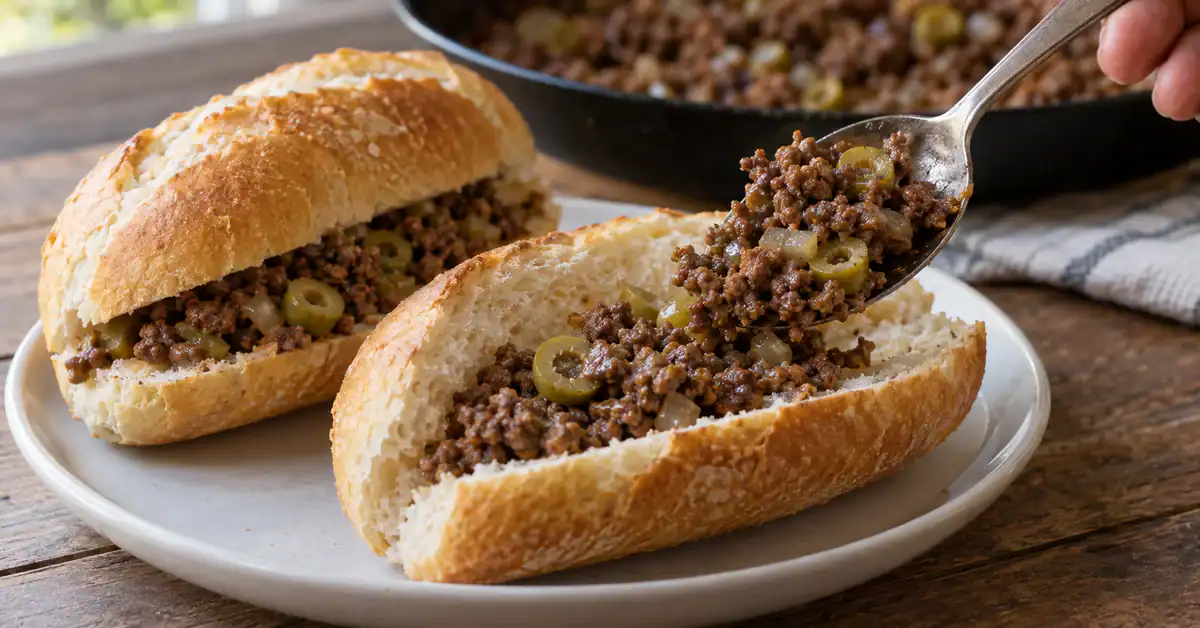
Spread the filling on the bread
- Split each crusty roll lengthways, leaving the halves attached if you find the sandwich easier to hold that way.
- Divide the mince and olives evenly between the 4 rolls. Spread gently with a spoon. Leave any liquid in the pan to keep the rolls from getting soggy.
Serve immediately after assembly
Serve while the filling is warm. Assembling the rolls just before eating helps them keep their texture.
Getting the texture of the mince right
Keep the filling juicy without excess liquid
Before adding the sauce, check the bottom of the frying pan: if there is accumulated liquid, wait for it to evaporate, stirring occasionally. Keep the medium-high heat, but reduce it if the meat starts to brown too much before the excess dries.
Break up large lumps of mince as it cooks. Once the sauce has been added, take the pan off the heat when the sauce coats the meat and the filling is still juicy. If it starts to dry out, turn down the heat and stir gently to coat the pieces.
Substitutions and variations
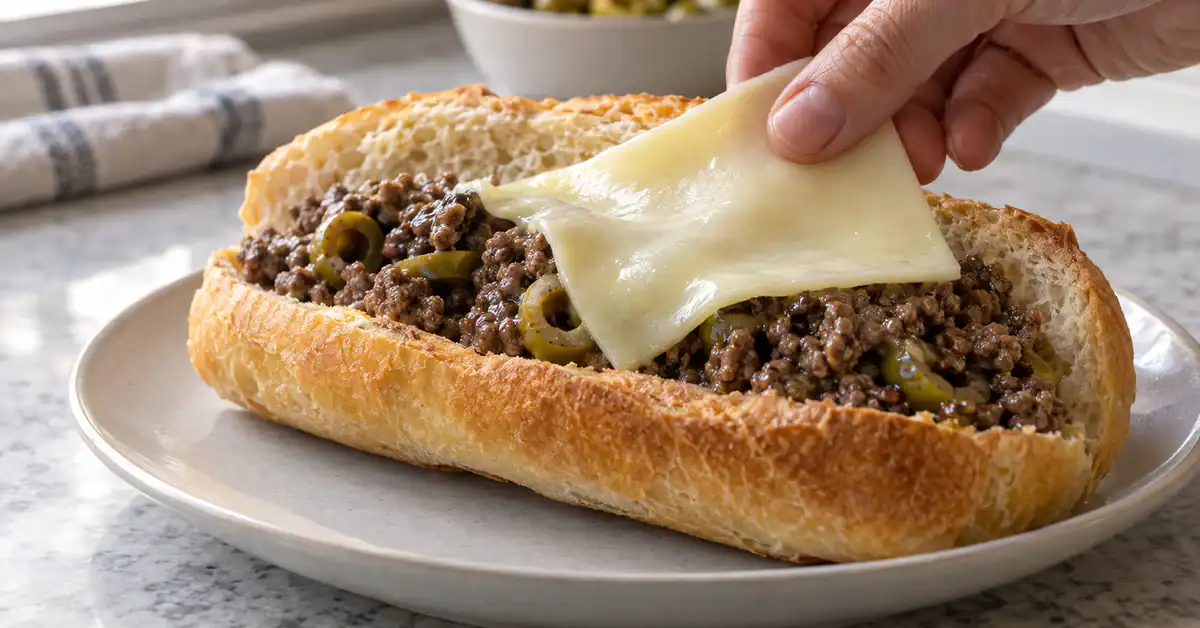
The basic sandwich uses minced beef, olives and a crusty French-style roll. Try one change at a time to see how it affects the texture and flavour.
- Change the bread. A burger bun or wholemeal roll can also hold the filling. A burger bun will be softer, while a wholemeal roll has a stronger flavour and can give a firmer sandwich.
- Variety of olives: use green or black olives, depending on your preference. Green olives usually have a more intense and salty flavour; black olives can make the filling milder. Drain and slice as in the main version.
- Add cheese: place a slice over the still-hot filling, already inside the bread, so it softens with heat. The cheese makes the sandwich creamier and adds salt; taste the filling before adjusting the seasoning.
How to serve and store leftovers
Suggestions for accompaniments
A salad of leafy greens or tomato slices pairs well with the filling and adds freshness to the dish. If you prefer something more substantial, serve with roasted potatoes or chips; since olives already contain salt in the sandwich, taste before adding more salt to the side dishes.
Cooling and storage of filling
Let any leftover filling cool, then refrigerate it in a clean, closed container, separate from the rolls. This keeps the bread from absorbing the juices. Reheat only the portion you plan to serve, stirring in a frying pan over a low heat until hot throughout.
Just before serving
Assemble the sandwiches when the filling is ready and leave any accumulated liquid in the frying pan to avoid soaking the bread too much. Serve with a leafy salad or tomato slices; if you’d like to vary it, try adding cheese to the hot filling.
Questions about preparation and assembly
What should I do if the meat releases too much liquid in the frying pan?
Keep the frying pan on medium heat and stir occasionally until the excess liquid reduces. Wait until this step is complete before adding the sauce, and remove the pan from the heat before the meat dries out.
Do I need a large frying pan?
Choose a wide frying pan to spread the meat without piling it up. This makes it easier to stir and monitor the liquid that forms at the bottom.
Should I add more salt because of the olives?
Taste the filling before adding more salt. The olives may already provide enough, and cheese will add more if you use it.
Can I use another kind of bread?
Yes. A burger bun makes a softer sandwich, while a wholemeal roll has a stronger flavour and can give it a firmer texture.
How do I store the filling if I want to assemble the sandwiches later?
Let the filling cool and store it in a clean, airtight container in the refrigerator, separate from the bread. Reheat only the portion you’re serving, in a frying pan over a low heat, stirring until it’s evenly warmed.
How do I add cheese to the sandwich?
Lay a slice of cheese over the hot filling inside the roll so it softens. Taste before adjusting the salt, as cheese can make the sandwich saltier.