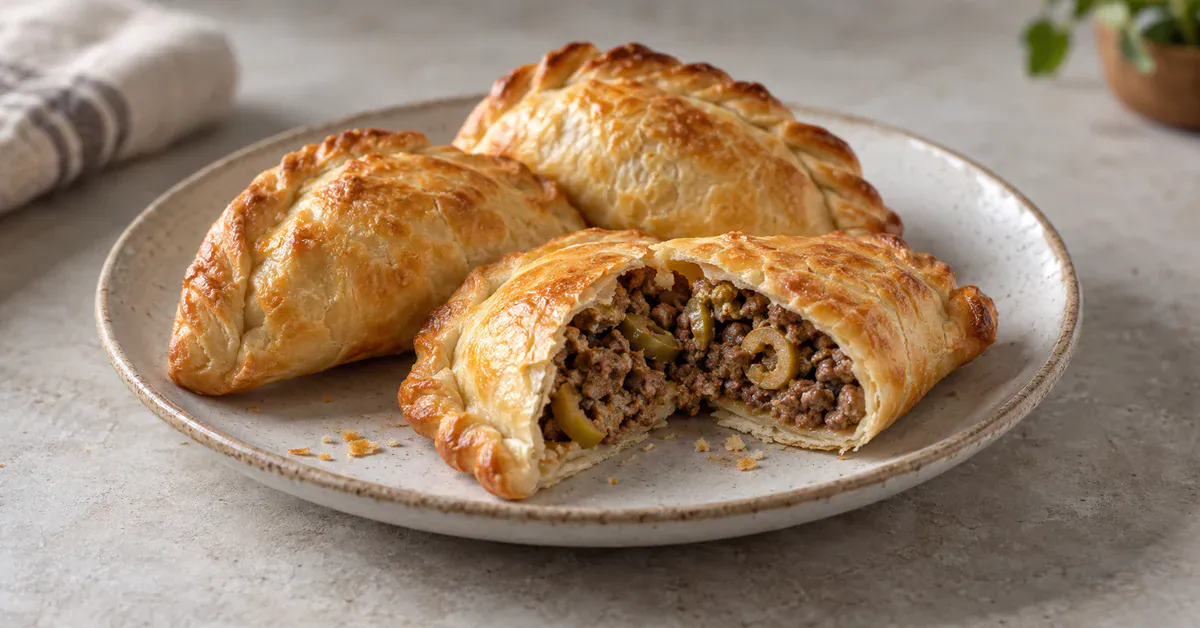

These baked pasties pair minced beef and olives with homemade pastry made with cold butter and chilled before rolling. The edges are pressed together, the tops brushed with egg yolk and the pasties baked at 200 °C until golden. Makes about 12.
These baked beef and olive pasties make a handy snack or a simple meal to share. Cook the filling, then wrap it in pastry. The steps below show how much filling to add and how to seal the edges before baking.
Ingredients for the filling, pastry and glaze
The quantities below make about 12 pasties, depending on the size of the pastry circles. Set out the ingredients for the filling, pastry and glaze before you start.
For the minced beef and olive filling
- 1 tablespoon (15 ml) oil
- 1 small onion (about 100 g), chopped
- 2 garlic cloves, chopped
- 400 g minced beef
- 1 medium tomato (about 120 g), deseeded and chopped
- ½ cup (about 70 g) pitted green olives, drained and chopped
- ½ teaspoon salt
- ¼ teaspoon black pepper
- 2 tablespoons chopped parsley (optional)
For the pastry and glaze
- 3 cups (360 g) plain flour
- 150 g unsalted butter, chilled and diced
- 1 egg
- ½ teaspoon salt
- 4 tablespoons (60 ml) ice-cold water
- 1 egg yolk, to glaze the pasties before baking
Make the minced beef filling
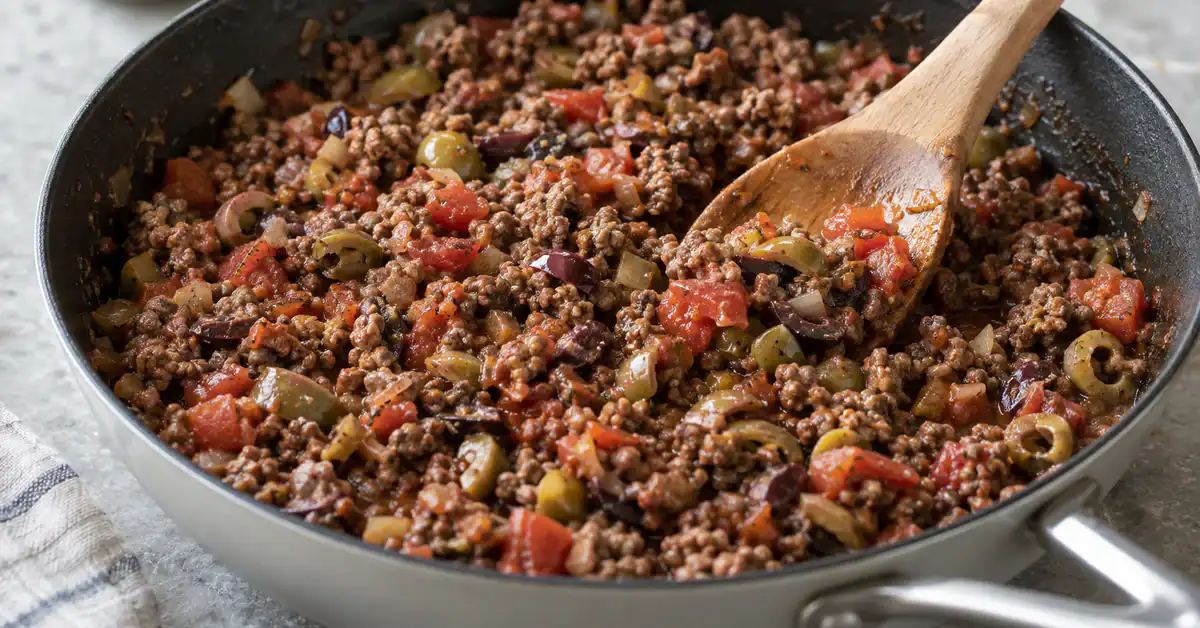
- Heat the oil in a wide frying pan or saucepan over a medium heat. Add the chopped onion and cook, stirring, for about 3–4 minutes, until soft and slightly translucent.
- Stir in the chopped garlic and cook for about 30 seconds, just until fragrant. Avoid browning it too much, as it can become bitter.
- Add the minced beef and break up any large clumps with a spoon. Cook over a medium heat, stirring occasionally, until the meat loses its pink colour and most of the liquid in the pan has evaporated.
- Add the chopped tomato, salt and black pepper. Cook for about 5 minutes, stirring occasionally, until the tomato softens and the filling is moist with no liquid pooling at the bottom.
- Stir in the chopped olives and the parsley, if using. Stir for 1 more minute, then turn off the heat.
- Transfer the filling to a plate or shallow container and let it cool completely before assembling the pasties. Hot filling can soften the pastry and make it difficult to seal.
Assemble the pasties without overfilling
- Mix the flour and salt in a bowl. Add the cold butter and rub it into the flour with your fingertips until the mixture resembles breadcrumbs. Add the egg, then the ice-cold water a little at a time, mixing just until the pastry comes together. Avoid kneading, which would make it elastic.
- Shape the pastry into a disc, cover and chill for about 30 minutes. It is ready to roll when it feels firm but still yields to a light touch. Keep the egg yolk aside for glazing before baking.
- Divide the pastry into portions and roll each one out to about 3 mm thick. Cut out circles about 12 cm across. Gather and re-roll the trimmings to use up the pastry. If it becomes too soft as you work, chill it again for a few minutes.
- Lay the circles on the worktop and put a small amount of cooled filling on one half of each. Divide the filling evenly, leave a clear border and avoid piling it up. Too much filling makes the pastry difficult to seal and can spill out during baking.
- Fold each circle over its filling without pressing the edges together just yet. Check that there are no pieces of meat or olive on the strip of pastry to be sealed. Then close the edges to keep the filling inside.
Seal the edges to prevent leaks
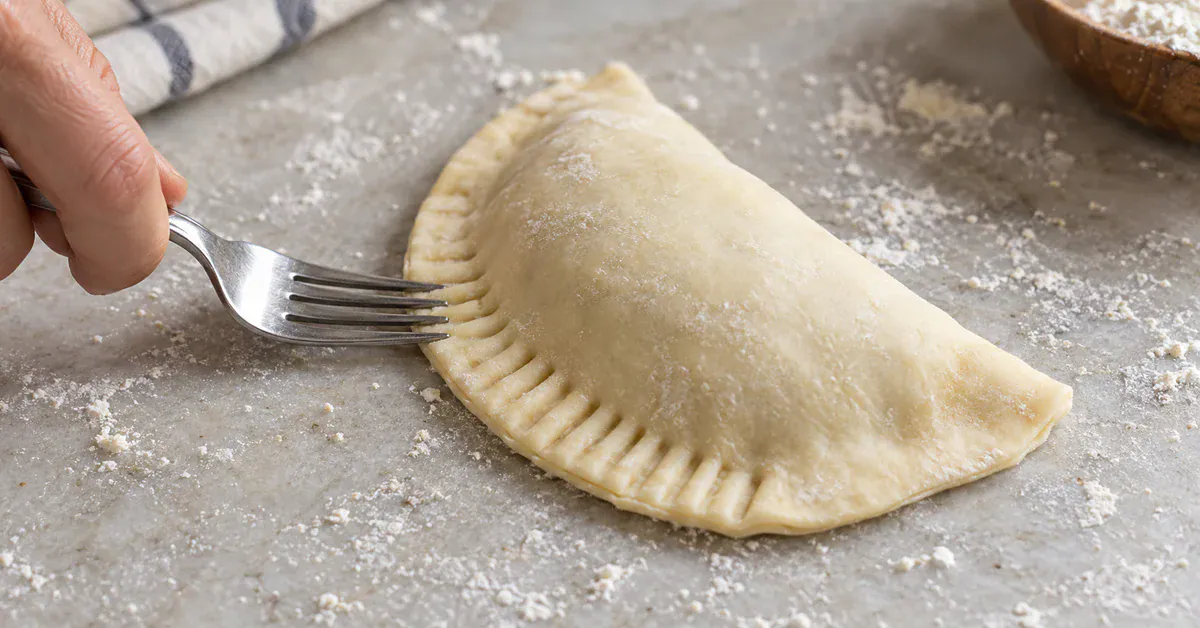
- With the pastry folded over the filling, press gently around it with your fingers, working from the centre towards the ends. This pushes out trapped air and keeps the edges aligned. Check that there are no pieces of filling between them.
- Press the two layers of pastry together with your fingers without pulling or stretching them. If the pastry is very cold and stiff, wait a few minutes until it is pliable enough to seal without cracking.
- Press the tines of a fork along the edge without piercing the pastry. Use firm but moderate pressure to join the two layers. If the edge opens or any filling shows, pinch it together again before using the fork.
Leave the sealed pasties on the worktop while you assemble the rest. They are then ready to glaze with egg yolk and bake.
Bake the pasties
- Preheat the oven to 200 °C and allow it to reach temperature before baking. Line a baking tray with baking paper or grease it lightly.
- Beat the egg yolk with a fork and brush a thin layer over each sealed pasty. Arrange the pasties on the tray, leaving a little space between them so their edges do not touch.
- Bake for about 20–25 minutes, until golden on top. The time can vary with the oven and the size of the pasties, so use the colour of the pastry as a guide.
- Remove the tray from the oven and wait a few minutes before transferring the pasties to a serving plate. The pastry is delicate when very hot, and the filling may be piping hot too.
Check the pastry and filling
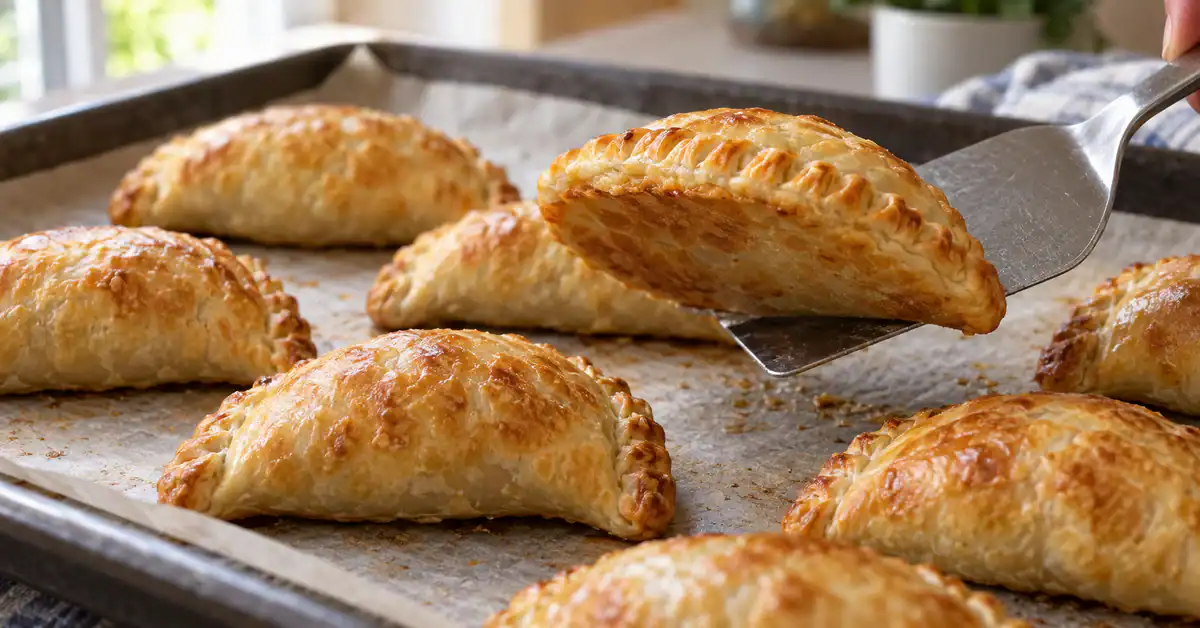
The pasties are ready when the tops are golden and the edges firm. If possible, lift one with a spatula. The base should be cooked and lightly golden, with no wet or raw-looking patches.
The colour will vary with your oven and the thickness of the pastry. If the pasties are still pale after 20–25 minutes, give them a few more minutes, keeping a close eye on them so they do not get too dark.
Since the meat is cooked before the pasties are assembled, baking mainly cooks the pastry and heats the filling. Wait a few minutes before cutting one open. The inside will be very hot and will release steam.
Serve and store the pasties
Serve warm a few minutes after taking the pasties out of the oven, when the pastry is firm enough to pick up without breaking. Serve with a simple salad or on their own as a snack.
Allow leftovers to cool and refrigerate in a sealed container. The pastry tends to lose some of its crispness. Reheat in the oven until the pasties are hot all the way through. A microwave can make the pastry softer.
To serve
Wait a few minutes after taking the pasties out of the oven for the pastry to firm up and the filling to cool slightly. Serve warm on their own or with a simple salad.
Questions about making the pasties
What if there is still liquid in the pan with the filling?
Keep cooking over a medium heat until most of the liquid evaporates. The filling should be moist, without any liquid pooling in the pan, so the pastry is easy to seal.
Why might the pasties open up in the oven?
Common causes are filling caught in the seam, trapped air or too much filling. Push the air out from the centre towards the ends and check that the edges are well sealed before crimping with a fork.
What if the pastry goes soft as I roll it out?
Return it to the fridge for a few minutes until firm enough to handle. If it is very cold and stiff when you come to seal it, give it a little time to become pliable again.
The top is golden but the bottom is pale. What should I do?
Lift a pasty with a spatula and check that its base is cooked and lightly golden. If it still looks damp or raw, return the pasties to the oven for a few more minutes and keep a close eye on them.
Can I leave out the parsley?
Yes. The parsley is optional and you can leave it out without changing the other filling quantities.