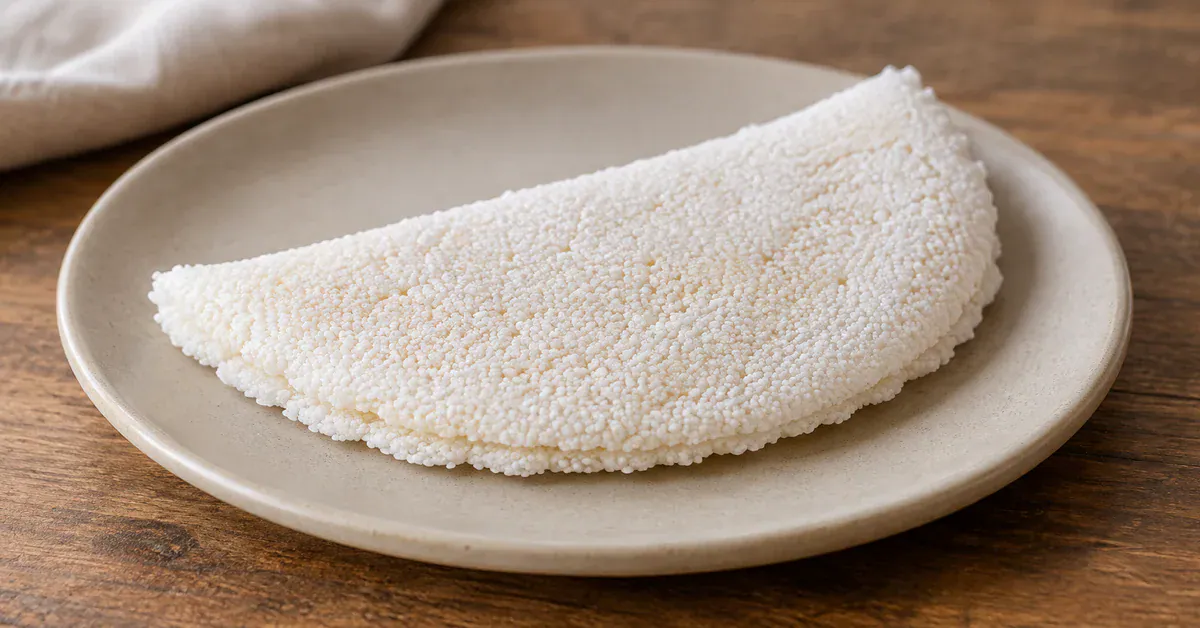

This tapioca pancake is filled with Brazilian queijo coalho cheese, deseeded tomato and basil. The pancake is made from hydrated tapioca starch. Cook over a medium-low heat until the grains bind and the surface turns opaque, then fill and fold before it dries out.
A gourmet tapioca pancake pairs a well-cooked base with fillings that balance flavour and texture. To make it at home, keep an eye on the starch in the frying pan. The grains should bind without drying out, so the pancake folds without breaking. The steps below explain what to look for and how to put together a well-balanced filling.
Ingredients for the pancakes and fillings
The following quantities make about 2 pancakes. Use hydrated tapioca starch sold ready for the frying pan. It is different from dry tapioca starch.
Tapioca starch and basic ingredients
- 150 g hydrated tapioca starch
- 1/8 teaspoon salt, optional
Choosing a filling
This version combines queijo coalho, tomato and basil for a fresh, savoury filling. Remove the seeds from the tomato to reduce the amount of moisture.
- 100 g queijo coalho (Brazilian grilling cheese), coarsely grated
- 1 small tomato (about 80 g), deseeded and diced
- 6 fresh basil leaves
- 1 teaspoon olive oil
Prepare and fill the tapioca pancakes
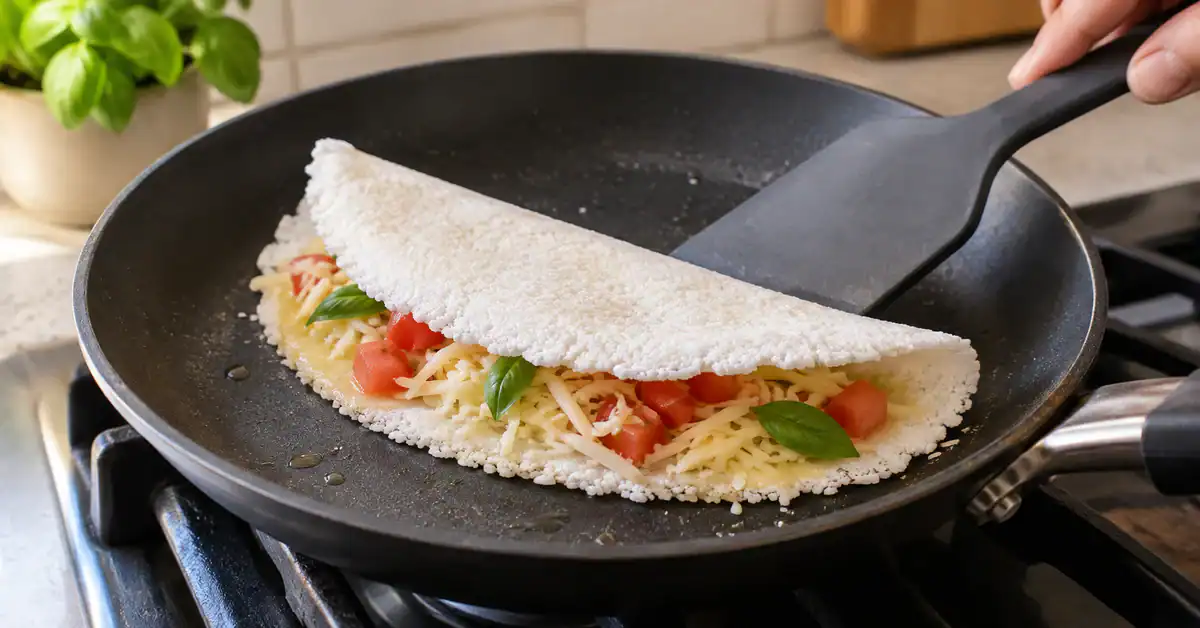
Spread and cook the starch
- Coarsely grate the 100 g of queijo coalho. Deseed the tomato and cut it into small cubes to reduce the moisture that could seep into the pancake. Set out the basil leaves and divide the filling ingredients into two portions.
- Divide the 150 g of hydrated tapioca starch into two 75 g portions. If using the optional salt, mix the stated amount into the starch before dividing it.
- Heat a dry non-stick frying pan over a medium-low heat. Use a spoon to spread one portion of starch into an even layer without mounds or gaps.
- Cook for about 1–2 minutes, watching the surface. When the grains have bound together and the pancake is opaque, with no loose starch, it is ready to fill. Do not wait for it to brown, as prolonged heat can dry it out.
Add the filling and fold
- With the first pancake still in the pan, spread half the queijo coalho over one half. Top with half the tomato, 3 basil leaves and 1/2 teaspoon olive oil.
- Keep over a low heat for about 1 minute, until the cheese is hot and starts to soften. Use a spatula to fold the unfilled half over the filling and transfer to a plate.
- Repeat with the remaining 75 g of starch and the second portion of filling. Serve as soon as the pancakes have been folded, while they are still soft.
How to tell when the pancake is ready
Signs that the tapioca pancake is cooked
Look at the surface. The starch grains should have joined in a continuous, opaque layer with no loose patches. Add the filling at this point. Waiting for the pancake to brown can dry it out.
What to do if the pancake is dry or brittle
If the pancake cracks when folded or feels stiff, it was probably cooked for too long or the pan was too hot. For the next one, keep the heat medium-low and take it off the heat as soon as the grains bind and the surface turns opaque. If it is already brittle, avoid forcing the fold. Transfer it carefully with a spatula, bearing in mind that it may not stay in one piece.
Filling combinations for a gourmet tapioca pancake
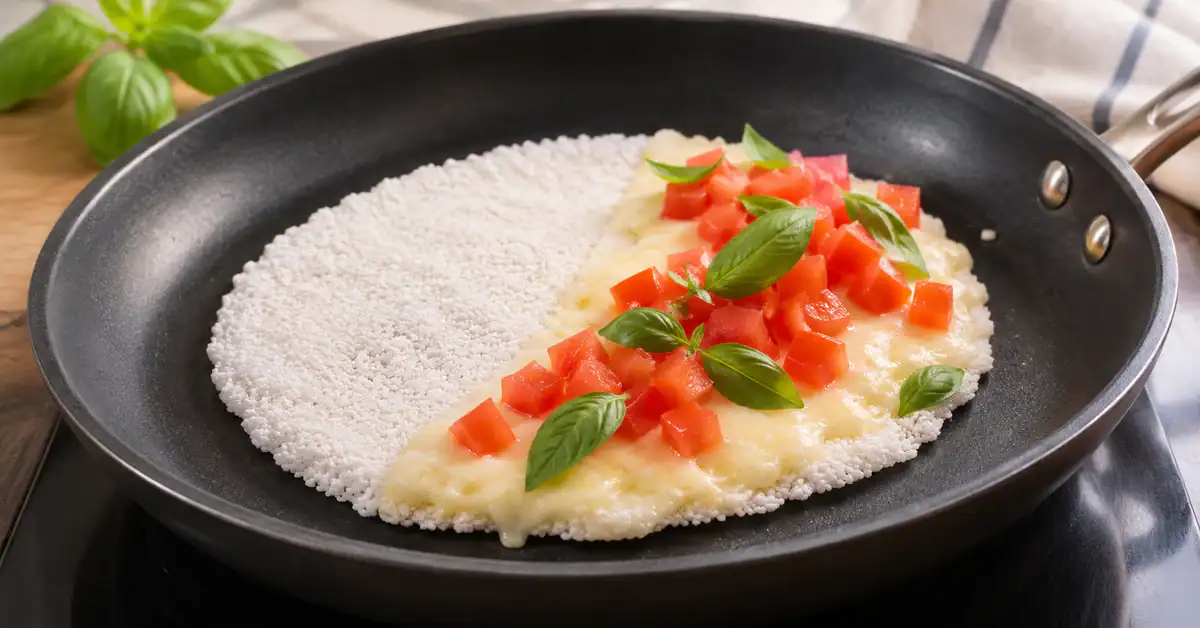
Balancing flavours and textures
In this filling, queijo coalho brings a salty flavour and softens when warmed, the tomato adds freshness and gentle acidity, and the basil provides aroma. The olive oil brings those flavours together. Stick to the stated amount so the filling does not contain too much liquid.
Divide the ingredients into two equal portions so each pancake gets a balanced filling, with the cheese and tomato evenly spread rather than concentrated in one spot.
Fill the pancake without making it soggy
Remove the tomato seeds and cut the flesh into small cubes as described above. This keeps moisture out of the pancake. Cutting the tomato too far ahead can leave a pool of juice in the bowl, so add it to the pancake only when the base is ready.
Spread the cheese over one half of the pancake, then scatter the tomato on top without piling it up. Use the stated amount of olive oil and fold as soon as the cheese starts to soften. Too much filling or too long in the pan can leave one side soggy and the other dry.
Serving and storage
Serve straight away
Take the pancakes to the table as soon as they are folded, while the bases are soft and the queijo coalho is still hot. Serve whole or cut each one in half with a knife. As the tomato may release a little juice, avoid leaving the cut pancakes standing.
Storing and reheating
If there are leftovers, wait just until they stop steaming, then refrigerate in a sealed container without leaving them at room temperature for long. The tomato can moisten the pancake during storage and the basil tends to lose some of its freshness.
Reheat in a non-stick frying pan over a low heat, turning the pancake carefully once warmed. It may be firmer or break more easily than when freshly made. Heat only until the filling is hot and avoid leaving it in the pan longer than necessary.
To serve
Serve the pancakes straight after folding, while the bases are soft and the cheese is hot. If you prefer, cut each one in half just before serving.
Questions about making tapioca pancakes
Can I use dry tapioca starch instead of hydrated starch?
Use hydrated tapioca starch sold ready for the frying pan. Dry tapioca starch is a different product, and the recipe does not give a direct substitution.
Do I need to grease the pan?
No. Use a dry non-stick frying pan over a medium-low heat. The olive oil in the recipe is for the filling, not the pan.
When do I add the filling?
Wait until the grains have joined and the surface is opaque, with no loose starch. Fill one half of the pancake at this point, without waiting for it to brown and dry out.
Can I cut the tomato in advance?
Leave cutting and adding the tomato until the pancake is ready. If the cut tomato stands for too long, juice may collect and make the pancake soggy.
Does the pancake need salt?
No, the salt is optional. If you want to include it, mix 1/8 teaspoon into the starch before dividing it.