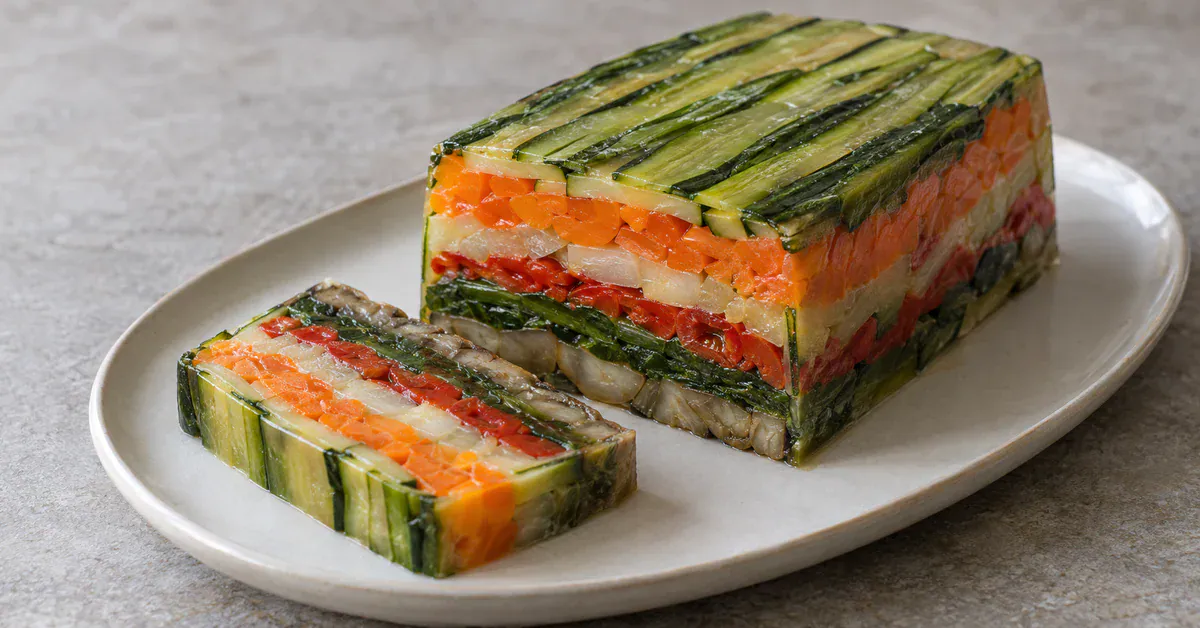

This chilled layered vegetable terrine combines carrots, green beans, courgette and red pepper in colourful slices to serve as a starter or a light meal. Cook the vegetables separately, arrange in a tin with stock and gelatine and refrigerate until set so the layers hold together when sliced.
The vegetables show off their colours in every slice of this chilled layered terrine, a lovely starter or part of a light meal. Pay attention to the order of the layers and each vegetable’s texture for neat slices that look good on the plate.
Ingredients and quantities for the terrine
This makes about 8 servings in a loaf tin measuring roughly 22 × 10 cm. The vegetable weights are before cooking.
Vegetables, seasoning and setting agent
- 2 medium carrots (about 250 g in total), peeled
- 200 g green beans, trimmed
- 1 medium courgette (about 250 g)
- 1 medium red pepper (about 180 g), cored and deseeded
- 400 ml vegetable stock
- 12 g unflavoured, colourless gelatine
- 60 ml cold water, to bloom the gelatine
- 1 small garlic clove, finely chopped or crushed
- 1 tablespoon chopped parsley
- 1 teaspoon salt for the stock
- Black pepper to taste
- Salt for the cooking water
The gelatine in the stock binds the layers once the terrine has chilled. Prepare the vegetables separately so each one cooks to the right point and keeps its texture.
Prepare the vegetables in order
Cooking, draining and cooling
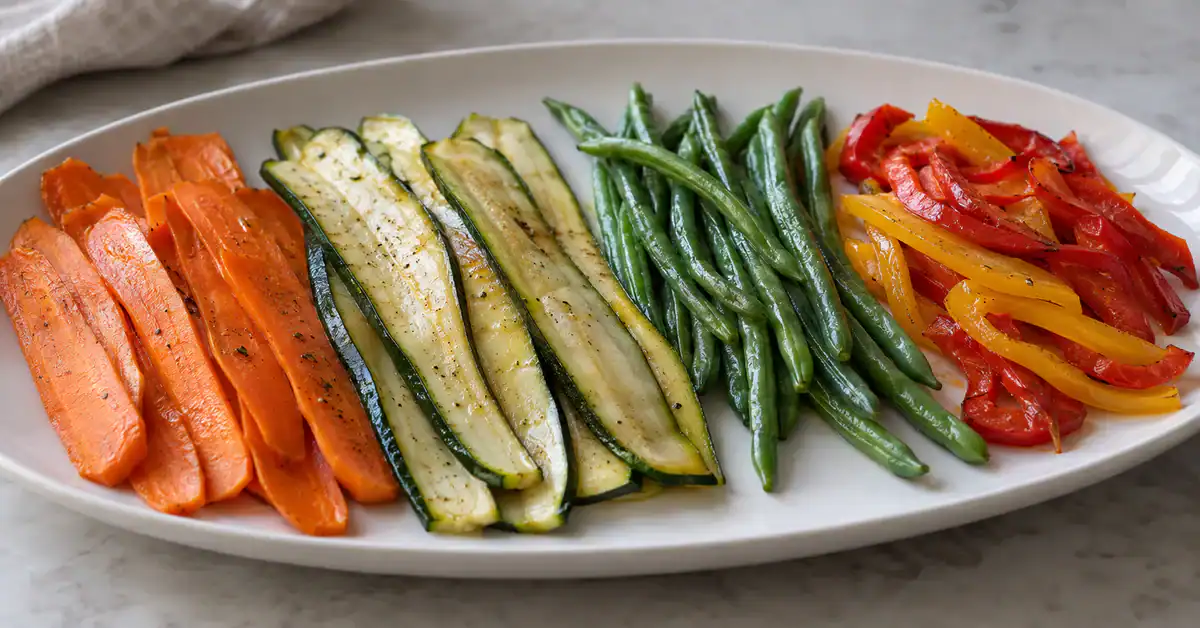
- Slice the carrots and courgette lengthways about 0.5 cm thick. Cut the pepper into strips about 1 cm wide and leave the trimmed beans whole.
- Bring a pan of salted water to the boil and cook the carrots and beans in separate batches. Give the carrots about 4 to 6 minutes and the beans 4 to 5 minutes, until tender when pierced but still firm. Drain each batch and let the water return to the boil before adding the next.
- In the same water, cook the courgette for about 2 to 3 minutes and the pepper for 2 minutes. Remove when pliable but still intact. The time can vary slightly with the thickness of the slices.
- Leave each vegetable in a sieve until it stops dripping. Gently pat the courgette slices and pepper strips dry with kitchen paper without squeezing, so excess water does not collect between the layers.
- Spread the vegetables on a platter or plate in a single layer and let them cool completely. Keep them separate. Add the gelatine and seasoning when assembling the terrine.
Build the layers in the tin
Arranging and pressing the vegetables
- Line the roughly 22 × 10 cm loaf tin with cling film, leaving an overhang at the sides to help turn the terrine out later.
- Bloom the 12 g of unflavoured, colourless gelatine in the 60 ml of cold water for about 5 minutes, until it has absorbed the water and firmed up.
- Warm the 400 ml of vegetable stock in a pan over a low heat until hot but not boiling. Add the garlic, salt, black pepper and parsley. Remove from the heat, add the bloomed gelatine and stir until completely dissolved.
- Arrange the cold vegetables in the tin, alternating colours. Layer the carrot and courgette slices and the pepper strips, tucking the green beans between them to fill any gaps. Gradually pour in the stock as you work so it fills the spaces without dislodging the vegetables.
- Gently press the layers with the back of a spoon, just enough to settle them and remove air pockets without crushing the vegetables. Use all the stock, fold the overhanging film over the terrine and refrigerate to set.
Chill until set
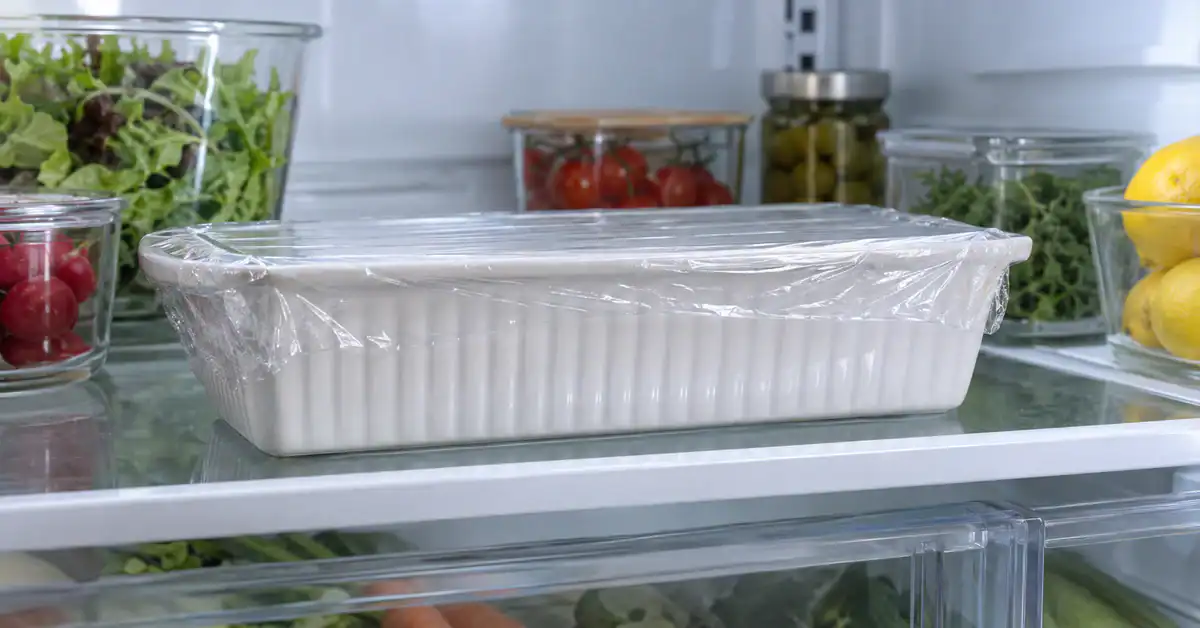
Place the covered tin on a level fridge shelf. Chill for about 4 to 6 hours, or until the stock and gelatine are firm and the layers stay in place when the tin is moved gently. The time may vary with the temperature of the fridge.
Avoid the freezer. Gradual chilling preserves the vegetables’ texture. If the centre still feels soft, leave the terrine in the fridge longer before turning it out.
Turn out and slice without disturbing the layers
How to cut neat slices
- Uncover the terrine and unfold the film at the sides. Place a serving plate over the tin and invert both together. Carefully lift off the tin, then peel away the film. If any part sticks, pull the film away gradually without tugging at the layers.
- Use a clean, sharp, smooth-bladed knife. To cut more easily, warm the blade in hot water and dry it before each cut. Cut slices about 1.5 cm thick, steadying the terrine so it does not slide.
- Serve as soon as you slice. Transfer each portion with a wide spatula. If the centre is still soft or the layers start to separate, return the whole terrine to the fridge to firm up before trying again.
Possible substitutions and variations
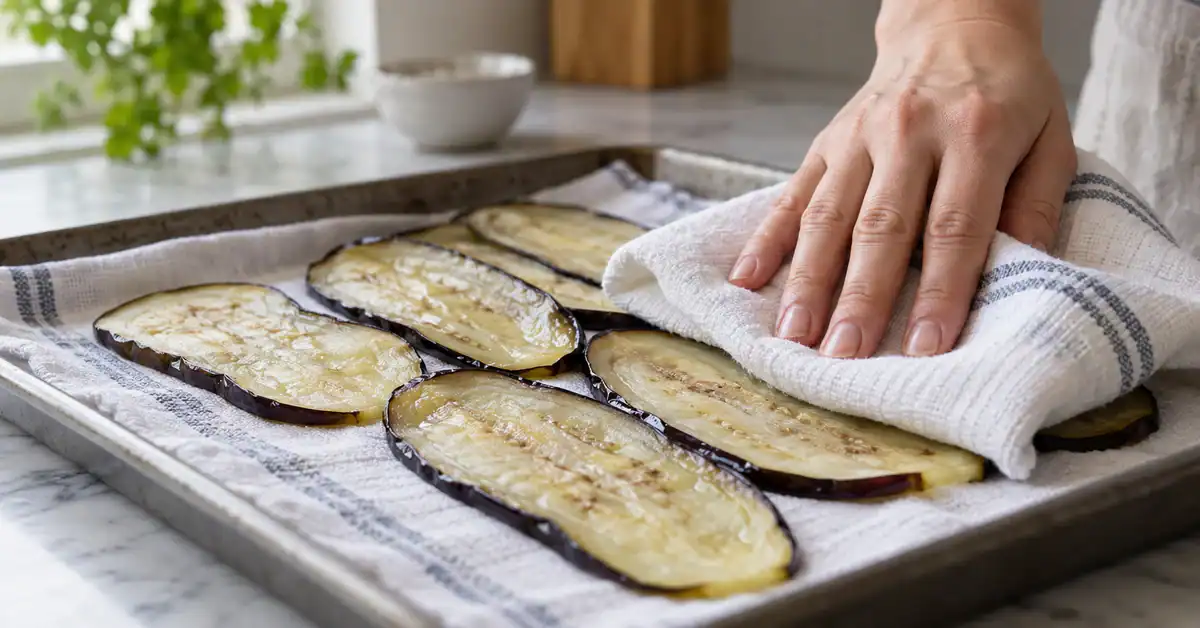
Choose vegetables that keep their shape after cooking and draining. Make one change at a time so you can see how it affects the pattern of the layers and the texture of each slice.
- Instead of pepper, use about 180 g raw beetroot, peeled and sliced. Cook separately until tender but still firm and drain thoroughly. Its colour may stain the neighbouring vegetables and it will give the terrine an earthier flavour.
- Instead of the roughly 250 g of courgette, use aubergine cut into slices of a similar thickness. Cook until pliable but still intact and dry carefully. Aubergine tends to make the terrine softer and can absorb more stock.
- To change the seasoning, replace the parsley with the same amount of chopped spring onion. It gives a more pronounced flavour. Keep the garlic, salt and pepper as in the main recipe.
Cook any replacement vegetable separately and let it cool completely before assembly. Draining and drying well helps prevent liquid collecting between the layers. Cooking time may vary with the vegetable and the thickness of the slices.
How to serve and store leftovers
Serve the terrine chilled in slices about 1.5 cm thick as a starter or as part of a light meal. Transfer each with a wide spatula to keep the layers in place.
Cover leftovers or put them in a sealed container in the fridge. Avoid leaving them at room temperature for long. Do not freeze the terrine, as thawing can spoil the texture of the vegetables and the jellied stock.
At serving time
If the centre is still soft, chill the terrine a little longer before cutting. Serve the cold slices with a wide spatula to keep the layers together.
Frequently asked questions
How do I know the terrine is firm enough to turn out?
After about 4 to 6 hours in the fridge, move the tin gently. The layers should stay in place. If the centre still seems soft, refrigerate for longer before turning out.
Why is there liquid between the layers?
Excess water from the vegetables can collect in the tin. Drain each batch and pat the courgette slices and pepper strips dry before layering. Pour the stock gradually without dislodging the vegetables.
Can I assemble the terrine while the vegetables are still warm?
Wait until they are completely cool. Spread them out without piling them up and keep the different vegetables separate as they cool.
What can I use in place of the pepper or courgette?
Replace the roughly 180 g of pepper with about 180 g of peeled, thinly sliced raw beetroot. It may colour the vegetables next to it. In place of the roughly 250 g of courgette, use aubergine sliced to a similar thickness. It tends to soften the terrine and can absorb more stock.
How do I slice it without breaking up the layers?
Use a sharp, smooth-bladed knife and steady the terrine as you cut slices about 1.5 cm thick. Warming the blade in hot water and drying it before each cut helps. Transfer the slices with a wide spatula.
Can I freeze the terrine or leftovers?
Freezing is not recommended because thawing can affect the texture of the vegetables and jellied stock. After serving, cover the leftovers or store them in a sealed container in the fridge.