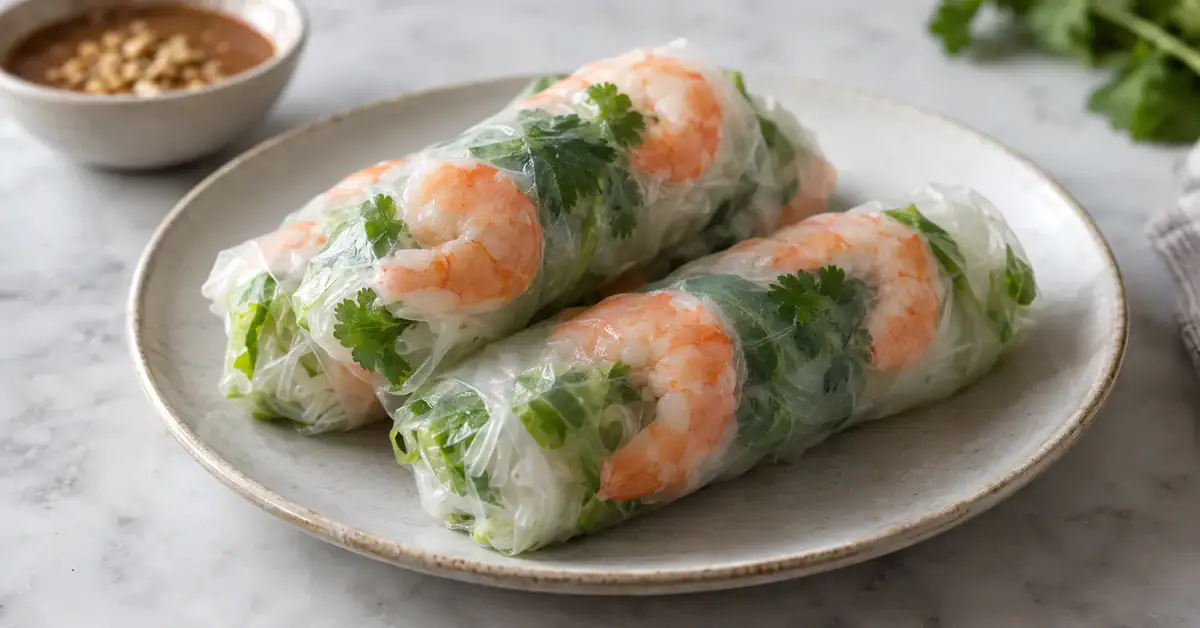

These Vietnamese prawn and herb summer rolls wrap cooked prawns, rice noodles, vegetables and fresh herbs in rice paper, with a fish sauce and lime dip on the side. Learn how to soften each wrapper without soaking it through and roll it snugly without tearing.
Vietnamese prawn and herb summer rolls need a little care in assembly. The rice paper should be pliable without being sodden so it wraps around the filling without tearing. Here’s how to organise the ingredients, soften each sheet and roll it firmly without squeezing.
Ingredients and quantities
This makes about 8 rolls, depending on how much filling you use in each.
For the rolls
- 8 rice paper sheets, about 22 cm in diameter
- 200 g cooked prawns, peeled and deveined
- 100 g dried rice vermicelli
- 8 medium lettuce leaves, washed and dried
- 1 medium carrot, about 100 g, peeled
- ½ medium cucumber, about 150 g
- 15 g mint leaves
- 15 g fresh coriander, leaves and tender stems
For the dipping sauce
- 2 tablespoons (30 ml) fish sauce
- 2 tablespoons (30 ml) lime juice
- 2 tablespoons (30 ml) water
- 1 tablespoon (15 ml) sugar
- 1 small garlic clove, chopped or crushed
- Fresh chilli, optional, thinly sliced
Prepare the filling before you start
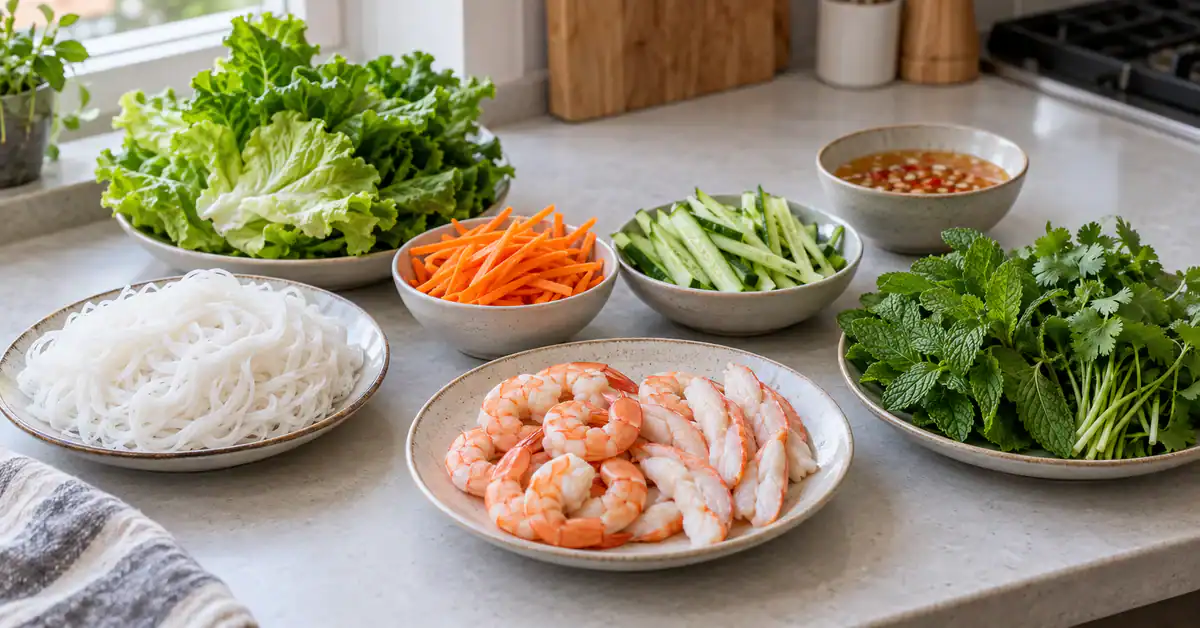
Prepare the filling before you soften the rice paper. Once the wrapper softens, assembly is easier if you don’t have to stop to chop or drain ingredients.
- Cook or soak the 100 g of dried rice noodles according to the packet instructions. Drain well, rinse under cold water to stop the cooking, then drain again and leave to cool completely.
- Cut the carrot and cucumber into thin strips of a similar length. Dry the lettuce, mint leaves and coriander leaves and tender stems. Discard the thicker coriander stems. Leave the herbs whole or tear the larger leaves.
- Check that the 200 g of cooked prawns are peeled and deveined. If large, halve them lengthways so they spread evenly through the filling.
- In a small bowl, stir the fish sauce, lime juice, water and sugar until the sugar dissolves. Add the garlic and the fresh chilli, if using. Set aside for serving.
- Arrange the noodles, vegetables, herbs and prawns on separate plates or in bowls within reach. Make sure the noodles are cold and well drained, as excess water can make the filling too wet.
Soften the rice paper just enough
Use a wide plate or shallow dish big enough for a 22 cm rice paper sheet. Add room-temperature water deep enough to cover the sheet without folding it.
- Dip one sheet at a time for a few seconds, turning to wet both sides. Lift it out when flexible but still offering a little resistance. It will continue to soften on the worktop.
- Lay the sheet flat on a clean, dry surface. Wait a moment until pliable and slightly sticky with no hard patches. Do not soak it until completely soft or it will stick and tear more easily.
Fill and roll each wrapper
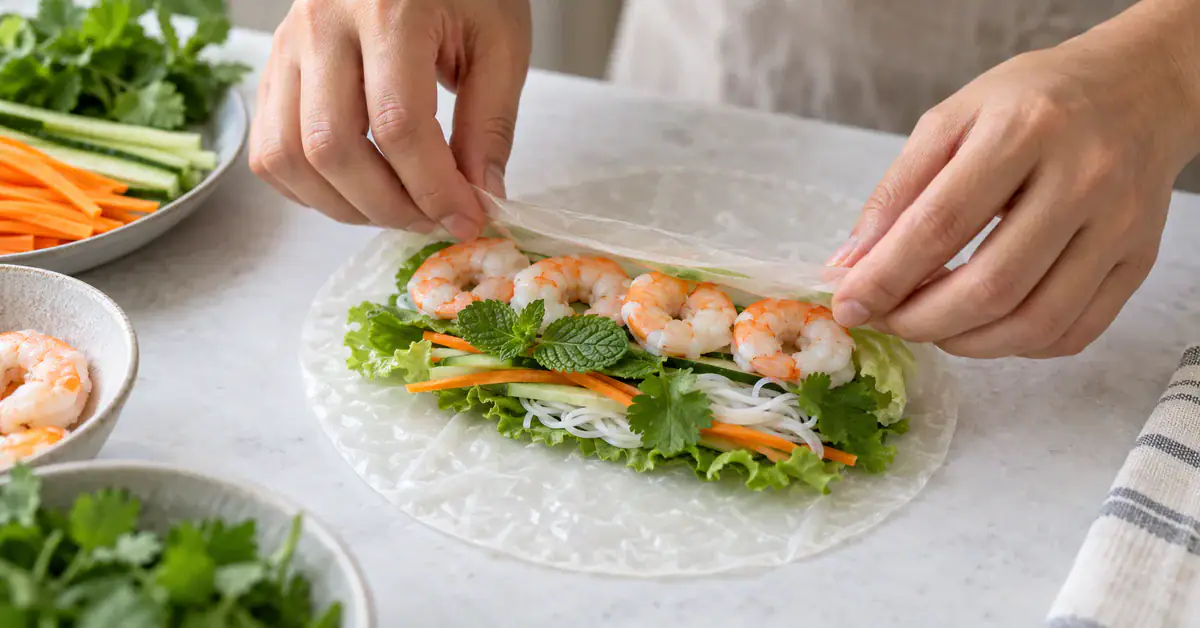
- Lay the pliable sheet flat and place a lettuce leaf on the third nearest you. Add some noodles, carrot and cucumber strips and a few mint and coriander leaves, keeping the pile low. Leave space at both sides to fold the roll closed.
- Arrange a few prawn pieces in a horizontal line across the far half, leaving room for folding. If using halved prawns, put the pink side down so it shows through the finished wrapper.
- Lift the edge nearest you over the filling, holding the filling in place with your fingers. Fold both sides in and continue rolling towards the prawns, firmly enough to hold the shape without pulling on the sheet.
- Finish rolling until the sheet sticks to itself. Lay the roll seam-side down on a plate and repeat, softening each sheet only when needed. If a sheet sticks to the worktop, lift it gently by the edges without dragging it.
How to keep the wrappers from tearing
If a sheet tears, check the amount of filling first. A tall pile strains the rice paper. Use fewer noodles and vegetables and leave the sides clear for folding. Keep the filling in place and roll with gentle pressure without pulling on the wrapper.
Very soft, sticky rice paper has usually spent too long in the water. Dip each sheet for just a few seconds and take it out while it still has some resistance. It will finish softening on the worktop. If it sticks, lift by the edges without dragging.
Carrot or cucumber strips with hard ends and thick herb stems can pierce the sheet. Cut the vegetables into thin strips and remove the thick coriander stems before assembling.
How to serve and store the rolls
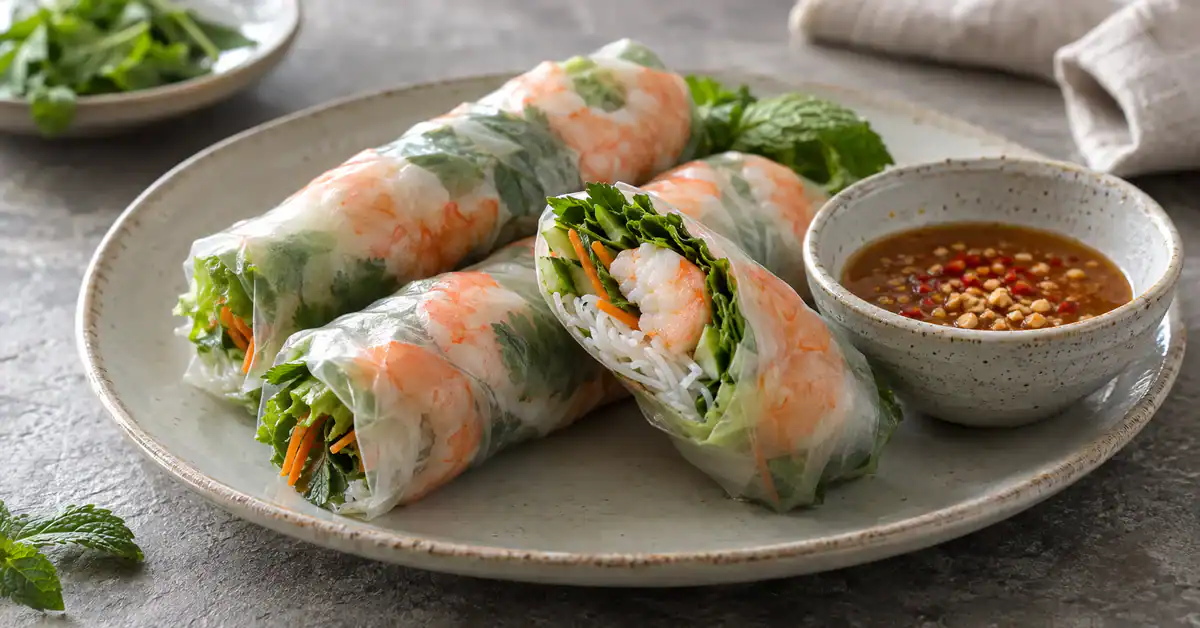
Serve whole or halved on the diagonal, with the prepared dipping sauce in a separate bowl. Everyone can dip their own portion and the rice paper will stay dry until eaten.
The rolls have the best texture just after assembly. If storing, arrange them in a single layer in a sealed container in the fridge and separate them with baking parchment to stop them sticking. The wrappers can firm up when cold, so assemble close to serving if possible.
Keep the dip separate and refrigerated too. Avoid leaving prawn rolls out of the fridge for extended periods.
At the table
Serve whole or halved on the diagonal, with the dip in a separate bowl so everyone can dip their own roll.
Questions about preparation and serving
Can I soften all the rice paper at once?
Soften one sheet at a time, only when ready to fill each roll. That way the wrappers won’t soften too much or stick together while you prepare the filling.
How do I know the wrapper is ready to fill?
Lift it out when pliable but still offering a little resistance. It will keep softening on the worktop, so do not wait for it to become completely soft in the water.
Can I use raw prawns in the filling?
No. Use the 200 g of cooked, peeled and deveined prawns listed. If large, halve them lengthways so they are easier to distribute.
Can I make the rolls ahead?
The texture is best immediately after assembly, so make them close to serving when possible. If storing, refrigerate in a sealed container in one layer, separated by baking parchment. Keep the sauce apart.
Does the sauce go inside the roll or on the side?
Serve the sauce in a separate bowl for dipping, so the rice paper does not get wet before you eat.