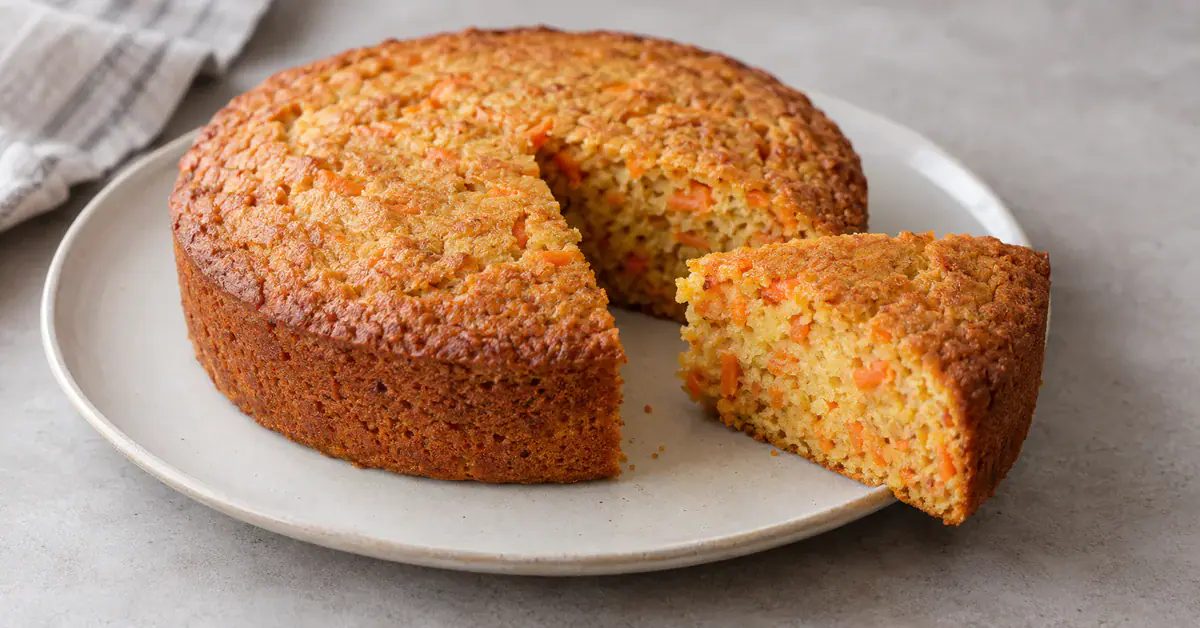

This savoury chickpea and carrot cake is made with chickpea flour, grated carrot and Parmesan, with no cooked chickpeas. Learn to mix the batter without overbeating, bake it at 180 °C and check it is ready with a skewer and a light touch on the surface.
Mildly seasoned batter flecked with pieces of carrot makes this savoury chickpea and carrot cake a change for lunch or a snack. The steps explain how to combine the ingredients and judge the consistency, even if you’re fairly new to baking.
Ingredients for the batter
Use chickpea flour rather than cooked chickpeas for this version. Grate the carrot before weighing it. These quantities make a mildly seasoned, cheesy batter.
Dry ingredients
- 180 g chickpea flour
- 1 tablespoon (15 ml) baking powder
- 1/2 teaspoon (2.5 ml) salt
- 1/4 teaspoon (1.25 ml) black pepper
Wet ingredients and additions
- 2 eggs
- 120 ml milk
- 60 ml oil
- 120 g raw carrot, coarsely grated
- 50 g grated Parmesan
How to prepare the batter
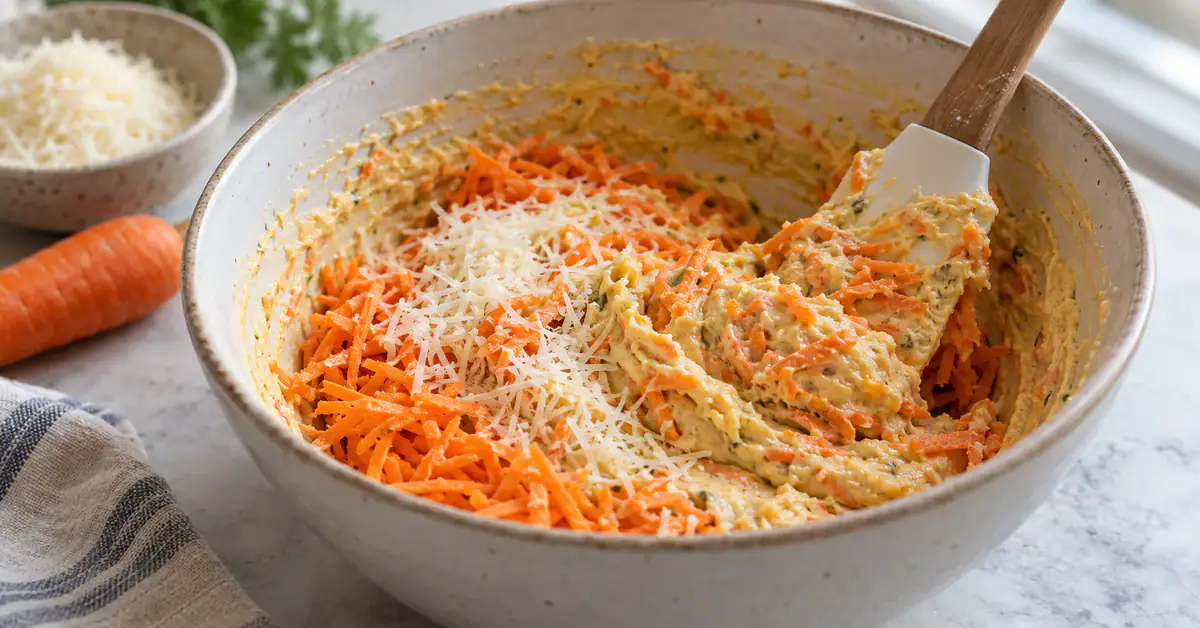
Mixing the ingredients
- Whisk the chickpea flour, baking powder, salt and pepper together in a bowl. This distributes the raising agent and seasoning evenly through the flour.
- In another bowl, beat the eggs, milk and oil until evenly combined. Add the dry ingredients gradually, stirring with a whisk or spatula just until no dry flour remains. Avoid beating for too long.
Folding in the carrot
- Add the grated raw carrot and Parmesan. Fold in with a spatula, lifting from the bottom until evenly distributed without crushing the carrot. The batter is now ready for a final consistency check before baking.
The right consistency before baking
Before baking, check that the batter is thick but still easy to stir. It should fall from the spatula in heavy dollops, neither pouring like a liquid batter nor holding its shape like bread dough.
Grated carrot and Parmesan can give the mixture an uneven appearance. That’s to be expected. Check that no dry flour remains at the bottom of the bowl and the carrot is evenly distributed. Avoid adding more milk or flour to change the texture. The recipe’s proportions already account for these additions.
How to tell when the cake is done
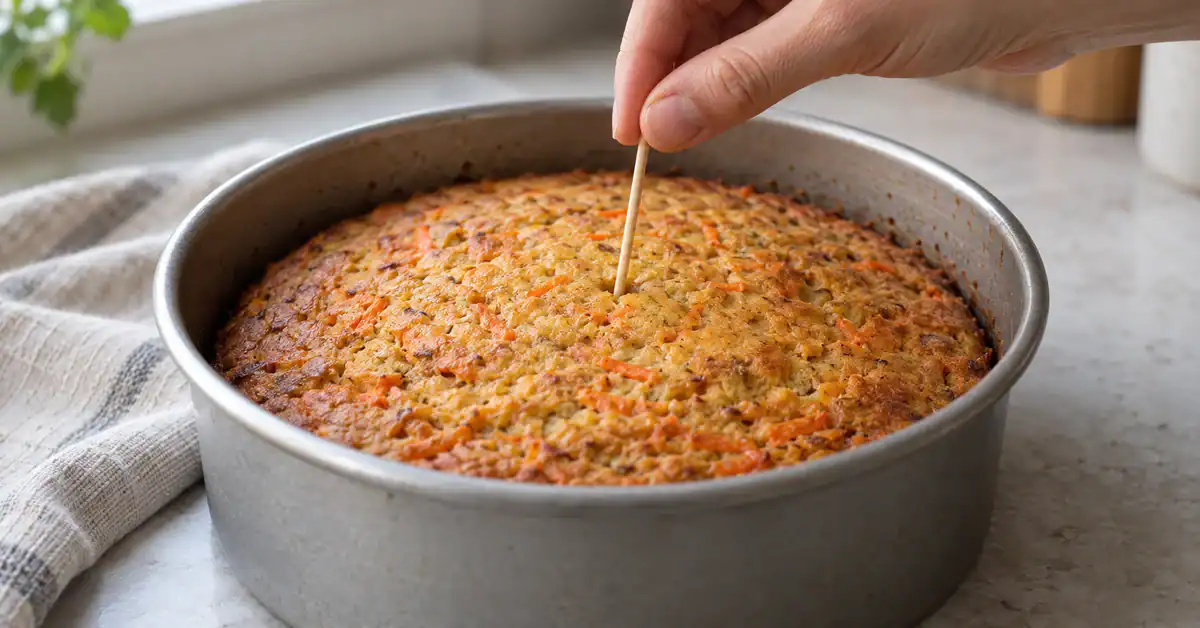
Bake in an oven preheated to 180 °C. The tin and oven affect the baking time. Start checking after about 30 minutes and allow roughly 30 to 40 minutes in total.
Check the centre, which usually bakes last. Insert a skewer there. It should come out free from raw batter, although a few moist crumbs are fine. The top should be firm, lightly golden and spring back when gently pressed.
If the skewer comes out with wet batter, bake for a few more minutes and test again. Avoid opening the oven during the first 25 minutes, as a sudden temperature change can affect the rise.
Serving and storing
Once baked, let the cake cool until warm before turning out and cutting so the slices stay intact. Serve warm or at room temperature as a snack, or with a salad at lunch.
Cool completely before storing in a sealed container in the fridge. To serve a warm slice later, briefly reheat it in the microwave or oven, taking care not to dry it out.
At serving time
Let the cake cool until warm before turning it out and cutting so the slices hold together. Serve warm or at room temperature, on its own as a snack or with salad for lunch.
Questions about the recipe
Can I use cooked chickpeas instead of the flour?
Do not make a direct swap. This recipe was developed with chickpea flour. Cooked chickpeas change the composition of the batter and would require a different recipe.
Should I cook the carrot before adding it?
No. Coarsely grate the raw carrot and fold it in with the Parmesan using a spatula, taking care not to crush the pieces.
The batter looks uneven. Has something gone wrong?
Not necessarily. Carrot and Parmesan give the mixture an uneven texture. Check the bottom of the bowl for dry flour and make sure the batter is thick but still easy to stir.
Can I mix everything with an electric mixer?
Mix by hand with a whisk or spatula and avoid beating for too long. Once the dry and wet ingredients are combined, fold in the carrot and Parmesan with a lifting motion.
The skewer has a few moist crumbs. Is the cake done?
Yes, provided no raw batter clings to the skewer. A few moist crumbs are normal. If it comes out coated in runny batter, bake for a few more minutes and test again.