
This Sicilian-style farfalle pairs browned aubergine with tomatoes, olives and capers, finished with basil and grated ricotta salata. Cook the pasta until just firm, then toss it in the sauce with a little pasta water to coat each bow.
For Sicilian-style farfalle, it pays to have the sauce ready when the pasta reaches the right texture. These steps help you organise the cooking and tell when the bows are cooked through but still firm to the bite.
Ingredients and quantities
This recipe makes about 4 servings. Aubergine, tomatoes, olives and capers give the sauce its character. Olives and capers are already salty, so taste before adding salt.
- 400 g dried farfalle
- 1 medium aubergine, about 350 g, cut into roughly 2 cm cubes
- 60 ml olive oil
- 2 garlic cloves, chopped
- 1 x 400 g tin of peeled tomatoes, crushed with their juice
- 50 g pitted black olives, halved
- 15 g capers, drained
- 8 fresh basil leaves
- 40 g ricotta salata, grated
- 2.5 litres water, to cook the pasta
- 25 g salt for the pasta water
- Salt for the sauce, if needed
How to make Sicilian-style farfalle
Prepare the ingredients and start the sauce
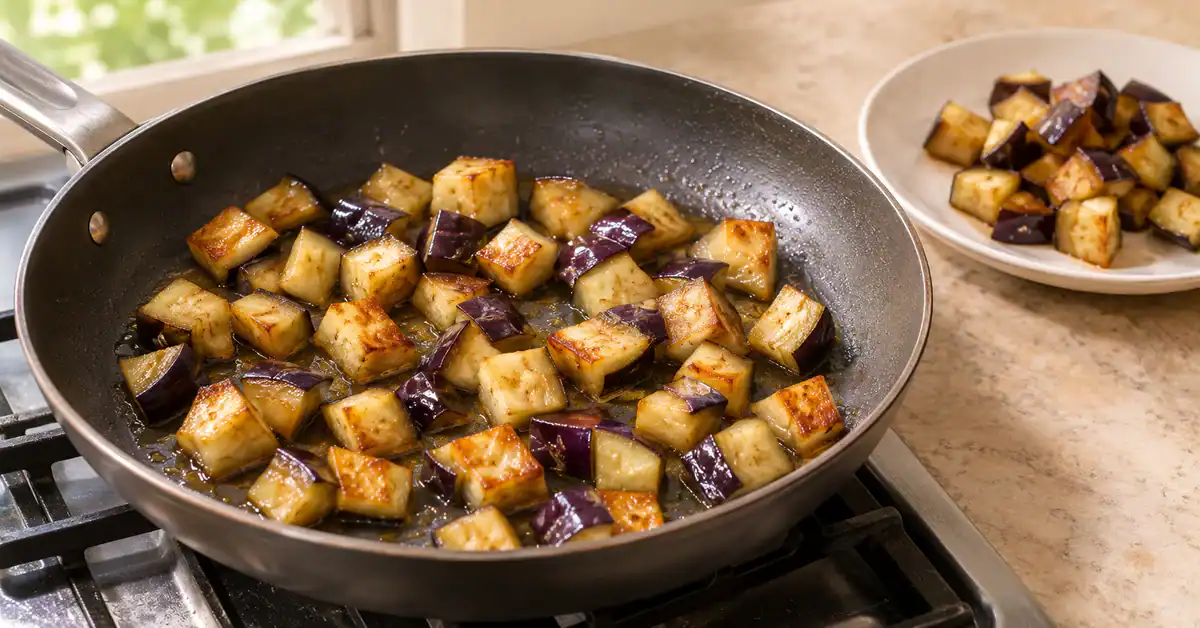
- Brown the aubergine. Heat 45 ml of the olive oil in a large frying pan over a medium heat. Add the cubes in a single layer, working in batches if needed. Cook for about 8 to 10 minutes, stirring occasionally, until tender and browned on several sides. Transfer to a plate.
- Start the sauce. Heat the remaining 15 ml olive oil in the same pan over a low heat. Add the garlic and stir for about 30 seconds, just until fragrant, without letting it darken. Add the crushed tomatoes and their juice. Cook over a medium-low heat for about 15 minutes, stirring occasionally, until thickened.
- Return the aubergine to the pan and stir in the olives and capers. Keep the sauce over a low heat while the pasta cooks. Taste before adding salt as the olives and capers already season the sauce.
Cook the pasta until al dente
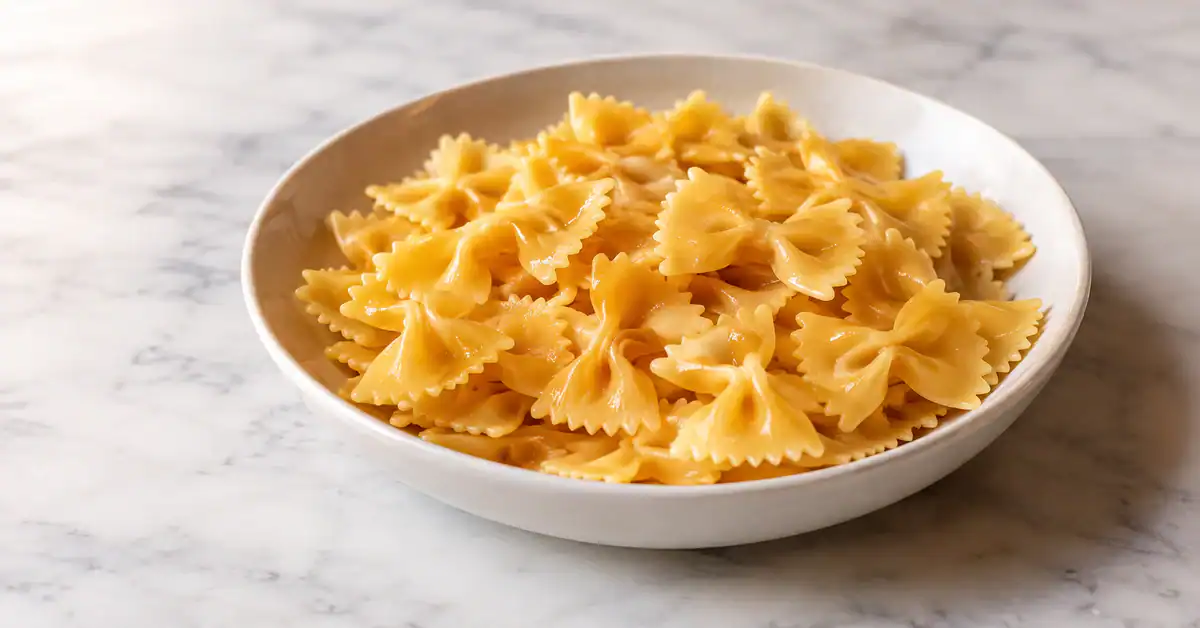
- While the sauce cooks, bring the 2.5 litres of water to the boil in a large pan. Add the 25 g salt, followed by the farfalle. Follow the packet timing, but start checking a minute or two before the shortest time given. The pasta should be cooked through with a little resistance when you bite it.
- Reserve about 120 ml of the cooking water, then drain the farfalle without rinsing. The surface starch helps the sauce cling.
Finish the pasta in the sauce
- Transfer the farfalle to the frying pan and toss with the sauce over a low heat for a minute or two. If the sauce is too thick to coat the pasta, add the reserved water a splash at a time, just until it clings to each bow.
- Turn off the heat, tear the basil leaves and stir them through. Serve with the grated ricotta salata on top. Taste the sauce before making any final adjustment to the salt.
How to tell when farfalle is ready
The wings are thin and the fold in the centre is thicker, so appearance alone can be misleading. Lift a bow out with a fork and bite into it. It should be cooked through, with no hard, chalky core, but still have a little bite.
The farfalle will spend another minute or two in the sauce, so drain it when it is slightly firmer than you want to serve it. The heat will finish cooking it. If the centre is already soft, the bows may lose their bite as you toss them.
Use the packet timing as a guide. The brand and thickness of the pasta make a difference. Taste a piece close to the stated time and check again at short intervals instead of relying solely on the clock.
Common problems and how to fix them
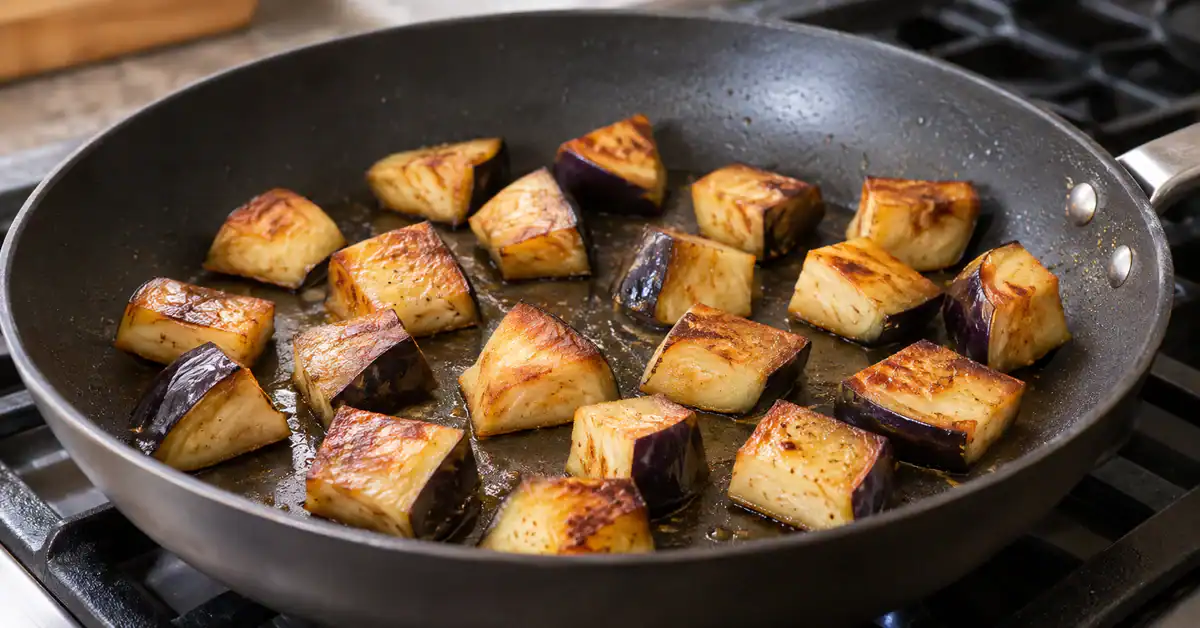
The aubergine is pale and watery. Crowding the pan makes the cubes steam. Take some out and brown them in batches. If liquid has collected, let it evaporate before continuing. The cubes should be soft with browned edges.
The garlic darkens too quickly. High heat can burn it and make the sauce bitter. If it starts to brown, take the pan off the heat briefly, turn the heat down and add the tomatoes once the pan has cooled a little.
The farfalle sticks together. Stir it just after adding it to the boiling water and keep the water boiling. There is no need for oil in the water. It can make the pasta slippery, so the sauce does not cling as well.
Substitutions and variations
Each option replaces an ingredient in the original recipe. Choose the substitution you want rather than adding both.
Change the pasta shape. Use penne or another short shape in place of farfalle. Cooking times vary with the shape and brand, so follow the packet and taste before draining.
Use courgette instead of aubergine. Dice it and brown it until just tender. Courgette is more delicate and less creamy than aubergine and may need less time in the pan.
Adjust the olives or capers. Reduce or omit one for a milder, less salty sauce. Taste before adding salt, especially if replacing the ricotta salata with another grated aged cheese. Start with a modest amount and adjust at the table.
Serving and storing leftovers
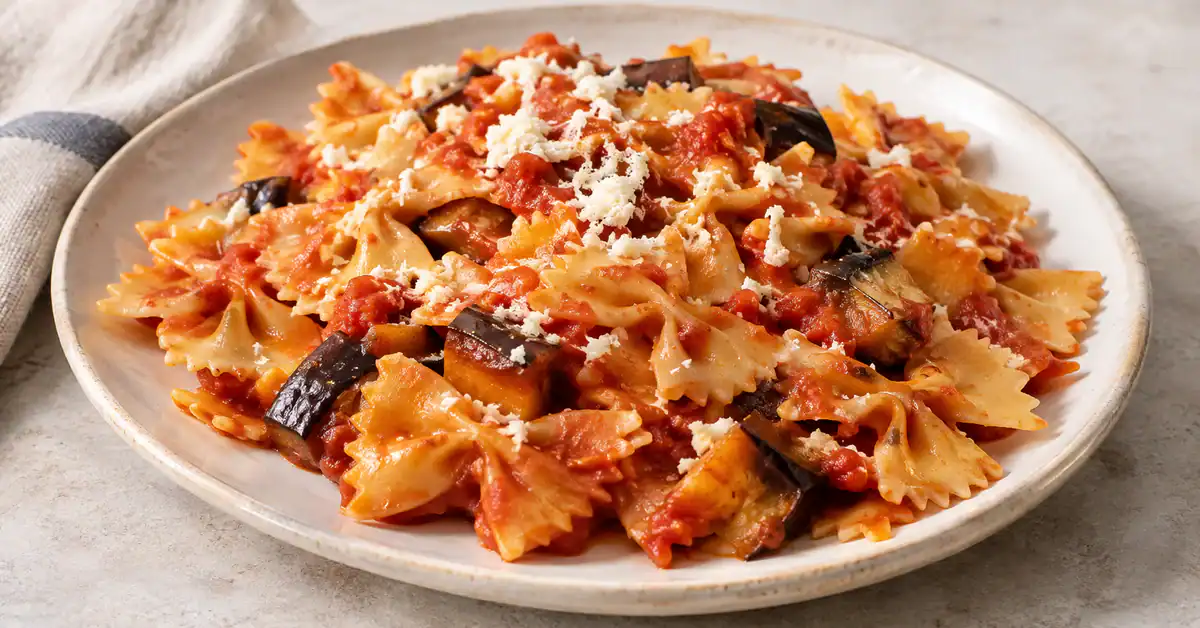
Serve as soon as the sauce coats the bows, while the pasta is still firm. Divide among plates and grate the ricotta salata over each portion so the cheese is evenly distributed rather than left in the pan.
Once leftovers have stopped steaming, put them in a closed container and refrigerate promptly. Reheat over a low heat in a frying pan with a splash of water to loosen the sauce, which thickens as it stands. The aubergine and pasta may soften in the fridge.
Ready for the table
Serve the farfalle as soon as the sauce coats each bow and finish with ricotta salata. Taste before adding salt, as the olives and capers already season the dish.
Frequently asked questions
Do I need all the reserved pasta water?
No. Add it gradually only if the sauce is too thick to coat the pasta. Stop once the sauce loosens and clings to the bows.
Should I rinse the farfalle after draining?
Leave it unrinsed. The starch on the surface helps the sauce stick.
Why might the sauce taste too salty?
Olives and capers are salty, and the ricotta salata adds more salt at the table. Taste the sauce before adding any and adjust only if needed.
Can I use penne instead of farfalle?
Yes. Use penne or another short shape. Cooking times depend on the shape and brand, so check the packet and taste before draining.
How can I reheat leftovers without drying out the sauce?
Warm them over a low heat in a frying pan with a splash of water to loosen the sauce. The pasta and aubergine may be softer after refrigeration.