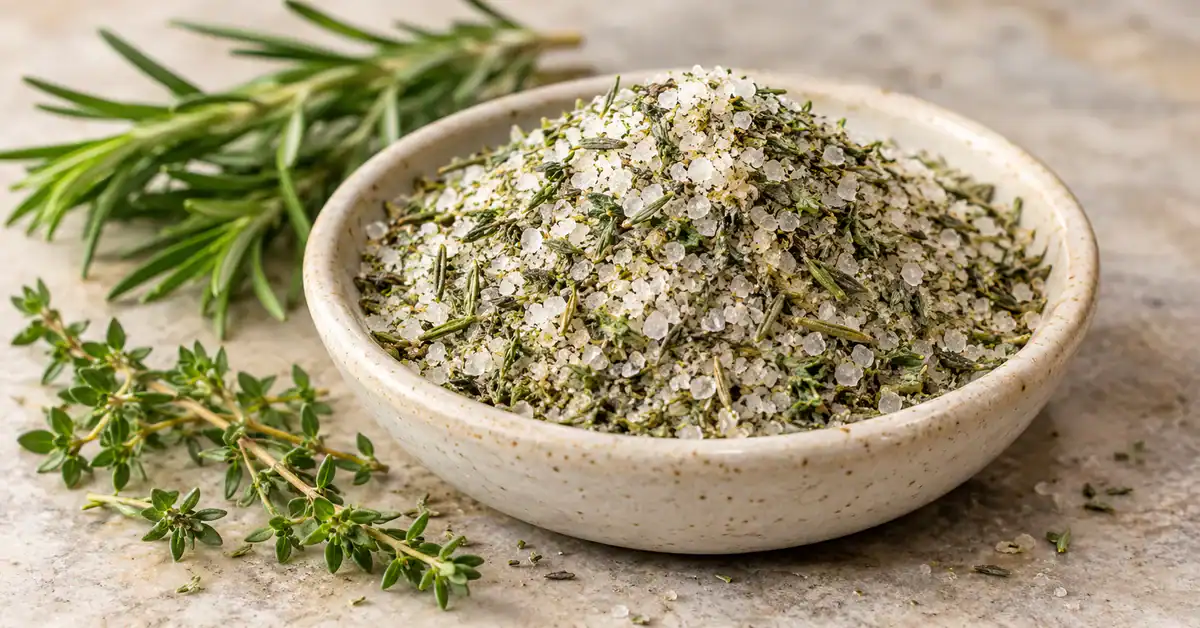

Make rosemary and thyme herb salt by pulsing coarse salt and dried herbs in a food processor. Short bursts distribute the herbs without grinding all the crystals fine. Makes about a cup and can replace some of the plain salt in vegetables, meat, fish, sauces and soups.
Rosemary and thyme give this herb salt a distinctive aroma for seasoning everyday dishes. Balance the herbs with the salt so neither dominates. Here is how to make the mixture and use it in your cooking.
Ingredients and quantities
Makes about 1 cup of herb salt. Use dried herbs without stalks to keep moisture low and make the mixture easier to store.
- 1 cup (240 ml) coarse salt
- 1 tablespoon dried rosemary leaves, stalks removed
- 1 tablespoon dried thyme leaves, stalks removed
How to make the mixture
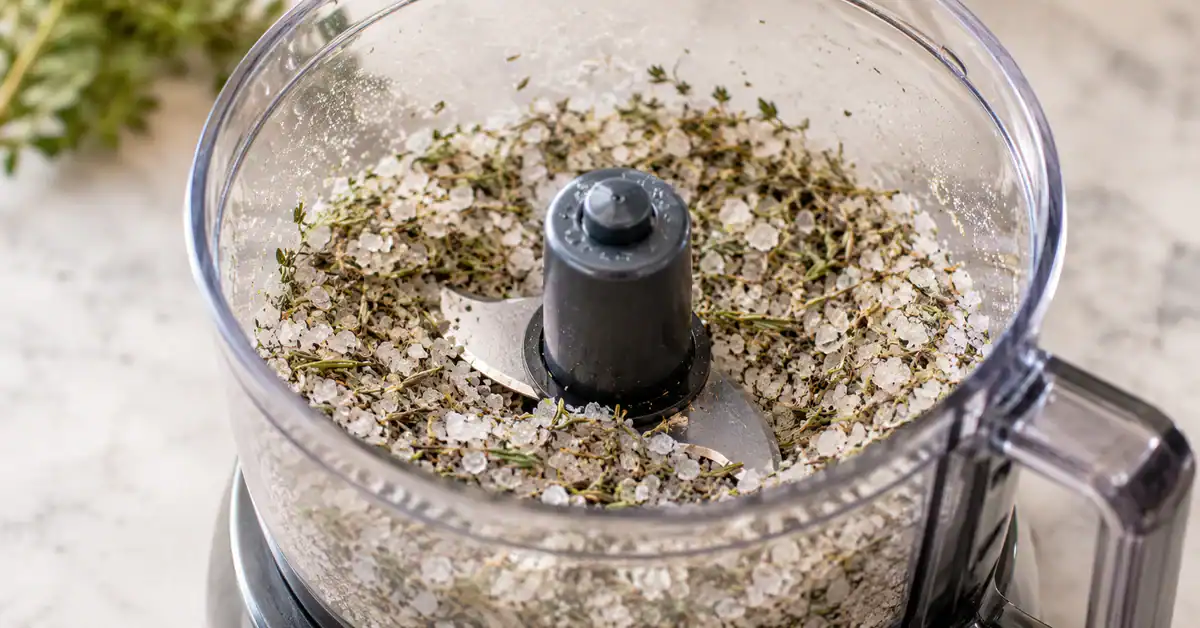
- Check that the processor and blade are clean and completely dry. Moisture can cause the salt to cake.
- Put the coarse salt, dried rosemary and dried thyme in the processor. Pulse briefly, checking between bursts, until the herbs are in small, evenly spread pieces. Stop while some salt crystals are still visible.
Balancing the herbal aromas
The basic recipe uses equal amounts of herbs: 1 tablespoon each of rosemary and thyme per 1 cup (240 ml) of coarse salt. Rosemary has a resinous aroma and thyme more delicate notes. Keep the quantities balanced so neither dominates.
The strength depends on the aroma and storage time of the dried herbs. After mixing, check that the pieces run throughout the salt and smell the blend. Both herbs should be noticeable. The mixture is very salty on its own, so judge the balance by using a little in a dish.
If you prefer a milder or stronger aroma once you have tried it in a dish, change the proportions in the next batch. The current batch will keep the balance set by the recipe.
Using herb salt in cooking
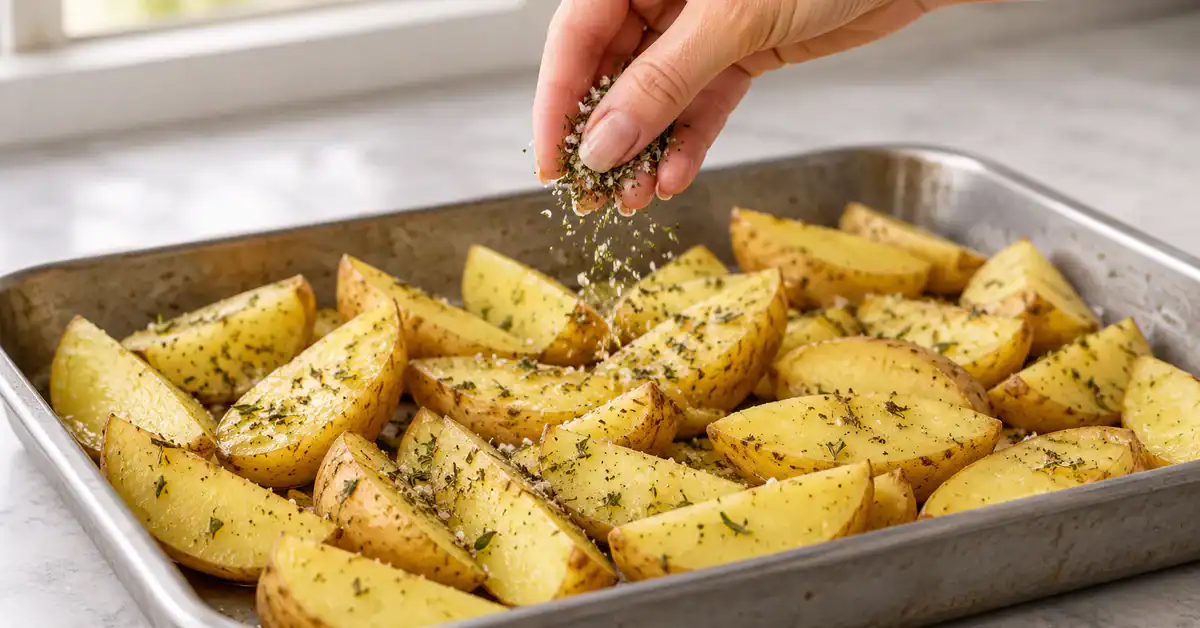
Use herb salt in place of some of your usual salt. Start with a little, mix and taste before adding more. The strength depends on how much food you are seasoning and on the aroma of the herbs.
- Potatoes and vegetables: sprinkle with a little before roasting or grilling to complement the vegetables with rosemary and thyme.
- Meat and fish: evenly scatter a small amount over the surface before cooking. The mixture adds salt, so avoid adding your usual full portion of plain salt as well. Taste before salting further.
- To finish, add a pinch to boiled potatoes or cooked vegetables when you want the herbs to stand out. Add gradually to avoid oversalting.
Start with less in delicate dishes such as mild fish, as rosemary can overpower them. The blend can also season sauces and soups. Add gradually and adjust the salt only after tasting.
Storing the mixture
Transfer the herb salt to a clean, completely dry jar, preferably with a tight-fitting lid. Close after each use and store in a dry cupboard away from hob heat and direct light, which can weaken the herbs’ aroma.
Always use a dry spoon. If moisture causes clumping, break up the lumps with a clean, dry spoon and check the jar for damp. The aroma may fade over time. Check before using and make a fresh batch once the scent is very faint.
When seasoning a dish
Use a little herb salt in place of some plain salt. Mix into the dish and taste before adding more, especially with mildly flavoured fish.
Roast potatoes and vegetables are simple ways to try the mixture. Keep the rest in a tightly sealed, dry jar.
Questions about herb salt
Can I use fresh rosemary and thyme?
Use dried herbs as listed. Fresh herbs introduce moisture that can dampen or cake the salt. This recipe gives no proportions for a fresh-herb version.
How do I know the herbs are still fragrant?
Smell before using. If very faint, make a fresh batch. There is no set keeping time for this mixture.
What should I do if the herb salt cakes?
Break up the lumps with a clean, dry spoon. Check the jar for signs of moisture and keep tightly sealed.
Can I taste the mixture on its own to check the balance?
It is very salty on its own. Judge the balance by using a small amount in a dish instead.