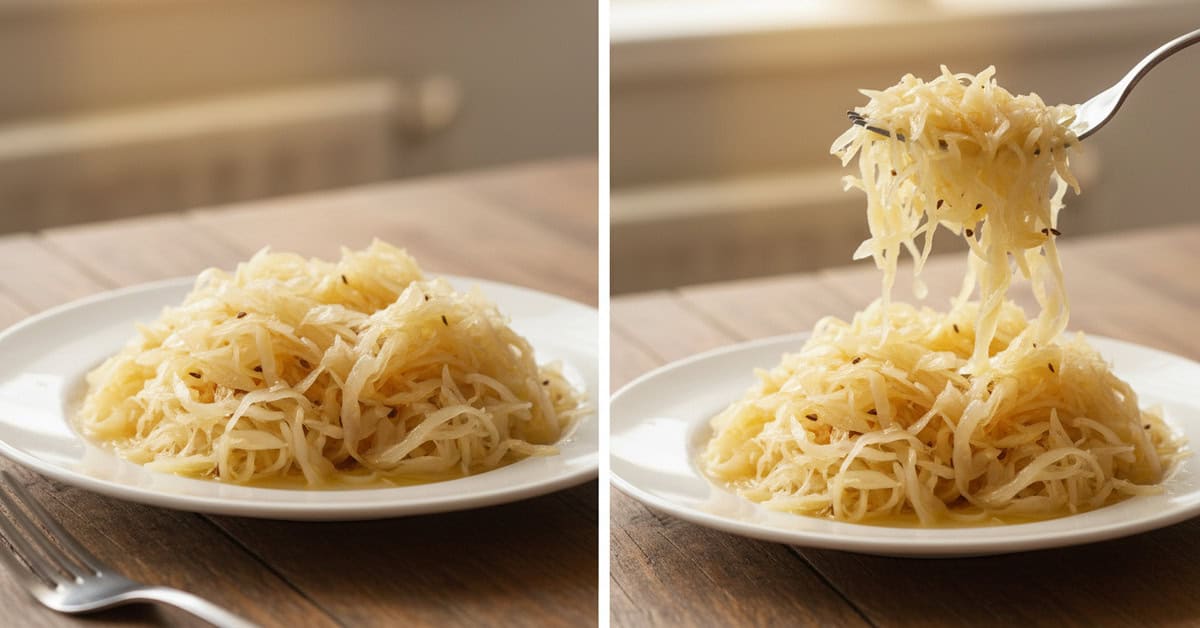

Sauerkraut is a tangy, crunchy side dish made by fermenting cabbage with salt. Thinly slice the cabbage, mix it with the salt and leave it to ferment for a few weeks. Serve it with meat, in sandwiches or alongside other dishes.
Sauerkraut is a traditional side dish made from fermented cabbage. It has a mild tang and goes well with meat, sandwiches and salads. Read on for the ingredients, the method, a few facts about sauerkraut and ideas for serving it.
Sauerkraut ingredients
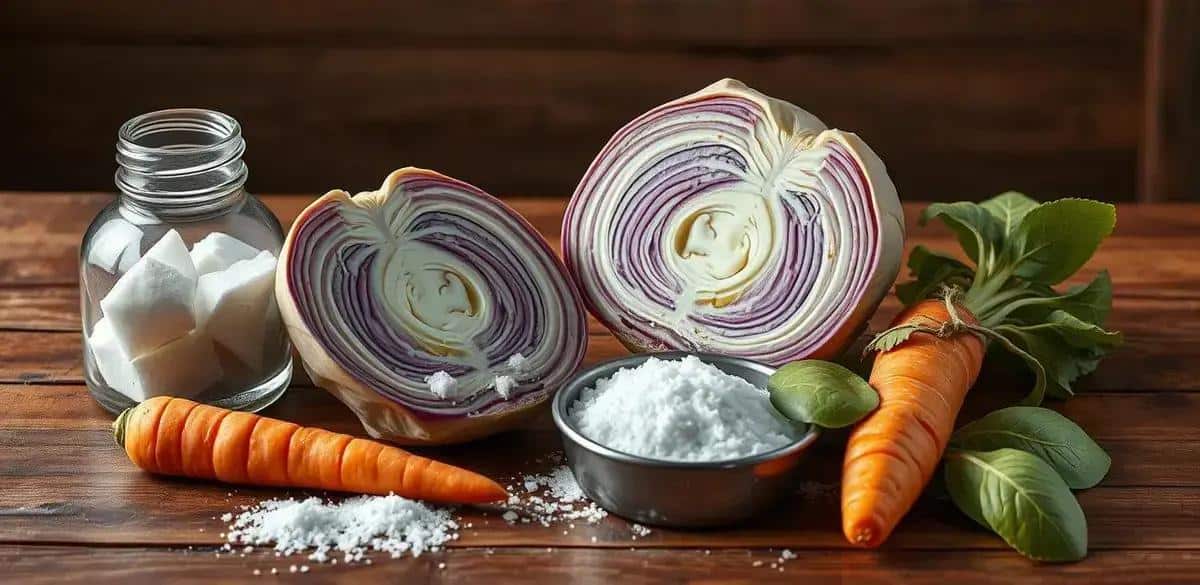
To make delicious sauerkraut, you’ll need the following ingredients:
- 1 small cabbage (about 1 kg)
- 30 g coarse salt
- 1 tablespoon cumin seeds (optional, but recommended for extra flavour)
- 1 grated carrot (optional, for sweetness and colour)
- 3 to 4 bay leaves (for their distinctive aroma)
Together, these simple ingredients make an authentic, flavoursome sauerkraut. Getting the amount of salt right matters because it seasons the cabbage and helps it ferment. The cumin and carrot are optional, but both can add flavour.
How to make sauerkraut

Follow these steps to make sauerkraut:
- Prepare the cabbage. Remove the outer leaves and cut the cabbage in half. Cut out the core and slice the cabbage into thin strips.
- Mix in the salt. Put the sliced cabbage in a large bowl and add the coarse salt. Mix thoroughly with your hands, squeezing the cabbage to draw out its juices. This helps it ferment. Keep mixing and squeezing for about 5 to 10 minutes.
- Add the seasonings. If you like, add the cumin seeds, grated carrot and bay leaves. Mix again to distribute them evenly through the cabbage.
- Pack the salted cabbage into a clean, food-safe fermentation container. Press it down until its own juices cover it. If you need extra brine, follow the proportions and preparation instructions from the National Center for Home Food Preservation in the United States.
- Use a fermentation container that lets gas escape and keeps the cabbage submerged in the brine. Keep it out of direct sunlight. At around 21–24°C, fermentation usually takes 3 to 4 weeks.
Check that the cabbage stays submerged throughout fermentation. Once fermentation is complete and the bubbling has stopped, cover the container and put it in the fridge.
Facts about sauerkraut

Sauerkraut has a rich history that goes well beyond its familiar place as a side dish. Here are a few facts about it:
- Ancient origins. Sauerkraut has its roots in China, where cabbage was fermented with water and rice. The practice spread to Europe and became particularly popular in Germany.
- Natural fermentation. Lactic acid bacteria on the cabbage give sauerkraut its characteristic tang.
- A versatile side dish. Sauerkraut is often served with sausages and other meats. It also works well in salads and sandwiches, and even features in some pizza and pie recipes.
- Nutrients in cabbage: sauerkraut retains the fibre and some of the vitamins in cabbage. Its nutritional content varies depending on how it is prepared.
- Varieties around the world. Many cultures have their own version of sauerkraut. In Poland, for example, kapusta kiszona is made in much the same way and can include other vegetables.
With its long history and many benefits, sauerkraut has plenty to offer at the table.
What sauerkraut adds to your diet

Sauerkraut has a tangy flavour and retains some of the nutrients in cabbage. Here’s what changes when cabbage ferments.
- Live cultures. Unpasteurised sauerkraut may contain live bacteria from fermentation.
- Vitamins. Cabbage provides vitamins C and K. The amounts can vary depending on how it’s prepared.
- Fibre. The cabbage strips retain their fibre and give the side dish its crunch.
- Low in calories. Cabbage makes a light addition to a meal.
- Compounds in cabbage. Cabbage also contains compounds with antioxidant activity.
A small serving of sauerkraut adds a tangy contrast to everyday meals.
Tips for serving sauerkraut

Sauerkraut can make a tasty, healthy addition to a meal. Try these serving ideas:
- Classic pairings. Sauerkraut goes particularly well with frankfurters, other sausages and pork. These traditional pairings bring out the flavours of both the cabbage and the meat.
- Add extra flavour. Try serving sauerkraut with mustard, black pepper or mayonnaise for an unexpected twist.
- Serve it warm or cold. If you prefer it warm, heat it gently just before serving. For a refreshing side dish, serve it straight from the fridge.
- Make a colourful platter. Add sauerkraut to a board of cold meats alongside cheeses, olives and other vegetables for a spread that looks as good as it tastes.
- Try new recipes. Use sauerkraut in pies or salads, or try it as a burger topping.
These serving ideas can turn a simple side of sauerkraut into something special your guests will love!
Thanks for joining us!
Now that you know how to make perfect sauerkraut, we hope you enjoy it with your meals. Cooking is an art, and every recipe is a chance to explore new flavours and share special moments.
If you’ve enjoyed this article and would like more tips and mouth-watering recipes, follow us on social media! Visit the Mestre das Receitas cookery website to keep up with everything we’re cooking up for you!
Join our community and let’s cook together!
Frequently asked questions about sauerkraut
What is sauerkraut?
Sauerkraut is a side dish made from fermented cabbage that’s full of flavour and nutrients.
What are the basic ingredients for sauerkraut?
The basic ingredients are cabbage and coarse salt. You can also add cumin seeds and carrot.
How do I make sauerkraut?
Thinly slice the cabbage, add salt and mix well. Leave it to ferment in a jar for a few weeks.
What does sauerkraut add to your diet?
Cabbage provides fibre and vitamins. Unpasteurised sauerkraut may contain live cultures, and fermentation gives it its characteristic tang.
How should I serve sauerkraut?
You can serve sauerkraut cold or warm alongside meat, add it to salads or use it as an ingredient in other dishes.
What’s the best way to store sauerkraut?
Keep sauerkraut in a closed container in the fridge, where it can last for several weeks.