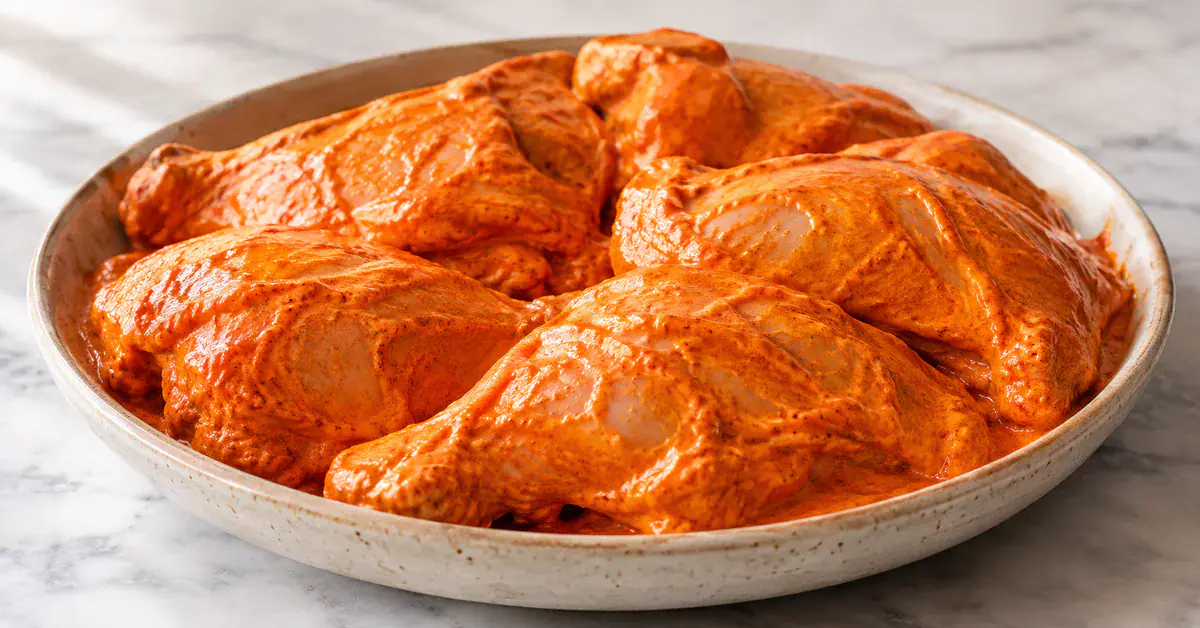

This yoghurt and paprika marinade combines plain yoghurt, garlic, lemon and seasonings to give 800 g of chicken a creamy coating. Learn how to coat the pieces evenly and refrigerate them for at least 30 minutes, ideally 2–8 hours.
Yoghurt coats the chicken with a creamy layer, while paprika adds colour and flavour. Mix the marinade to a smooth paste and spread it evenly over the meat, right into every fold.
Marinade ingredients and quantities
These quantities make enough marinade for 800 g of chicken. Choose unsweetened plain yoghurt. Its mild flavour suits the paprika and gives the coating a creamy consistency.
- 800 g raw boneless, skinless chicken
- 170 g unsweetened plain yoghurt, about 1 pot
- 1 tablespoon sweet paprika
- 2 garlic cloves, grated or crushed
- 1 tablespoon lemon juice
- 1 tablespoon olive oil
- 1 teaspoon salt
- ¼ teaspoon ground black pepper
Mixing the yoghurt and paprika
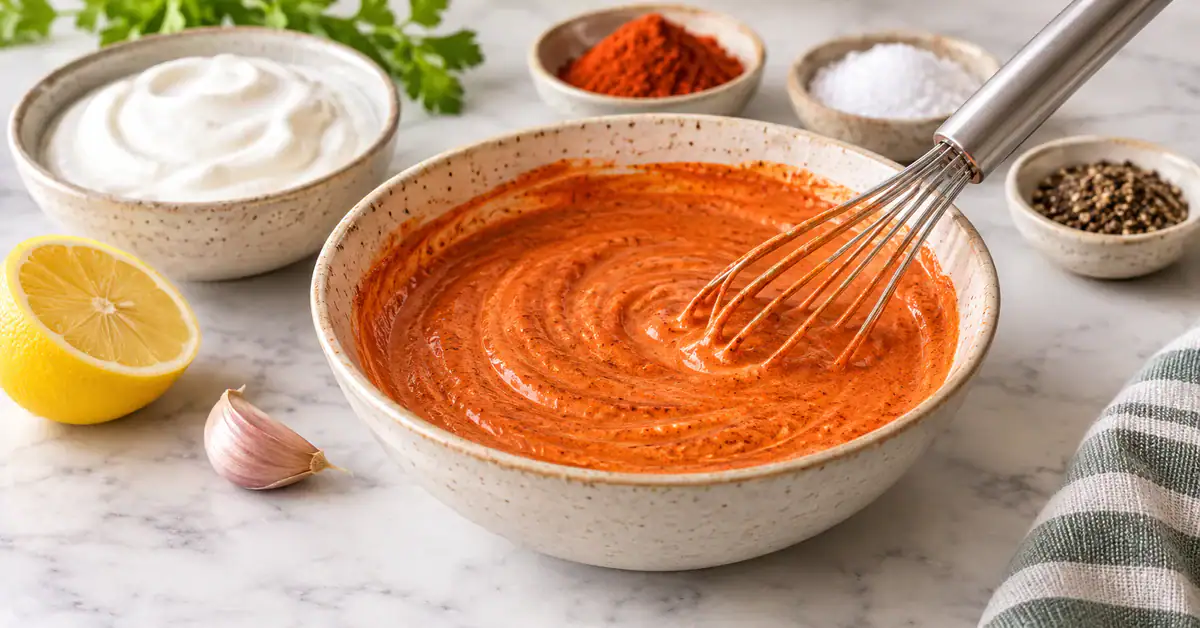
- Put the 170 g plain yoghurt, sweet paprika, grated or crushed garlic, lemon juice, olive oil, salt and black pepper in a medium bowl.
- Stir with a spoon or small whisk, scraping down the sides. The marinade should be evenly reddish, with no pockets of paprika or plain yoghurt. Work in any powder clinging to the edges before use.
Coating the chicken evenly
- Use a bowl wide enough to hold the 800 g of chicken without piling the pieces on top of each other. This makes it easier to coat the entire surface.
- Apply the marinade with a spoon or clean hands, turning each piece to coat both sides. Work the reddish mixture into the folds and corners as well.
- Lift each piece to check the coating. Cover any bare spots with marinade from the bottom of the bowl. Wash your hands and any utensils that touched raw chicken thoroughly afterwards.
How long to marinate the chicken
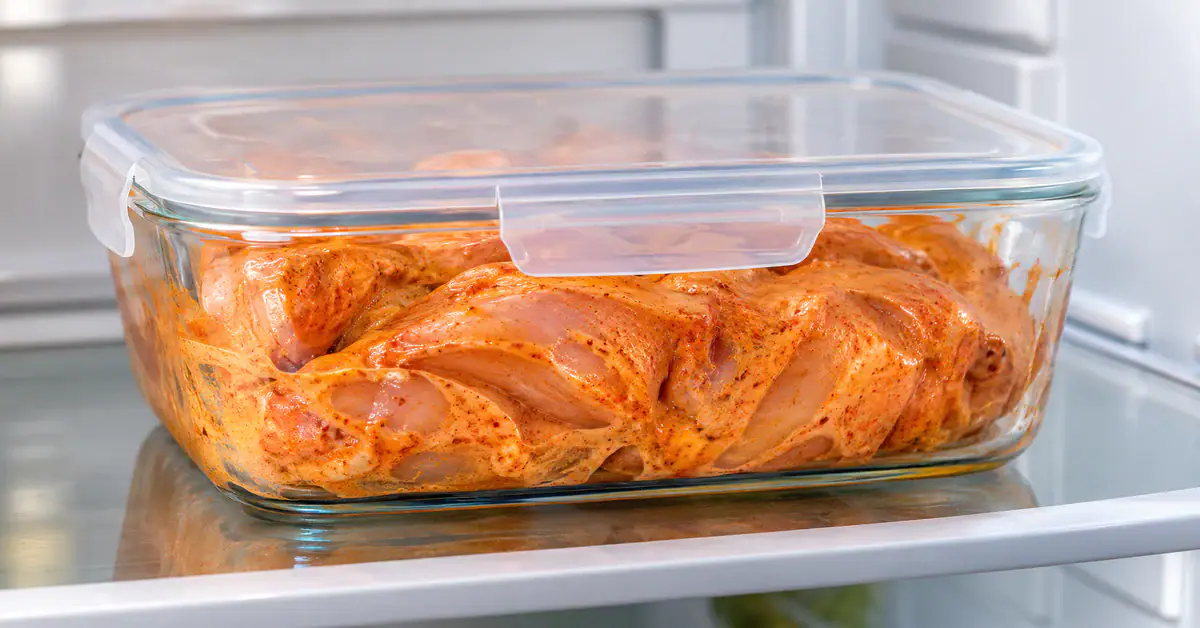
Cover the bowl or transfer the coated pieces to a lidded container and refrigerate. Allow at least 30 minutes, preferably around 2–8 hours for a fuller paprika, garlic and lemon flavour.
The yoghurt and lemon juice can soften the surface, so avoid extending the marinating time too far. Keep the meat refrigerated throughout and cook it when the marinating time is up.
Cooking the marinated chicken
When the marinating time is up, cook the chicken promptly. Remove excess coating so the yoghurt does not burn before the chicken is cooked. Discard any marinade that has touched raw chicken.
In a frying pan
Heat a non-stick frying pan over a medium heat. Add the pieces without crowding, working in batches if necessary. Brown for about 5–7 minutes on each side, adjusting the heat if the paprika darkens quickly. Timing varies with thickness. Check the centre of the thickest piece with a food thermometer. It must reach 74 °C.
In the oven
Preheat the oven to 200 °C. Space the pieces apart in a roasting tin and bake for about 20–30 minutes. Size and thickness affect the cooking time. Check the centre of the thickest part has reached 74 °C. If it has not, continue baking and check again.
On the barbecue
Prepare the barbecue for a medium heat with no high flames. Grill for about 6–8 minutes per side, turning when the chicken releases easily. If the coating darkens quickly, move the chicken away from the hottest area. Check the thickest part has reached 74 °C at the centre.
Colour cannot confirm that chicken is cooked. Check the thickest part with a food thermometer for 74 °C. If the pieces vary in thickness, check more than one before serving.
Substitutions and flavour variations
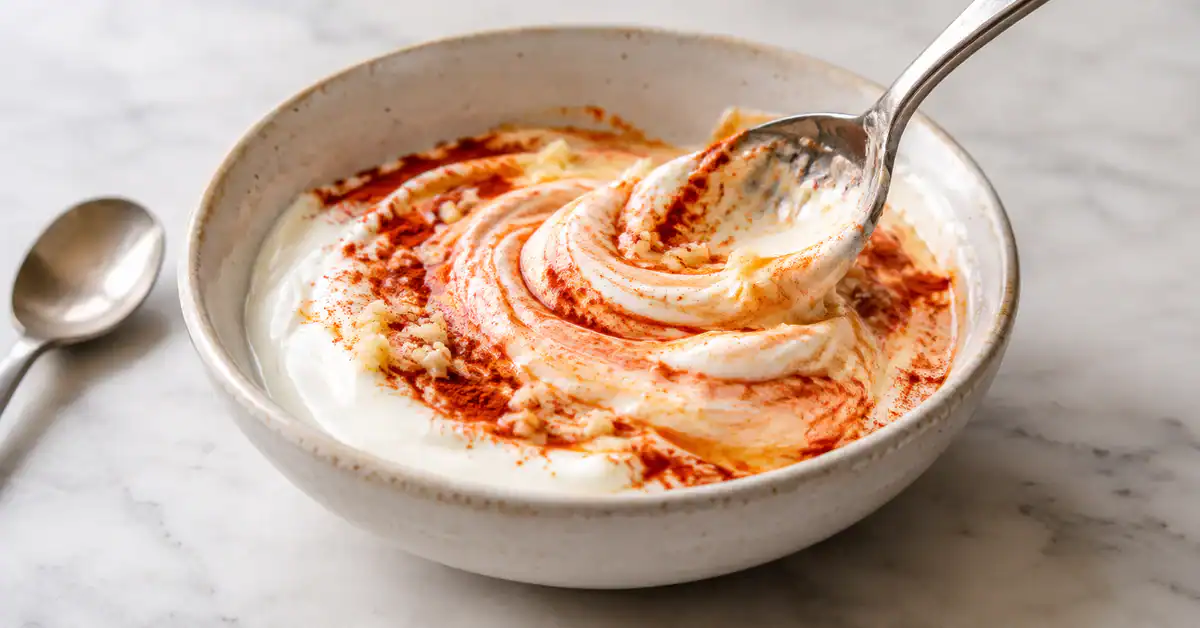
The basic recipe uses unsweetened plain yoghurt and sweet paprika. To vary the flavour, try one of the changes below at a time.
Change the type of paprika
Replace sweet paprika with the same amount of smoked paprika for a charcoal-grilled aroma. Hot paprika also works but adds heat. Start by using it for just part of the tablespoon and top up with sweet paprika.
Use plain Greek yoghurt
Replace the 170 g plain yoghurt with 170 g unsweetened Greek yoghurt. Its thicker consistency gives the chicken a denser coating. Mix thoroughly so the paprika and garlic are evenly distributed.
Add herbs
For a more herbal flavour, stir in a little dried oregano. This changes the aroma without altering the marinating time.
Storing marinated chicken safely
Keep the coated chicken covered in the fridge at 4 °C or below throughout marinating. Use a low shelf so raw juices cannot drip onto other food. Follow the stated times and cook as soon as marinating is complete.
If you need to postpone cooking, freeze the chicken in a tightly sealed freezer-safe container. Defrost in the fridge before cooking. Discard any marinade that touched raw chicken and do not serve it as sauce.
Finishing the dish
Check that the thickest part of the chicken has reached 74 °C at the centre. This is the most reliable way to check it is cooked.
Next time, try the same amount of smoked paprika instead of sweet paprika for a different flavour.
Frequently asked questions
Can I marinate the chicken overnight?
Aim for 2–8 hours. The yoghurt and lemon can soften the surface too much if left any longer.
What if the coating darkens quickly in the pan?
Turn the heat down and avoid crowding the pan. Removing excess marinade before cooking also helps stop the yoghurt burning.
Can I use Greek yoghurt instead of plain yoghurt?
Yes. Use 170 g unsweetened plain Greek yoghurt. It is thicker, so mix well to distribute the garlic and paprika.
Can I freeze marinated chicken if I need to cook it later?
Yes. Use a tightly sealed freezer-safe container. Defrost in the fridge before cooking and discard any marinade that has touched the raw chicken.
Can I check doneness without a thermometer?
The appearance of the centre cannot confirm that the chicken is cooked. Insert a food thermometer into the centre of the thickest piece and check it reads 74 °C before serving.