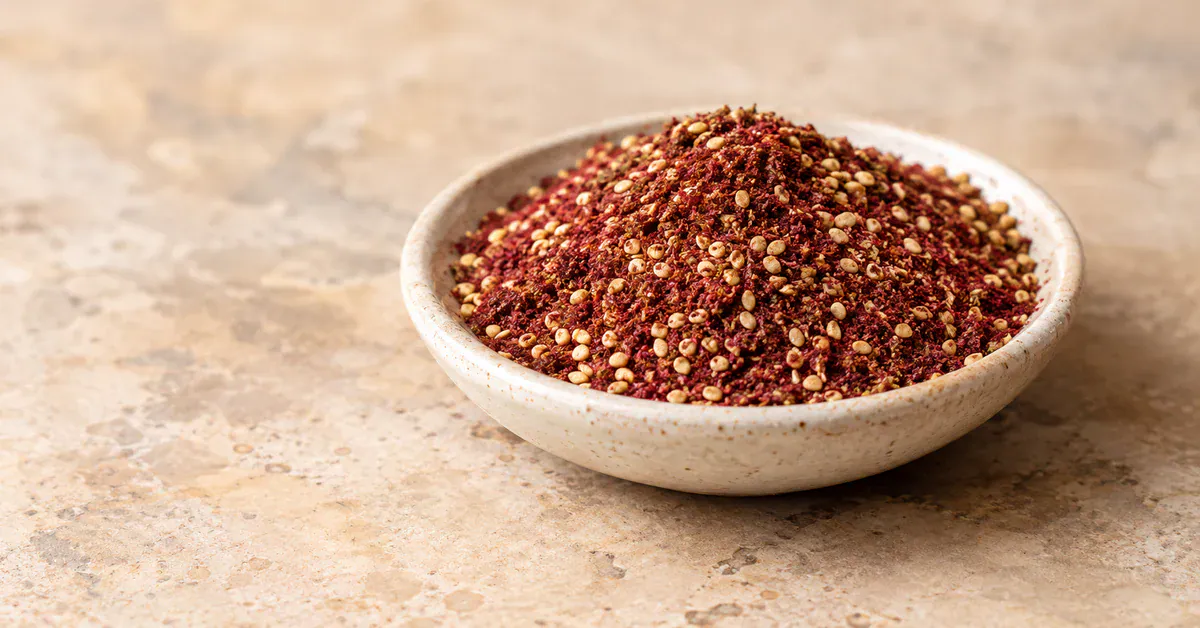

This homemade za’atar combines thyme, sumac, sesame seeds, oregano and salt into a fragrant, versatile dry seasoning. It makes about ¼ cup. Lightly toast the raw sesame seeds and let them cool completely before mixing them with the other ingredients.
The citrus tang of sumac and the mellow flavour of sesame give homemade za’atar its distinctive character. It goes well with a range of dishes. The process is simple: combine the ingredients to make a fragrant seasoning, then try the serving ideas below.
Ingredients and proportions
This homemade version makes about ¼ cup of za’atar. Measure with a standard 15 ml tablespoon and a 5 ml teaspoon.
- 2 tablespoons dried thyme
- 1 tablespoon sumac
- 1 tablespoon raw sesame seeds
- 1 teaspoon dried oregano
- ½ teaspoon fine salt
How to make homemade za’atar
Toast the sesame if needed
- As the sesame seeds in the recipe are raw, put them in a dry frying pan over a low to medium-low heat. Stir often for about 2–3 minutes until lightly golden and fragrant. Remove from the pan and let cool completely before mixing, as the residual heat could darken them too much.
Mix the ingredients and adjust the texture
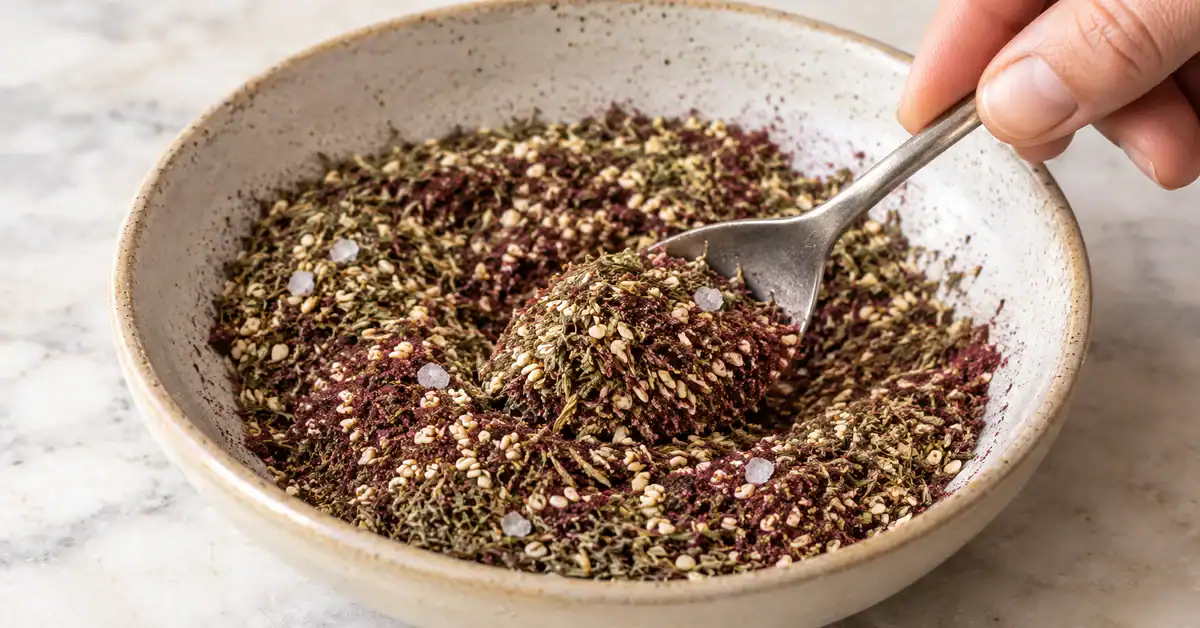
- Combine the dried thyme, sumac, dried oregano and salt in a bowl. Add the cooled sesame seeds and stir with a spoon until everything is evenly distributed.
- Leave the seeds whole for a crunchier texture and visible specks of sesame. For a finer blend, gently crush some of them with the back of the spoon. Avoid grinding them all, as sesame can turn into a paste.
How to balance the flavour and judge the result
Za’atar should smell distinctly herbal, with a pleasant tang from the sumac and toasted notes from the sesame. The salt should stay in the background. Taste a small pinch to see if the flavours come through together. Too much sharpness may mean the sumac dominates, while blandness can come from herbs that have lost their aroma.
If the sumac seems too strong, add a little more thyme or oregano from the recipe, mix and taste again. If it tastes flat, first check that the salt is evenly distributed before adding any more. It is easy to add a pinch and difficult to remove an excess.
Check the texture as well as the flavour. The blend should be dry and loose with visible seeds and no damp clumps or pasty areas. The sesame should be lightly golden and fragrant. A dark colour or burnt smell can give the blend a dominant bitter note.
Practical ways to use za’atar
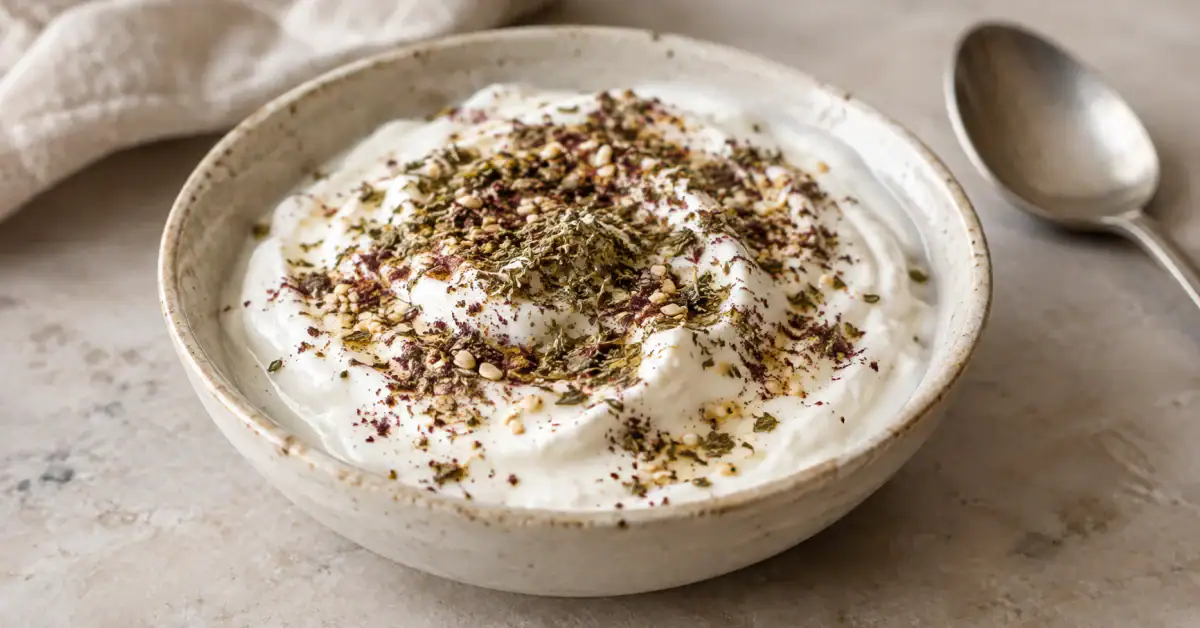
Use za’atar as a finishing touch or stir it into a creamy base. This lets the herbs and tangy sumac come through without dominating the dish.
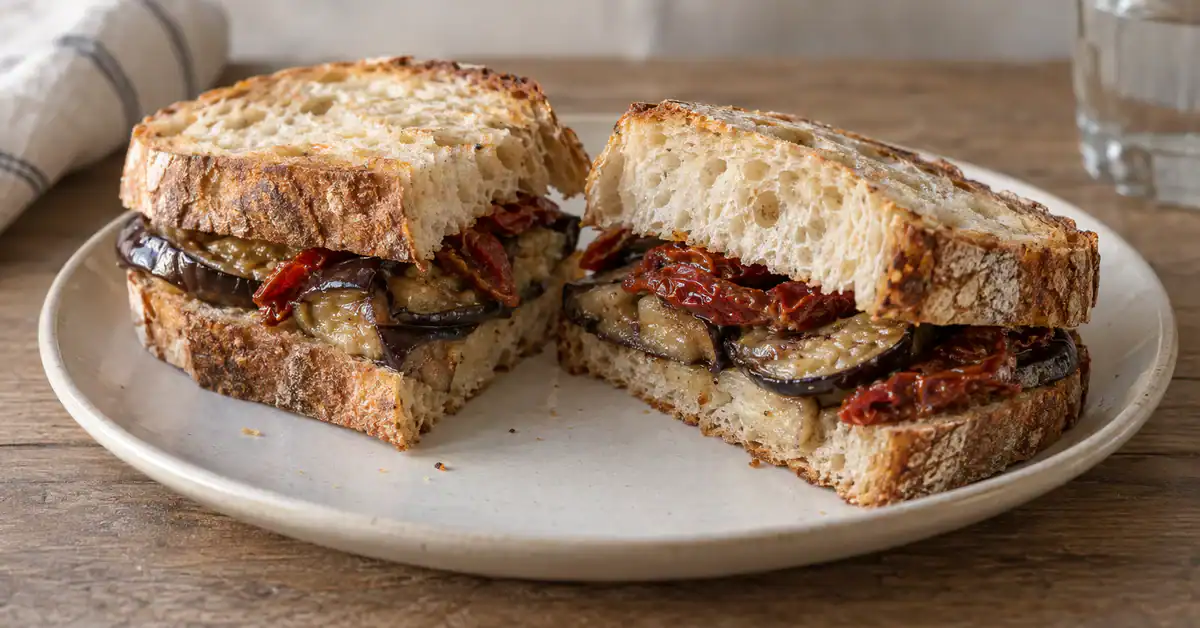
- With bread: mix a little za’atar with olive oil and spread over bread before serving. For a toastier surface, brush it on during the last few minutes in the oven or on the grill, watching closely so the sesame does not burn.
- In dips and yoghurt: scatter over hummus, cultured curds or plain yoghurt, or stir it in gradually. Taste before adding more, as the sumac brings acidity and the blend already contains salt.
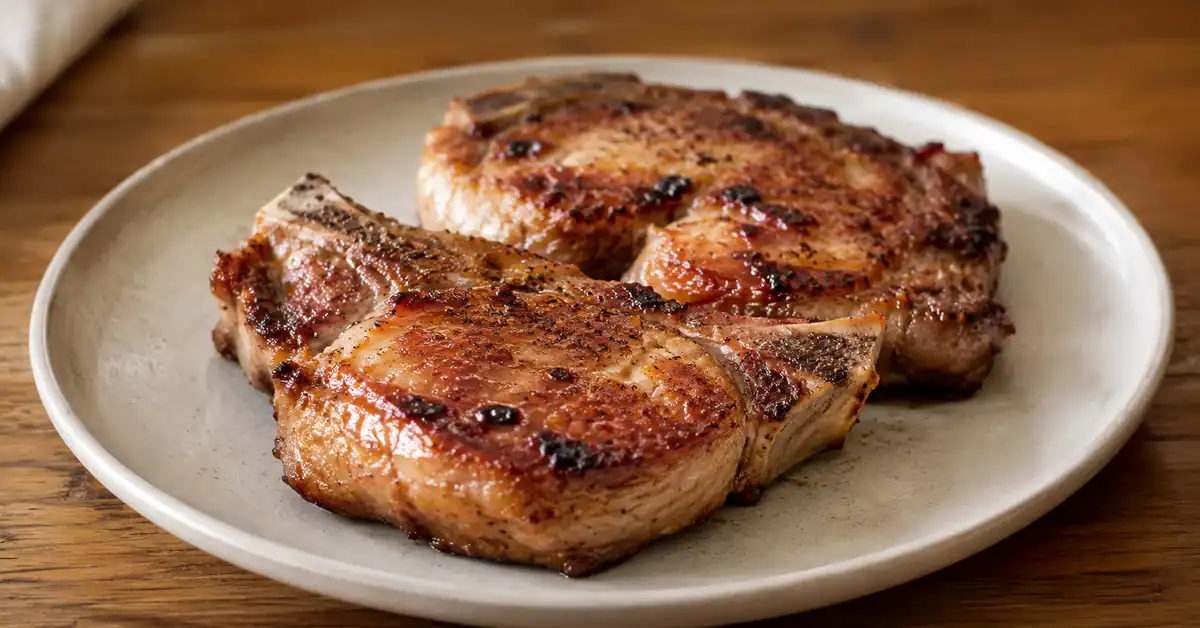
- Over vegetables and eggs: sprinkle over roast vegetables or pan-cooked eggs just before serving. The heat brings out the aroma and adding it at the end helps preserve the flavour of the herbs.
Start with a pinch and add more to suit the dish. Store the remaining za’atar dry and separate, mixing with olive oil or other ingredients only when ready to use.
Ways to adapt the blend
The main recipe balances herbs, sumac and sesame. For a different flavour, make one change at a time and taste before adjusting again.
- For a more herbal blend: increase the dried thyme or oregano slightly. The herbs will be more prominent and the tang of the sumac less pronounced.
- For a hint of cumin: add a pinch of ground cumin. A little brings an earthy note without overpowering the citrus flavour of the sumac.
- For some heat: stir in a pinch of chilli flakes. They add colour as well as heat. Start with a little, as it is easier to add more than to correct an excess.
When adding ingredients, note your changes so you can repeat a combination you like without altering the main blend.
How to store za’atar
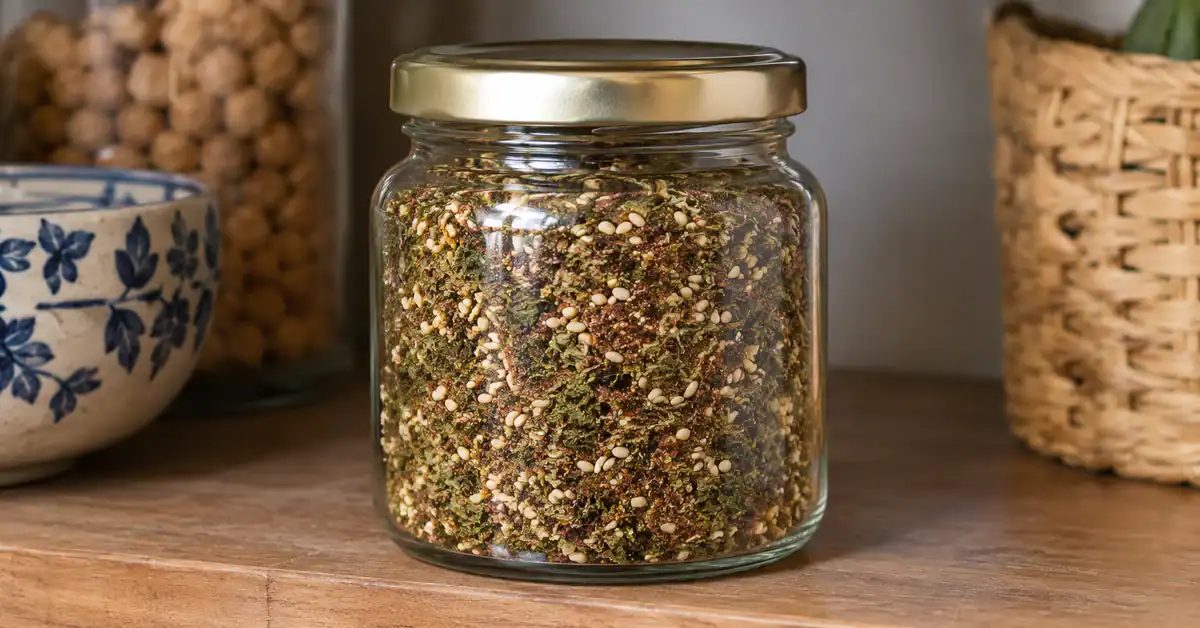
Transfer the za’atar to a clean, completely dry jar with a tight-fitting lid. Keep it in a cool, dark cupboard away from the hob, direct light and steam, which can make the blend damp and weaken the herbs’ aroma.
Use a dry spoon and take out only the amount you need. To preserve the loose texture and flavour, keep the za’atar separate from olive oil and other wet ingredients until serving.
Herbs lose their aroma with time, so smell the blend before using it. If it feels damp, has stubborn clumps or smells different from usual, discard it rather than trying to dry it again.
Use a little at a time
At your next meal, sprinkle a pinch over roast vegetables, eggs or yoghurt and taste before adding more. Keep the rest dry in its tightly closed jar and only mix with olive oil when serving.
Questions about preparation and use
If the sesame seeds are already toasted, do I need to heat them again?
No. Add them without toasting them again. If they are still warm, let them cool before combining with the other ingredients.
Can I make za’atar before the meal?
Yes. Keep the dry blend in a clean, tightly closed jar away from heat, light and steam. Add olive oil or other wet ingredients just before serving.
Can I grind all the sesame seeds for a finer blend?
It is best to leave some whole, as grinding all the sesame can turn it into a paste. For a more even texture, gently crush only some of the seeds.
When should I put za’atar and olive oil on bread that I am toasting or grilling?
Brush it on during the last few minutes of cooking. Watch the bread closely so the seeds do not darken too much or burn.