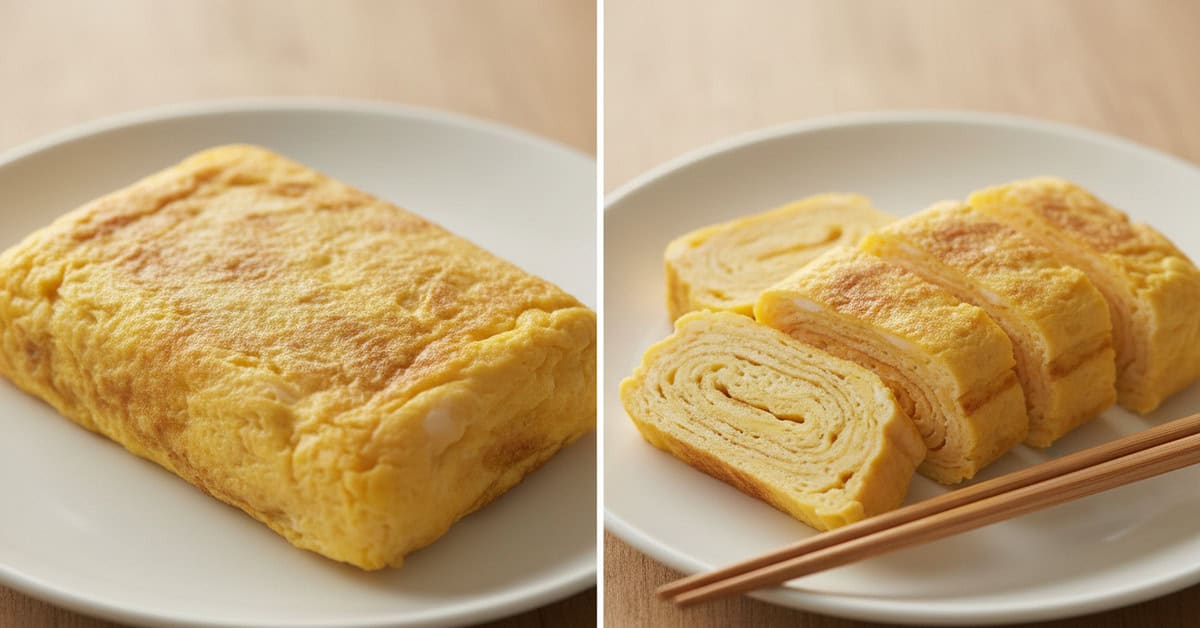

Tamagoyaki is a light, delicious Japanese omelette made with beaten eggs, sugar, soy sauce and rice vinegar. Served in layers, often with rice or miso soup, it’s a favourite around the world.
This famous Japanese omelette is loved for its distinctive flavour and delicate texture. A staple of Japanese cooking, it combines sweet and salty flavours. ❤️ This easy recipe shows you how to make it, what to look out for as it cooks and which flavours you can add to make it even more special.
Tamagoyaki ingredients
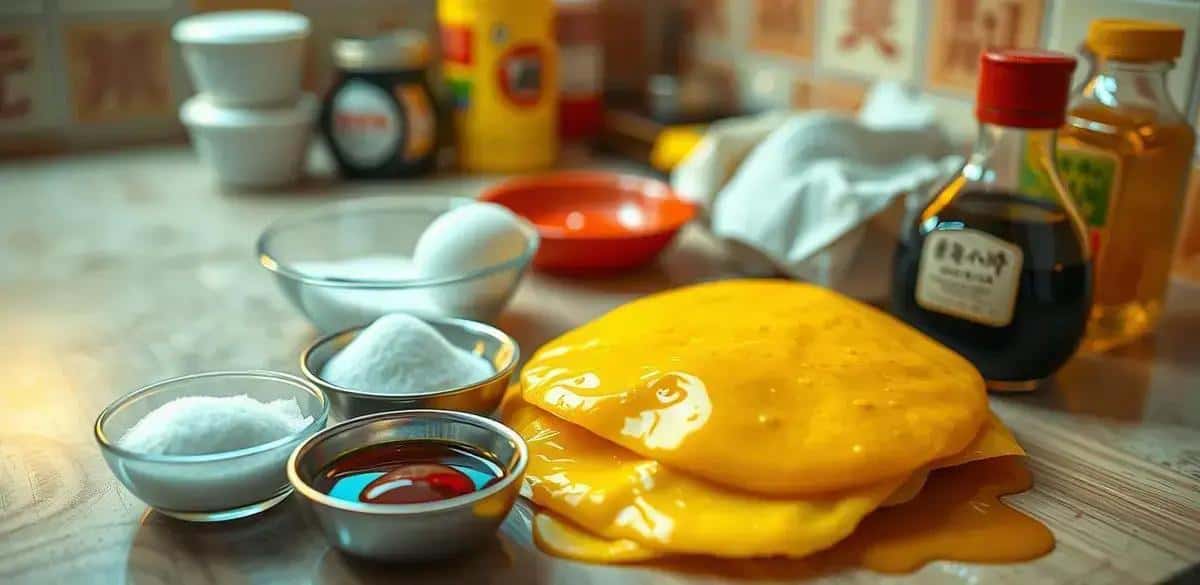
To make this delicious Japanese omelette, you’ll need the following ingredients.
- 4 eggs – fresh eggs are essential for the right texture.
- 1 tablespoon of sugar – for a hint of sweetness.
- 1 tablespoon of soy sauce – for the omelette’s distinctive salty flavour.
- 1 teaspoon of rice vinegar – its mild acidity balances the flavours.
- Vegetable oil – for greasing the frying pan as you cook.
These ingredients form the basis of a traditional tamagoyaki. The combination of sugar and soy sauce gives this Japanese omelette its distinctive flavour. You can adjust the quantities to suit your taste.
How to make tamagoyaki

Follow these steps for a perfect tamagoyaki.
- Beat the eggs. Crack the eggs into a bowl and add the sugar, soy sauce and rice vinegar. Whisk until evenly combined and frothy.
- Prepare the pan. Heat a rectangular frying pan over a medium heat and add a little vegetable oil. Use a sheet of kitchen roll to spread the oil evenly over the cooking surface.
- Cook the omelette. Pour a ladleful of the egg mixture into the hot pan. Tilt the pan to spread the mixture evenly and cook until the edges begin to set.
- Roll the omelette. Once the underside is golden, use a spatula to roll the omelette carefully towards the opposite side of the pan, forming a cylinder. Push the roll to one side of the pan.
- Add the next layer. Pour a little more egg mixture into the pan, lifting the roll so the mixture can run underneath. Cook the new layer, then roll it around the first. Repeat until you’ve used all the egg mixture.
- Cook the omelette through, then lift it out of the pan and let it cool slightly before slicing. It’s best served in thin slices, either hot or at room temperature.
A few facts about tamagoyaki

Tamagoyaki is more than a simple omelette. It has a rich history and a long tradition in Japanese cooking. Here are a few facts about it.
- Traditional origins. Tamagoyaki has its roots in feudal Japan, where it was served at banquets. Over the years, it became a popular breakfast snack in many Japanese homes.
- Regional variations. There are several versions of tamagoyaki across Japan. In some regions, cooks add nori seaweed or fish to give the omelette a distinctive flavour.
- The art of rolling. Rolling tamagoyaki is considered an art. Chefs spend years mastering the technique so they can create perfect layers and present the omelette beautifully.
- The meaning of the name. The Japanese name tamagoyaki literally means ‘cooked egg’, a reference to the egg mixture at the heart of the dish.
- A bento favourite. In Japan, tamagoyaki often features in bento boxes (packed lunches), where it’s prized for its light texture and delicious flavour.
Tips for perfect tamagoyaki

For a perfect tamagoyaki, keep these tips in mind.
- Use fresh eggs. The quality of the eggs matters. Fresh eggs give the omelette a more delicate texture and a better flavour.
- Keep an eye on the heat. Cook over a medium-low heat. If the pan gets too hot, the edges can burn before the centre is cooked.
- Whisk the eggs well. Beat the eggs until the mixture is smooth and frothy. This helps give the omelette a light, airy texture.
- Be patient. Give each layer time to cook before adding more egg mixture. This helps keep the layers distinct.
- Grease the pan well. Use a generous amount of vegetable oil and spread it evenly. This stops the omelette sticking and makes it easier to lift out.
- Try different flavours. Add spring onions, karashi (Japanese mustard) or even cheese to give your tamagoyaki a personal touch.
What to serve with tamagoyaki

Tamagoyaki goes well with a variety of side dishes that bring out its flavour and make the meal even more enjoyable. Here are a few to try.
- Japanese rice. Serve the omelette with a portion of steamed Japanese rice. The lightness of the rice complements the texture of the omelette.
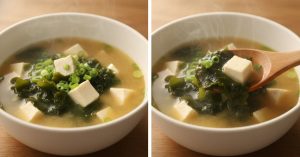
- Miso soup. A bowl of miso soup works beautifully alongside tamagoyaki. Its saltiness and umami complement the omelette.
- Japanese pickles. Tsukemono (Japanese pickles) add a tang and crunch that contrast with the soft omelette.
- Seaweed salad. A light wakame salad adds freshness to the meal and is rich in nutrients. It can be a healthy accompaniment to the omelette.
- Soy sauce. A small dish of soy sauce for dipping is always welcome. It brings out the flavour of the eggs.
Thank you for exploring the world of tamagoyaki with us!
We hope you’ve enjoyed this recipe and are ready to try it in your own kitchen. Tamagoyaki is just one of the many delights Japanese cooking has to offer.
For more delicious recipes and cooking tips, don’t forget to follow the Mestre das Receitas cooking blog to keep up with the latest news! Thanks for visiting. We hope to see you again on social media.
Join us on our culinary journey and discover flavours that will surprise you. Follow us for more recipes, humour and inspiration in the kitchen!
Frequently asked questions about tamagoyaki, the famous Japanese omelette
What is tamagoyaki?
Tamagoyaki is a Japanese omelette made with beaten eggs. The eggs are cooked in thin layers and rolled up, giving the omelette a light texture and a delicious flavour.
What ingredients do I need to make tamagoyaki?
The main ingredients are eggs, sugar, soy sauce and rice vinegar. Vegetable oil is commonly used to grease the pan.
How can I vary the flavour of my tamagoyaki?
Try adding spring onions, seaweed or even different cheeses to create your own variations on tamagoyaki.
What’s the best way to serve tamagoyaki?
Tamagoyaki can be served hot or at room temperature, often with rice, miso soup or Japanese pickles.
How should I store tamagoyaki after cooking?
Let it cool completely, then store it in an airtight container in the fridge. Eat it within 3 days.
Can I make tamagoyaki in an ordinary frying pan?
A rectangular tamagoyaki pan is ideal, but you can use an ordinary frying pan. You’ll just need to adapt your rolling technique to form the layers.