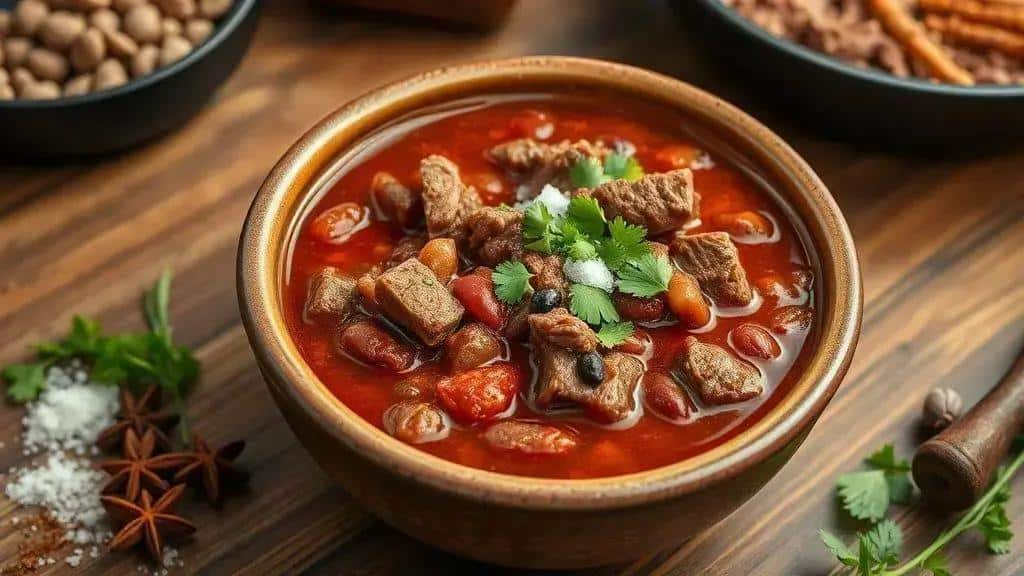

Beef chilli is a Texan dish of beef, smoky spices and tomatoes, cooked slowly until the meat is tender and the sauce is rich. Serve it without beans, Texas-style, or with beans and sweetcorn for a Southwestern version. You can adjust the heat and thicken the sauce with masa harina.
Beef chilli is a Texan classic with juicy beef, smoky spices and just the right amount of heat. Looking for an easy, flavourful homemade chilli that you can adapt for everyday meals? I’ll take you through the ingredients and the method and share a few tips that really work.
Ingredients for beef chilli
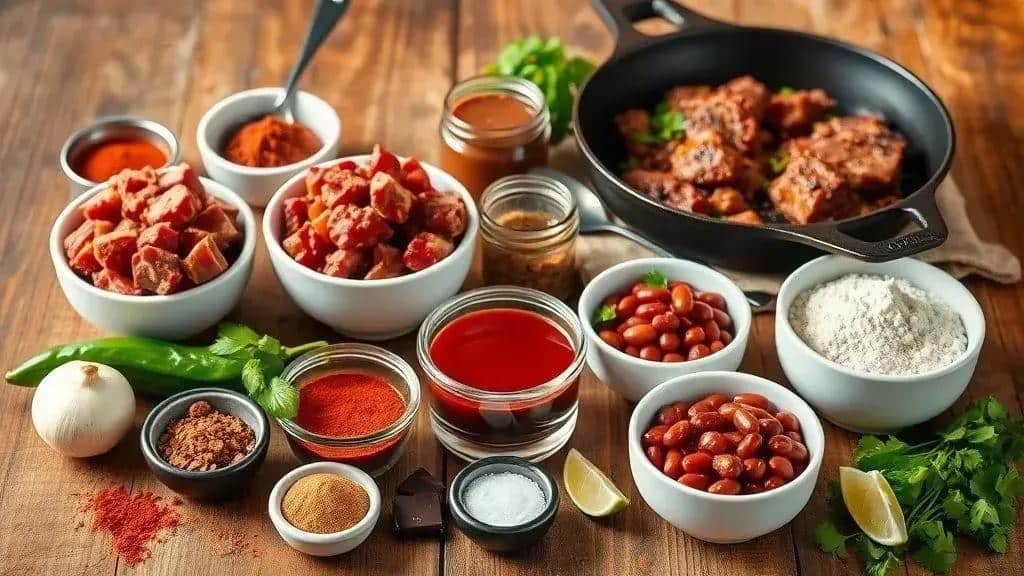
To make the beef chilli, gather the following ingredients.
- 1 kg beef (chuck, shoulder or thick flank), cut into 2–3 cm cubes for slow cooking. For a quicker version, use 800 g of minced beef.
- 2 tablespoons vegetable oil for browning the beef.
- 1 large onion, finely chopped.
- 3 garlic cloves, finely chopped or crushed.
- 1 jalapeño chilli, deseeded and chopped (optional, for extra heat).
- 2 tablespoons chilli powder, or to taste depending on how hot you like your chilli.
- 1 tablespoon ground cumin
- 1 tablespoon smoked paprika for that classic Texan aroma.
- 1 teaspoon dried oregano
- 1 teaspoon salt. Taste and adjust at the end of cooking.
- 1/2 teaspoon ground black pepper
- 2 tablespoons tomato purée to give the sauce body.
- 400 g tinned peeled tomatoes or 400 g crushed tomatoes.
- 250 ml beef stock, or water with 1 stock cube dissolved in it.
- 1 teaspoon brown sugar (optional, to balance the acidity).
- 1 teaspoon cocoa powder or 10 g dark chocolate (optional, for a deeper flavour).
- 400 g cooked red kidney beans, drained (optional). Traditional Texan chilli usually leaves out the beans.
- 2 tablespoons masa harina (maize flour) or cornflour, to thicken the sauce if needed.
- Chopped parsley or coriander and lime slices, to serve.
Substitutions and quick tips
Use minced beef for a quicker chilli, or slow-cook cubes of chuck for a chunkier texture. Add beans for a Southwestern chilli or leave them out for a Texas-style version. Adjust the chilli powder and jalapeño to taste, or use chipotle in adobo for a smoky flavour. Masa harina thickens the sauce and adds a subtle maize flavour. Cornflour gives a neutral finish. For a vegetarian version, replace the beef with the same quantity of cooked lentils and sautéed mushrooms combined.
How to make Texan beef chilli step by step
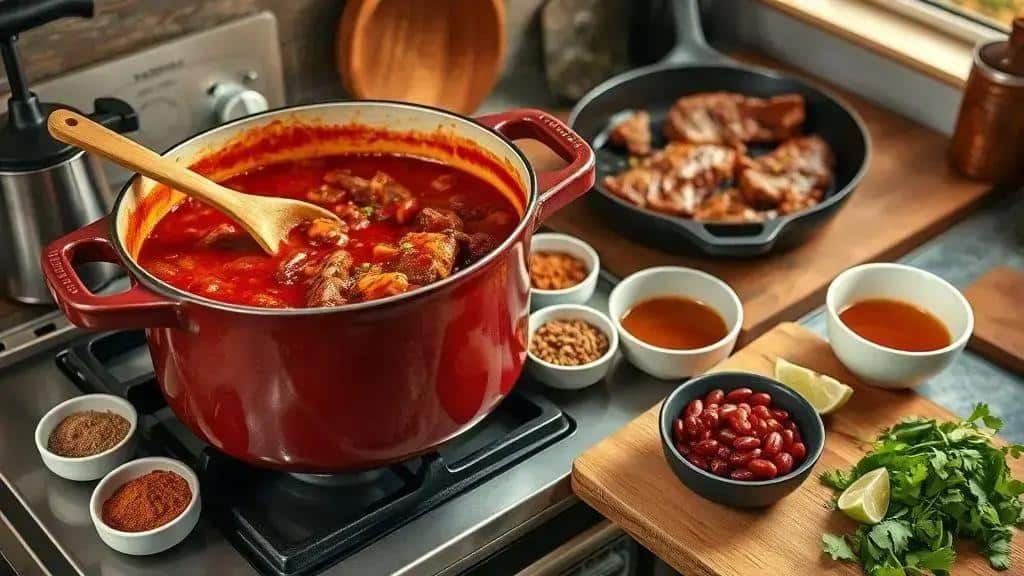
- Get your ingredients and equipment ready. Cut the beef into 2–3 cm cubes or use minced beef. Measure out the spices, open the tinned tomatoes and prepare the stock. Have a heavy-based pan, such as a cast-iron casserole, and a wooden spoon to hand.
- Heat 2 tablespoons of oil over a high heat. Brown the beef cubes in batches for 3–5 minutes per batch, leaving enough space between the pieces for them to brown well. Lift out and set aside.
- Turn the heat down to medium and add the chopped onion and jalapeño. Fry gently for 4–5 minutes until the onion is translucent. Stir in the garlic and cook for 30–60 seconds.
- Add the chilli powder, cumin, smoked paprika and oregano. Stir for 30–45 seconds until fragrant, taking care not to burn the spices.
- Stir in the tomato purée and cook for 1–2 minutes until it darkens slightly. This deepens its flavour.
- Pour in 250 ml of beef stock, or 1 can of beer for extra flavour. Scrape the base of the pan with the wooden spoon to loosen the browned bits.
- Return the beef to the pan and add the peeled tomatoes, brown sugar and, if using, the cocoa or chocolate. If you used beer to deglaze the pan, add the 250 ml of stock now. If you used stock, it’s already in the pan.
- Bring to a brisk boil, then turn the heat down low. Simmer with the lid slightly ajar for 1.5–2 hours, stirring occasionally, until the beef is tender. If using minced beef, cook for 30–45 minutes.
- If using cooked kidney beans, stir them in for the final 10–15 minutes, just long enough to heat them through and let the flavours mingle.
- If the sauce needs thickening, mix 1 tablespoon of masa harina with 2 tablespoons of cold water. Stir the mixture into the chilli and cook for 3–5 minutes. For a neutral flavour, mix 1 tablespoon of cornflour with 2 tablespoons of water until smooth.
- Taste for salt, pepper and heat. Adjust with a little more chilli powder, a pinch of sugar or a squeeze of lime until the heat and acidity are to your liking.
- Turn off the heat and let the chilli rest for 10 minutes. Serve with chopped coriander or parsley, lime slices, grated cheese and tortillas or bread.
Practical tips for beginners
Take your time browning the beef, as this builds flavour. A long, gentle simmer tenderises the meat and concentrates the sauce. Use a heavy-based pan to distribute the heat evenly.
Quick adjustments and variations
- For a quicker chilli, use 800 g of minced beef and cook for 30–45 minutes.
- To use a slow cooker, brown the beef first, then transfer everything to the slow cooker and cook on low for 6–8 hours.
- For a smokier chilli, add chipotle in adobo or a little extra smoked paprika.
- For a vegetarian chilli, replace the beef with the same quantity of cooked lentils and sautéed mushrooms combined.
Equipment and cooking times
Use a cast-iron casserole or a heavy-based pan. Allow 2–2.5 hours in total for diced beef or 45 minutes for minced beef.
Techniques and tips for authentic flavour and texture
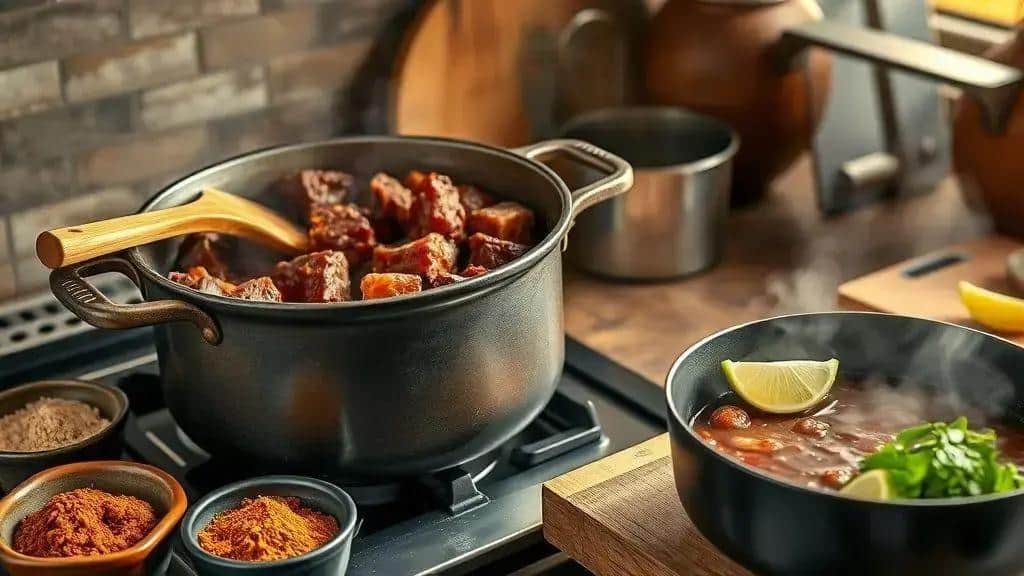
For an authentic flavour, start by browning the beef well. Get the pan good and hot, then brown the pieces without crowding the pan. As the meat browns, the Maillard reaction develops deep, savoury flavours that enrich the sauce.
Toasting the spices
Briefly toast the chilli powder, cumin and paprika in the pan before adding any liquid. This releases their oils and intensifies their aroma. Stir for 30–45 seconds so the spices don’t burn.
Slow cooking over a low heat
Let the chilli simmer gently with the lid slightly ajar. Over time, the collagen breaks down and the beef becomes tender. The sauce gradually reduces while retaining its flavour.
Deglazing the pan and building flavour
After browning the beef, deglaze the pan with stock, beer or water to loosen the browned bits on the bottom. These give the sauce its savoury base. Repeat as you add ingredients to build up layers of flavour.
Balancing the flavours
- A little acidity from lime juice or vinegar cuts through the richness and balances the sweetness.
- A small spoonful of brown sugar takes the edge off particularly sharp tomatoes.
- For a hint of bitterness and more depth, add cocoa powder or a piece of dark chocolate to bring out the umami.
Thickeners and texture
Mix masa harina with water to thicken the sauce and give it a subtle maize flavour, or use cornflour for a neutral taste. Add a little at a time until the sauce is as thick as you like.
Adjusting the heat
Add the chilli a little at a time, tasting as you go. Fresh chilli gives an immediate kick, while chilli powder and chipotle in adobo can add smoky notes as well as heat. Make your final adjustment at the end so the dish doesn’t get too hot.
Resting before serving
Leave the chilli to rest for 10–15 minutes before serving. This gives the juices time to redistribute and the sauce time to settle, improving both flavour and texture.
Portioning and storage tips
- Try the chilli the next day. Its flavour deepens after 24 hours in the fridge.
- Reheat over a low heat with a splash of stock to keep the chilli from drying out.
- Freeze in individual portions and defrost in the fridge before reheating.
Beef chilli variations – Texas-style, Southwestern and versions with beans
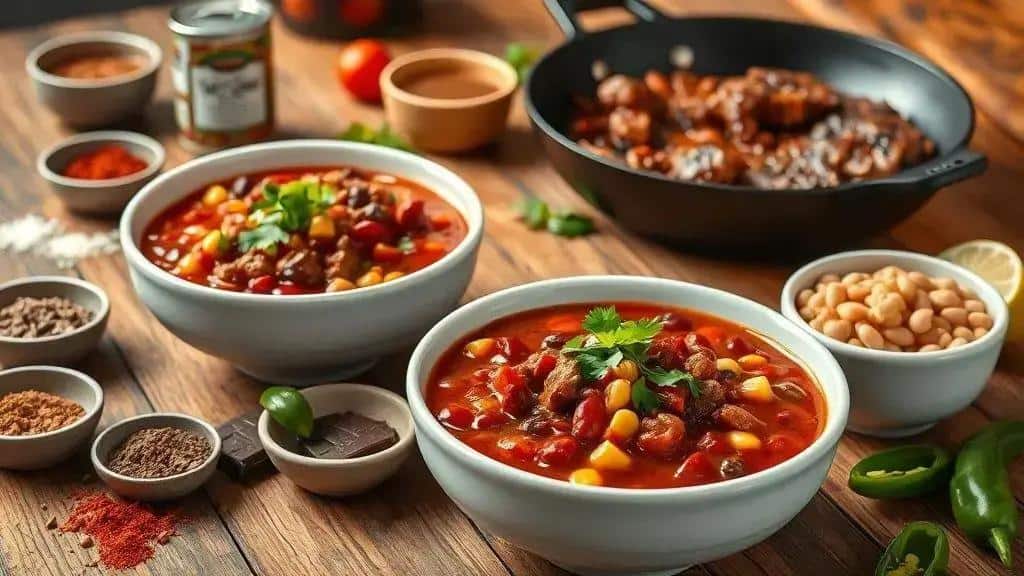
Regional versions of beef chilli vary in their ingredients, texture and heat. Here’s how three popular versions differ and how you can adapt each one at home.
Classic Texas-style chilli
The emphasis is on the beef and spices, and beans are usually left out. The sauce is more concentrated and has a smokier flavour.
- 1 kg diced beef chuck or shoulder for juicy chunks of slow-cooked meat.
- 2 tablespoons chilli powder, adjusted to your preferred level of heat.
- 1 tablespoon cumin and 1 tablespoon smoked paprika form the aromatic base.
- 2 tablespoons tomato purée and 400 g peeled tomatoes give the sauce body and a concentrated tomato flavour.
- 250–500 ml beef stock to cook the meat without thinning the sauce too much.
For a quicker version, use minced beef (800 g). Add chipotle in adobo for a smokier flavour, and leave out the beans to keep it Texas-style.
Southwestern chilli
This more colourful version has Mexican influences and often includes beans, sweetcorn and peppers.
- 800–900 g minced or diced beef. Minced beef gives the chilli a more even texture.
- 1 tin (400 g) of kidney beans or black beans, drained or with a little of their liquid to stir into the sauce.
- 1 cup sweetcorn (fresh or frozen) and 1 chopped red pepper.
- 2 tablespoons chilli powder, 1 teaspoon oregano and cumin to taste.
- Diced tomatoes and chicken or beef stock to adjust the consistency.
Add coriander, lime juice and tortillas for an authentic Southwestern touch.
Chilli with beans: variations and techniques
Beans change the texture and nutritional profile of the chilli. Here’s how to choose them and stir them in while keeping the sauce thick.
- 400 g cooked kidney beans, pinto beans or black beans, either tinned or cooked at home. Drain tinned beans to keep the sauce from becoming too thin.
- A little cornflour mixed with water, or some masa harina, helps bind the sauce around the beans without having to break them up too much.
- Add the beans in the final 10–15 minutes of cooking so they heat through without falling apart.
If using dried beans, cook them separately until cooked through but still firm. Only then add them to the chilli so they hold their shape.
More variations and quick ideas
- For a beer chilli, replace some of the stock with dark beer for a malty flavour.
- For a chocolate version, add a small square of dark chocolate or a little cocoa powder for depth of flavour.
- A slow cooker works well for cheaper cuts. Brown the beef first, then cook on low for 6–8 hours.
- For a vegetarian or vegan version, replace the beef with lentils and sautéed mushrooms, keeping the proportions of the spices the same.
Choose your accompaniments to suit the chilli. Serve Texas-style chilli with cornbread or tortillas. Southwestern chilli goes well with rice, guacamole and tortilla chips.
Chilli and its ingredients – history and trivia
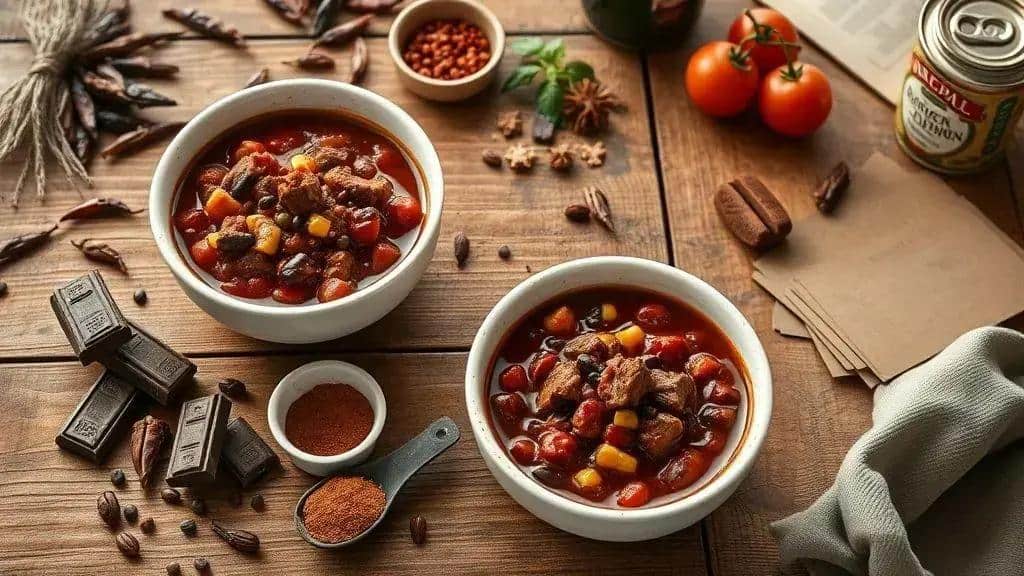
Chilli has a complex history, bringing together Mexican traditions, the cooking of Texan pioneers and modern adaptations.
Origins and evolution
In the early days, dishes made with chopped meat and chillies were common along the border. The combination of dried chillies, tomatoes and cumin came from Mexican kitchens and was adapted by cowboys and traders in Texas.
The Chili Queens and popular culture
In the 19th century, women known as the ‘Chili Queens’ sold chilli in public squares and at fairs in cities such as San Antonio. Their stalls helped make the dish part of the local identity and spread recipes and variations further afield.
Commercial production and chilli powder
Commercial chilli powder made ready-mixed seasoning popular and chilli easier to prepare at home and at market stalls. Ground chilli gave the dish a more consistent flavour and made it more accessible beyond the regions where it originated.
The debate over beans
Whether beans belong in chilli is a long-running debate. Traditional Texas-style chilli usually leaves them out to focus on the meat and spices. Southwestern and home-style versions often include beans for texture and to make the dish go further.
The ingredients that give chilli its flavour
- Dried chillies such as ancho, guajillo and chipotle determine how hot and smoky the dish tastes.
- Cumin and smoked paprika give the chilli earthy notes and a rich aroma.
- Tomatoes and tomato purée give the sauce body and enough acidity to balance its richness.
- Masa harina or cornflour thickens the sauce while preserving its flavour.
- A little dark chocolate or cocoa powder brings out the umami and adds depth.
A few facts about chilli
- Competitions such as the Terlingua chili cook-off have celebrated chilli recipes and cooking techniques since the mid-20th century.
- Each part of the American Southwest has its own version, with different chillies, beans and sauce consistencies.
- As well as adding heat, chillies contain concentrated oils that enhance the dish’s aroma and help preserve it.
- Browning the beef and deglazing the pan are long-established techniques that cooks still use for the layers of flavour they create.
Putting these ideas into practice
Try a different dried chilli, add a square of chocolate for depth or leave out the beans for a more Texan chilli. Small changes can transform the flavour without making the dish any more complicated to cook.
Conclusion
Beef chilli is versatile. It can be chunky and rustic without beans, or rich and creamy with them. Slow cooking and careful seasoning make all the difference.
Try small variations, taste as you cook and adjust the heat to suit you. Even a simple recipe can deliver plenty of flavour when you take care with the technique.
Thanks so much for reading! Follow us on social media for more easy recipes and tips, and be sure to visit the Mestre das Receitas blog for more inspiration.
Frequently asked questions about beef chilli
Can I use minced beef instead of diced beef?
Yes. Use 800 g of minced beef for a quicker version. Cook for 30–45 minutes until the sauce reduces and the flavour deepens.
Does chilli have to include beans?
No. Texas-style chilli usually leaves out the beans, while Southwestern versions often include them. If using tinned beans, add them in the final 10–15 minutes so they don’t fall apart.
How do I control the heat of the chilli?
Add the chilli powder and jalapeño gradually, tasting as you go. Remove the seeds for a milder chilli. Use chipotle in adobo for smokiness without too much heat, and balance the flavour with lime or brown sugar.
What’s the best way to thicken the sauce?
Mix 1 tablespoon of masa harina with 2 tablespoons of water. Stir the mixture into the chilli and cook for 3–5 minutes. For a neutral-tasting alternative, use 1 tablespoon of cornflour mixed with cold water.
How should I store and reheat leftover chilli?
Keep it in a sealed container in the fridge for 3–4 days, or freeze it for up to 2–3 months. Defrost in the fridge and reheat over a low heat with a little stock to bring the sauce back to its original consistency.