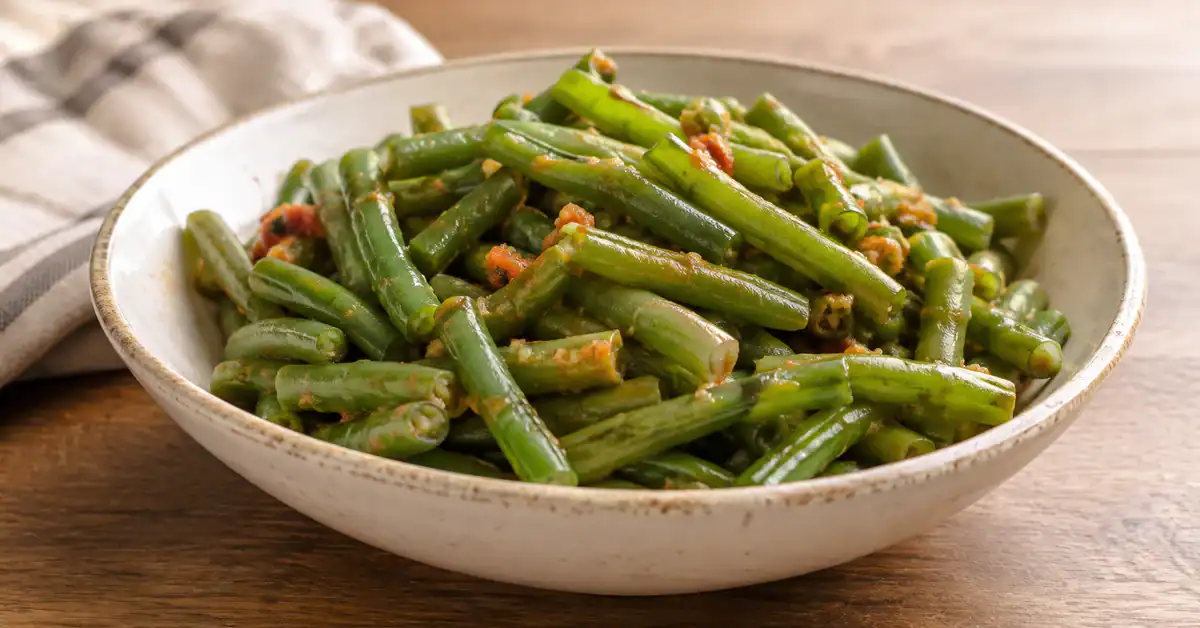

Blend Brazilian pimenta-de-cheiro chillies with garlic, salt and oil to make a moist, slightly chunky paste for 500 g of cooked fresh cowpeas. Stir it in a little at a time, tasting between additions until the seasoning is to your liking.
This aromatic chilli paste lets you season fresh cowpeas evenly without adding whole chillies as they cook. Here’s how to make it and stir it in gradually so the chilli complements the beans without overwhelming their flavour.
Ingredients for the paste and the beans
For the paste
- 6 pimenta-de-cheiro chillies, washed and stalks removed, seeds left in
- 1 garlic clove, peeled
- 1/2 teaspoon salt
- 2 tablespoons oil
To serve with the paste
- 500 g fresh shelled cowpeas, cooked and drained
This batch of paste is for adding a little at a time. You may have some left over. As the beans are already cooked, they are the only other ingredient you need.
How to make aromatic chilli paste
Prepare the chillies
- Dry and chop the chillies. After washing the 6 chillies and removing the stalks, pat them dry. Leave the seeds in and cut the chillies into smaller pieces so they blend easily. Peel the garlic clove.
Blend to a paste
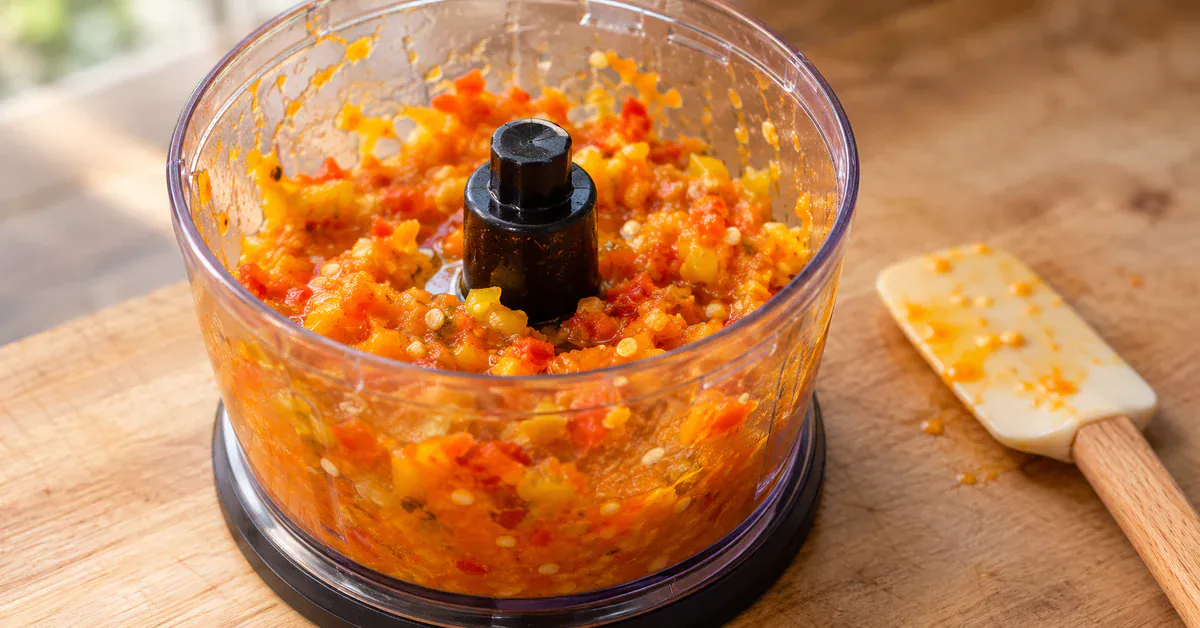
- Put the chillies, garlic, salt and oil in a small food processor. Pulse in short bursts, switching off the machine to scrape down the sides with a spatula if necessary. Stop when the paste is moist and there are no large pieces of garlic or chilli. There’s no need to blend it completely smooth.
When to add the paste to the beans
Add the paste once the beans are cooked, drained and hot. If they’re cold, heat them gently in a pan and switch off the heat before seasoning so the paste coats the beans without frying.
Start with a small spoonful and stir well to coat the beans. Taste, then add a little more if needed until the flavours are balanced. You don’t have to use the whole batch.
How to adjust the heat
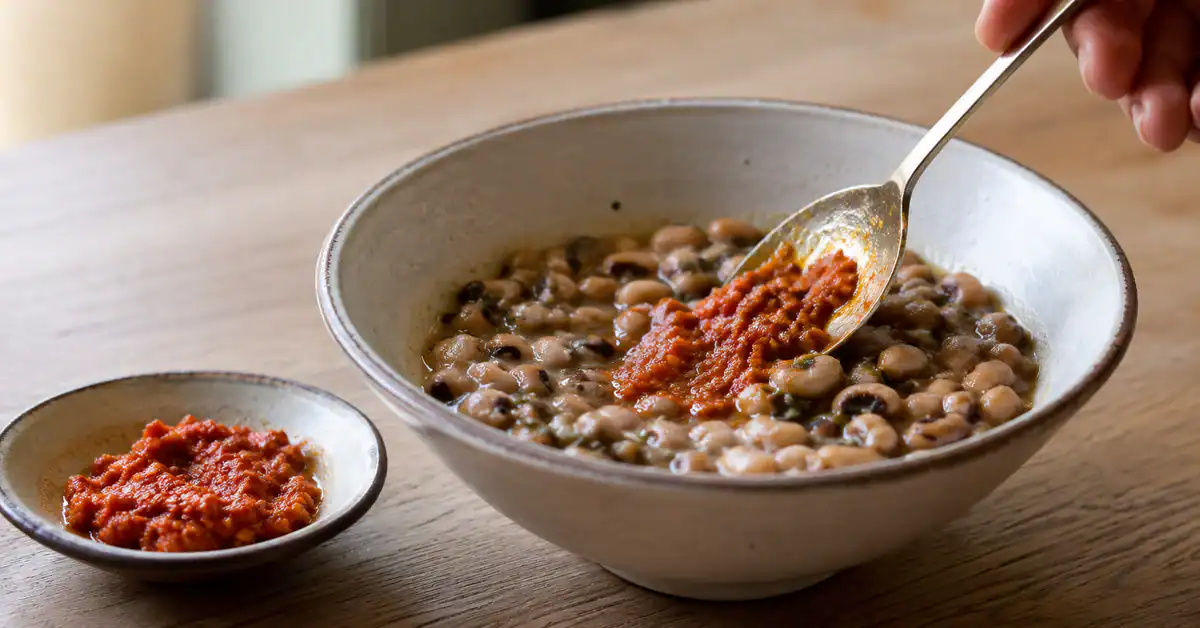
Pimenta-de-cheiro chillies vary in heat, so there’s no single measure for every batch of beans. Mix a dab of paste with a few beans and taste them together. Tasting the paste on its own won’t tell you how strong it will be in the dish.
For a milder flavour, stop when you can taste the chilli without it overpowering the beans. For more heat, add small amounts, stirring and tasting each time. If you’ve added too much, stir in some plain cooked beans if you’ve kept any aside.
How to tell when the texture is right
The paste should be moist enough to hold together on a spoon, with little flecks of chilli still visible. It doesn’t need to be as smooth as a sauce. Check there are no large pieces of garlic or chilli that would make the paste hard to distribute.
A slight sheen from the oil is normal. If a lot of oil has separated or the mixture feels dry and crumbly, the texture is still uneven.
Common problems and how to fix them
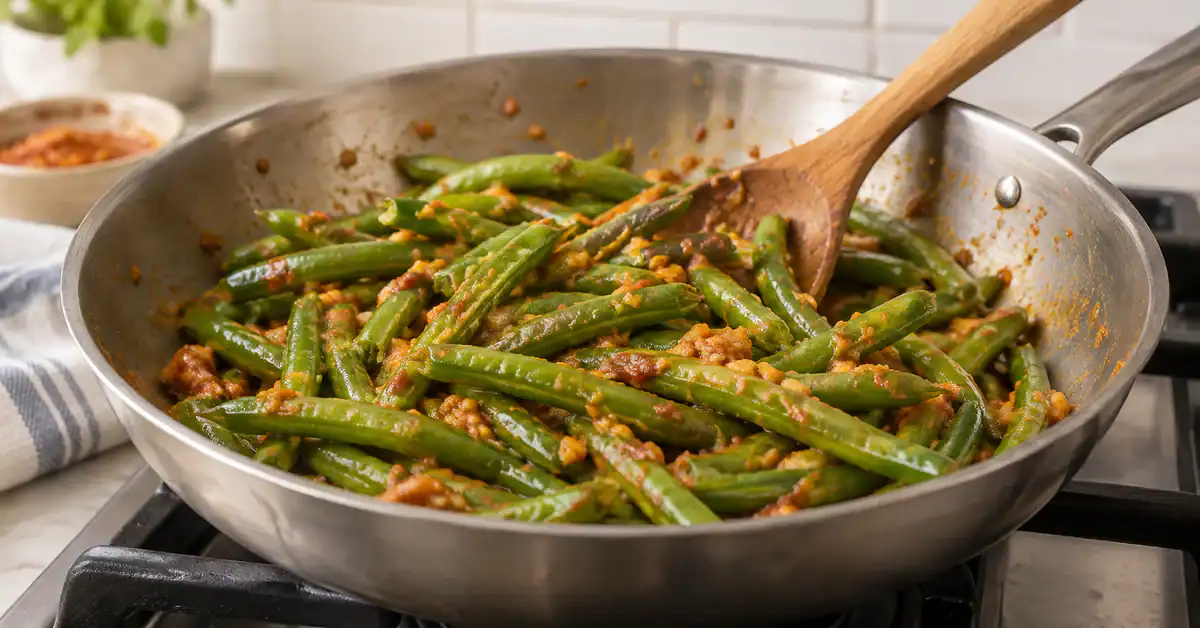
Some problems only become apparent when you stir the paste into the beans. Check what has happened before adding anything else, as extra ingredients can affect the seasoning and texture.
- Watery beans and weak seasoning can mean the beans weren’t drained thoroughly. Let the liquid drain before adding the paste. If the beans are already seasoned, stir gently to redistribute the paste and taste before adding more.
- Large pieces of garlic or chilli mean the paste may need more blending. Before adding it to the beans, give it a few more short pulses, scraping down the sides of the processor with a spatula if needed.
- If the paste starts frying, the beans may be too hot or the heat may still be on. Switch it off and stir gently so the paste coats the beans without frying in a separate pool of oil.
How to store and use leftover paste
Transfer any remaining paste to a clean, covered container and refrigerate immediately. As it contains fresh garlic and oil, use it within 4 days and discard anything left after that. Do not store it at room temperature.
Use a clean, dry spoon to take out only as much as you need. To season another batch of cooked fresh cowpeas, stir in a little paste at a time and taste before adding more, as the heat can vary.
If you don’t plan to use the paste soon, freeze it in small, tightly sealed portions so you can thaw only what you need. There’s no need to add the whole batch to the 500 g of beans at once.
To serve
Stir the paste into the beans a little at a time, tasting before each addition. Serve once you can taste the chilli without masking the flavour of the beans.
Questions about the paste and the beans
Do I need to use all the paste for 500 g of beans?
No. Stir in a little, then taste. Continue gradually until it tastes right to you. The amount needed depends on how hot the chillies are.
Can I add the paste while the beans are still cooking?
Wait until the beans are cooked, drained and hot. Switch off the heat before adding the paste so it coats the beans without frying.
How do I store leftover paste?
Transfer to a clean, covered container and refrigerate immediately. Use within 4 days and discard anything kept in the fridge for longer. Take out portions with a clean, dry spoon or freeze the remainder promptly in small, tightly sealed portions.
Is it normal for the paste to have small pieces in it?
Yes. It should be moist and hold together, but little pieces of chilli can remain. If there are large pieces of garlic or chilli, pulse again briefly and scrape down the sides of the processor if needed.
Should I remove the chilli seeds?
Leave the seeds in for this recipe. Removing them would change the paste and there’s no set ratio for adjusting the other ingredients.