

Aubergine antipasto is a flavourful dish made with aubergines, olive oil, vinegar and seasonings. You can keep it in a glass jar in the fridge and serve it as a starter or side dish with all sorts of meals.
Have you ever tried an aubergine antipasto that melts in the mouth? This lovely aubergine antipasto in a jar is simple to make and adds a special touch that can make any meal memorable.
Ingredients for aubergine antipasto
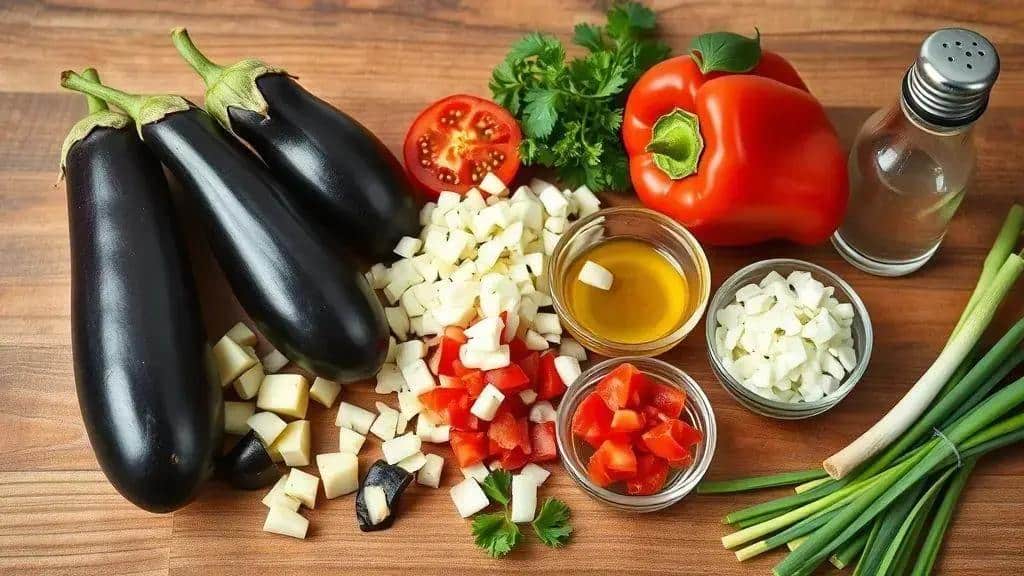
- 2 medium aubergines, cut into small cubes, form the base of the antipasto.
- 1 medium onion, finely chopped, adds flavour.
- 2 garlic cloves, crushed, give the dish its distinctive aroma.
- 3 ripe tomatoes, deseeded and chopped, add freshness and acidity.
- 1 red pepper, finely diced, adds colour and flavour.
- ½ cup of olive oil for cooking and dressing the vegetables. Use vegetable oil if you prefer.
- Salt and black pepper to taste.
- ½ cup of cider vinegar to give the antipasto a little tang.
- Chopped parsley and spring onions add a fresh finishing touch.
How to make aubergine antipasto to store in jars
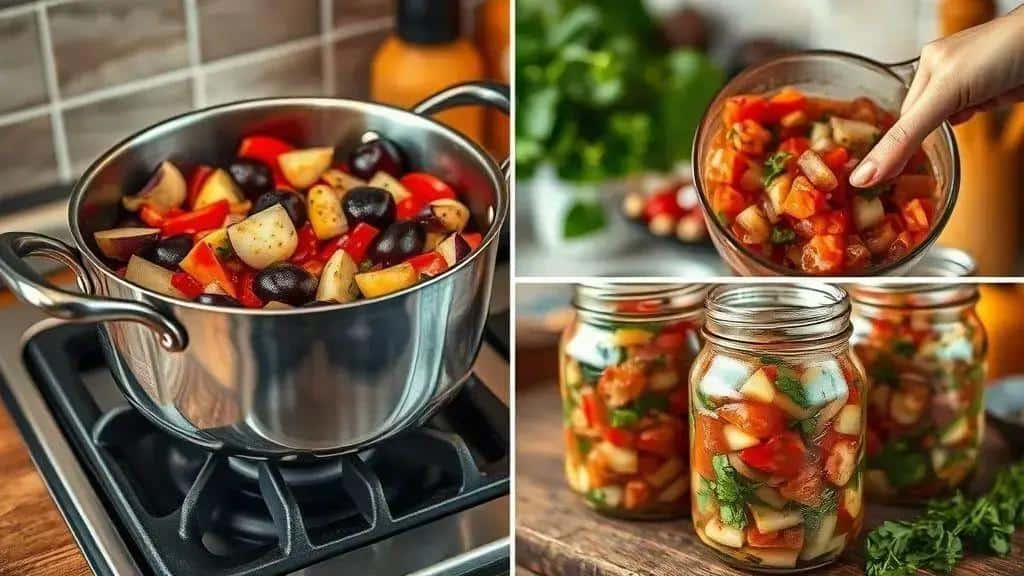
- Prepare the aubergines. Cut 2 medium aubergines into small cubes and sprinkle with salt. Leave to stand for 30 minutes to draw out the bitterness, then rinse and drain well.
- Sauté the onion and garlic. Heat ½ cup of olive oil in a saucepan, add 1 chopped medium onion and 2 crushed garlic cloves, and sauté until golden.
- Add the vegetables. Stir in 3 chopped ripe tomatoes and 1 diced red pepper, mixing well to bring the flavours together.
- Cook the aubergines. Add the drained aubergines to the pan, stir and cook over a medium-low heat for about 25 minutes, stirring occasionally to prevent sticking.
- Adjust the seasoning. Add salt and black pepper to taste, stir in ½ cup of cider vinegar and cook for a further 5 minutes to let the flavour develop.
- Add the fresh herbs. Take the pan off the heat and stir in the chopped parsley and spring onions for a fresh, fragrant finish.
- Store in glass jars. Divide the antipasto into small portions in clean, shallow jars suitable for hot food. Cover and refrigerate within 2 hours of preparation. Eat within 4 days and keep the fridge at 4 °C or below.
How to store the antipasto in the fridge
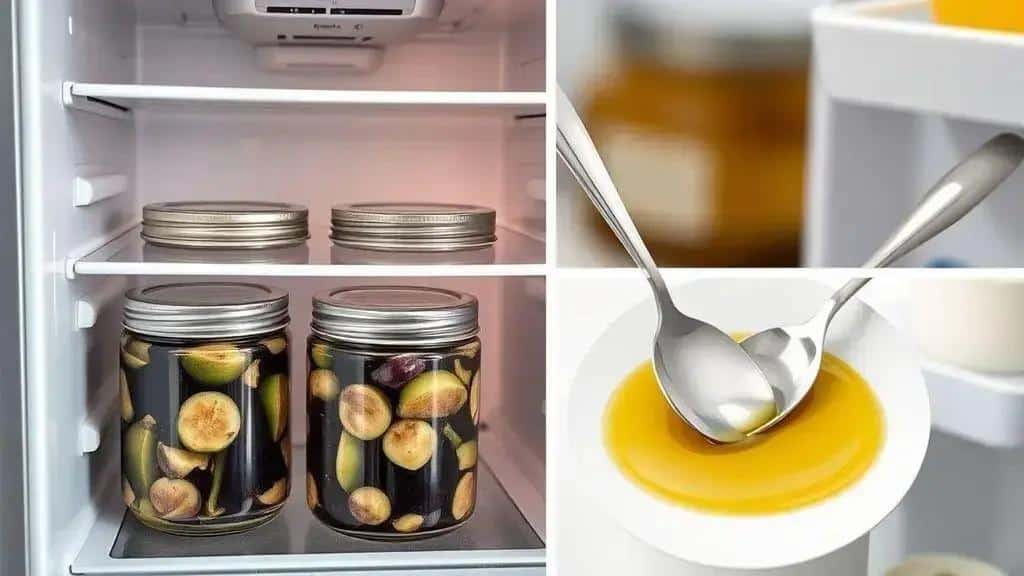
Choose small, shallow glass jars suitable for storing food, with clean lids.
Prepare the jars. Wash the jars thoroughly. If you choose to boil them for 10 minutes, only use jars and lids suitable for boiling. Keep the antipasto refrigerated even if you have boiled the jars.
Keep the jars in the fridge at 4 °C or below. The antipasto needs to be refrigerated from the time you make it, even while the jars are still unopened.
The vinegar adds acidity and the olive oil coats the vegetables. This homemade antipasto needs to be kept in the fridge.
Prevent contamination. Always use clean, dry utensils to serve the antipasto. Keep your fingers and anything dirty out of the jar to avoid introducing bacteria.
Make a note of the date you made the antipasto. Keep it in the fridge and eat it within 4 days. Discard any leftovers after that.
Tasty variations on aubergine antipasto
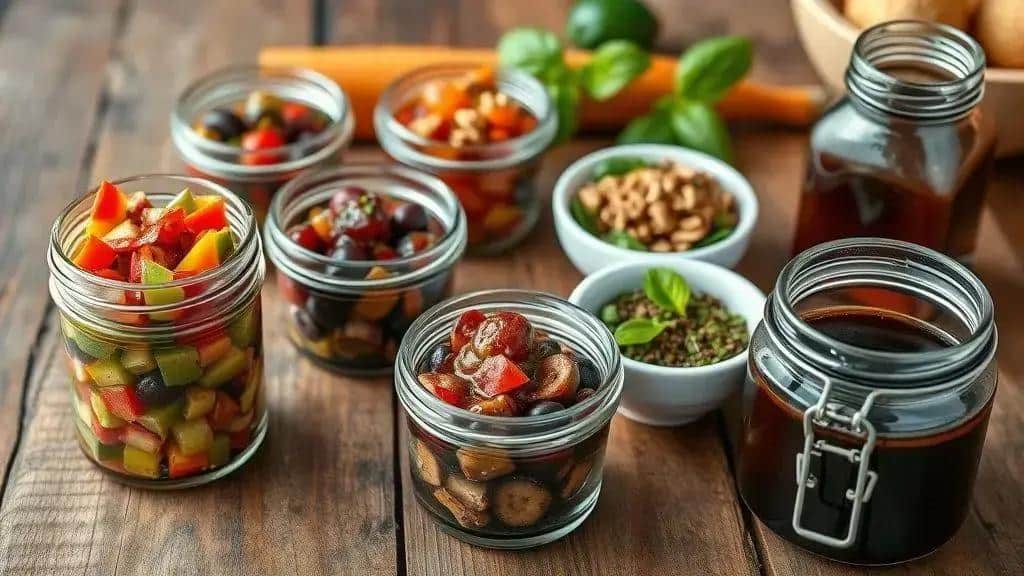
You can adapt aubergine antipasto to suit different tastes. Try some of these ideas to make yours a little more special.
- Pepper and olive antipasto. Add a mix of coloured peppers and chopped green or black olives for extra texture and flavour.
- Spicy antipasto. Add chopped fresh dedo-de-moça chilli or dried chilli flakes for a little heat.
- Antipasto with walnuts or other nuts. Stir in chopped walnuts for a little crunch and a rich, nutty flavour.
- Fresh herb antipasto. Use basil, mint or thyme to give the antipasto a fresher, more aromatic flavour.
- Balsamic vinegar antipasto. Use balsamic vinegar in place of the cider vinegar for a sweeter, more complex flavour.
Mix and match these variations to create your own antipasto and surprise your guests.
Facts about aubergines in Brazil

Aubergines are very popular in Brazil and have a rich history there. Originally from Asia, they were brought to Brazil by the Portuguese during the colonial period.
Brazilian cooks use aubergines in everything from traditional dishes to inventive new recipes. Their mild flavour and soft texture make them a versatile choice for antipasti and sautés, and they are lovely grilled too.
Aubergine flesh contains water and fibre. As it roasts, it softens and takes on the flavours of the olive oil and seasonings.
Brazil’s Southeast region is one of the country’s main aubergine-growing areas. Fertiliser use varies with the soil and climate.
In Italy, aubergines are also used to make caponata, an antipasto that can be served with bread.
A final thought
Aubergine antipasto is a delicious, versatile choice when you fancy something different to serve as a starter or side dish. Its simple ingredients and easy preparation make it a good fit for all sorts of occasions.
Follow the storage advice to preserve the flavour and quality of your antipasto for longer.
Thank you for reading! For more delicious recipes and cookery tips, follow us on social media and visit the Mestre das Receitas cookery website. See you there!
Frequently asked questions about aubergine antipasto
How long can I keep aubergine antipasto in the fridge?
Eat it within 4 days of preparation and keep the jars in the fridge at 4 °C or below.
Can I use another oil instead of olive oil in the antipasto?
Yes, you can use a vegetable oil such as sunflower or rapeseed oil, although the finished dish may taste slightly different.
Do I need to draw out the bitterness from the aubergines before making the antipasto?
Yes. Dice the aubergines, sprinkle them with salt and leave them to stand for about 30 minutes to draw out the bitterness. Then rinse and drain well.
How can I store the antipasto for longer?
Divide the antipasto between shallow containers, cover and refrigerate at 4 °C or below. To keep it for more than 4 days, freeze it in a freezer-safe container.
Can I vary the aubergine antipasto recipe?
Yes, you can add peppers, olives, chilli, walnuts or fresh herbs, or even use balsamic vinegar for a different flavour.