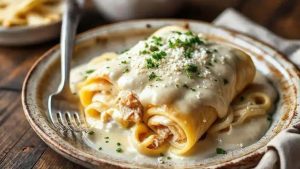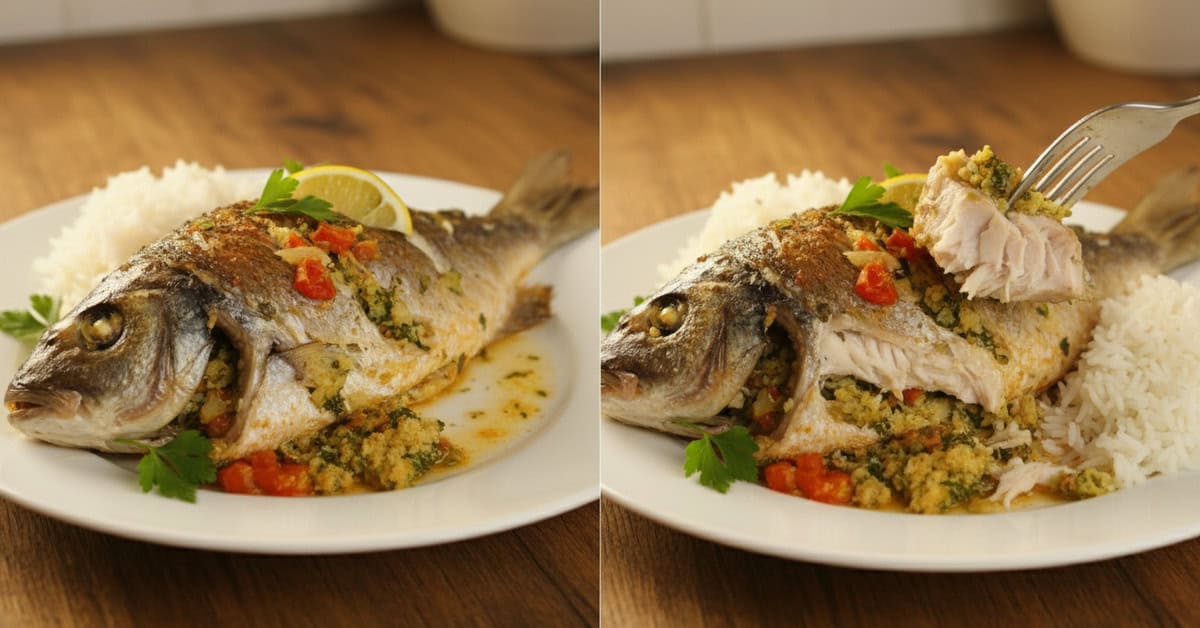

Baking a whole fish with stuffing is a simple way to keep it succulent and bring out its flavour. Choose fresh fish, keep the stuffing moist without letting it get too wet, season carefully and bake at the right temperature. The flesh will be tender, the stuffing will hold its shape and the fish will look good on the table at any meal.
Baking a whole stuffed fish is a simple way to make lunch or dinner feel special. Looking for stuffing ideas and ways to keep the fish succulent? I’ll take you through it step by step and share a few chef’s tips along the way.
Ingredients for baked stuffed fish
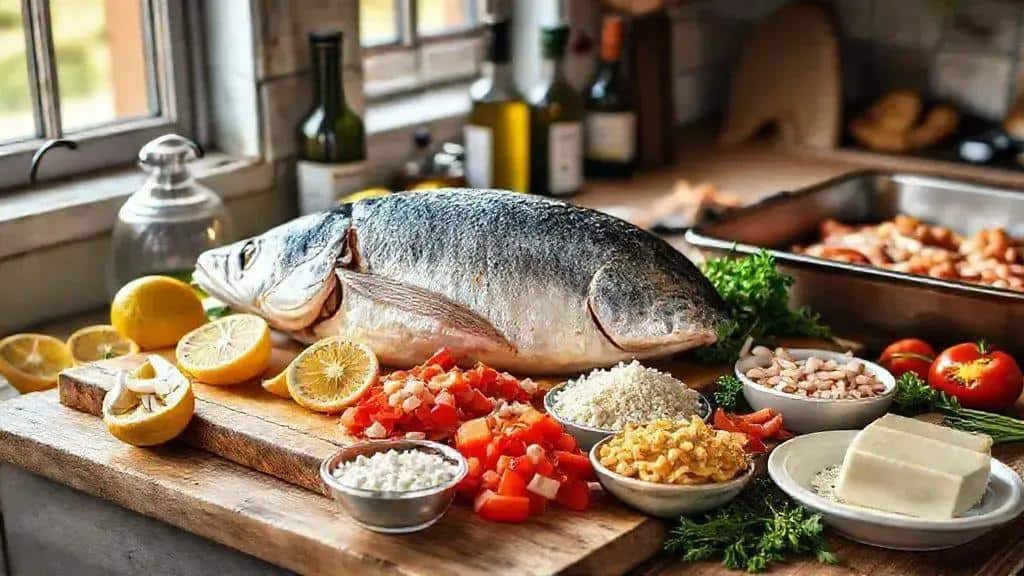
For a succulent baked stuffed fish, get your fresh ingredients ready in the quantities below.
Ingredients
- 1 whole fish (1.2–1.5 kg), gutted and scaled. Sea bass, red porgy or sandperch all work well. Alternatively, use 1 kg of whole fish fillets and arrange them around the stuffing.
- 2 tablespoons coarse salt for rinsing and seasoning the fish. Adjust to taste.
- Juice of 1 lemon to season the fish and get rid of any fishy smell. Alternatively, use 2 tablespoons of diluted cider vinegar.
- 4 tablespoons olive oil for drizzling over the fish before baking. Vegetable oil or melted butter will also work.
- 3 garlic cloves, chopped, to flavour the stuffing and the fish. Alternatively, use 1 teaspoon of garlic powder.
- 1 medium onion, chopped, to fry gently for the stuffing. Use a red onion for a milder flavour.
- 2 medium tomatoes, deseeded and chopped, to keep the stuffing juicy. Alternatively, use 1 cup of diced peeled tomatoes.
- 1 small red pepper, chopped, for colour and sweetness. A yellow or green pepper will also work.
- 1/2 cup breadcrumbs or panko to bind the stuffing. Alternatively, use fine cassava flour or stale bread blitzed into crumbs.
- 100 g of soft cheese or requeijão, a creamy Brazilian cheese spread, for a creamy stuffing. Mashed ricotta or cream cheese will also work.
- 150 g of chopped prawns (optional) for a richer stuffing. Alternatively, use 150 g of flaked fish or shredded chicken breast.
- 1/4 cup chopped parsley and spring onions for freshness and aroma. Use coriander if you prefer.
- 1/4 cup dry white wine or fish stock to moisten the stuffing. Vegetable stock will also work.
- Lemon slices to lay over the fish for flavour and decoration.
- Black pepper and salt to taste for the final seasoning.
How to make baked stuffed fish step by step
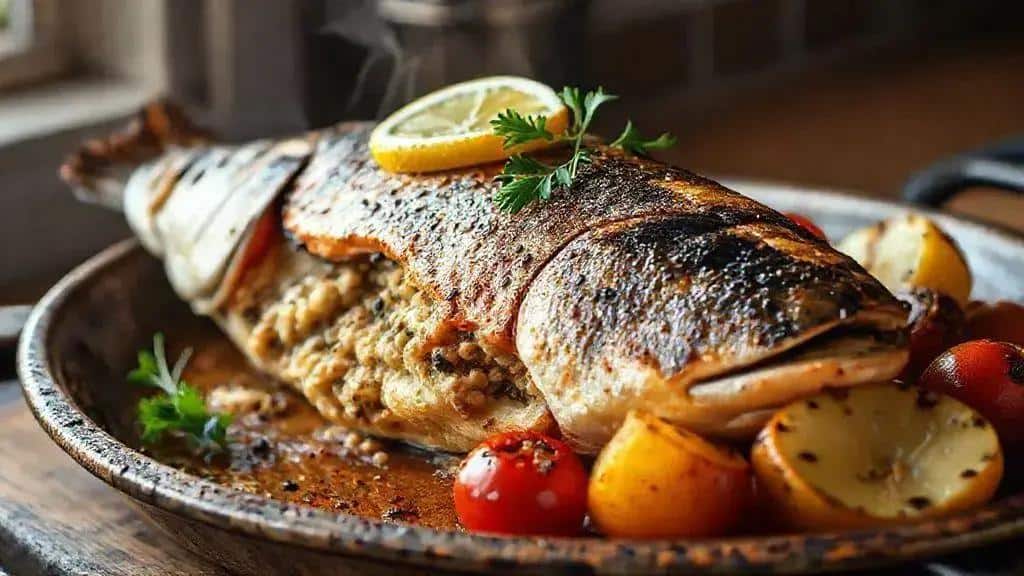
For the best results, follow the steps below, paying close attention to the timings and the simple techniques used to prepare and bake the fish.
- Preheat the oven to 200°C while you prepare the ingredients.
- Rinse the whole fish (1.2–1.5 kg) under running water, remove the innards and scales, then pat dry with kitchen paper.
- Rub the fish inside and out with the juice of 1 lemon, 1 tablespoon of salt and some black pepper. Leave for 10 minutes to reduce any fishy smell.
- For the stuffing, heat 2 tablespoons of olive oil and gently fry 1 chopped medium onion and 3 chopped garlic cloves until translucent.
- Add 2 chopped tomatoes and 1 chopped red pepper. Cook for about 5 minutes, until they release their juices.
- Stir in 150 g of chopped prawns (or flaked fish) and 1/2 cup of breadcrumbs to bind the stuffing, then turn off the heat. The stuffing will finish cooking in the oven and must reach at least 74 °C in the centre.
- To finish the stuffing, stir in 100 g of soft cheese, 1/4 cup of chopped parsley and spring onions and 1/4 cup of white wine or stock. Season to taste with salt and pepper.
- Gently open the belly of the fish and press the stuffing into the cavity, filling any gaps. Secure the opening with cocktail sticks if needed.
- Brush the fish all over with 2 tablespoons of olive oil. Lay lemon slices over the fish and dot with thin slices of butter.
- Place the fish in a greased roasting tin and put it in the preheated oven. For a 1.2–1.5 kg fish, allow 30–40 minutes, checking after 25 minutes.
- Use a food thermometer to check that both the thickest part of the fish and the centre of the stuffing have reached at least 74 °C. Keep the probe clear of the backbone.
- Remove the fish from the oven and leave it to rest for 5 minutes before cutting. Serve with lemon slices, fresh herbs and your choice of sides.
Quick tips
If the fish browns too quickly, cover it with foil. If the stuffing is on the wet side, cook off the excess liquid before filling the fish. Always use fresh ingredients for the best flavour.
Tips for choosing, cleaning and seasoning fish
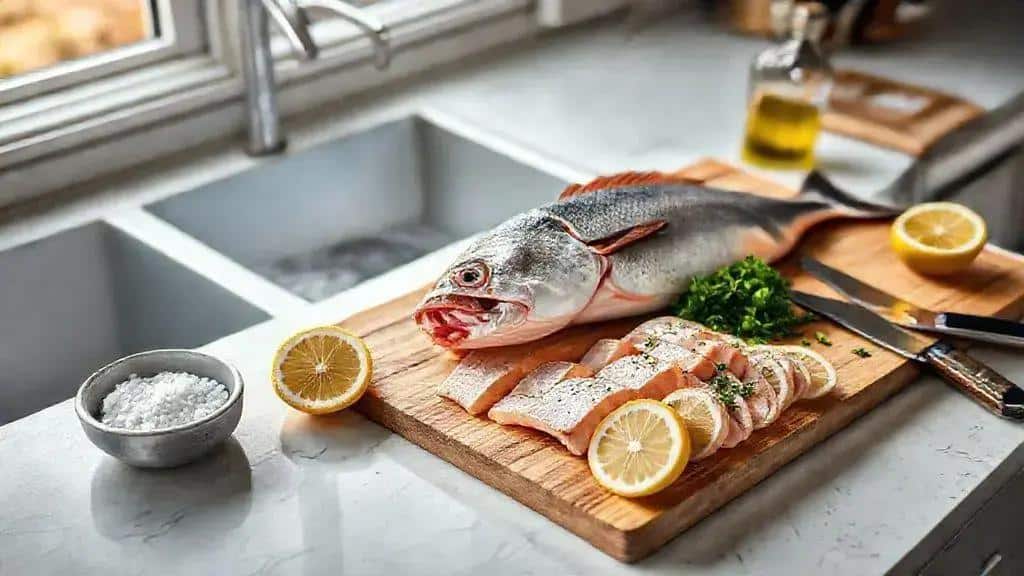
Follow these tips to choose, clean and season the fish before preparing the stuffing and baking the fish.
Choosing the fish
- Look for clear, bright eyes. Cloudy eyes suggest the fish is less fresh.
- Look for red gills. Dark or brown gills are a sign that the fish is losing its freshness.
- Press the flesh gently. It should feel firm and spring back. Soft flesh is a sign the fish is past its best.
- A mild smell of the sea is normal. If the fish has a strong, unpleasant smell, don’t buy it.
- For stuffing, choose a whole fish weighing between 1.2 and 1.5 kg, such as sea bass, red porgy or sandperch.
How to clean the fish
- Wash the chopping board and knife thoroughly. Have a bowl of water with lemon juice ready for rinsing.
- To scale the fish, hold it by the tail. Use the back of a knife or the edge of a spoon to scrape from tail to head until all the scales are off.
- Lift the gill cover and cut out the gills with kitchen scissors or a knife. Cleaning out the gill area helps reduce odours.
- To gut the fish, make a small cut along the belly from the vent to just short of the head. Take hold of the innards, gently pull them out and dispose of them in a sealed bag.
- Rinse the cavity under cold running water until any blood and debris have washed away. To reduce odours, give the cavity a quick wipe with lemon juice or diluted vinegar.
- Pat dry with kitchen paper, remove any loose bones and trim any fins that get in the way of stuffing the fish.
- If preparing ahead, keep the fish refrigerated on ice or in a tightly sealed plastic bag for no more than 24 hours.
Seasoning fish safely and well
- Rub salt, pepper and lemon juice inside the cavity and over the skin to season the fish evenly.
- Fresh parsley, spring onions and thyme all go well with fish. Mix some into the stuffing and tuck whole herb sprigs into the cavity.
- Drizzle olive oil over the skin or brush it with melted butter to help it brown and keep the fish succulent.
- Allow 15–30 minutes to marinate a whole fish. A longer marinade can change the texture of the flesh.
- Chopped garlic, lemon zest, white wine or a little fish stock all add flavour. Use them sparingly.
- Adjust the salt to taste, bearing in mind that the stuffing may already contain some. Coarse salt is best for rinsing the fish and fine salt for seasoning it before baking.
Quick tip for checking freshness at the fish counter: ask where the fish came from. Choose fish kept chilled on ice for better flavour and food safety.
Classic, creamy and light stuffing ideas
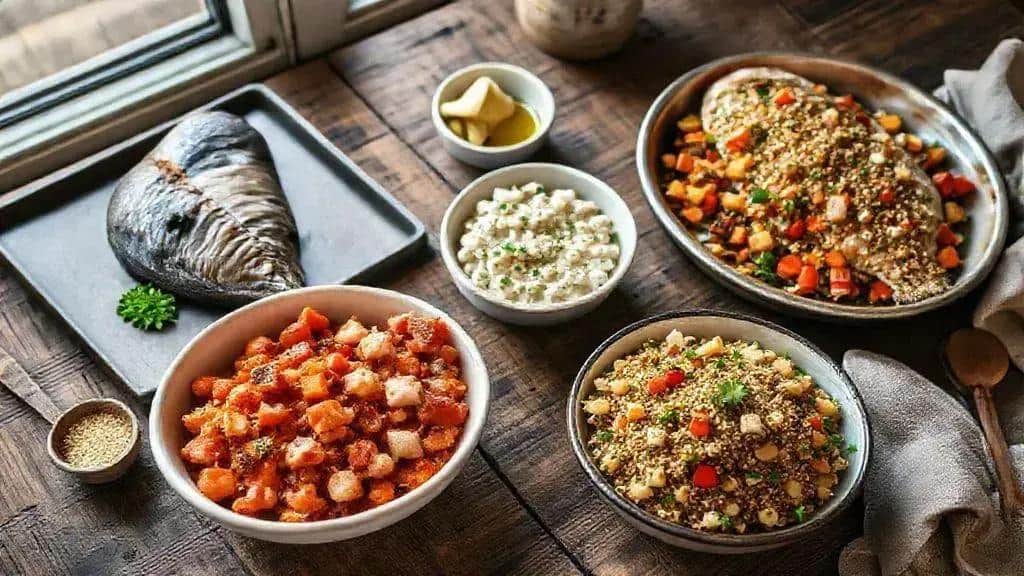
Classic stuffings
These traditional stuffings bring out the flavour of the fish and suit most tastes.
Prawn and tomato stuffing
- 150 g of medium prawns, cleaned and chopped. Alternatively, use 150 g of shredded chicken.
- 2 medium tomatoes, deseeded and chopped.
- 1 small onion, finely chopped.
- 2 garlic cloves, chopped.
- 2 tablespoons olive oil for frying.
- Salt and black pepper to taste.
- 1/4 cup chopped parsley to finish.
- Heat the olive oil and gently fry the onion and garlic until translucent.
- Add the tomatoes and cook for about 4 minutes to reduce the liquid and concentrate the flavour.
- Add the prawns and cook for 2–3 minutes until opaque. Season with salt and pepper.
- Stir in the parsley, add more salt if needed and remove from the heat.
- Fill the cavity of the fish with the stuffing and secure with cocktail sticks if needed.
Bacon farofa stuffing with toasted cassava flour
- 100 g of bacon, cut into small cubes. Plant-based bacon or ham will also work.
- 1 cup toasted cassava flour.
- 1/2 onion, chopped.
- 2 tablespoons butter for browning.
- 2 tablespoons chopped parsley.
- Pepper and salt to taste.
- Fry the bacon in a frying pan until crisp. Set the bacon aside and reserve half the fat.
- Gently fry the onion in the bacon fat until soft.
- Stir in the cassava flour and toast lightly for 2–3 minutes until fragrant.
- Stir in the reserved bacon and the parsley. Adjust the salt and use the mixture to stuff the fish.
Creamy stuffings
These soft-textured stuffings help keep the fish moist.
Cream cheese and herb stuffing
- 150 g of cream cheese at room temperature. Alternatively, use creamy ricotta.
- 1/4 cup grated Parmesan (optional, for extra flavour).
- 2 tablespoons chopped spring onions.
- 1 tablespoon lemon juice for a little sharpness.
- Salt and pepper to taste.
- In a bowl, beat the cream cheese and Parmesan together until smooth.
- Stir in the spring onions, lemon juice, salt and pepper.
- Spread a generous layer inside the fish, then spread a little over the skin to give it a golden finish.
Creamy prawn and requeijão stuffing
- 150 g of prawns, cleaned and chopped.
- 100 g of creamy requeijão to bind the stuffing.
- 1/4 cup breadcrumbs, if needed to adjust the consistency.
- Parsley and pepper to taste.
- Quickly sauté the prawns just until they turn opaque.
- Stir in the requeijão. If the mixture is too loose, add the breadcrumbs a little at a time.
- Spoon the stuffing into the fish and bake as usual.
Light stuffings
These fresh, lower-fat stuffings are ideal if you prefer a lighter dish.
Grilled vegetable stuffing
- 1 small courgette, diced and grilled.
- 1 small aubergine, grilled and chopped.
- 1 sun-dried tomato, chopped.
- 2 tablespoons olive oil for grilling.
- Salt, pepper and herbs to taste.
- Cut up the vegetables and grill until tender and lightly browned.
- Mix in the sun-dried tomato, olive oil and herbs. Add salt to taste.
- Fill the fish with the grilled vegetable mixture for a light stuffing fragrant with herbs.
Quinoa and herb stuffing
- 1 cup cooked quinoa, prepared in salted water.
- 1/4 cup grated carrot for crunch.
- 1 tablespoon lemon juice for freshness.
- Parsley and spring onions, chopped.
- 1 tablespoon olive oil.
- Cook the quinoa according to the packet instructions until tender and fluffy.
- Stir in the carrot, herbs, lemon juice and olive oil. Adjust the seasoning.
- Fill the cavity with the mixture and bake. The quinoa stays light, with a little bite.
Baked stuffed fish variations and the best sides to serve with each
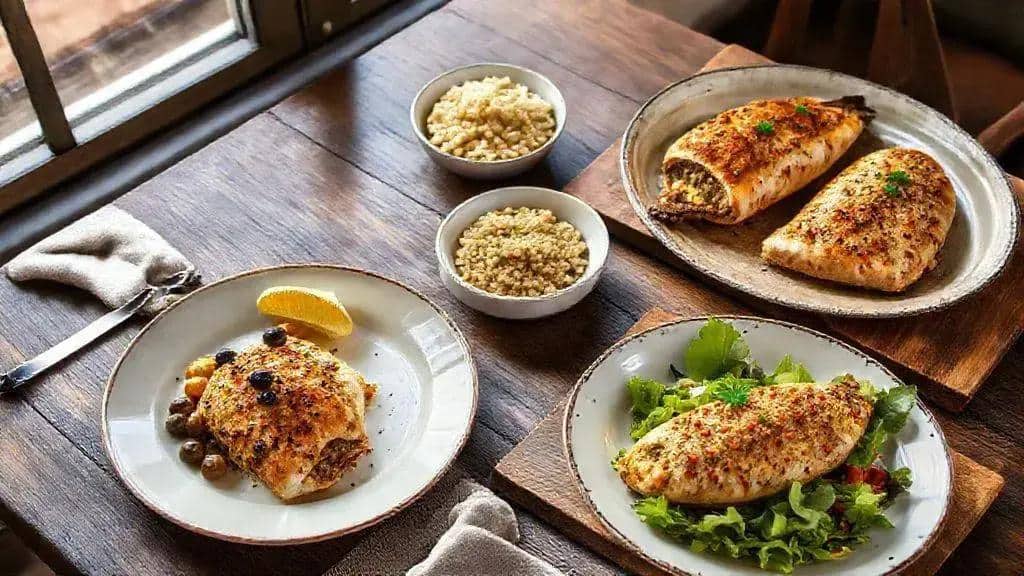
Try these variations on baked stuffed fish with the side dishes that best complement each one.
Main variations
Mediterranean tomato, olive and caper stuffing
- 1 whole fish (1.2–1.5 kg), cleaned.
- 2 tomatoes, deseeded and chopped.
- 1/3 cup sliced black or green olives.
- 1 tablespoon capers, rinsed if very salty.
- 2 tablespoons olive oil for frying and drizzling.
- Thyme or oregano, plus parsley, to taste.
The tomatoes add acidity, while the olives and capers add a briny flavour. Serve with fluffy rice or roast potatoes.
Creamy prawn and cheese stuffing
- 150 g of prawns, cleaned and chopped.
- 100 g of requeijão or cream cheese for a creamy texture.
- 1/4 cup breadcrumbs to adjust the texture.
- Olive oil, salt and pepper to taste.
This rich, succulent stuffing goes well with mashed potatoes or coconut rice.
Crunchy bacon farofa
- 100 g of bacon, chopped and browned.
- 1 cup toasted cassava flour for the farofa.
- 1/4 onion, finely chopped.
- Parsley to finish.
The crunchy farofa contrasts with the tender flesh of the fish. Serve with grilled vegetables and a green salad.
Light vegetarian stuffing with quinoa and vegetables
- 1 cup cooked quinoa for the base of the stuffing.
- Grilled courgette, aubergine and pepper.
- Lemon juice and olive oil to give the stuffing a fresh flavour.
This lighter, nutritious stuffing goes well with a leafy salad and fluffy brown rice.
The best side dishes
- Fluffy white rice has a mild flavour that lets the stuffing shine. Serve it with Mediterranean or creamy stuffings.
- Creamy mashed potatoes balance rich stuffings, while roast potatoes offer a contrast to farofa.
- Grilled courgette and aubergine with diced, peeled and deseeded tomato add freshness and colour to lighter versions.
- A green salad with a light vinaigrette refreshes the palate and goes well with richer stuffings.
- Fragrant coconut rice or lemon rice goes well with prawn stuffings and tropical variations.
- Serve herb farofa alongside the bacon farofa stuffing for extra crunch and a Brazilian flavour.
Quick pairing tips
- To balance the flavours, pair tangy stuffings with creamy sides and rich stuffings with sharp salads.
- If the stuffing is moist, serve it with a dry side dish such as rice or roast potatoes to balance the textures.
- For a balanced meal, allow a total of 150–200 g per person for the side dishes.
- Light white wines or pale beers go well with stuffed fish. For spicy versions, choose a drink with a more neutral flavour.
Common mistakes and how to bake fish evenly without drying it out
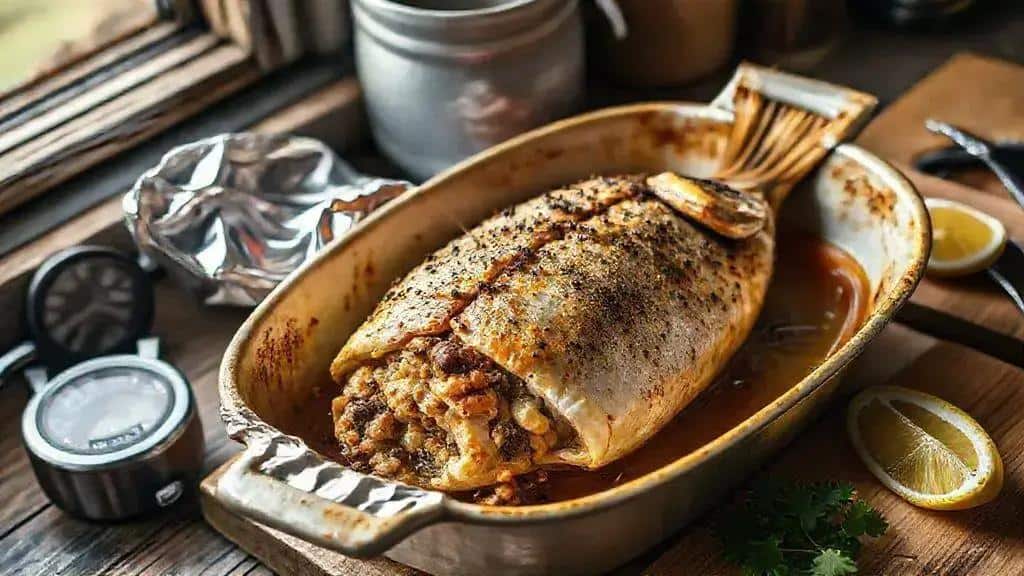
Learn to spot the most common problems when baking fish so you can put them right as you cook and keep the flesh succulent.
Common mistakes
- Putting the fish into a cold oven makes it cook unevenly. Always preheat the oven to the specified temperature before putting the fish in.
- Avoid over-seasoning the stuffing. Too much salt or acidity can dry out the flesh. When salting the fish, take into account how salty the stuffing is.
- Too much liquid stops the stuffing from browning and holding together. Reduce the amount of liquid in the stuffing before filling the fish.
- Overbaking can dry out the fish. Use the cooking time for its thickness as a guide, then check with a food thermometer that both the fish and the centre of the stuffing have reached 74 °C.
- Cutting the fish as soon as it comes out of the oven lets the juices escape. Leave it to rest for a few minutes before serving.
- Too much direct heat can burn the skin while the inside is still raw. If the fish browns too quickly, cover it with foil.
How to keep the fish succulent and cook it evenly
- Preheat the oven to 200°C so it is at a steady temperature when the fish goes in.
- Pat the surface of the fish dry with kitchen paper to help the skin brown and the stuffing keep its texture.
- Season the fish inside and out, bearing in mind that the stuffing also contributes salt.
- Bind the stuffing with panko, breadcrumbs or cream cheese to avoid excess liquid.
- Set the fish on a rack over a roasting tin so the heat can circulate underneath.
- Halfway through cooking, drizzle or brush the skin with olive oil or melted butter to keep it moist.
- Check the temperature with a food thermometer. The stuffed fish is ready when both the thickest part of the flesh and the centre of the stuffing have reached at least 74 °C.
- If the fish browns too quickly, cover it with foil and continue baking until cooked through.
- Leave the fish to rest for 4–5 minutes after taking it out of the oven to allow the juices to redistribute.
Practical tips
- As a starting point, allow 10–12 minutes for every 2.5 cm of thickness.
- Avoid overstuffing the fish. Fill the cavity loosely enough to let the heat circulate.
- The flesh turns opaque and flakes apart when cooked. To check that the stuffed fish is cooked through, make sure the thermometer reads at least 74 °C in both the thickest part of the fish and the centre of the stuffing.
- Drape the foil loosely over the fish to minimise contact with the skin and trap enough steam to keep the flesh succulent.
- Choose fresh fish and fresh stuffing ingredients for a better texture and less risk of unwanted flavours.
These tips and techniques will help you bake succulent, flavourful stuffed fish with confidence, even if you have little experience in the kitchen.
Try the variations, season to your taste and keep an eye on the baking time so the fish stays moist. If you make the recipe, share the result and tag us on social media. We love seeing your versions.
Thanks for reading! Follow us on social media and visit Mestre das Receitas Food Blog for more recipes, practical tips and the latest news.
Frequently asked questions about baked stuffed fish
Which fish are best for stuffing, and why?
Whole fish weighing between 1.2 and 1.5 kg, such as sea bass, red porgy or sandperch, are ideal because they have firm flesh and a cavity with room for the stuffing.
How do I clean the fish before stuffing it?
Scale the fish, remove the gills and make a cut along the belly to gut it. Rinse with cold water and pat dry with kitchen paper before seasoning.
How do I stop the stuffing from making the fish soggy?
Reduce the amount of liquid in the stuffing before filling the fish. Use breadcrumbs or panko to bind the mixture and avoid packing it too tightly into the cavity.
What oven temperature and baking time should I use?
Preheat the oven to 200 °C. Allow about 30 to 40 minutes for a fish weighing 1.2–1.5 kg. Use a food thermometer to check the thickest part of the fish and the centre of the stuffing. Both must reach at least 74 °C. If needed, bake for longer and check the temperatures again.
Which side dishes go best with creamy stuffings, and which work best with lighter ones?
Creamy stuffings go well with mashed potatoes or coconut rice. Serve lighter stuffings with a green salad and grilled vegetables.