
This Brazilian cheese bread is made in a blender and needs no kneading. Blend the ingredients into a creamy batter that still runs off a spatula. The recipe makes about 24 small rolls. Bake them in greased molds at 200 °C for about 20 to 25 minutes.
A blender makes it easy to prepare Brazilian cheese bread at home without kneading. Once you have blended the ingredients, check the consistency. Here is how to tell when the batter is ready and how to get it into the oven.
Ingredients and quantities
For about 24 small cheese rolls, you will need
- 3 medium eggs
- 250 ml milk
- 125 ml oil
- 360 g sweet cassava starch (polvilho doce)
- 100 g grated Brazilian semi-aged cheese (queijo meia-cura)
- ½ teaspoon salt (about 2.5 g)
- 1 tablespoon oil (15 ml) for greasing the molds
How to blend the batter
In what order should the ingredients go into the blender?
- Blend the liquids. Put the 3 medium eggs, 250 ml milk, 125 ml oil and salt in the blender. Blend for a few seconds, just until combined.
- Add the 360 g of sweet cassava starch a little at a time, blending after each addition. If you need to scrape starch off the sides of the jug with a spatula, switch off the blender and wait for the blades to stop.
- Add the 100 g grated semi-aged cheese and pulse briefly to distribute it. You can also fold in the cheese with a spoon or spatula after blending the batter.
What the blended batter should look like
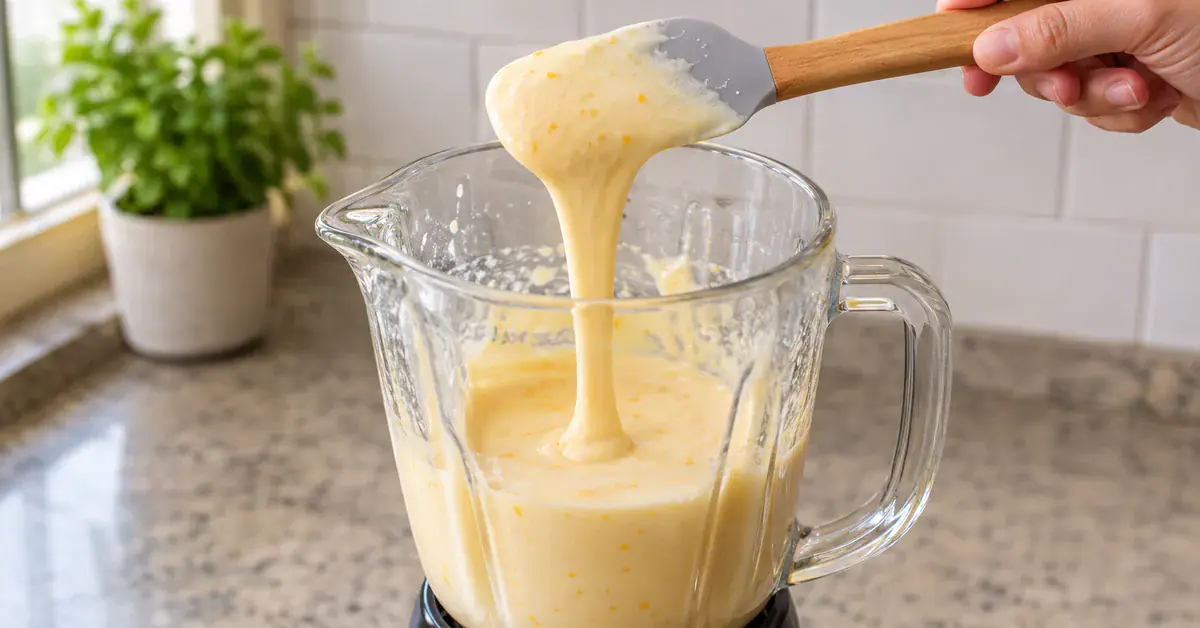
The batter should be smooth, creamy and thicker than pancake batter, yet still fall from the spatula in a continuous ribbon. If dry starch clings to the sides, turn the blender off, scrape down the jug and blend again for a few seconds. Stop once the ingredients are incorporated so the batter does not heat up.
How to prepare the molds and bake the rolls
- Preheat the oven to 200 °C while you prepare the molds.
- Use a pastry brush or paper towel to spread the tablespoon of oil across about 24 small mold cavities. Grease the sides as well so the baked rolls release easily.
- Pour the batter into the cavities, filling each about two-thirds full. Leave room for the rolls to rise. Bake in batches if you need more space.
- Bake in the preheated oven for about 20 to 25 minutes, until puffed and golden on top. Keep the door closed for the first 15 minutes, as a change in temperature can interfere with the rise.
- Carefully remove the pan from the oven. Let the rolls rest for a few minutes before releasing them from the molds so they hold together while still hot.
How to tell when the rolls are done
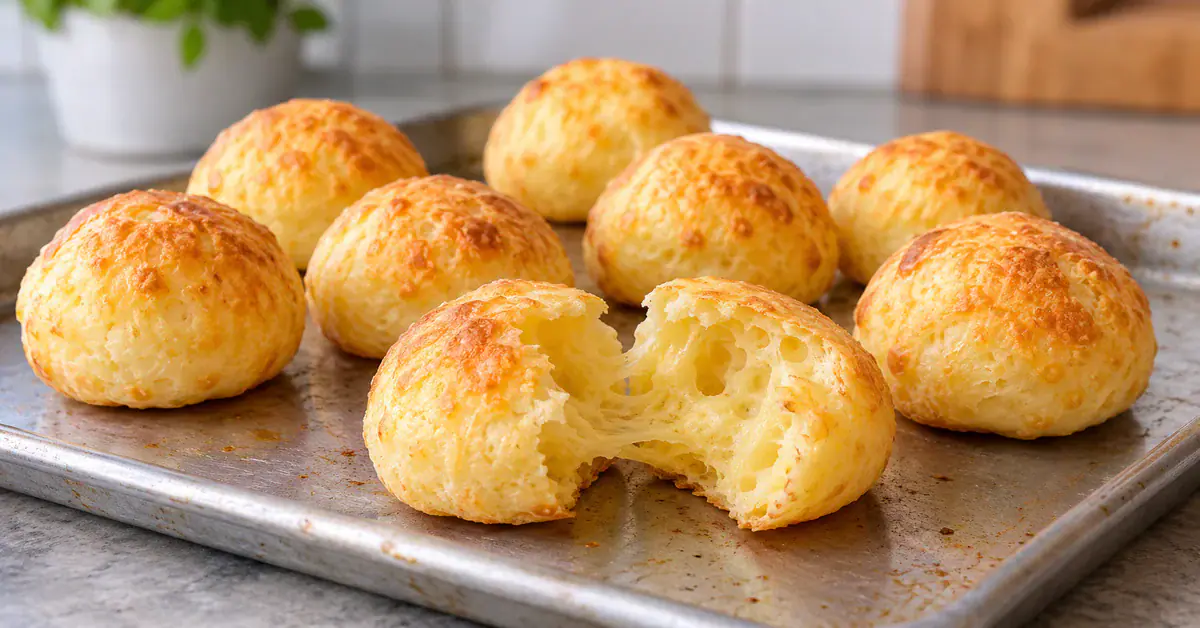
The rolls are ready when they have risen and turned golden on top, usually after about 20 to 25 minutes at 200 °C. The surface should look dry and feel slightly firm, with a soft, springy center.
If the tops are still pale, watch them for a few more minutes. Ovens vary, so use the color as a guide. Take the rolls out once golden, before the edges get too dark.
Common problems and how to fix them
- If dry starch clings to the sides, switch off the blender and scrape down the jug with a spatula. Blend for just a few seconds until smooth. Always wait for the blades to stop before scraping.
- If the batter does not run off the spatula, check your measurements and make sure all the starch is mixed in. Scrape down the sides and blend briefly. Adding more milk or starch changes the proportions and can affect the texture.
- If the rolls stay pale or rise unevenly, the oven may not have been fully preheated or the cavities may have been filled unevenly. Preheat to 200 °C and fill each cavity about two-thirds full. If the tops still look pale, bake for a few minutes longer and keep an eye on the color.
Serving and storing the rolls

Serve the cheese rolls warm, while the centers are soft and springy. They make a good snack with coffee. Give them a few minutes to cool before tasting so you do not burn your mouth.
Let any leftovers cool and store them in a tightly sealed container. To bring back some of their texture, warm them in a preheated oven at 180 °C for a few minutes until heated through. The time depends on their size and number. A microwave warms them too, but it can make them rubbery.
Serve warm
After a few minutes of resting, gently remove the rolls from the molds and take them to the table while still warm. Serve with coffee for a simple snack.
Questions about making Brazilian cheese bread
Can I stir in the cheese by hand?
Yes. After blending the batter, stir in the grated semi-aged cheese with a spoon or spatula until evenly distributed. This avoids blending longer than necessary.
Why should I leave space at the top of each mold?
Fill each cavity about two-thirds full. The rolls rise in the oven and the extra space keeps the batter from spilling over. Bake in batches if the pan cannot hold all the batter.
What happens if I open the oven door too soon?
A change in temperature can keep the rolls from rising properly. Leave the door closed for the first 15 minutes, then watch for browning as well as checking the time.
How can I reheat leftovers without making them rubbery?
Warm them for a few minutes in an oven preheated to 180 °C, until heated through. A microwave also works, but it tends to give the rolls a rubbery texture.
Should the rolls still be soft inside after baking?
Yes. A baked roll has a dry, slightly firm surface and a soft, springy center. Take the rolls out when golden on top, before the edges darken too much.