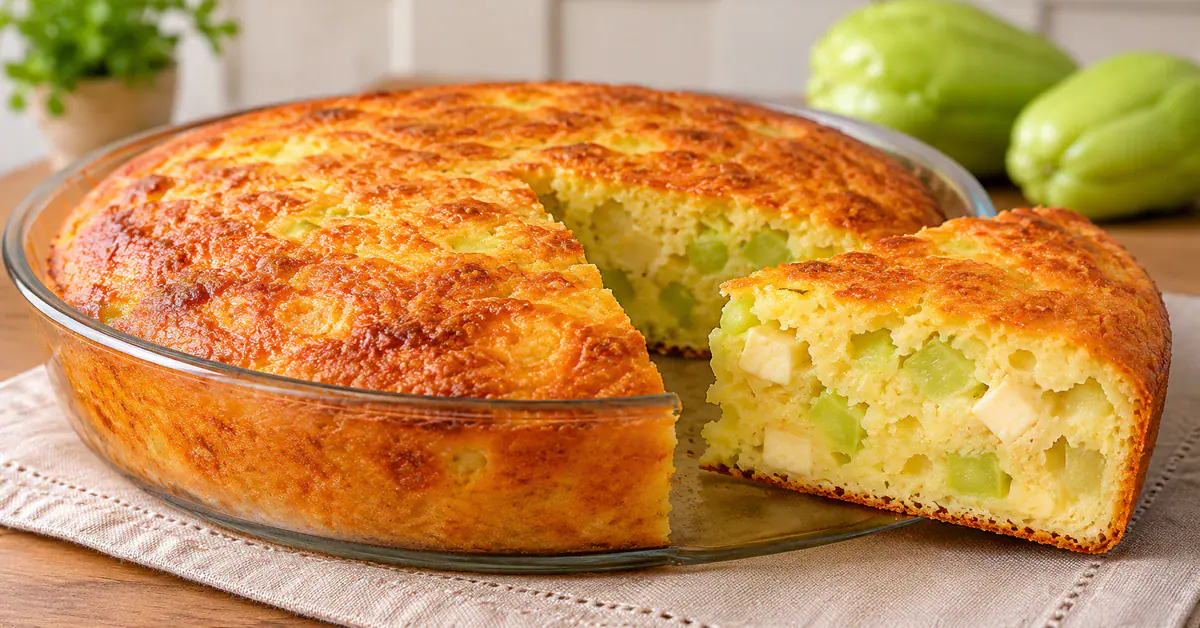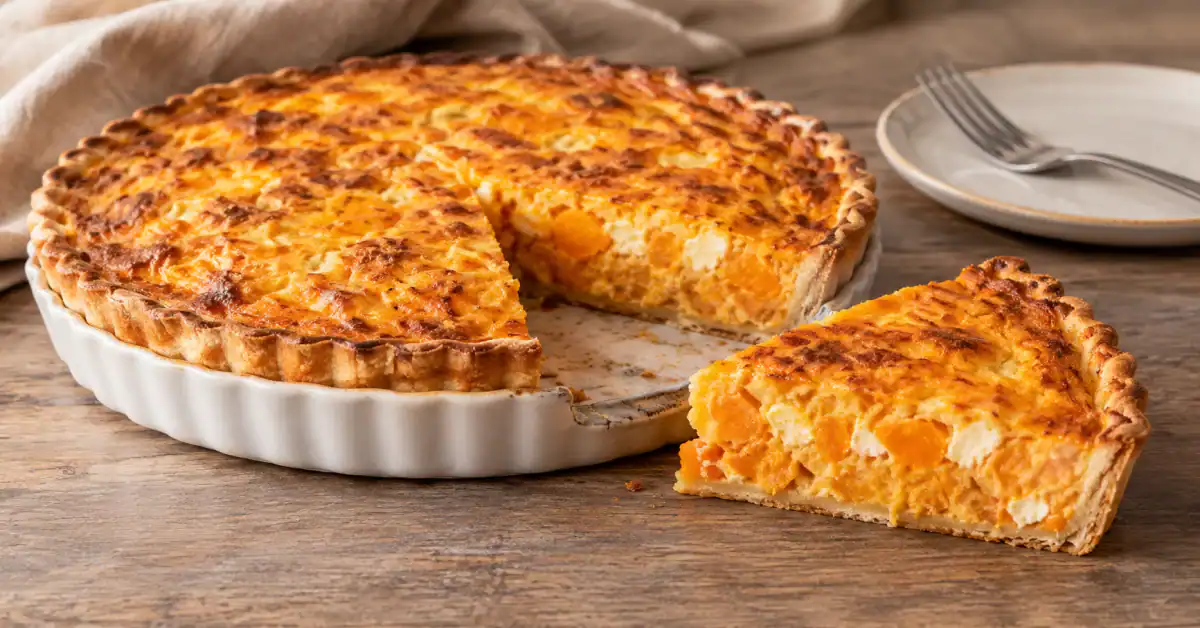

This Brazilian blender pie has sweet potato in the batter and goat’s cheese between the layers. Learn to blend a smooth, thick batter, assemble the pie and bake it at 180 °C until golden and set in the centre.
This sweet potato and goat’s cheese pie combines the ease of a blender batter with distinctive flavours. Blend until smooth and check the texture before baking. Follow the instructions to judge the consistency and doneness as you go.
Ingredients for the batter and filling
For the batter
- 300 g cooked sweet potato, peeled and mashed
- 3 eggs
- 240 ml milk
- 120 ml oil
- 240 g plain flour
- 12 g baking powder
- 3 g salt
- 10 g butter to grease the tin
- 10 g plain flour for dusting the tin
Using the sweet potato and goat’s cheese
- 180 g soft goat’s cheese (chèvre), crumbled
Add the sweet potato to the batter already cooked and mashed. Weigh it after peeling. Crumble the cheese so it’s easy to spread between the layers.
Prepare the sweet potato and blend the batter
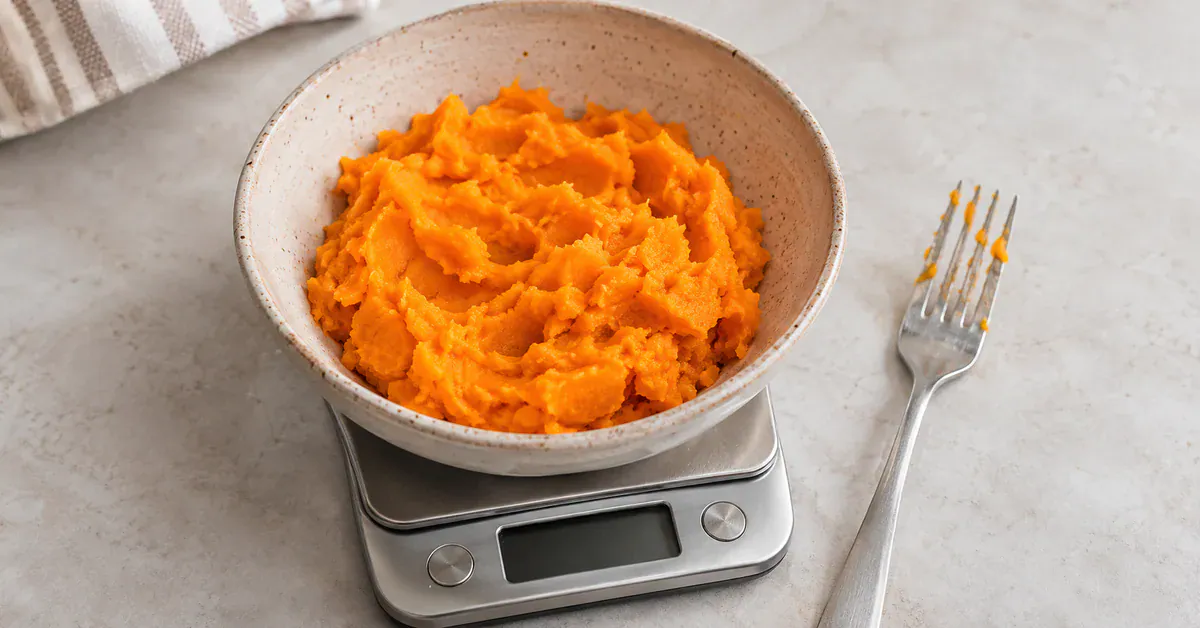
Get the sweet potato ready
- Cut the sweet potato into similar-sized pieces and cook in water until a fork slides through the flesh without resistance. Drain well, peel, mash and weigh out 300 g. Let it cool before blending with the eggs.
Blend the ingredients until smooth
- Put the eggs, milk, oil, mashed sweet potato and salt in the blender. Blend until smooth, with no large pieces of potato.
- Gradually add the 240 g plain flour, blending on low just until incorporated. If the jug fills up or the mixture stops circulating, transfer to a bowl and fold in the flour with a spatula.
- Gently fold in the 12 g baking powder with a spatula until no dry patches remain. The batter should be smooth and thick but fall from the spatula in a continuous ribbon. Avoid prolonged blending once the flour goes in.
Assemble and bake the pie
Layer the batter and goat’s cheese
- Heat the oven to 180 °C. Grease a medium tin with the 10 g butter and dust with the 10 g flour, covering the base and sides. Tap out excess flour.
- Pour half the batter into the tin and spread with a spatula. Scatter over the crumbled goat’s cheese without pressing down and cover with the rest of the batter. It’s fine if a few pieces of cheese are still visible.
Bake until golden and set
- Bake at 180 °C for about 35–45 minutes. The top should be golden and the centre firm to a light touch. Insert a cocktail stick into the batter away from the cheese. It should come out without raw batter.
- Take the pie out of the oven and let it rest in the tin for a few minutes before cutting. This helps the slices stay intact when served.
How to tell when the pie is baked
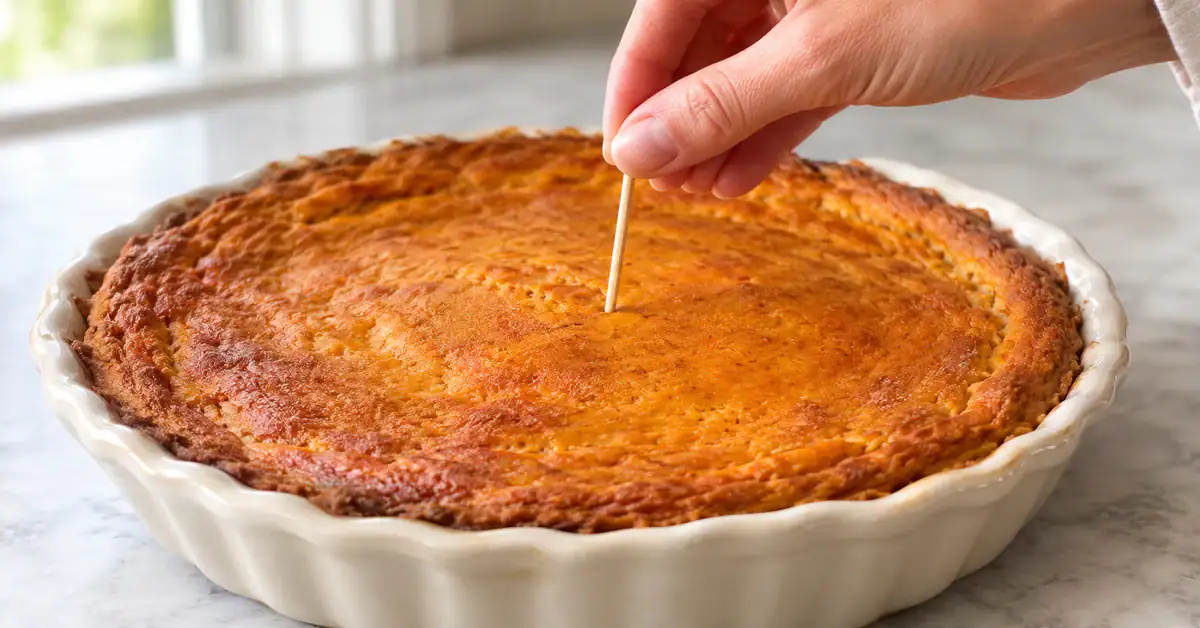
As well as a golden top, look for a firm centre that doesn’t wobble like liquid batter when lightly touched. Goat’s cheese softens as it melts, so test the batter away from it. The stick should come out free of raw batter.
If the top browns before the centre sets, check the centre before taking the pie out. Once baked, leave it in the tin for a few minutes so the batter settles and the slices are easier to serve.
Common problems and how to fix them
If the top has darkened but the centre is still soft, the surface colour alone isn’t a sign the pie is done. Cover the tin loosely with foil and keep baking, checking the centre again. The foil slows further browning while the batter sets.
Slices may stick where the tin wasn’t buttered and floured. After resting, run a thin spatula around the sides and gently lift out each slice without pulling at the batter. Next time, check the corners are coated too.
Possible substitutions and variations
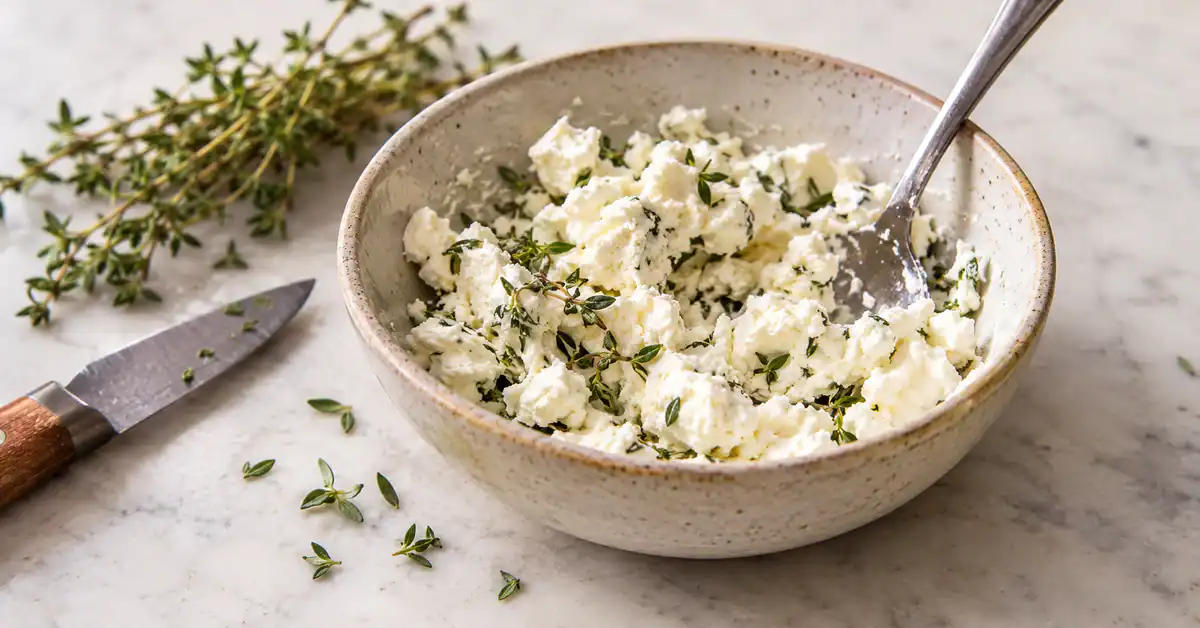
The main recipe uses soft goat’s cheese. You can change the cheese or add a herb, which will alter the result. Try one change at a time so you can tell how it affects the flavour and texture.
- Feta: use in place of the crumbled goat’s cheese. Feta is generally firmer and saltier, so reduce the salt in the batter to avoid oversalting the pie.
- Ricotta: use well-drained, crumbled ricotta instead of goat’s cheese for a milder flavour and a less creamy filling.
- Fresh herbs: mix thyme or chopped chives into the cheese before assembly to add aroma without changing the structure of the batter.
To keep the goat’s cheese flavour prominent, use it as directed and avoid adding salt to the filling.
Serving and storing leftovers
Serve after a brief rest in the tin, once the slices are firm enough to hold their shape. Pair with salad for lunch or supper, or cut smaller pieces for a snack.
Let leftovers cool and store in a closed container in the fridge. Reheat only the portion you want. The oven helps restore the browned surface, while a microwave leaves the batter softer.
At serving time
Serve with salad for lunch or supper, or cut into smaller pieces for a snack. For a change, try the ricotta version next time.
Questions about the recipe
Can I blend the sweet potato while it’s hot?
Let the sweet potato cool before blending with the eggs. This follows the order in the recipe and avoids blending a hot mixture.
The batter is quite thick. Should I add more milk?
No extra milk is needed if the batter is smooth and thick and falls from the spatula in a continuous ribbon. That’s the consistency you want.
My blender can’t mix in the flour. What should I do?
Transfer the mixture to a bowl and fold in the flour with a spatula. Avoid prolonged blending once the flour has been added.
Should I change anything if I use feta instead of goat’s cheese?
Reduce the salt in the batter, as feta tends to be saltier and firmer. The swap also changes the flavour and texture of the filling.
Does the pie need to cool before slicing?
Let it rest in the tin for a few minutes before cutting. This helps the slices firm up and stay together when served.