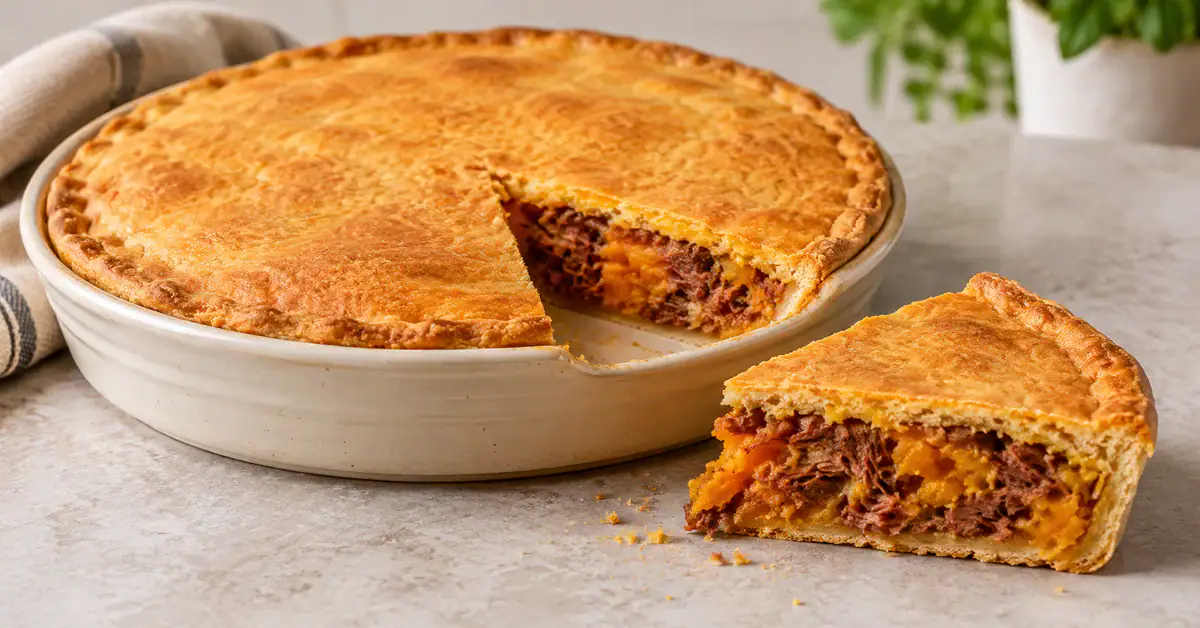

This blender pie with carne-seca and squash has a pourable batter made with eggs, milk, flour and Parmesan, and a filling of shredded Brazilian salt-cured beef and squash cubes. Assemble the layers in the tin and bake at 180°C until firm and golden.
This carne-seca and squash blender pie combines an easy batter with a filling that balances richly flavoured salt-cured beef and tender squash. The steps take you through making the batter and layering the filling before baking.
Ingredients for the batter and filling
Makes about 8 servings in a rectangular tin measuring roughly 20 × 30 cm.
Batter ingredients
- 3 eggs
- 2 cups milk (use a 240 ml cup)
- ½ cup oil (120 ml)
- 2 cups plain flour, loosely filled and levelled (use a 240 ml cup)
- 50 g grated Parmesan
- 1 tbsp baking powder (about 12 g)
- ½ tsp salt (about 2.5 ml)
Filling ingredients
- 500 g carne-seca (Brazilian salt-cured beef), in one piece, weighed before soaking
- 400 g kabocha squash, peeled and diced
- 1 tbsp oil
- 1 medium onion (about 120 g), chopped
- 2 garlic cloves, chopped
- 2 tbsp chopped fresh parsley
Prepare the carne-seca and squash filling

Soak and shred the salt-cured beef
- Cut the 500 g carne-seca into large pieces and put in a bowl with enough water to cover. Refrigerate for about 12 hours, changing the water every 3 or 4 hours. Thicker pieces may need longer.
- Drain the beef and put in a pressure cooker with enough fresh water to cover. Close the lid and place over a high heat. Once it reaches pressure, reduce the heat to medium and cook for about 30 minutes. Turn off the heat and let the pressure release completely before opening. The beef should pull apart easily with a fork. If it is still firm, cook under pressure for a few minutes longer.
- Drain the beef, let it cool until lukewarm and remove any excess fat or sinew. Shred with two forks or clean hands and set aside.
Cook the squash and add it to the filling
- Put the 400 g diced kabocha in a saucepan with enough water to almost cover. Cook over a medium heat for about 8–12 minutes, testing with a fork. The cubes should be tender but still intact. Drain thoroughly to keep excess water out of the filling.
- Heat 1 tbsp oil in a large frying pan over a medium heat. Add the chopped onion and stir until soft and slightly translucent. Add the garlic and stir for about 30 seconds, without letting it brown too much.
- Add the shredded beef and stir for 2–3 minutes to heat it through and bring the flavours together. Gently fold in the squash to keep some of the cubes intact, take off the heat and stir in the 2 tbsp parsley. Let the filling cool until lukewarm before assembly.
Blend the batter
Once the filling is lukewarm, make the batter just before assembly. Put the liquid ingredients in the blender first to help the blades move the mixture around.
- Put the 3 eggs, 2 cups milk, ½ cup oil and salt in the blender. Blend for a few seconds, just until the eggs are mixed into the liquids.
- Add the 2 cups flour and 50 g grated Parmesan. Blend on low or pulse, stopping to scrape the sides with a spatula if needed. Stop as soon as the batter is even. Prolonged blending can make it heavy.
- Add 1 tbsp baking powder and pulse a few times to incorporate. The batter should be smooth and pourable, a little thicker than pancake batter, with no dry patches of flour.
- Pour the finished batter into the tin as directed below. Use it promptly once the baking powder has been added.
Assemble and bake the pie

- Heat the oven to 180°C and line a roughly 20 × 30 cm rectangular tin with baking parchment, fitting the paper into the corners.
- Pour half the batter into the tin and spread to cover the base. Use a spoon or spatula to guide the pourable batter out to the edges.
- Spread the lukewarm filling over the batter. Avoid pressing down on the squash cubes so they keep their shape.
- Gradually pour the remaining batter over the top and spread gently. A few pieces of filling can show through, so there is no need to disturb the layers.
- Bake in the preheated oven for about 35–45 minutes. Ovens vary, so use the signs below to check the pie is baked.
How to tell when the pie is ready
After about 35 minutes at 180°C, check that the top is golden and firm and the edges have set. If the centre seems soft, bake for a few more minutes and check again. The total time will depend on the oven.
Insert a skewer into an area of batter away from pieces of squash and beef. It should come out free of raw batter, though a few moist crumbs are fine. If the top browns before the centre firms up, cover loosely with foil and continue baking.
The pie may still look moist around the filling if it has released water. Check the batter itself as well as the colour of the top.
Keeping the filling from getting too wet or salty

Control moisture in the filling
The squash should be tender but still in cubes and thoroughly drained before it goes into the frying pan. If liquid pools in the pan after mixing, leave the filling uncovered over a medium-low heat and stir gently until the excess evaporates. Let the filling cool to lukewarm. A hot or very wet filling can make the surrounding batter heavy.
Taste before adjusting the salt
The carne-seca and Parmesan both contain salt. Taste the beef after soaking and cooking, before adding the aromatics. If too salty, rinse it briefly in hot water and drain thoroughly before frying. Taste the finished filling as well before adding any extra salt.
Serving the pie and storing leftovers
Wait a few minutes after baking before cutting. The batter firms up a little and the slices are easier to serve. Serve warm with a simple salad if you like.
Once the leftover pieces have stopped steaming, put them in a closed container in the fridge. Reheat in the oven or microwave until hot in the middle. The crust tends to be softer after microwaving.
To serve
When the top is golden and the skewer comes out free of raw batter, take the pie out of the oven and wait a few minutes before slicing. Serve warm, with a simple salad if you like.
Frequently asked questions
Should the batter be very runny?
It should be smooth and pourable, a little thicker than pancake batter. If there are dry patches of flour, mix just until incorporated without prolonged beating.
Can I blend the batter in advance?
Prepare it just before assembling the pie. Once the baking powder is in, use it straight away to avoid leaving it to stand.
Can I assemble the pie with hot filling?
Let the filling cool until lukewarm before spreading it on the batter. A hot or very wet filling may make the batter around it heavy.
How can I stop the squash cubes from falling apart?
Test with a fork as they cook until tender but still holding their shape. Drain thoroughly and gently fold them into the filling.
The top has browned but the centre is still soft. What should I do?
Continue baking for a few minutes, then check the middle again. If the top browns too quickly, loosely cover it with foil while the centre finishes setting.