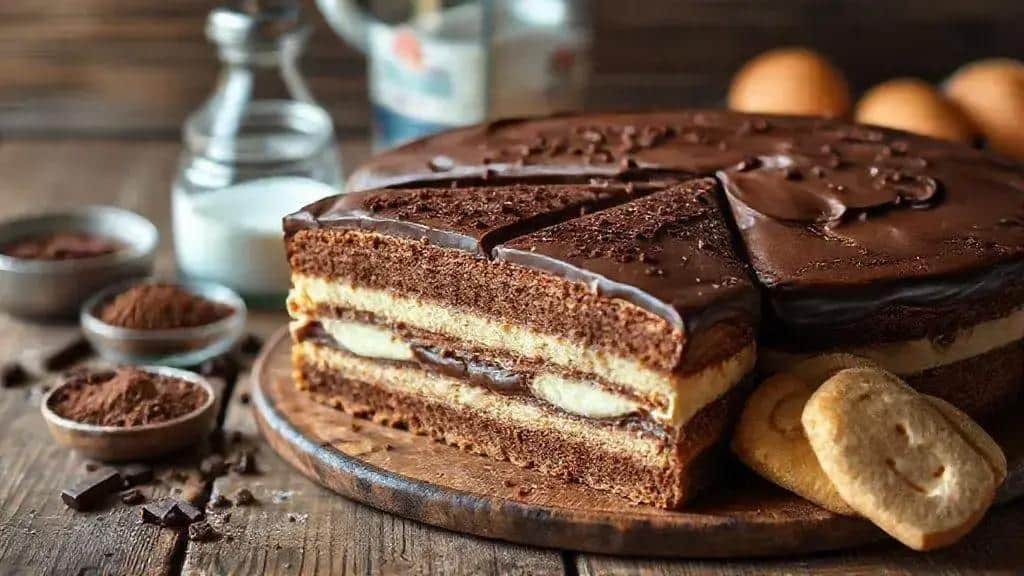

This German-style chocolate biscuit cake is a creamy, chilled dessert made with layers of chocolate filling and milk-dipped biscuits. The filling comes together quickly in a blender, and the cake is easy to assemble. It can be made vegan or gluten-free and needs several hours in the fridge to set.
This German-style chocolate biscuit cake has layers of silky chocolate cream and biscuits, and it’s easy to put together. Want to make it with a blender and give it a professional finish? I’ll take you through the steps and share variations and tips that work in a home kitchen.
Ingredients for German-style chocolate biscuit cake with a blender-made filling
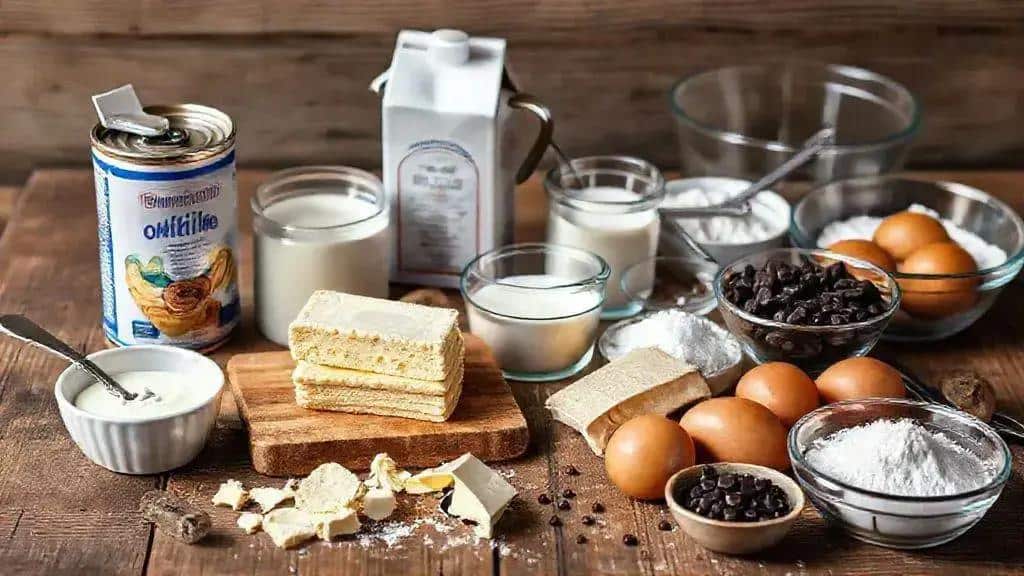
To make this German-style chocolate biscuit cake using a blender, you’ll need the ingredients below. The recipe makes enough to fill a medium cake tin (22 cm). I’ve included alternatives where they’re useful.
Chocolate cream filling
- 1 tin (395 g) of condensed milk forms the base of the filling. You can use reduced-fat condensed milk or 350 ml of evaporated milk mixed with 2 tablespoons of sugar.
- 1 carton (200 g) of cream gives the filling its creamy texture. Alternatively, use 200 ml of thick cream or 150 ml of fresh whipping cream.
- 3 tablespoons of sifted cocoa powder give the filling its chocolate flavour. Adjust to taste for a milder or more intense flavour. Alternatively, use 3 tablespoons of drinking chocolate powder for a sweeter filling, or 100 g of melted dark chocolate.
- 2 tablespoons of unsalted butter give the filling a glossy finish. Baking margarine also works.
Chocolate sponge mixture (optional, if you like layers of cake)
- 3 large eggs give the sponge its structure.
- 1/2 cup of oil (120 ml) keeps the sponge tender. Use a neutral vegetable oil or substitute 90 g of melted butter.
- 1 cup of milk (240 ml). Skimmed milk, almond milk or oat milk also work.
- 1 cup of sugar (200 g), adjusted to taste.
- 1 cup of plain flour (130 g). For a gluten-free sponge, use the same quantity of gluten-free flour blend.
- 1/2 cup of cocoa powder (48 g) gives the sponge its colour and chocolate flavour.
- 1 tablespoon of baking powder gives the sponge a little lift.
Biscuit layers and assembly
- 300 g of plain cornflour biscuits (Maizena-style) to layer with the filling. You can also use sponge fingers or Marie biscuits.
- 1 cup of milk for dipping the biscuits. For extra flavour, add 1 tablespoon of liqueur or coffee. Plant-based milk also works.
Chocolate ganache topping
- 150 g of dark chocolate, chopped, for the ganache. Use milk chocolate for a sweeter topping.
- 100 ml of fresh cream (or cream from a carton) for the ganache.
- 1 tablespoon of butter for a glossy finish (optional).
Decoration (optional)
- Chocolate shavings or cocoa powder to sprinkle over the top.
- Whole or broken biscuits to decorate the sides or top.
Adjust the sweetness to your taste by using less sugar or choosing dark chocolate. For a vegan version, swap the condensed milk for vegan condensed milk and the cream for plant-based cream.
How to make German-style chocolate biscuit cake with a blender, step by step
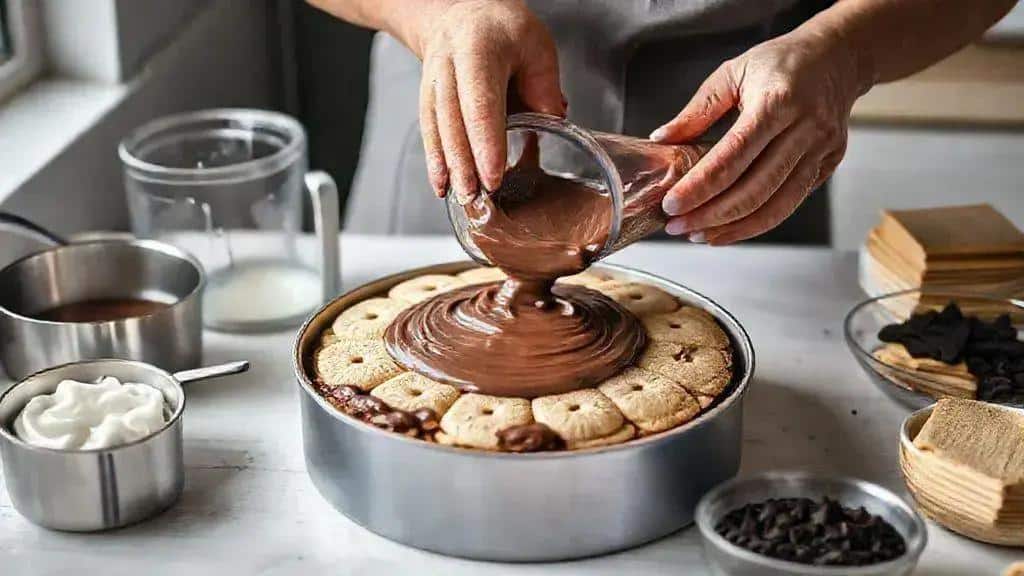
- To make the chocolate filling, blend 1 tin (395 g) of condensed milk, 1 carton (200 g) of cream, 3 tablespoons of cocoa powder and 2 tablespoons of butter until smooth.
- Pour the mixture into a medium saucepan and cook over a low heat, stirring constantly, until slightly thickened and glossy (3–5 minutes). Take it off the heat and leave to cool.
- Place 300 g of cornflour biscuits in a shallow bowl. Use 1 cup of milk to dip each biscuit briefly so it holds its shape without becoming soggy.
-
Optional sponge layers
If you’re making the sponge, blend 3 eggs, 1/2 cup of oil, 1 cup of milk, 1 cup of sugar, 1 cup of plain flour and 1/2 cup of cocoa powder. Add 1 tablespoon of baking powder last and bake in a 22 cm tin for 30–35 minutes. Leave to cool, then slice into thin layers.
- Arrange the dipped biscuits in an even layer across the base of a 22 cm round tin or a rectangular tin.
- Use a spatula to spread half the chocolate filling over the biscuits, covering them evenly without soaking them through.
- Add another layer of dipped biscuits, followed by the remaining filling. If you’re using sponge, alternate slices of sponge with the filling and biscuits as you prefer.
- Level the top with a spatula, cover with cling film and chill for at least 4 hours. Overnight is ideal for a firm set.
-
Make the ganache
For the topping, heat 100 ml of cream until it’s just below boiling point, pour it over 150 g of chopped dark chocolate and stir until smooth. Add 1 tablespoon of butter for a glossy finish.
- Take the cake out of the fridge, spread the warm ganache over the top and quickly smooth it out. Chill for another 30–60 minutes to set the topping.
- To decorate, scatter chocolate shavings over the top or dust with cocoa powder, then arrange a few whole biscuits around the edge.
- Keep the cake in the fridge until you’re ready to serve. Cut with a warmed knife for neat slices. It will keep, well covered, in the fridge for up to 4 days.
Variations and substitutions for German-style chocolate biscuit cake with a blender-made filling
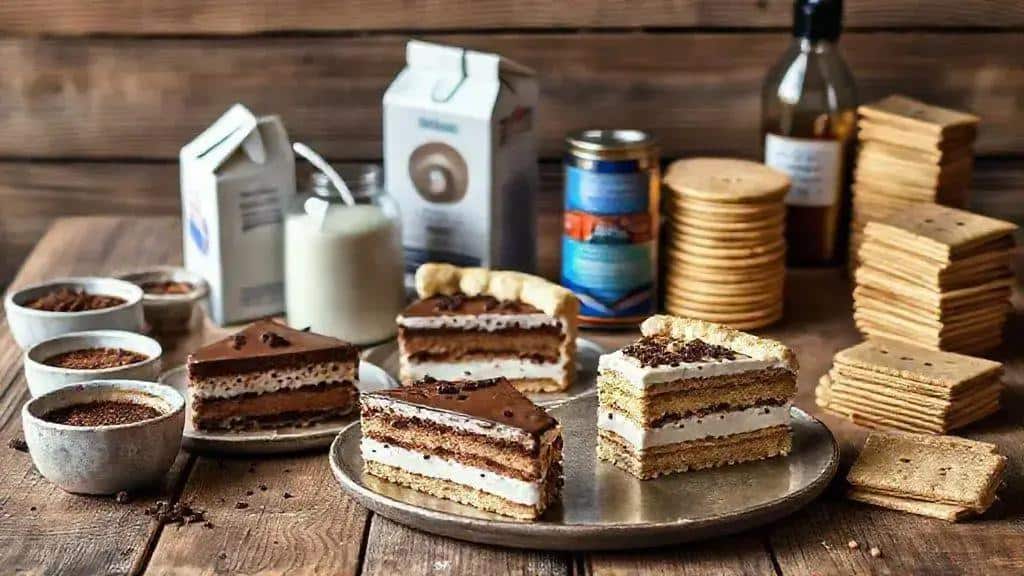
You can adapt this cake to suit different tastes and dietary requirements. Here are some simple variations and ingredient swaps.
Vegan version
Use plant-based alternatives to the dairy ingredients to keep the filling creamy.
- 1 tin of vegan condensed milk (or 395 g) in place of regular condensed milk.
- 200 ml of plant-based cream in place of dairy cream for a creamy filling.
- 3 tablespoons of cocoa powder for the chocolate flavour. Melted vegan dark chocolate also works.
- 300 g of plain vegan biscuits made without animal-derived ingredients.
Gluten-free version
Use gluten-free biscuits and, if you’re making the sponge, a gluten-free flour blend.
- 300 g of gluten-free biscuits, such as gluten-free cornflour biscuits or rice biscuits.
- Replace the plain flour with 1 cup of a gluten-free flour blend for bread or cakes.
Less sugar or a lighter version
A few small changes can reduce the sweetness while keeping the same texture.
- For fewer calories, choose reduced-fat condensed milk. Lactose-free condensed milk is also an option. Alternatively, use evaporated milk mixed with a natural sweetener such as erythritol.
- Use reduced-fat cream, or fat-free Greek yoghurt for a lighter texture.
- Use dark chocolate with 60–70% cocoa solids for a topping with less sugar.
Coffee or liqueur variation
Give the cake a deeper, more grown-up flavour using the same method.
- Dissolve 1 tablespoon of instant coffee in the milk for dipping the biscuits to bring out the chocolate flavour.
- Stir 1–2 tablespoons of amaretto, rum or Kahlúa into the dipping milk or the cooled filling.
Other useful substitutions
A few simple swaps make the recipe more versatile.
- For a vegan version, replace the butter with plant-based baking margarine or coconut oil.
- For a more intense flavour, replace the cocoa powder with melted dark chocolate (100 g).
- For a firmer ganache, use thick cream or fresh whipping cream in place of the cream from a carton.
Mini cakes and individual portions
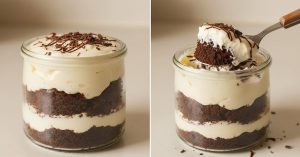
For parties, assemble individual portions in small moulds or cups. Cut the biscuits into smaller pieces, build up thin layers and chill for a shorter time for a creamier texture.
Quick tips
Try substitutions in a small batch first. Adjust the sweetness and consistency of the filling before assembling the cake. For neater slices, warm the knife briefly before cutting.
Tips for texture, assembly and presentation
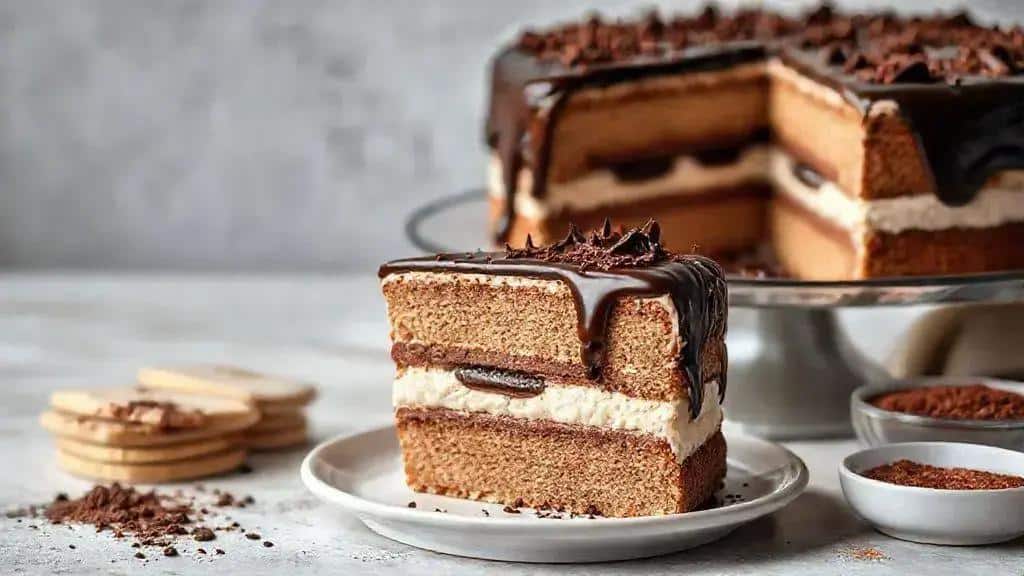
Texture
Cook the filling until it thickens slightly and turns glossy. It should fall slowly from the spoon without running straight off.
- Let the filling cool to room temperature before assembling the cake so it doesn’t soften the biscuits too much.
- If the filling is too stiff, stir in 1–2 tablespoons of cream. If it’s too thin, cook it for another 1–2 minutes.
- Blend only until smooth. Blending for too long incorporates too much air and changes the texture.
- Using your fingertips or a fork, dip each biscuit in the milk for 1–2 seconds so it doesn’t become soggy.
Assembly
- Arrange the dipped biscuits neatly in a single layer across the tin to make an even base for the layers above.
- Using a spatula, gently spread the filling from the centre out to the edges so the biscuits stay in place.
- Alternate biscuits and filling until the tin is full, finishing with a layer of filling ready for the ganache.
- Keep the layers thin and even so the cake holds its shape and slices easily.
- Cover with cling film and chill for at least 4 hours. For the best texture, leave it in the fridge overnight.
Ganache and topping
Let the ganache cool until it’s warm and no longer hot, then pour it over the cake. It should spread to a glossy finish without melting the filling.
- Add 1 tablespoon of butter to the ganache for extra shine.
- Warm a spatula in hot water, dry it and quickly smooth the ganache before it sets.
Presentation and slicing
- Warm the knife blade in hot water, wipe it dry and cut firmly for slices with smooth edges.
- For parties, cut smaller portions (6–8 cm) and serve on individual plates with chocolate shavings.
- For a simple, elegant finish, dust the top with cocoa powder, scatter over chocolate shavings or place 1 biscuit against the side.
- Take the cake out of the fridge 10–15 minutes before serving to soften the filling slightly and bring out its flavour.
Storage
Keep the cake in a sealed container in the fridge for up to 4 days. To freeze, wrap it in several layers and freeze for up to 1 month. Defrost in the fridge.
Always try a small change, such as using less milk or more cocoa, on a small batch before adapting the whole recipe. That way you can check the texture.
The story behind German-style chocolate biscuit cake
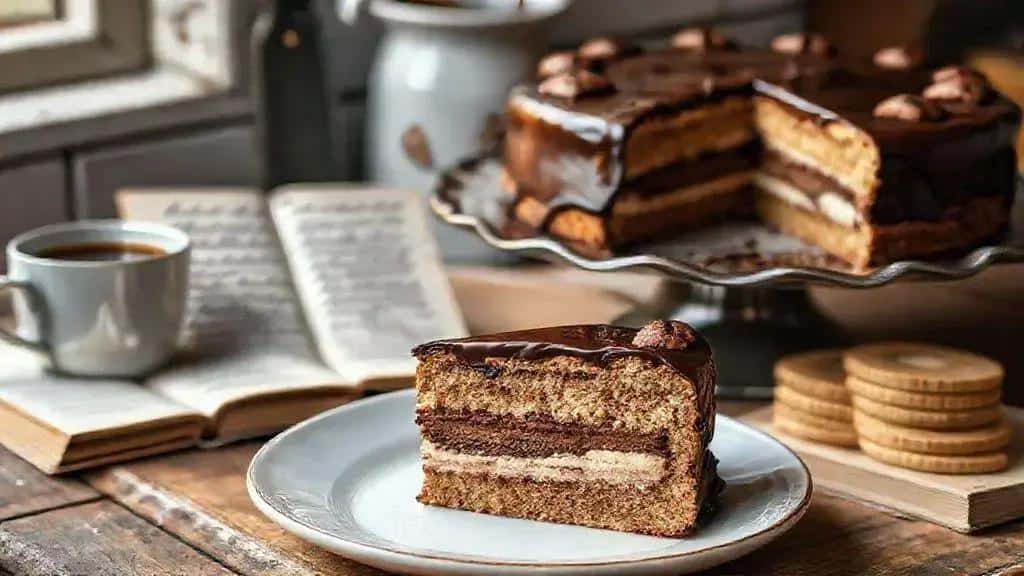
German-style biscuit cake is a popular Brazilian dessert known for its layers of chocolate cream and biscuits. Despite its name, its exact origins are unclear. The cake shows the influence of both European recipes and adaptations made in home kitchens.
Likely origins
There’s no historical consensus. Some accounts suggest that European immigrants adapted the recipe. Others say it originated in Brazil as a variation on chilled cakes made with plain biscuits. The combination of condensed milk and cream is typically Brazilian and helped establish the recipe locally.
Why ‘German’?
The name may reflect cultural associations or call to mind traditional European recipes. It doesn’t necessarily indicate a direct link to Germany. Often it’s simply a familiar name that suggests an old family recipe.
Similar recipes around the world
- Chocolate biscuit cake in the UK uses a similar no-bake method, with layers of biscuits and chocolate.
- Chilled biscuit cakes in Portugal and Brazil are often made at home with Marie biscuits or cornflour biscuits.
- No-bake chocolate tarts are one example of the desserts found in many cultures that combine cream and biscuits without baking.
The cake in Brazilian life
- The cake is a familiar sight at birthdays and other parties because it’s easy to assemble ahead of time.
- Regional variations include coffee, liqueur, a darker ganache or slices of sponge between the layers.
- In some regions, the cake is simply called ‘biscuit cake’ or ‘chilled chocolate cake’.
A few more facts
- The recipe uses affordable, readily available ingredients, which helped it spread to homes and cake shops.
- Using a blender, as many versions do, saves time and makes the recipe easier to prepare.
- For many families, this cake brings back memories of recipes handed down through the generations and is part of their home cooking tradition.
To finish
Making this German-style chocolate biscuit cake with a blender is easier than it looks. Everyday ingredients and a few straightforward steps give you a creamy, elegant dessert.
Try small variations, adjust the sweetness to your taste and give the cake plenty of time in the fridge for the layers to set. If you’re unsure about a change, try it on a smaller portion before making the whole recipe.
Thanks for following the recipe! Follow us on social media for more tips and step-by-step recipes, and visit the Mestre das Receitas blog for more inspiration.
Frequently asked questions about making German-style chocolate biscuit cake with a blender
How long should I chill the cake before serving?
Allow at least 4 hours. Ideally, leave it in the fridge overnight so the layers set firmly.
Can I use biscuits other than cornflour biscuits?
Yes. Sponge fingers, Marie biscuits and gluten-free biscuits all work. Adjust the dipping time so they don’t become soggy.
How do I make a vegan version?
Use vegan condensed milk, plant-based cream and biscuits made without animal-derived ingredients.
Can I freeze the cake?
Yes. Wrap it in cling film and aluminium foil and freeze for up to 1 month. Defrost in the fridge for 8–12 hours before serving.
How do I stop the cake from becoming too soft?
Don’t soak the biscuits for too long. Cook the filling until it thickens slightly and chill the cake long enough for the layers to set.
What’s the best way to cut neat slices?
Warm the knife blade in hot water, dry it and cut firmly. Warm the blade again between cuts for neat slices.