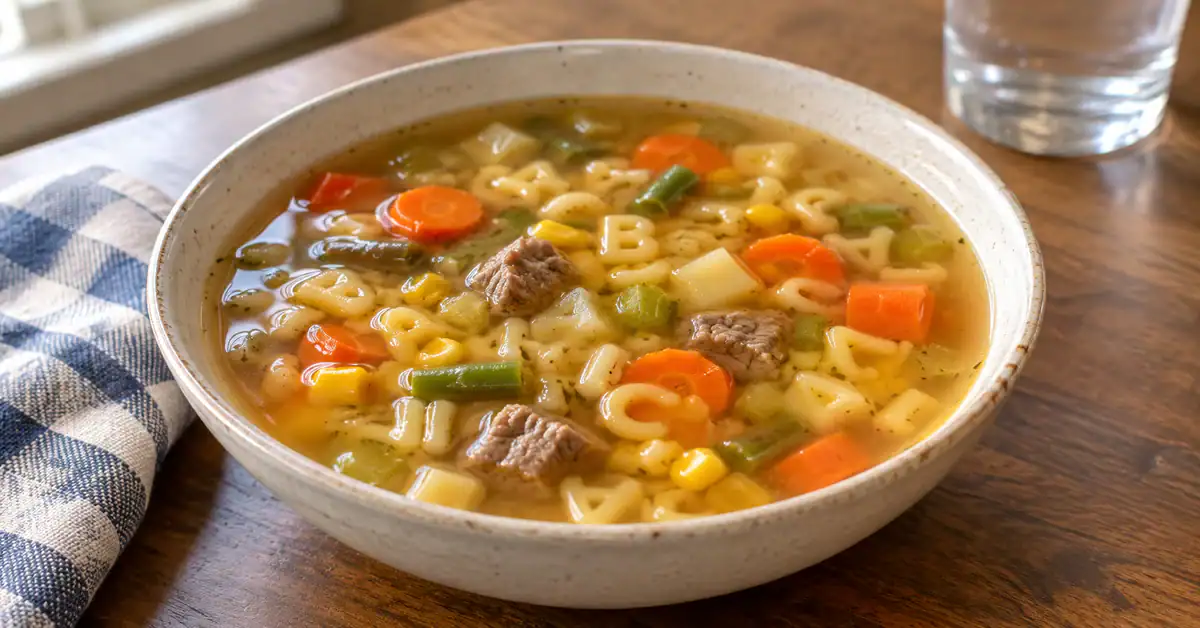

This beef and vegetable alphabet soup combines slow-cooked beef chuck with carrot, potato and green beans. Add the pasta only once the beef and vegetables have begun to soften. Cook just until the letters are tender and still hold their shape.
This beef and vegetable alphabet soup has a homemade broth, tender pieces of beef and vegetables, and tiny pasta letters that need a little care to avoid overcooking. The soup cooks in stages so the beef and vegetables have time to soften before the letters go into the pan.
Ingredients and quantities
These quantities make about 4 servings. Cut the beef into roughly 2 cm cubes and the vegetables into small pieces so they cook evenly.
Beef and broth ingredients
- 350 g beef chuck, cut into roughly 2 cm cubes
- 1 tablespoon (15 ml) oil
- 1 medium onion, chopped
- 2 garlic cloves, chopped
- 1.8 litres of water
- 1 bay leaf, optional
- Salt and black pepper to taste
Vegetables and alphabet pasta
- 1 medium carrot, peeled and cut into small cubes
- 1 medium potato, peeled and cut into small cubes
- ½ cup (about 50 g) fresh green beans, sliced crossways
- 100 g dried alphabet pasta
- 2 tablespoons chopped fresh parsley, optional
How to make the soup step by step
Cook the beef and start the broth
- To sear the beef, heat the oil in a large saucepan over a medium-high heat. Add the cubes of beef chuck and brown them for a few minutes, turning them so they take on colour on more than one side.
- To sauté the onion and garlic, reduce the heat to medium. Add the onion and cook, stirring, until it begins to soften. Add the garlic and cook for about 30 seconds, just until fragrant, taking care not to let it burn.
- To cook the beef in the broth, pour in the water, add the bay leaf if using, and season with salt and black pepper. Bring to the boil, then turn the heat down to low and partially cover the pan. Simmer for about 45 to 60 minutes, until a fork slides easily into the beef. If necessary, skim off any foam that forms on the surface.
Add the vegetables and finish with the pasta
- Add the carrot, potato and green beans to the pan. Simmer gently over a low heat for about 10 to 15 minutes, until the vegetables begin to soften. The tip of a knife should go in with a little resistance.
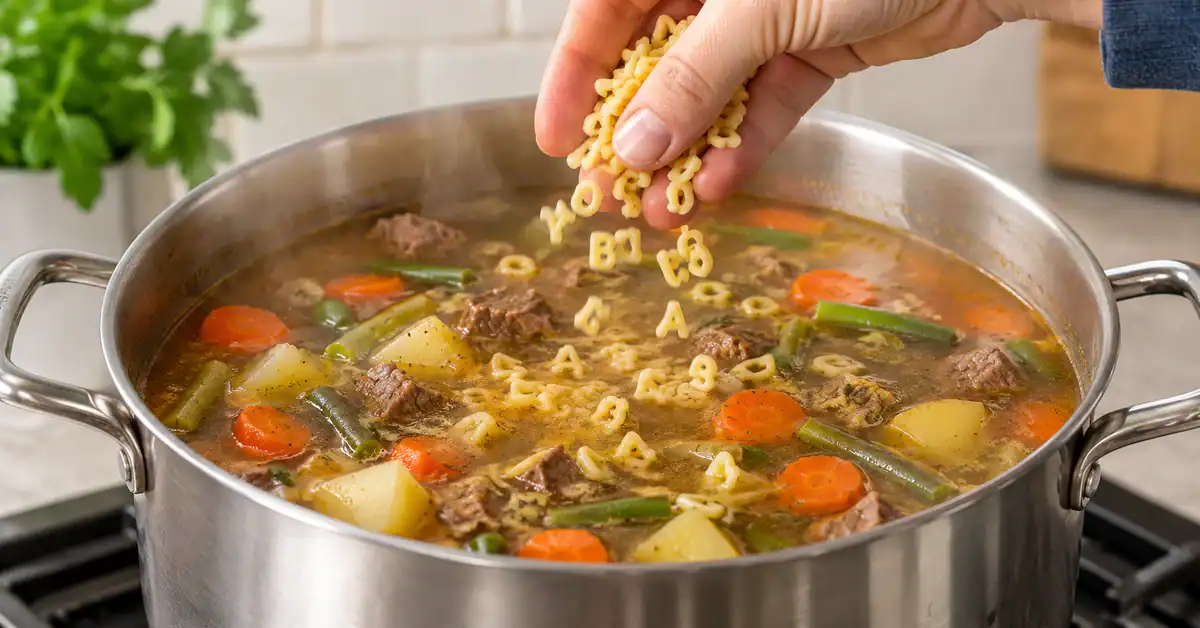
- Add the alphabet pasta and stir to distribute the letters through the broth. Cook according to the packet instructions, stirring occasionally, until the letters are tender but still hold their shape. Cooking times vary by brand, so start checking a few minutes before the time on the packet is up.
- To finish, taste the broth and adjust the salt and pepper if needed. Turn off the heat and stir in the parsley, if using.
How to tell when the beef and vegetables are tender
Check the beef and vegetables before adding the alphabet pasta. Pierce a cube of beef with a fork. The fork should slide in easily and the meat should give without feeling tough. If it still feels firm, keep the soup over a low heat and check again after a few minutes.
The carrot and potato should be tender and still hold their shape. Pierce a piece with the tip of a knife. The knife should go in fairly easily without the piece falling apart. The green beans should also be tender, with a little bite. If the vegetables are still hard, cook them a little longer before moving on.
When to add the alphabet pasta so it doesn’t overcook

Add the alphabet pasta only once the beef and vegetables are tender. If you add it earlier, the letters may overcook while the other ingredients still need more time.
Use the time on the packet as a guide, as it varies with the brand and size of the pasta. Taste a letter towards the end of that time and turn off the heat when it is tender and still holds its shape. The pasta will keep absorbing broth and softening in the heat of the pan, so avoid simmering it any longer once it reaches that point.
How to adjust the consistency of the broth
The amount of broth can change as the soup cooks. The beef and vegetables release liquid, and the pasta absorbs some of it. If the soup is thicker than you like, add a little hot water and stir gently. Taste before adjusting the salt, as the extra water dilutes the seasoning.
If the broth seems thin once the beef and vegetables are tender, simmer uncovered over a low heat for a few minutes before adding the pasta. Once the letters are in, avoid reducing the broth for too long. They will keep absorbing liquid and may overcook. For a thicker soup, turn off the heat while the broth is still a little thinner than you want it to be when you serve it.
Substitutions and variations
You can adapt the soup while keeping the main steps in the same order. Try one substitution at a time to see how it affects the flavour and texture.
- For a different cut of beef, use shin in place of chuck. Shin also needs to cook until tender, and the time may vary. Check it with a fork before adding the vegetables.
- To use chicken instead of beef, cook the chicken pieces just until they are cooked through and tender. They take less time than beef chuck, though the timing depends on the cut and the size of the pieces. Cooking them for as long as the chuck could dry them out.
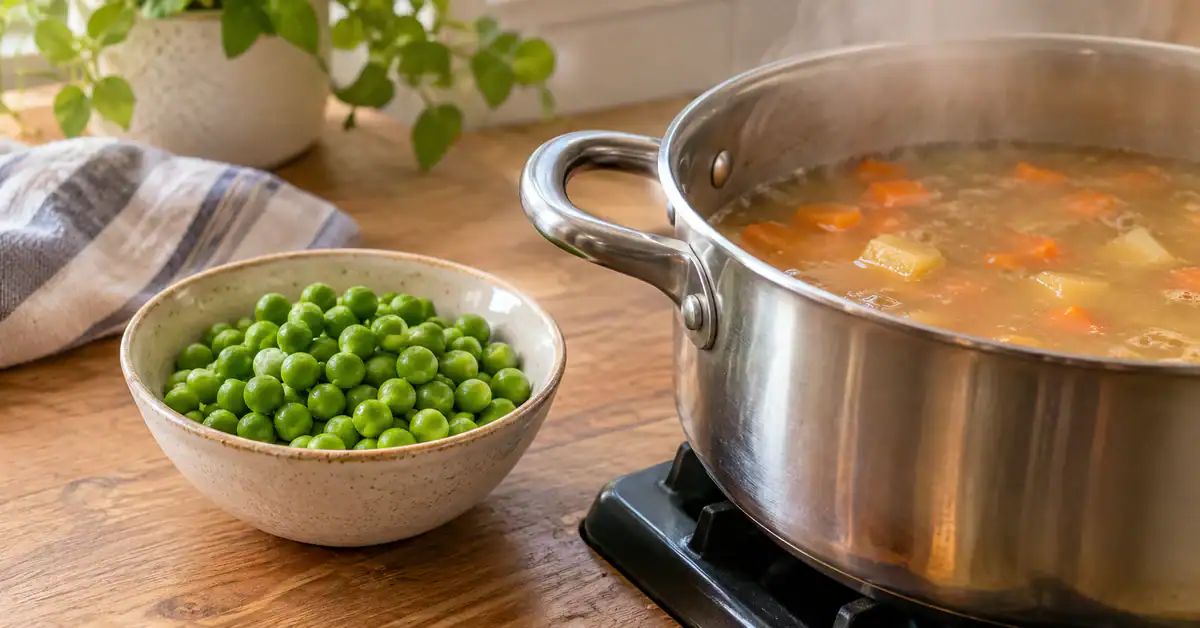
- If using peas instead of green beans, add them towards the end of the vegetables’ cooking time, as they soften quickly. They give the soup a more delicate texture and a slightly sweeter flavour.
How to serve the soup and store leftovers
Serve the soup hot, making sure each portion gets some beef, vegetables and broth. If you’re using parsley, stir it in at the end of cooking. Give the soup a stir before serving, as the ingredients can settle at the bottom of the pan.
The pasta letters keep absorbing broth, so the soup tends to thicken as it cools. Divide any leftovers between shallow, lidded containers and refrigerate as soon as possible. Avoid leaving the pan at room temperature for long.
Reheat only the portion you intend to serve, over a low heat, stirring gently. If it is too thick, add a little hot water and taste before adjusting the salt. The pasta may be softer than when it was first cooked.
Serve while hot
Once the pasta letters are tender and still hold their shape, turn off the heat and serve the soup. Next time, try beef shin or chicken in place of chuck, adjusting the cooking time as described above.
Common questions about making the soup
What if the beef chuck is still firm after 60 minutes?
Keep the pan over a low heat and simmer for a few more minutes, until a fork slides easily into the beef. The cooking time is a guide. Wait until the meat is tender before adding the vegetables.
Can I cook the alphabet pasta just before serving?
Yes. Cook the beef and vegetables first, then add the pasta closer to serving time, following the cooking time on the packet. This way, the letters spend less time in the hot broth.
Why does the soup thicken as it cools?
The pasta letters keep absorbing broth, so the soup tends to thicken. Add a little hot water when reheating and taste before adjusting the salt.
How do I use peas instead of green beans?
Add the peas towards the end of the vegetables’ cooking time, as they soften quickly. They give the soup a more delicate texture and a slightly sweeter flavour.
Do I need a pressure cooker for the beef?
No. Use a large saucepan and simmer gently with the lid partially on. Cook until a fork slides easily into the beef chuck, as the cooking time can vary.