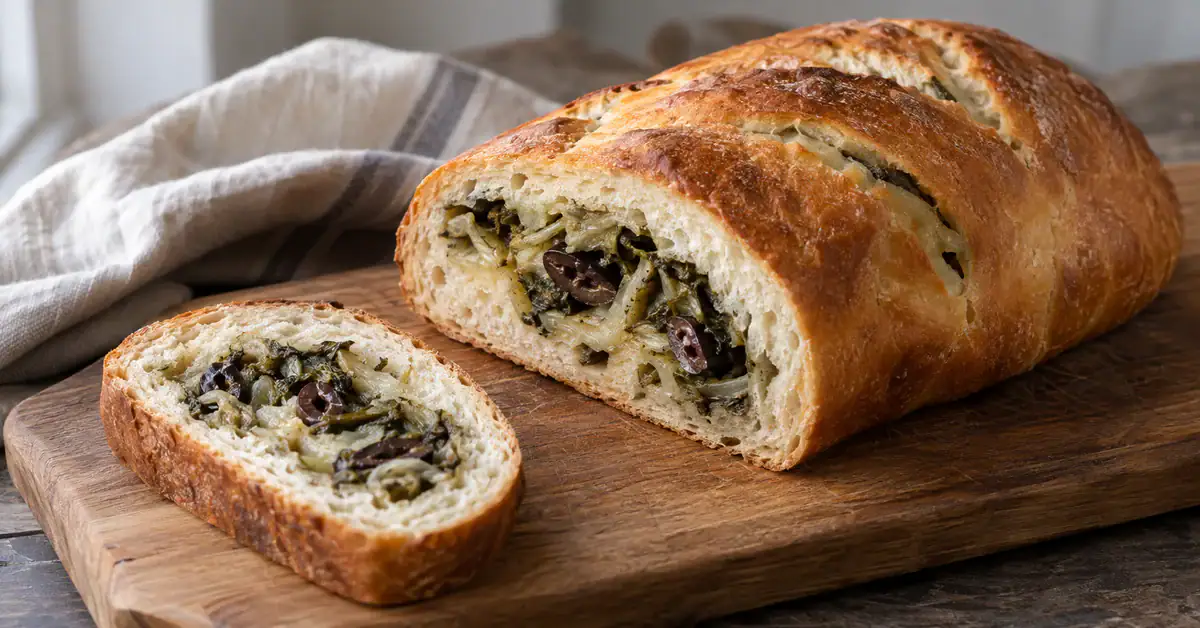

This stuffed loaf wraps sautéed escarole and olives in homemade bread dough, kneaded and left to rise before and after filling. Cool the filling and cook off any excess liquid before spreading it over the dough, rolling it up and baking until golden.
The slight bitterness of escarole and the saltiness of olives complement each other in this stuffed bread, ideal for a snack or to share at the table. Take care to spread the filling evenly so that each slice has a little of both flavours.
Ingredients for the dough and filling
Bread dough
- 500 g wheat flour
- 300 ml lukewarm water, not hot
- 7 g dried yeast
- 1 tablespoon (15 ml) sugar
- 10 g salt
- 2 tablespoons (30 ml) olive oil
Escarole and olive filling
- 300 g escarole, trimmed, washed, thoroughly dried and chopped
- 1 medium onion (about 100 g), chopped
- 2 garlic cloves (about 6 g), chopped
- 100 g green or black olives, pitted and drained
- 1 tablespoon (15 ml) olive oil
- ¼ teaspoon (about 1.5 g) salt
Prepare the filling before assembling
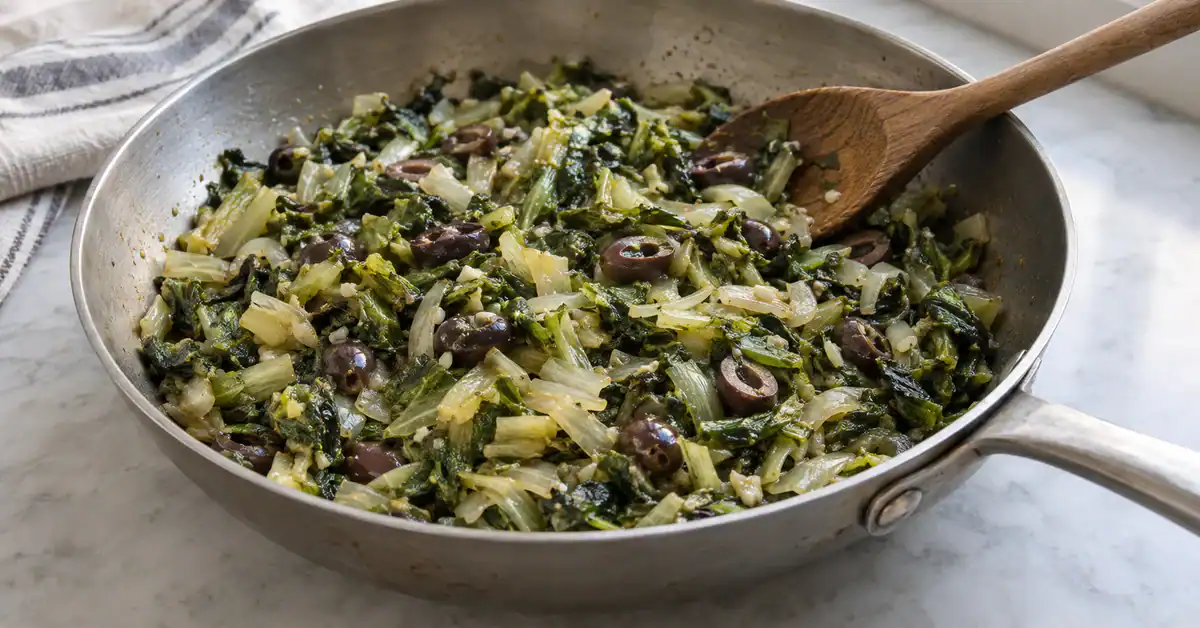
- Heat the olive oil in a large frying pan over a medium heat. Add the chopped onion and stir for about 3 to 4 minutes until soft and translucent, without letting it brown too much.
- Stir in the garlic for about 30 seconds, just until fragrant. Add the chopped escarole gradually. As the leaves start to wilt, add the rest and stir to spread the seasoning.
- Cook over a medium heat for about 5 to 8 minutes, stirring occasionally, until the escarole is tender and its liquid has evaporated. If any liquid remains in the pan, cook a little longer. A wet filling can make the dough soggy.
- Stir in the chopped pitted olives and salt. Taste and add more salt only if needed, as the olives are already salty. Spread the filling on a plate or platter and leave to cool completely before adding to the dough.
Make the dough and let it rise
- Combine the flour, dried yeast, sugar and salt in a large bowl. Mix with a spoon to distribute the yeast and salt through the flour.
- Pour in the lukewarm water and olive oil. Mix with a spoon at first. When the dough starts to come together, use your hands until no dry flour remains.
- Knead on a clean surface for about 8 to 10 minutes, folding the dough and pushing with the heel of your hand. It should be smooth, elastic and slightly tacky, without falling apart or sticking excessively.
- Return the dough to the bowl and cover with a clean cloth or cling film. Leave in a draught-free place for about 1 to 1½ hours or until doubled in size. Room temperature affects the timing, so judge the rise by the volume.
Once risen, the dough is ready to roll out and cover with the cooled filling.
Fill, shape and bake the bread
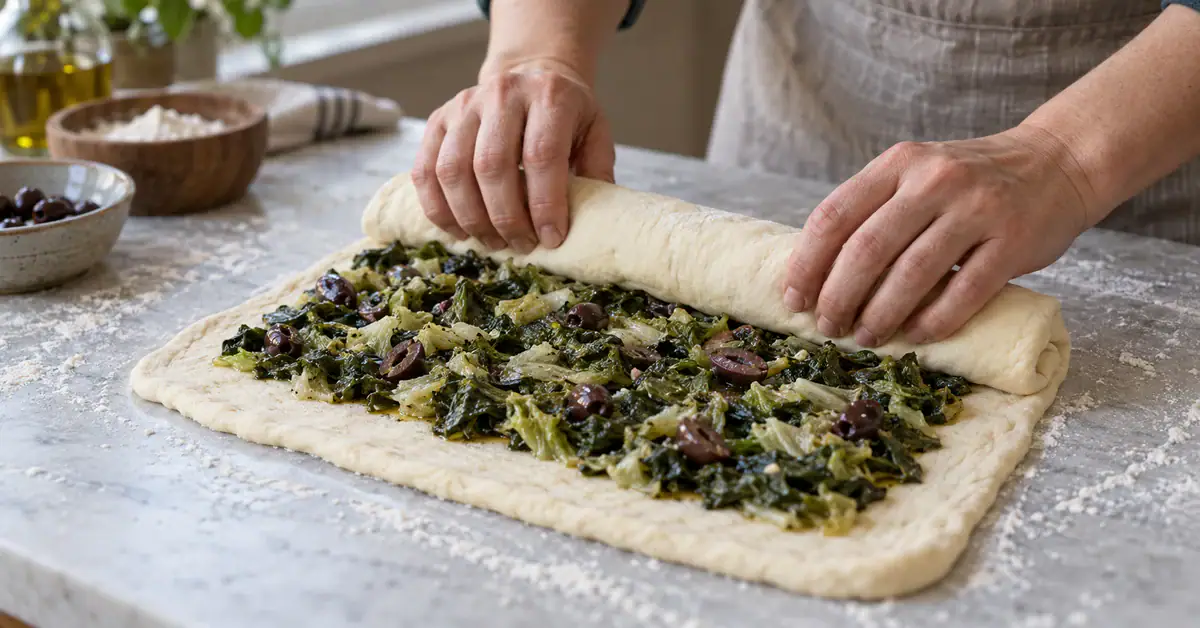
- Transfer the risen dough to a clean surface. Using your hands or a rolling pin, shape it into a rectangle about 30 × 40 cm. If it springs back, rest it for a few minutes and try again.
- Spread the cold filling over the dough, leaving a border of about 2 cm all round. Roll up from a long side without pulling so tightly that the dough tears. Pinch the seam and ends closed with your fingers.
- Place seam-side down on a baking tray lined with baking parchment. Cover loosely and leave for about 20 to 30 minutes until slightly puffier. Meanwhile, heat the oven to 200 °C.
- Bake in the preheated oven for about 30 to 40 minutes until golden on top. Remove the tray and wait a few minutes before transferring to a wire rack or board. This short rest helps the crumb firm up before slicing.
How to tell when it’s baked and serve it
Checking the bake
The loaf normally needs 30 to 40 minutes in an oven preheated to 200 °C. Look for a golden top and a coloured base with no pale patches. If the top browns well before the estimated time is up, cover loosely with foil and continue baking.
After removing the loaf from the oven, wait a few minutes before moving it to a wire rack or board. Let it cool a little longer before slicing. If cut while very hot, steam can leave the crumb damp and make it harder to slice neatly.
Serving and storage tips
Serve in slices for a snack or alongside a meal. The escarole and olive filling flavours the bread, so you can serve it on its own or with other dishes to suit the occasion.
Once completely cool, refrigerate leftovers in a sealed container. Reheat the slices until hot before serving again. The crust may lose some crispness in storage.
At serving time
Let the loaf cool until warm before slicing so the crumb can set. Serve the slices as a snack or with a meal.
Frequently asked questions
How do I stop the filling making the dough soggy?
Cook the escarole until the liquid it releases has evaporated. If any liquid remains at the bottom of the pan, leave it on the heat a little longer. Cool the filling completely before spreading.
Should the dough feel slightly sticky after kneading?
Yes. It can feel slightly tacky but should be smooth and elastic, without falling apart or sticking excessively. Knead for about 8 to 10 minutes and check the texture rather than trying to make it completely dry.
What if the dough hasn’t doubled in the time given?
Judge the rise mainly by volume, as timing varies with room temperature. Let the dough double before rolling out and filling.
Can I choose between green and black olives?
Yes. Use 100 g of either, pitted and drained. Since they are already salty, taste the filling before adding any more salt.
Do I need a rolling pin?
No. Use your hands or a rolling pin to form a rectangle about 30 × 40 cm. If the dough springs back, rest it for a few minutes before trying again.