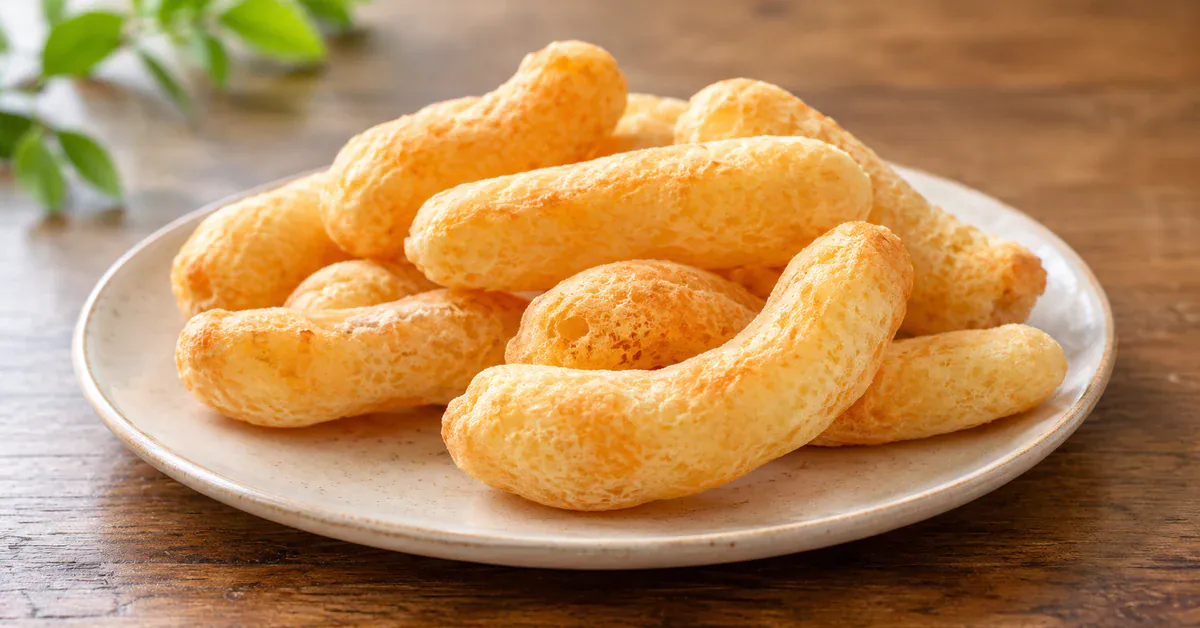

These cassava starch biscuits are made with sour cassava starch. Scald it with hot water and oil, then add eggs and just enough water for a soft, pliable dough. Start the pieces in cold oil over a medium heat and lift them out when puffed and lightly golden.
These fried sour cassava starch biscuits turn out light and crisp when the dough has the right consistency and the oil heats gradually. This homemade recipe shows how to judge when the dough is ready to shape and what to look for as the biscuits fry.
Ingredients and quantities
This version uses 500 g of cassava starch scalded with hot water and oil. Set aside a little extra water to adjust the dough after the eggs go in.
Ingredients
- 500 g sour cassava starch (polvilho azedo)
- 1 level teaspoon salt
- 200 ml water for scalding, plus up to 100 ml to adjust the dough
- 100 ml oil for scalding
- 2 eggs
- About 1 litre oil for frying, depending on the size of the pan
Making the dough, from scalding to shaping consistency
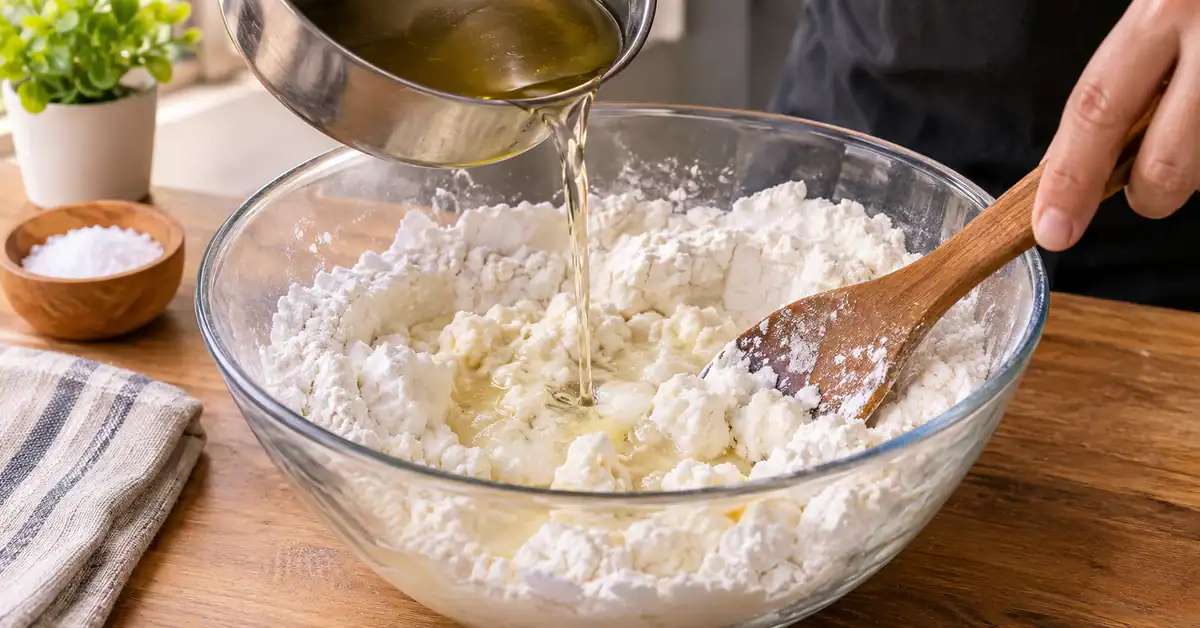
Scald the cassava starch
- Combine the 500 g of sour cassava starch and the level teaspoon of salt in a large bowl.
- Heat the 200 ml of water and 100 ml of oil in a pan over a medium heat. When the mixture boils, switch off the heat and gradually pour it over the starch, stirring with a wooden spoon or spatula. Work carefully to avoid splashes.
- Mix until there are no dry patches, then leave the dough to cool until comfortable to touch. Adding the eggs while it’s still hot could cook them.
Add the eggs and adjust the dough
- Mix one egg into the warm dough, then add the second. It may look uneven at first. Keep mixing with a spoon or your hands until uniform.
- Add the reserved water in small amounts, mixing after each addition. You may not need all 100 ml. Stop when the dough is soft and pliable and holds on the spoon. If it’s still dry and crumbly, add a little more water. It should now be easy to shape.
How to shape the biscuits
- Take small portions of dough and roll each between your hands into an even rope about 1 cm thick.
- Cut the ropes into lengths of about 6 cm. Keep the length and thickness similar so the biscuits fry evenly.
- Arrange the pieces in a single layer on a tray. If the dough cracks when rolled, press it gently between your hands before continuing. Don’t squeeze too hard or make very thick pieces, as they can fry unevenly.
Frying temperature and precautions
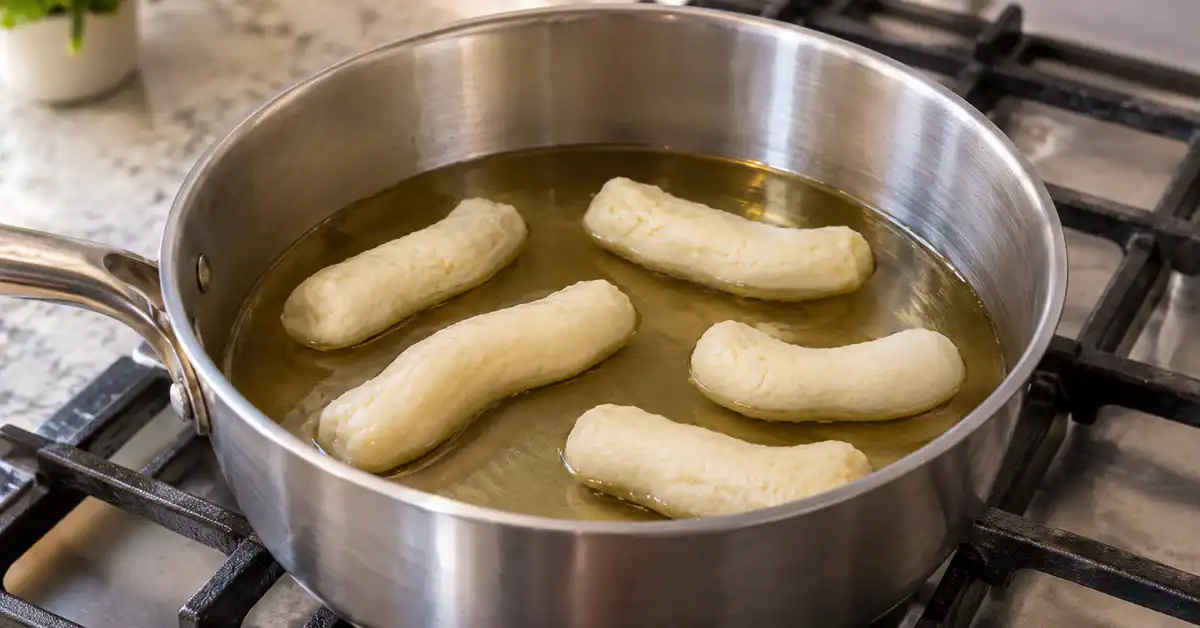
Start with cold oil
Pour enough frying oil into a deep pan to cover the biscuits. Place a few in the cold oil in a single layer. Set over a medium heat and let the temperature rise gradually so the outside doesn’t brown while the inside is still raw.
Fry without crowding the pan
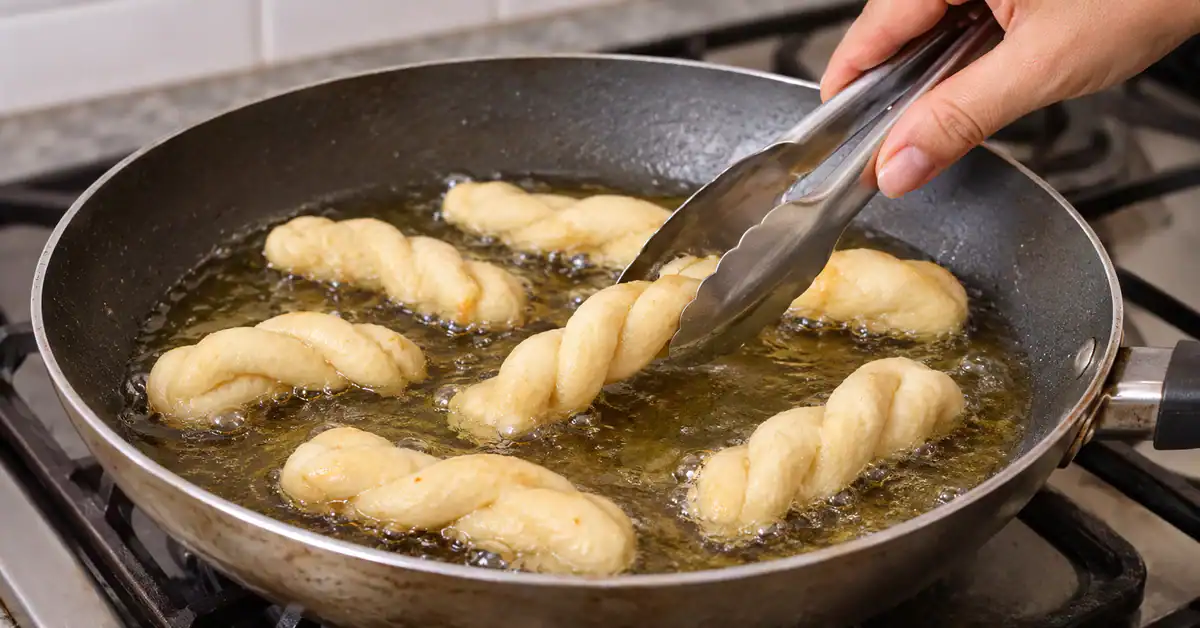
Fry a few at a time, leaving room for them to move and expand. When the biscuits begin to come free, turn them gently with a slotted spoon for even browning. Keep the heat medium. If the oil bubbles very vigorously or the biscuits darken quickly, reduce the heat before starting the next batch.
Lift each batch out with the slotted spoon and drain on a plate lined with kitchen paper. Let the oil cool until lukewarm before starting another batch. Don’t put raw biscuits into very hot oil.
How to tell when the biscuits are ready
Watch each batch. The biscuits generally puff up, firm up and rise to the surface. Turn with a slotted spoon to brown evenly and remove when lightly golden. Don’t wait for them to darken, as they can overcook quickly.
Bubbling tends to ease as the biscuits fry. This and an even colour help you judge doneness. Heat levels and biscuit sizes vary, so don’t rely on time alone. Drain on kitchen paper as directed and watch the next batch before adjusting the heat.
Common problems and how to fix them
If the dough cracks when rolled, it may be dry or unevenly mixed. Press it gently between your hands. If some of the reserved water remains, add it a little at a time without exceeding the 100 ml allowance.
If the biscuits darken before firming up, the oil may be too hot. Reduce the heat and watch the batch. Let the oil cool to lukewarm before adding more raw biscuits.
Different thicknesses or a crowded pan can cause uneven frying. Roll even ropes and fry only a few pieces at a time, gently turning them when they start to come free.
How to serve and store
Drain on kitchen paper and let the biscuits cool slightly before serving. The outside is crispest when freshly fried. Wait a few minutes before eating, as the centres can be very hot.
Let leftovers cool completely before putting them in a tightly sealed container so steam doesn’t soften them. They lose some crispness over time and are best eaten soon after frying.
Serve while still crisp
After draining, let the biscuits cool slightly, then serve while the outsides are crisp. Cool leftovers completely before storing in a tightly sealed container.
Questions about the method
Do I need all 100 ml of the reserved water?
Not necessarily. Add it gradually, just until the dough is soft and pliable without running off the spoon. Use no more than 100 ml for this adjustment.
Why let the dough cool before adding the eggs?
Wait until the dough is cool enough to touch comfortably. If it’s too hot, it may cook the eggs.
Why start the biscuits in cold oil?
The temperature rises gradually so the outside is less likely to brown quickly while the centre is still raw. Keep the heat medium and don’t add another batch while the oil is very hot.
How can I tell when the biscuits are ready?
Remove them when firmer and lightly golden, before they darken. Look for puffing, even colour and less bubbling around them. Don’t rely on frying time alone.
What if the dough cracks when I roll it?
Press it gently between your hands to bring it together. If it’s still dry and there’s reserved water left, add a little at a time without exceeding the 100 ml allowance.