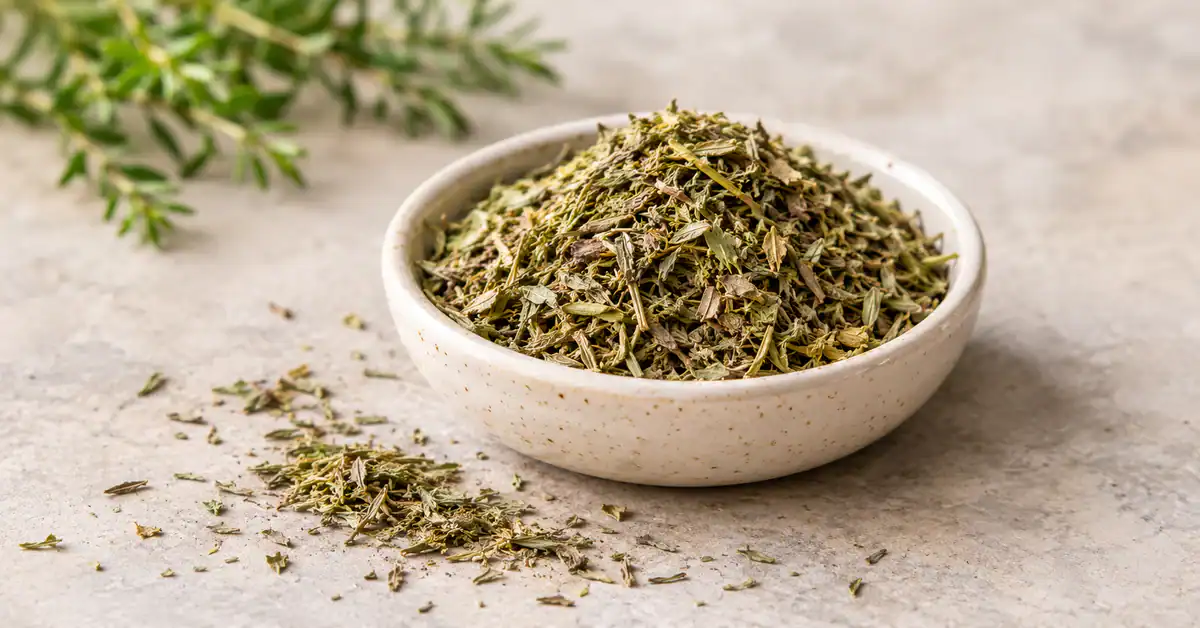

Homemade herbes de Provence combines dried herbs in balanced proportions, with thyme as the base and optional culinary lavender. Mix the herbs and adjust the aromas a little at a time, leaving the leaves in flakes rather than grinding them to a powder.
Making your own herbes de Provence lets you choose a blend of dried herbs that suits your taste. There is no single formula. Simply combine the herbs, paying attention to their proportions, and adjust gradually so that no one aroma dominates.
Ingredients and proportions
This is one way to make the blend at home. Thyme makes up the largest share, with the other herbs rounding out its aroma. Use level measuring spoons: a 15 ml tablespoon and a 5 ml teaspoon. Makes about 6 tablespoons, before adding the optional lavender.
Dried herbs for the blend
- 2 level tablespoons dried thyme
- 1 level tablespoon dried rosemary leaves
- 1 level tablespoon dried oregano
- 1 level tablespoon dried marjoram
- 1 level tablespoon dried savory
Optional herb for a variation
- 1 level teaspoon dried culinary lavender (optional, for a more distinct floral note)
How to prepare the herb blend
Combine the ingredients and check the texture
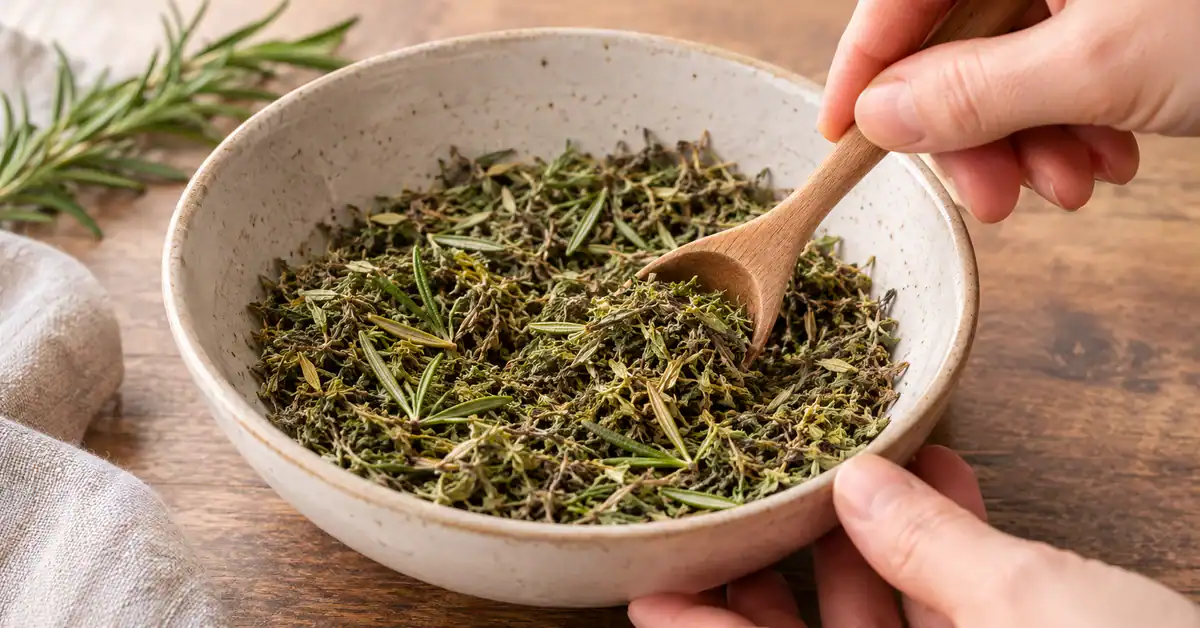
- Put the measured dried herbs in a clean, dry bowl. Add the culinary lavender if using. Stir with a spoon until the leaves and their aromas are evenly distributed.
- Check for any particularly large pieces of rosemary. Gently crumble them between your fingers and stir again. Avoid grinding the herbs to powder. The mixture should be loose, without damp patches or lumps.
Choosing herbs to suit your taste
Consider which aroma you would like to notice first. Thyme has a dry, herbal note, rosemary is more resinous and pronounced, and oregano brings a familiar, robust flavour.
- Marjoram makes the blend gentler and slightly sweet.
- Savory adds a lively herbal note with a hint of pepper.
- Optional culinary lavender adds a noticeable floral note. If you rarely enjoy floral aromas in food, you can leave it out.
For a subtle blend, favour the milder herbs and use the stronger ones sparingly. For a bolder, more aromatic result, give rosemary and savory a clear presence. Dried herbs vary with age and storage, so smell each one before mixing to see whether any is particularly strong.
Adjusting the balance of aromas
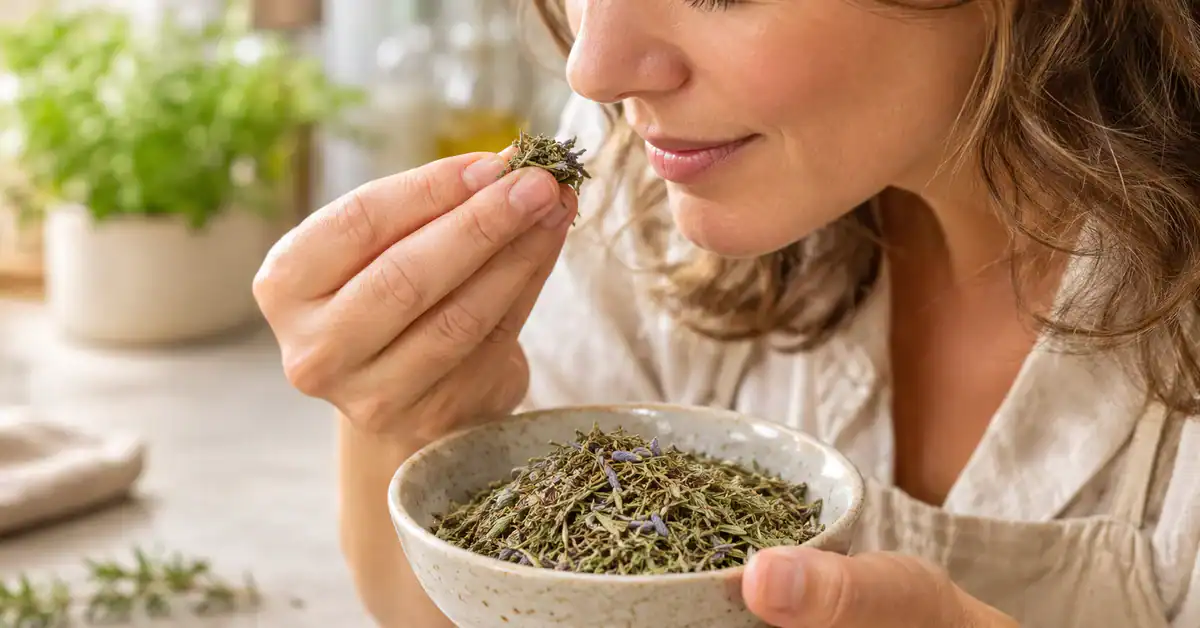
Adjust in small steps. Rub a pinch of the blend between your fingers to release the aroma and smell before adding anything. If a note seems faint, add a little of that herb, mix well and check again. If you add several at once, it is harder to tell what has changed.
If rosemary or savory dominates, add a little marjoram and mix again. If the lavender makes it too floral, prepare a separate portion without lavender and blend it in gradually. The pieces are difficult to remove once mixed.
Dried herbs may smell stronger on their own than they taste in a finished dish. When adjusting the blend for a particular recipe, add a little at a time during cooking and judge the aroma of the food before adding more.
Substitutions and variations
If savory is unavailable, replace the 1 tablespoon of savory with 1 tablespoon of dried thyme. This gives a less lively, more thyme-led blend and changes the balance of the original version.
For a stronger flavour, replace the 1 tablespoon of marjoram with the same amount of dried oregano. The result will be bolder and less mellow. Make one substitution at a time to judge its effect.
Using the blend in different dishes
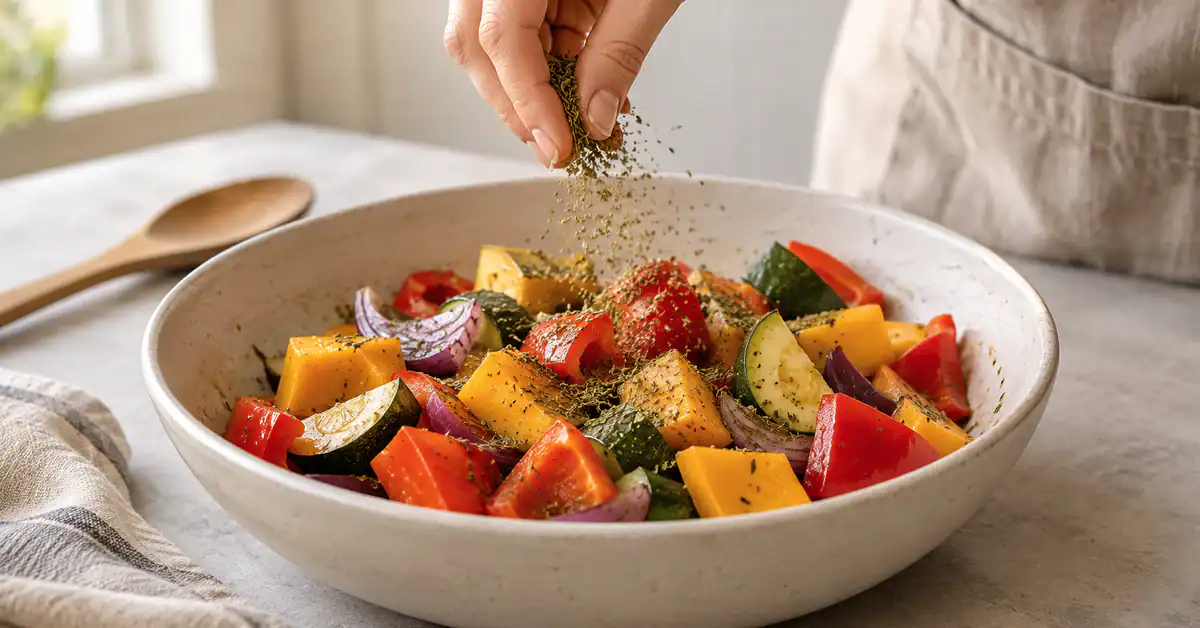
Use herbes de Provence in savoury dishes, remembering that dried leaves have a concentrated aroma. Start with a pinch, stir into the dish and taste before adding more. The right quantity depends on the size of the dish and the strength of the herbs.
- Roast vegetables: toss the herbs with the vegetables before roasting so the flavour spreads as they cook.
- Sauces and soups: add a pinch during cooking and stir it in. If the flavour seems faint, add a little more towards the end.
- Meat and poultry: scatter a small amount over the surface before roasting or grilling. A thick layer may overpower other flavours.
If using lavender, add the blend sparingly to dishes where a floral note suits the other ingredients. Bear in mind the salt and other seasonings already in the recipe when choosing how much to use.
How to store homemade herbes de Provence
Keep the blend in a clean, completely dry jar with a tight-fitting lid. Store it in a cool, dry cupboard away from direct light and the heat of the hob, which can weaken the aroma over time.
Use a dry spoon and close the jar straight after use. Discard the blend if you notice dampness, clumps or an unusual smell. As the strength of the herbs can vary, check the aroma before using.
Choosing how to use it
Decide whether you prefer to leave out the lavender or try one of the substitutions. Start by tossing a pinch with vegetables before roasting, then adjust gradually to suit their aroma.
Questions about the herb blend
What if the rosemary pieces are too large?
Crumble them gently between your fingers and mix again. Keep the blend loose and avoid grinding it to powder.
The lavender smells too floral. How can I adjust it?
Make a portion without lavender and mix it in gradually. Once the lavender pieces have been mixed in, they cannot be picked out easily.
Can I replace savory with another herb?
If you cannot find savory, replace its 1 tablespoon with 1 tablespoon of dried thyme. The blend will be less lively, with a more pronounced thyme flavour.
How much of the blend should I add to a dish?
Start with a pinch, mix it into the food and taste before adding more. The right quantity depends on the size of the dish, the strength of the herbs and other seasonings, including salt.
How do I know whether the herbs are still good to use?
Check the aroma before using, as its strength can vary. Discard the blend if there is any moisture, clumping or change in smell.