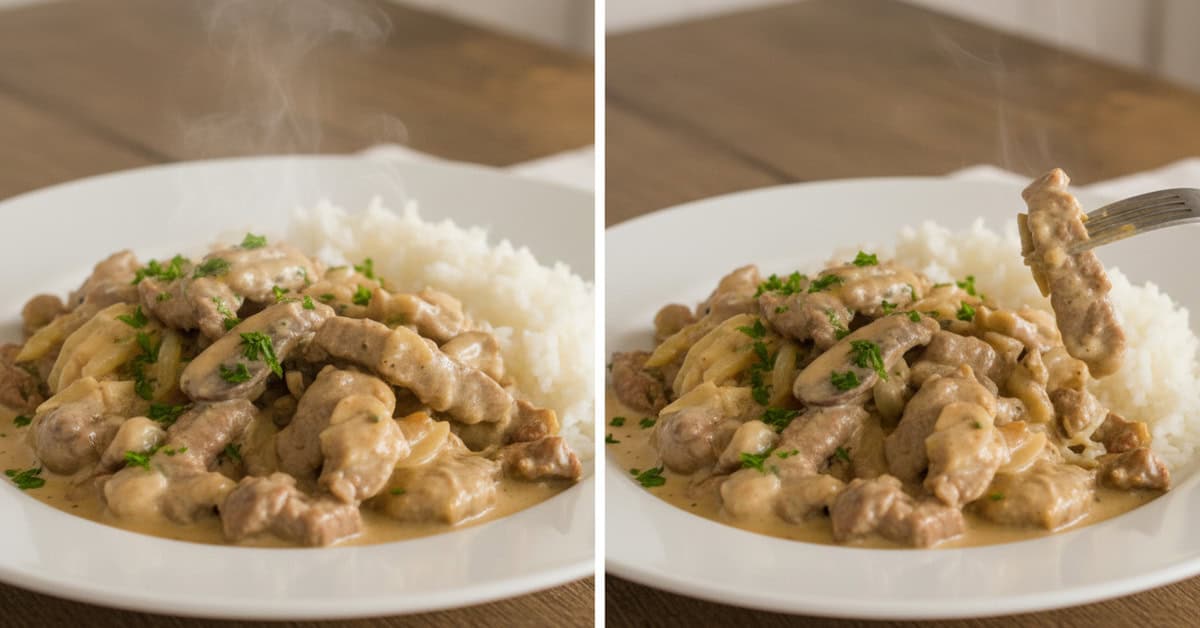

This Midwestern-style beef stroganoff combines seared strips of beef, sautéed mushrooms and a creamy sauce seasoned with mustard and Worcestershire sauce. Slice the beef across the grain, sear it in a hot pan and stir in the cream at the end.
Tender beef, mushrooms and a velvety sauce make this Midwestern-style stroganoff a quick dinner. Here’s how to choose the meat, brown it well and keep the sauce smooth.
Ingredients for homemade beef stroganoff

- 600 g beef, such as rump, strip loin or tenderloin, cut into strips across the grain. For a lighter variation, use strips of chicken.
- 2 tbsp butter or 1 tbsp vegetable oil for searing and sautéing. Mild olive oil also works.
- 1 medium onion, chopped. Use red onion for a slightly sweeter flavour.
- 2 garlic cloves, minced, or to taste.
- 200 g fresh button mushrooms, cleaned and sliced. Shiitakes also work, as do canned mushrooms, thoroughly drained.
- 1 tbsp ketchup for a little sweetness and acidity, or 1 tbsp tomato paste mixed with ½ tsp sugar.
- 1 tsp Dijon mustard for depth. Try mild yellow mustard or paprika for a different flavour.
- ½ cup (120 ml) beef stock, homemade or made with ½ stock cube dissolved in water.
- 1 tbsp Worcestershire sauce. For a substitute, use light soy sauce and an extra pinch of salt to taste.
- 200 g cream or 200 ml crème fraîche. Alternatives include soy cream for a dairy-free sauce, or 150 g Brazilian requeijão cream cheese mixed with 50 ml milk.
- Salt and freshly ground black pepper to taste, depending on the beef and how salty the stock is.
- 1 tbsp plain flour mixed with 2 tbsp water, optional, to thicken the sauce. Alternatively, use 1 tsp cornstarch.
- Chopped fresh parsley to taste.
- White rice and/or pasta (250–300 g) and crunchy shoestring potatoes to serve. For a more rustic meal, try mashed potatoes.
Quick substitutions and tips
Rump and strip loin offer a good balance of tenderness and cost. Tenderloin is particularly tender but usually costs more. Slice across the grain to shorten the muscle fibres.
Fresh mushrooms have the best texture. If using canned mushrooms, rinse and drain them thoroughly to keep water out of the sauce.
For a lighter sauce, use reduced-fat cream or blend requeijão with milk. For a gluten-free thickener, use cornstarch instead of flour.
Adjust the Worcestershire sauce, mustard and ketchup to taste. Taste before adding salt, especially if using prepared stock.
How to make Midwestern-style beef stroganoff

- Slice 600 g beef thinly across the grain. Slice 200 g mushrooms and chop 1 medium onion and 2 garlic cloves. Measure out 120 ml stock, 1 tbsp ketchup, 1 tsp Dijon mustard, 1 tbsp Worcestershire sauce and 200 ml cream.
- Season the beef with salt and black pepper shortly before searing.
- Heat a large frying pan over high heat with 1 tbsp butter or oil until hot.
- Add the beef in small batches, without crowding. Leave it undisturbed for 1–2 minutes to brown, then turn and sear for another 30–60 seconds. Transfer to a plate while you prepare the sauce.
- Reduce the heat to medium. Add a little more butter if needed and cook the onion in the same pan until translucent, about 3 minutes. Add the garlic and stir for 30 seconds.
- Add the sliced mushrooms and cook for 4–5 minutes until their liquid evaporates and they start to brown. This concentrates their flavour and keeps the sauce from becoming watery.
- Stir in the ketchup, mustard and Worcestershire sauce, scraping up the browned bits from the pan. Pour in 120 ml stock and let it reduce over medium heat for 2–3 minutes.
- For a thicker sauce, stir 1 tbsp flour into 2 tbsp water, or blend 1 tsp cornstarch with a little cold water. Stir the mixture into the sauce and cook until thickened.
- Turn the heat down low and gently stir in 200 ml cream. Return the beef to the pan and heat through for 1–2 minutes, or until cooked to your liking. Keep the sauce below a boil.
- Taste and adjust the salt and pepper. For more acidity, add a little extra ketchup or a few drops of lemon juice.
- Scatter over the chopped parsley, turn off the heat and let the sauce settle for 1 minute before serving.
- Serve with fluffy white rice and crunchy shoestring potatoes, or with ribbon noodles. Mashed potatoes make a heartier alternative.
Practical tips
- Use a sharp knife and slice the beef across the grain for tender strips.
- A well-heated pan browns the outside quickly. In a cool pan, the beef can dry out before it browns.
- Keep the heat low once the cream goes in so the sauce stays smooth.
- For a lighter variation, use chicken strips and cook them to 74°C in the centre. Choose lactose-free cream if needed.
The best beef cuts and techniques
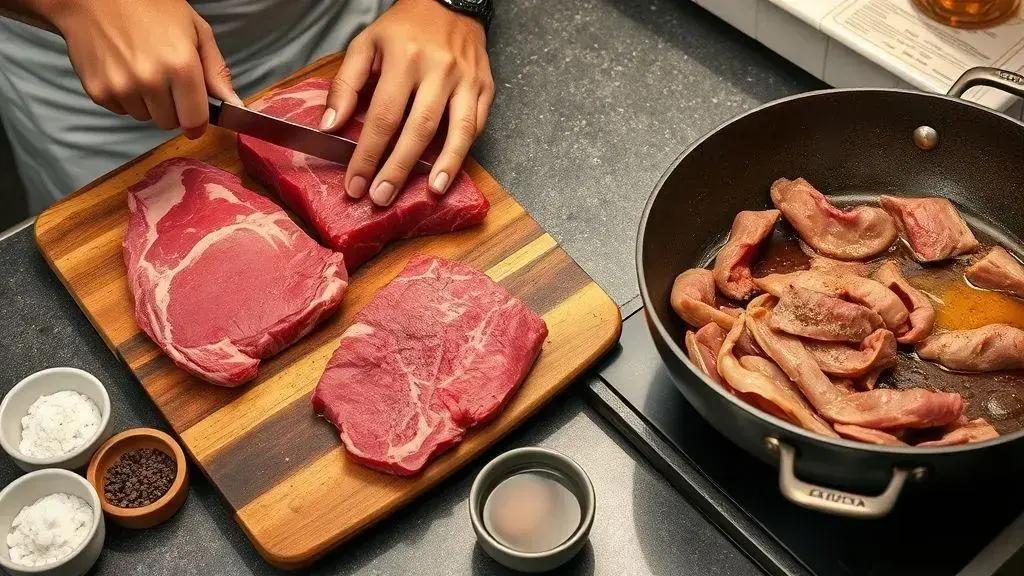
Recommended cuts
- Rump or sirloin is tender and good value, especially when cut into thin strips.
- Strip loin has a full beefy flavour and good marbling, which adds richness to the sauce.
- Tenderloin is exceptionally tender and usually more expensive, making it a good choice for a special occasion.
- Top round is firmer. Slice it thinly and consider a short marinade.
Slicing techniques
- Chill the meat for 20–30 minutes before slicing to make neat, even cuts easier.
- Find the direction of the muscle fibres and cut across them for more tender strips.
- Aim for strips 0.5–1 cm thick so they cook quickly and evenly.
- Use a sharp blade and smooth strokes. Hold the meat steady to avoid tearing it.
- Trim the silverskin, tough connective tissue and excess fat before cooking.
Cooking techniques
- Heat oil or butter in a large pan over high heat so the beef quickly develops a browned crust.
- Sear in batches to keep the pan hot and brown the strips evenly.
- Sear thin strips for about 1–2 minutes per side, then lift them out. They will finish cooking in the sauce.
- After searing, use stock or wine to loosen the tasty browned bits on the bottom of the pan.
- Return the beef to the reduced sauce only at the end and heat it gently for about 1–2 minutes so it stays tender.
- Once the cream is in, keep the heat low. Boiling can make the sauce split.
For a little extra tenderness, marinate the meat in the fridge for 30 minutes with a little wine or Worcestershire sauce. To thicken without gluten, use cornstarch instead of flour.
Homemade beef stroganoff variations

You can adapt the meat, cream and accompaniments to different tastes and diets while keeping the sauce rich and creamy.
Chicken stroganoff
Replace the beef with 600 g chicken breast strips. Sear for about 1 minute per side, then finish cooking gently in the sauce until a food thermometer reads at least 74°C in the centre of the thickest strips. Keep the mushrooms and cream for the classic texture.
- For juicier meat, use 600 g boneless chicken thighs cut into strips.
Vegetarian stroganoff with mushrooms and plant protein
Use 400 g mixed mushrooms, such as shiitakes and button mushrooms, with 200 g firm tofu in cubes or seitan strips. Brown them, then make the sauce as usual.
- For a different texture, replace the tofu with cooked chickpeas.
Lactose-free variation
Replace the dairy cream with 200 ml soy or oat cream. Use 1 tbsp olive oil to sauté the ingredients instead of butter.
- Taste before adding salt, as some plant-based creams already contain it.
Lower-carb variation
Serve over cauliflower rice or cauliflower mash. For a thicker sauce, stir in 1 tsp cornstarch blended with a little cold water.
- Courgette noodles are another alternative to white rice or pasta.
Red wine variation
Deglaze the pan with 50 ml dry red wine. Reduce it for 2–3 minutes before adding the stock for a deeper, more complex sauce.
- Let the wine simmer until its sharp alcoholic smell softens.
Beer variation
Deglaze with 100 ml pale beer. Its gentle bitterness complements the savoury sauce and gives the dish a rustic note.
- Choose a lager or pilsner so the beer doesn’t overpower the sauce.
Quick tips for all versions
- Taste at the end and adjust salt and acidity. Plant-based creams may need a little extra seasoning.
- For a gluten-free thickener, mix cornstarch with cold water before adding it to the sauce.
- Finish with freshly chopped parsley just before serving.
Side dishes and serving ideas

Fluffy white rice and crisp shoestring potatoes are a classic pairing. Choose your sides according to the occasion and the texture you want.
Traditional sides
- White rice: 1 cup (200 g) uncooked serves 3–4. Keep the grains fluffy to balance the creamy sauce.
- Ribbon noodles or fusilli: allow 250–300 g for 4. Cook al dente and lightly toss with butter.
- Crisp shoestring potatoes: allow 80–120 g. Scatter them over the stroganoff just before eating so they stay crunchy.
- Mashed potatoes: 500 g cooked potatoes serves 4. Their smooth texture pairs well with a thick sauce.
- Cauliflower rice: allow 400 g for a lower-carb side and warm it briefly before serving.
Fresh and colourful sides
- A simple green salad of mixed leaves and cherry tomatoes with a light vinaigrette balances the richness of the sauce.
- Roasted carrots, courgettes and broccoli are good lightly seasoned. Allow 200–250 g for 4 as a small side.
- Serve pickles or pickled onions on the side for a sharp bite between forkfuls.
Presentation tips
- Use a broad plate or a deep bowl to hold the sauce in the centre.
- Spoon the rice onto the plate first, forming a nest or a small mound to one side.
- Ladle the stroganoff alongside or partly over the rice. Leave some of the white grains showing for contrast.
- Add the shoestring potatoes just before serving to preserve their crunch.
- Finish with chopped parsley or chives, about 1 tbsp per plate, for colour and freshness.
- Warm the sauce gently until smooth and glossy. Avoid boiling it, which can make it split.
- Wipe the rim of the plate with a clean cloth before it goes to the table.
Serving for different occasions
- For a family dinner, offer the rice and sides in serving dishes and keep the sauce hot in a covered pan.
- For a quick meal, use ready-sliced beef and assemble individual bowls of rice and stroganoff in about 15 minutes.
- For a special occasion, serve smaller portions on pale plates and finish with microgreens to set off the sauce.
Storage and reheating
- Refrigerate in a sealed container for up to 48 hours. Store the rice and sauce separately if possible.
- Reheat gently in a saucepan with a splash of stock or water, stirring frequently until the leftovers reach 74°C throughout.
- Microwave in 30-second intervals, stirring between each and adding a little liquid to prevent drying. Heat the leftovers to 74°C throughout.
- Reheat gently to keep the cream sauce from boiling and splitting.
Beef stroganoff and cream through the years

From nineteenth-century Russia to kitchens around the world, beef stroganoff has taken many forms.
Origins and name
The dish dates to nineteenth-century Russia and bears the name of the influential Stroganov family. Early versions combined pieces of beef with a creamy mustard sauce.
How the recipe travelled
- European versions have included wine and mushrooms.
- In Brazil, local adaptations made it an everyday dish, often served with rice and crisp shoestring potatoes.
- This Midwestern-inspired version can include a splash of red wine or a reduction for depth.
Kitchen notes
- Ketchup is common in Brazilian adaptations, where it balances sweetness and acidity.
- Stroganoff works for a simple lunch or a festive dinner, depending on the cut of meat and how it is served.
- A homemade version usually takes about 25–35 minutes, making it practical for a busy week.
Choosing the cream
Fat content affects both texture and stability. Fresh heavy cream is richer and tolerates heat well. Long-life UHT cream is convenient but can split if boiled.
- Fresh heavy cream gives the sauce a full, velvety texture.
- Long-life UHT cream is convenient for quick meals. Heat it gently.
- Crème fraîche or sour cream brings tang. Higher-fat crème fraîche is particularly resistant to splitting.
- Soy or oat cream also works. Adjust the seasoning and thickness to suit the product.
How to keep the cream from splitting
- Keep the heat low once the cream is in. High heat can make it separate.
- Stir in the cream off the heat near the end, then warm gently until combined.
- A little cornstarch dissolved in cold water can stabilise the sauce without changing its flavour.
- Taste before salting. Prepared stock and sauces can already be salty.
Other creamy substitutes
- For extra richness, blend 100–150 g creamy Brazilian requeijão into the cream.
- Replace cream with an equal quantity of plant-based cream and adjust the acidity with lemon juice or apple cider vinegar.
- For a thicker version, add 50–100 g cream cheese.
Choose your cream according to the texture you want and how much heat your sauce will need.
Once you know the basic technique, you can vary the cut of beef, the cream and the sides. Sear the strips well and add the cream at the end for a smooth Midwestern-style stroganoff.
Thanks for cooking with us! Follow us on social media for more quick tips, photos and variations. Visit our Mestre das Receitas blog for more easy recipes and inspiration.
Try the recipe, share your version and leave a comment with any questions or suggestions. Enjoy your meal!
Frequently asked questions about homemade beef stroganoff
What is the best cut of beef for tender stroganoff?
Rump, strip loin and tenderloin all work well. Cut thinly across the grain.
Can I use a lactose-free alternative to cream?
Yes. Use soy cream, oat cream or a plant-based creamy spread. Adjust the seasoning and use a little cornstarch if the sauce needs thickening.
How can I keep the sauce from splitting?
Keep the heat low, add the cream at the end and avoid boiling. Stir gently and add a splash of stock if the sauce is too thick.
How do I brown the beef without drying it out?
Heat the pan well and sear in small batches. Remove the beef before it is fully cooked and finish it in the sauce.
Can I make stroganoff ahead and reheat it?
Refrigerate in a closed container for up to 48 hours. Warm gently in a pan with a splash of stock, stirring until creamy and heated through to 74°C.
Which sides go best with this Midwestern-style version?
Fluffy rice and crisp shoestring potatoes are classics. For a change, try al dente pasta, mashed potatoes or cauliflower rice.