

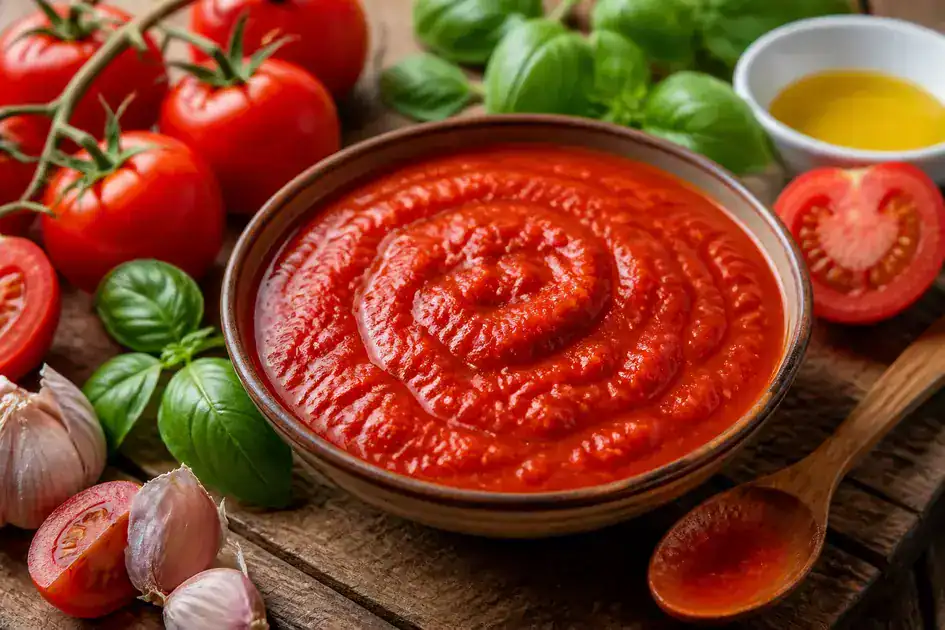

homemade tomato sauce is a simple, flavorful condiment made by simmering ripe tomatoes with aromatics like onion, garlic, olive oil, and herbs, which you can prepare quickly or slowly, customize with variations such as arrabbiata or ragu, and store refrigerated up to five days or frozen about three months.
homemade tomato sauce is a kitchen shortcut that often surprises—do you want deep, real flavor with minimal fuss? I’ve tested quick and slow methods so you can choose what fits your week.
Ingredients of homemade tomato sauce
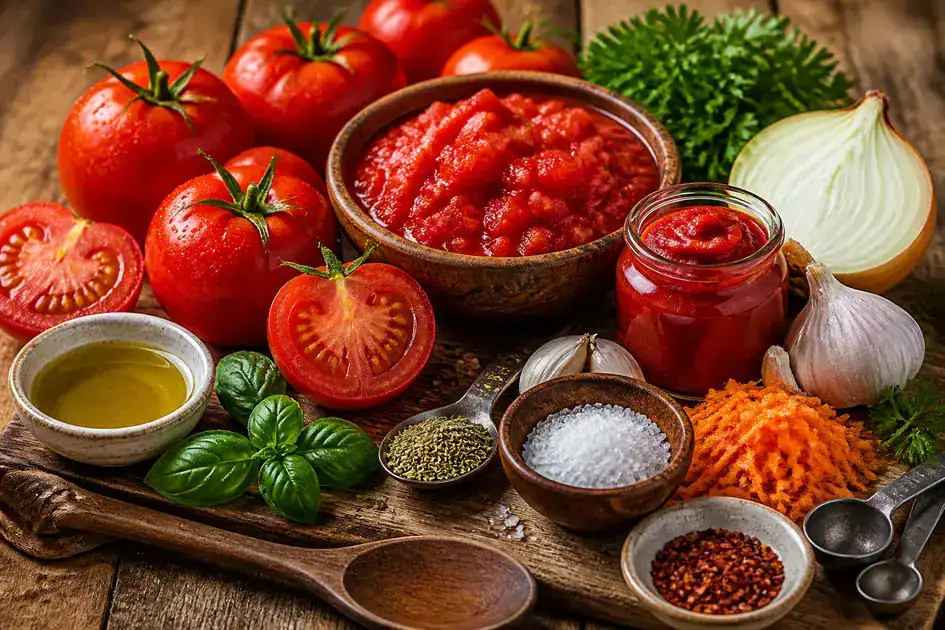
- 2 lbs (900 g) ripe tomatoes – peeled and chopped (or 2 cans, 28 oz/800 g crushed San Marzano tomatoes as a substitute).
- 2 tbsp extra-virgin olive oil – for sautéing (substitute: 2 tbsp butter for a richer finish).
- 1 medium yellow onion – finely chopped.
- 3 cloves garlic – minced (or 1 tsp garlic powder).
- 2 tbsp tomato paste – to deepen flavor and color (optional but recommended).
- 1 small carrot – grated to naturally reduce acidity (optional).
- 1/2 cup (120 ml) water or low-sodium vegetable/chicken broth – adjust to reach desired thickness.
- 1 tsp sugar – optional to balance acidity (or use extra grated carrot).
- 1 tsp fine salt – adjust to taste.
- Fresh basil: 8–10 leaves – torn (or 1 tsp dried basil).
- 1 tsp dried oregano – or 1 tbsp fresh chopped oregano.
- Pinch of red pepper flakes – optional for gentle heat.
- Freshly ground black pepper – to taste.
- 2 tbsp chopped fresh parsley – optional garnish.
Substitutions and quick notes
Canned vs fresh: Use canned San Marzano for consistent flavor and less peeling work. Fresh tomatoes are great in season.
Sweetening: Sugar helps acidity but grated carrot is a natural alternative.
Oil choices: Olive oil is classic. Butter adds richness.
Herbs: Fresh herbs give brighter flavor. Dried herbs work if fresh aren’t available.
How to prepare homemade tomato sauce step by step
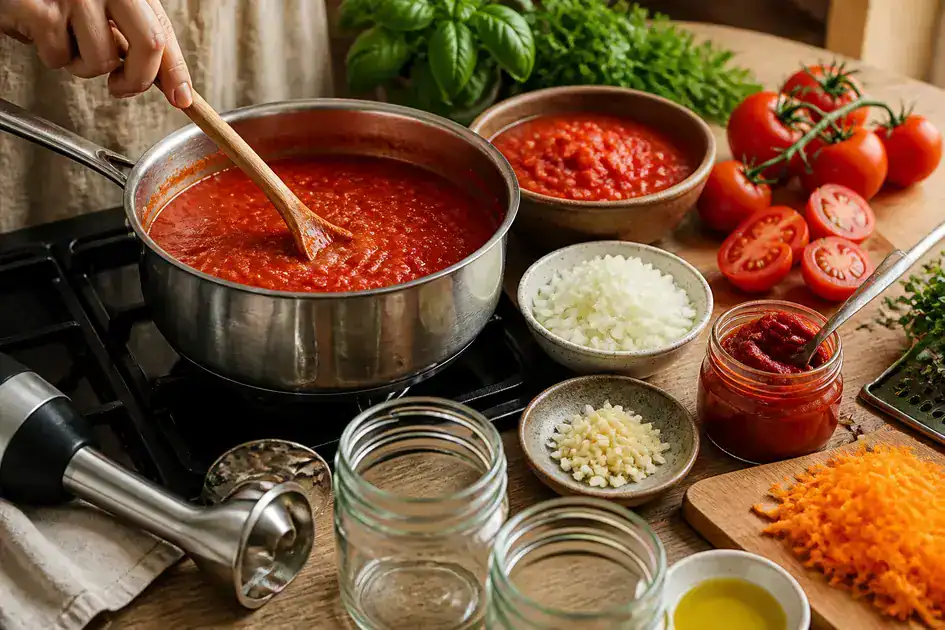
- Prep the tomatoes: If using fresh, score the bottoms and blanch 30–60 seconds in boiling water, cool, peel, and chop (about 2 lbs / 900 g). Or use one 28 oz (800 g) can crushed San Marzano tomatoes for convenience.
- Prep aromatics: Finely chop 1 medium yellow onion and mince 3 garlic cloves. Grate 1 small carrot if you prefer a naturally sweeter, less acidic sauce.
- Sauté the onion: Heat 2 tbsp extra-virgin olive oil in a medium pot over medium heat. Cook the onion, stirring, until soft and translucent, about 5–7 minutes.
- Add garlic and tomato paste: Stir in the garlic and 2 tbsp tomato paste. Cook 1–2 minutes until fragrant and the paste darkens slightly—this deepens the sauce flavor.
- Add tomatoes and liquid: Add the chopped or canned tomatoes and 1/2 cup (120 ml) water or low-sodium broth. Stir to combine and bring to a gentle simmer.
Quick or slow simmer
- Simmer and reduce: Keep the sauce at a gentle simmer. For a quick version, cook 15 minutes. For richer flavor, simmer 30–45 minutes, stirring occasionally until it reaches your desired thickness.
- Season and balance: Add 1 tsp fine salt, a pinch of sugar (or use the grated carrot), 1 tsp dried oregano, and a few torn basil leaves. Taste and adjust seasoning as needed.
- Blend or leave chunky: For a smooth sauce, let it cool slightly and use an immersion blender or blend in batches until smooth. For a rustic texture, mash with a spoon or leave as is.
- Finish for shine and depth: Stir in 1–2 tbsp extra-virgin olive oil or a small knob of butter for a glossy finish. Add fresh basil right before serving for brightness.
- Store and reheat: Cool completely, refrigerate up to 5 days in an airtight container, or freeze in portions for up to 3 months. Reheat gently and adjust salt or acidity before using.
Variations and flavor twists for homemade tomato sauce
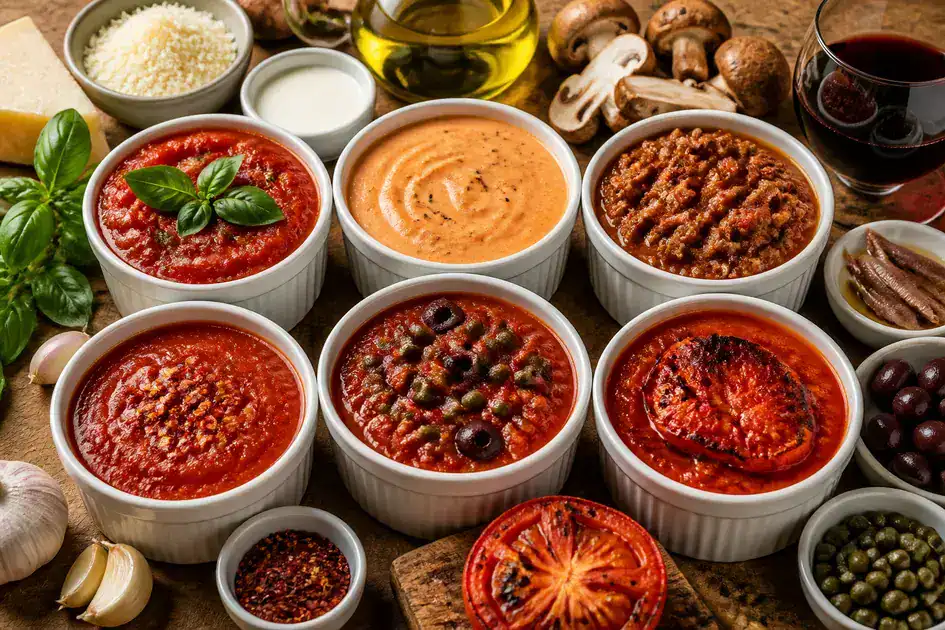
- Arrabbiata (spicy kick): Sauté 1/2–1 tsp crushed red pepper flakes with the garlic. Use 1–2 cloves garlic per 28 oz sauce and simmer 10–15 minutes. Substitute fresh chopped red chilies for a brighter heat.
- Vodka or creamy tomato: Stir in 2–4 tbsp vodka, cook 2 minutes, then add 1/4 cup heavy cream off-heat for a silky texture. For a non-dairy option, use 2 tbsp butter or 1/3 cup full-fat coconut milk.
- Roasted tomato base: Roast 2 lbs halved tomatoes with 2 tbsp olive oil at 400°F (200°C) for 25–30 minutes until caramelized. Blend and fold into the sauce for smoky sweetness.
- Meat ragu: Brown 1/2–1 lb ground beef, pork, or a mix; drain excess fat, add to sauce and simmer 45–60 minutes. Swap ground turkey for a lighter version; add a splash of red wine for depth.
- Puttanesca-style: Stir in 2 tbsp chopped capers, 1/3 cup chopped Kalamata olives, and 2 anchovy fillets mashed into the oil. Add a pinch of chili flakes and simmer 10 minutes—great with spaghetti.
- Mushroom and red wine: Sauté 8 oz sliced mushrooms until golden, deglaze with 1/4 cup red wine, then combine with the tomato sauce and simmer 15–20 minutes for an earthy, savory twist.
Quick flavor and texture tips
Balance acidity: Add 1 tsp sugar or 1 grated carrot if the sauce tastes too sharp. Taste as you go.
Boost richness: Finish with 1–2 tbsp extra-virgin olive oil or a small knob of butter for shine and mouthfeel.
Herb swaps: Use 8–10 torn basil leaves for freshness, or 1 tsp dried oregano for a pantry-friendly option.
Salt and time: Add salt gradually and simmer longer for deeper flavor; quick versions take 15–20 minutes, slow ones 30–60 minutes.
Serving ideas: Match variations to dishes—arrabbiata for penne, ragu for pappardelle, puttanesca for robust pasta, and creamy or roasted sauces for pizza or gnocchi.
Tips, storage and batch-cooking for homemade tomato sauce
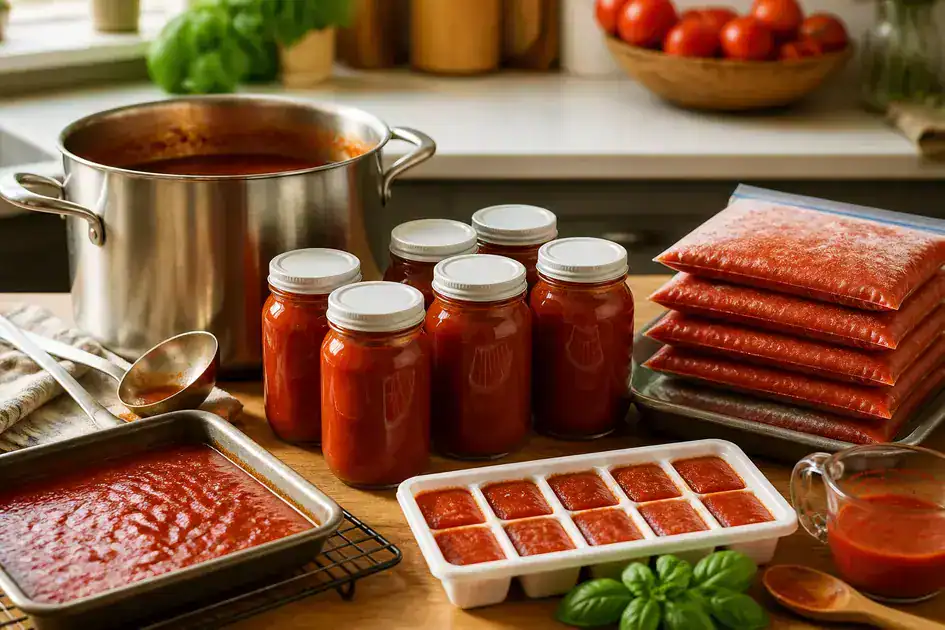
Practical tips to keep your homemade tomato sauce fresh and ready for meals, whether you store a few jars or batch-cook for the month.
Storage times and containers
- Refrigerator: Transfer cooled sauce to airtight containers and refrigerate up to 5 days.
- Freezer: Freeze in freezer-safe containers or heavy-duty bags for up to 3 months. Remove excess air before sealing.
- Portioning: Use 1-cup or 2-cup portions for easy thawing; ice cube trays work well for single-serving sauce cubes.
- Glass jars: Use clean, wide-mouth jars and leave 1/2–1 inch (1–2 cm) headspace for expansion. Do not overfill.
- Labeling: Mark each container with the date and contents using a blank adhesive label or tape—avoid handwritten notes directly on exposed food.
Batch-cooking method
- Scale the recipe: Multiply ingredients to fit a large stockpot—use a heavy-bottom pot to prevent scorching.
- Cook in stages: Sauté aromatics, add tomatoes, and simmer longer (45–90 minutes) for concentrated flavor when making larger batches.
- Cool safely: Cool sauce quickly by dividing into shallow pans, then transfer to containers when lukewarm to limit time in the danger zone.
- Portion and pack: Fill jars or bags leaving headspace; for freezer bags, flatten to remove air and speed freezing.
- Freeze flat: Lay bags flat on a tray until solid, then stack to save space and allow fast thawing.
Reheating and final-use tips
- Thawing: Thaw overnight in the fridge or place sealed bag in cold water; microwave-thaw in short bursts if needed.
- Reheat gently: Warm sauce over low heat, stirring to prevent sticking; add a splash of water or broth if too thick.
- Refresh flavor: Taste after reheating and adjust salt, a squeeze of lemon, or a pinch of sugar to balance acidity.
- Finish for shine: Stir in 1 tbsp olive oil or a small knob of butter just before serving for a glossy finish.
- Safety: Do not refreeze defrosted sauce unless it was thawed in the fridge and kept cold; discard if it smells off.
Fun facts about tomatoes and this sauce
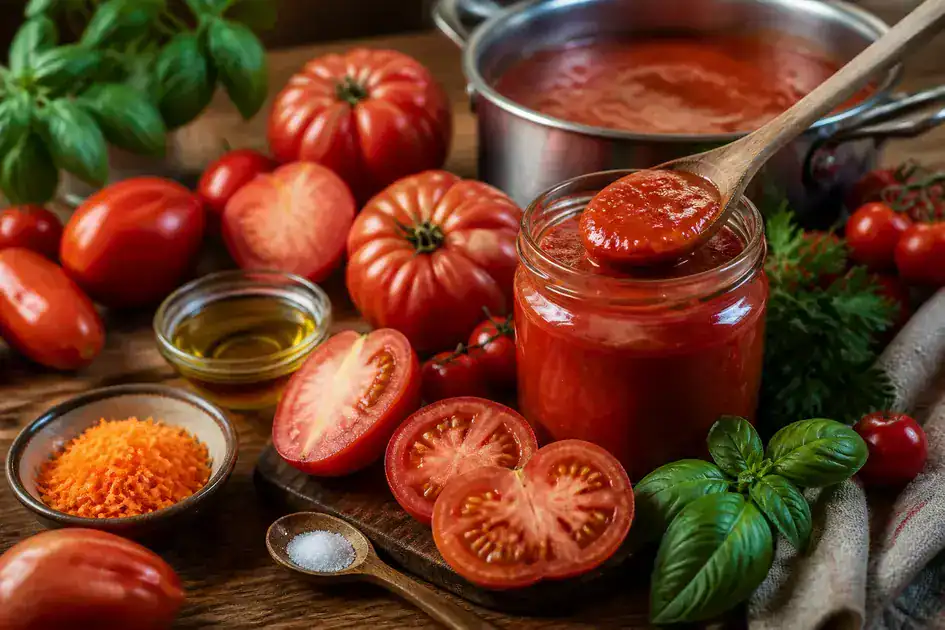
- Tomato origin: Tomatoes come from western South America and were first domesticated in Mexico.
- Fruit, not veg: Botanically a fruit, tomatoes are used like vegetables in everyday cooking.
- Lycopene and color: Red tomatoes are rich in lycopene, an antioxidant linked to heart health.
- Umami from cooking: Heat concentrates natural glutamates, so cooked tomato sauce tastes richer and more savory.
- Balance acidity: A grated carrot or a tiny pinch of sugar evens acidity without hiding tomato flavor.
- Best varieties for sauce: Plum, Roma, and San Marzano tomatoes are meatier and less watery—ideal for a thick sauce.
- Canned vs fresh: Use fresh in season for brightness; use quality canned tomatoes for consistency year-round.
- Preservation facts: Freeze sauce in flat bags or jar and refrigerate after opening; frozen sauce keeps up to three months.
- Global twists: Italian sauce highlights basil and olive oil, while other regions add spices, anchovies, or wine for local flavor.
Quick kitchen tips
- Roasting: Roast halved tomatoes at high heat for a sweeter, smoky base.
- Simmer time: Longer simmering deepens flavor; short cooks keep fresher brightness.
- Finish: Stir in a tablespoon of olive oil or a knob of butter for a glossy, rounded finish.
- Storage hack: Freeze in 1- or 2-cup portions for fast weeknight use and easy thawing.
Wrapping up
Making your own homemade tomato sauce is simple, fresher, and more flexible than store-bought options. Try quick or slow methods, test a few variations, and freeze portions for easy weeknight meals.
Thanks for reading — we hope you feel inspired to cook. Follow us on social media for tips and new recipes, and visit the Mestre das Receitas Cooking Blog for more ideas and step-by-step guides.
FAQ – Frequently Asked Questions about Homemade Tomato Sauce
Which tomatoes are best for making sauce?
Plum, Roma, or San Marzano tomatoes are ideal because they are meaty and less watery. Use ripe fresh tomatoes in season or quality canned San Marzano year-round.
How can I reduce the sauce’s acidity?
Add a grated carrot or 1 tsp sugar while cooking, or simmer longer to mellow acidity. Taste as you go and adjust gradually.
How long does homemade tomato sauce last in the fridge and freezer?
Refrigerate in airtight containers up to 5 days. Freeze portions flat in freezer bags for up to 3 months for best quality.
Can I use tomato paste or canned tomatoes instead of fresh?
Yes. Use a 28 oz (800 g) can of crushed tomatoes for 2 lbs fresh, and 2 tbsp tomato paste to deepen color and flavor if desired.
How do I thicken a watery sauce?
Simmer the sauce uncovered until reduced, or blend some cooked tomatoes and stir back in. A small grated carrot also helps without changing flavor much.
Is it safe to can tomato sauce for pantry storage?
Home canning is possible but requires proper sterilization and a tested recipe. Follow USDA or trusted canning guidelines—pressure canning is safest for low-acid mixtures.