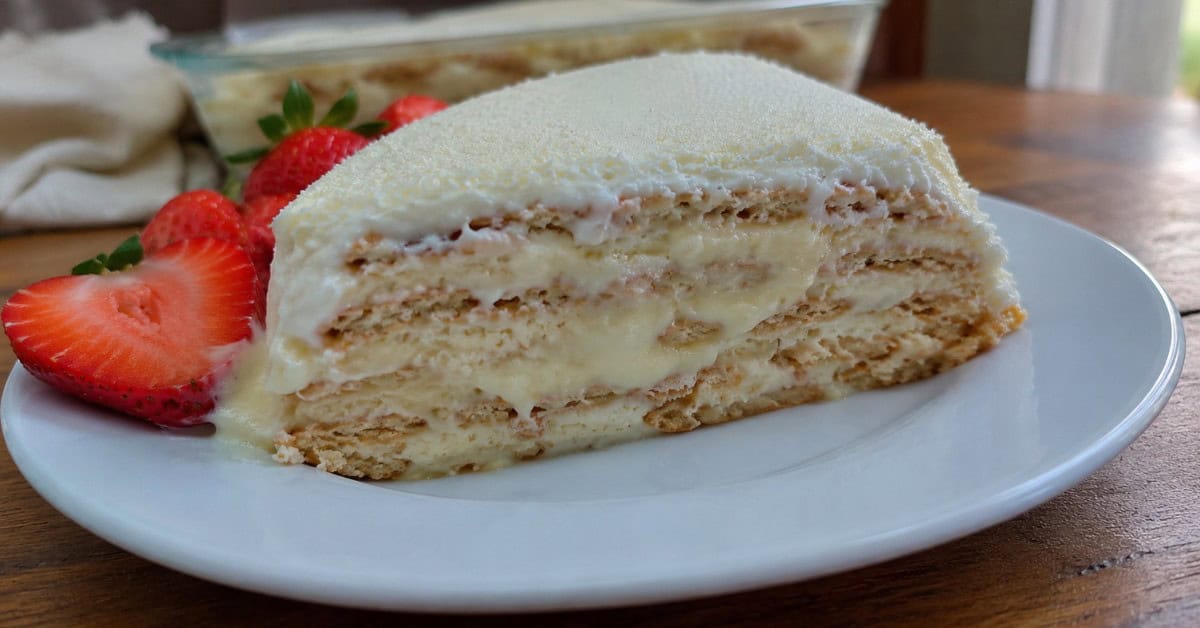

Some recipes become favourites from the first forkful, and this Leite Ninho German biscuit cake is one of them. The sweet, gently milky flavour of Leite Ninho milk powder makes this creamy take on the classic even harder to resist. If you already love the traditional chocolate version, this one will win you over with its delicate layers and refined flavour. It’s easy to make and there’s no need to turn on the oven.
Here at Mestre das Receitas, we love recipes that delight people, and this cake does just that. Whether you’re making dessert for Sunday lunch with the family, celebrating a special occasion or giving someone a homemade treat, it delivers more than you might expect. Read on for the little details that will help you get it just right.
Ingredients for Leite Ninho German biscuit cake
Before you start, take a moment to gather your ingredients. It makes a real difference to the finished cake. As you’ll be building it in layers, I’ve grouped the ingredients by stage to make the preparation easier.
Leite Ninho cream filling (the main layer)
This filling is the heart of the recipe. It’s smooth and rich, with that unmistakable aroma of milk powder that has everyone asking for the secret. You’ll need the following ingredients.
- 1 tin of well-chilled condensed milk – it gives the filling body without the need for gelatine
- 200 ml fresh whipping cream, preferably with at least 35% fat for a firmer, more velvety filling
- 6 heaped tablespoons of Leite Ninho milk powder – be generous, as this is what gives the filling that distinctive flavour everyone loves
- 1 tablespoon of unsalted butter at room temperature, for a smooth, glossy filling
- 1 teaspoon of good-quality vanilla essence – it brings out the milky flavour in a subtle but noticeable way
Biscuit base
The biscuit base holds the cake together, and its crunch contrasts beautifully with the smooth filling. Here’s what you’ll need.
- 300 g plain cornflour biscuits – choose a crisp variety that can take a quick dip in milk without falling apart
- 150 ml whole milk at room temperature, to moisten the biscuits just enough so they’re neither soggy nor dry
Creamy Leite Ninho topping
The topping gives the cake a patisserie finish and makes it even more tempting. Set aside the following ingredients.
- 200 g good-quality white chocolate, very finely chopped – it gives the topping its body and flavour
- 100 ml fresh whipping cream, for a silky, pourable white chocolate ganache
- 3 tablespoons of Leite Ninho milk powder, sifted so it blends into the ganache without forming lumps
To decorate (optional, but well worth it)
- Leite Ninho milk powder to taste, dusted generously over the top for that classic snowy finish
- White chocolate curls or pieces to give the decoration some contrast
- Fresh strawberries or other red berries – their tartness balances the sweetness, and they look lovely on the cake
With the ingredients laid out for each stage, you can work through the recipe without having to hunt for anything at the last minute. Let’s get started!
How to make Leite Ninho German biscuit cake step by step
You don’t need an oven or any special equipment. This cake just takes a little care and time in the fridge. Follow each step and you’ll be surprised by what you can make, even if you’ve never felt confident in the kitchen.
Making the Leite Ninho filling
- Combine the condensed milk, butter and 6 heaped tablespoons of Leite Ninho milk powder in a heavy-based saucepan over a medium-low heat. Stir constantly with a silicone spatula to stop the mixture sticking.
- Keep stirring for about 8 to 10 minutes, until the mixture thickens and starts to come away from the base of the pan. It should be soft and spoonable, like a soft-set Brazilian brigadeiro.
- Take the pan off the heat, add the vanilla essence and mix well. Transfer to a bowl and leave to cool completely at room temperature before using. You can speed this up in the fridge, but don’t skip the cooling stage. A hot filling will melt the other layers as you assemble the cake.
- Once the mixture is cold, whip the fresh cream to stiff peaks. Gently fold it into the Leite Ninho mixture, scooping from the bottom of the bowl and turning the mixture over to keep it light.
Making the white chocolate ganache topping
- Warm the fresh cream over a low heat until small bubbles start to appear around the edges. Don’t let it come to a full boil.
- Pour the cream over the chopped white chocolate and leave to stand for 1 minute. Stir with a spatula, working from the centre outwards, until the ganache is smooth and glossy with no pieces of chocolate left.
- Stir in the sifted Leite Ninho milk powder until fully incorporated. Leave at room temperature until needed. If it cools too much, warm it briefly over a pan of hot water.
Assembling the cake
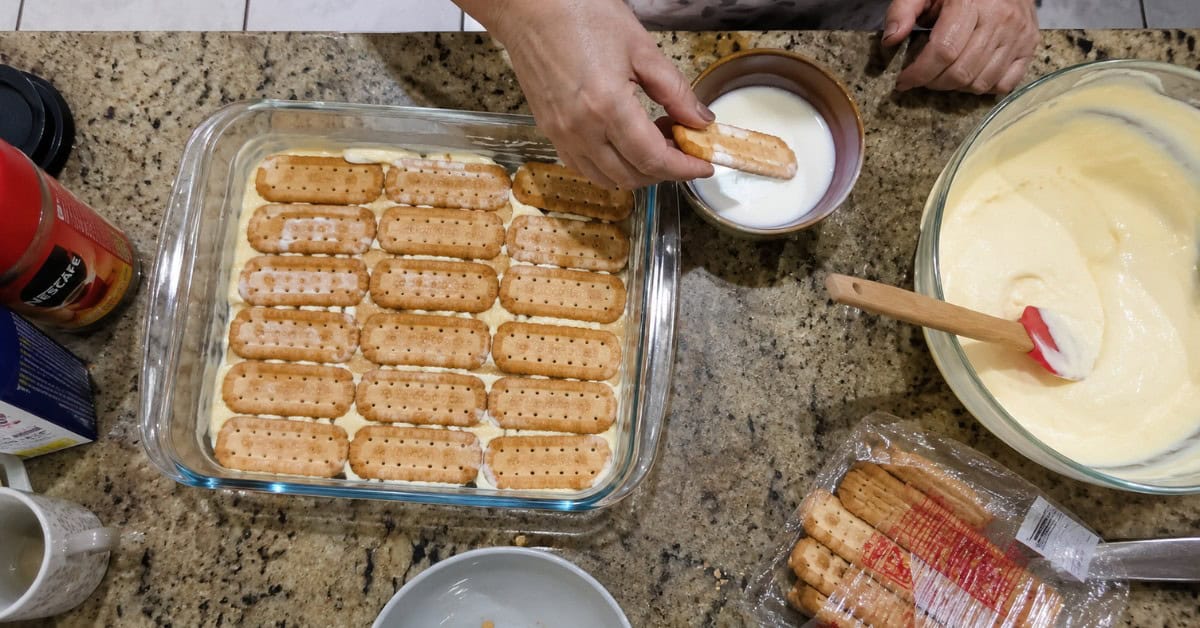
- Choose a rectangular or square tin, preferably one with a loose base, or line it with cling film so the cake is easy to lift out. Spread a thin layer of Leite Ninho filling over the base to hold the biscuits in place.
- Dip each biscuit briefly in the milk. A second on each side is enough. Don’t let the biscuits get too soft. Arrange the first layer of biscuits to cover the entire base of the tin.
- Use a spatula to spread half the Leite Ninho filling evenly over the biscuits. Cover with another layer of milk-dipped biscuits.
- Spread the remaining filling over the top. Add one more layer of biscuits if you’d like a taller cake, or go straight on to the topping.
- Pour the white chocolate and Leite Ninho ganache over the top and gently spread it out. Dust the whole surface generously with Leite Ninho milk powder.
- Chill for at least 4 hours. Overnight is ideal, as it gives the layers time to set and the flavours time to come together.
Variations and substitutions to make it your own
One of the pleasures of this cake is how versatile it is. With a few small changes, you can adapt it to different tastes, dietary requirements or whatever you have in the cupboard. Here are a few variations to try.
With a layer of dulce de leche
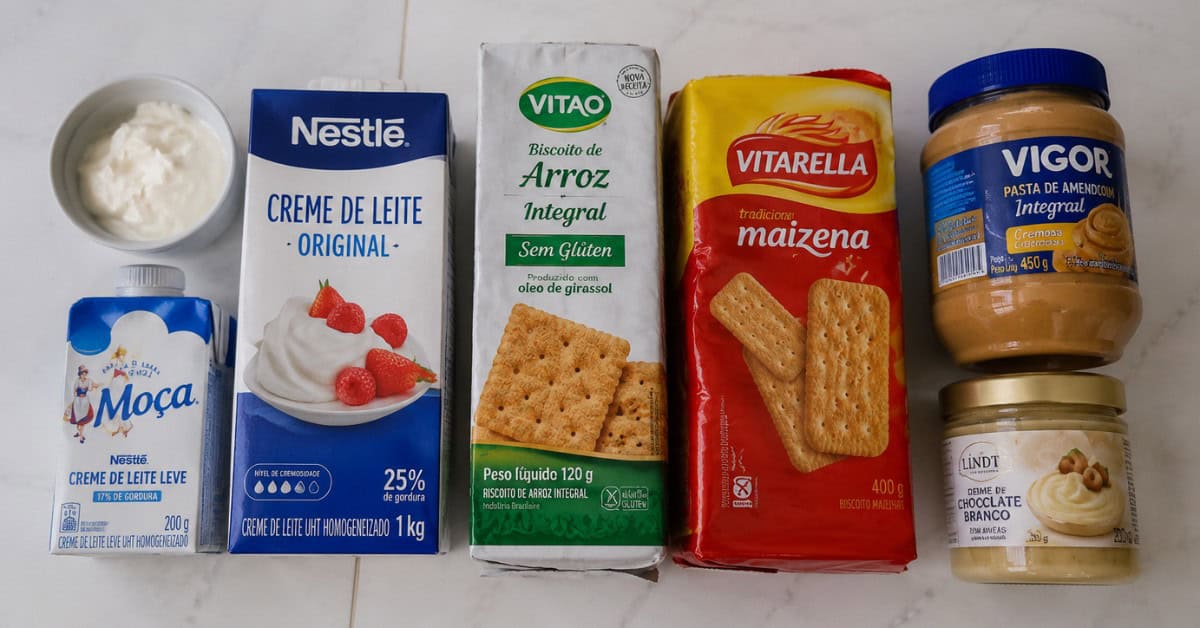
Spread a thin layer of artisan dulce de leche between the Leite Ninho filling and the biscuits. It gives the cake a richer flavour, with a caramel note that goes beautifully with the milk powder. Choose a thick, spreadable dulce de leche so the layers hold their shape.
With peanut butter
If you love milk and peanuts together, stir 3 tablespoons of smooth peanut butter straight into the Leite Ninho mixture while it’s still hot. It gives the filling a deeper, nuttier flavour with a hint of salt that keeps you coming back for more. It’s always a hit at parties.
Lactose-free version
For a lactose-free version, use lactose-free condensed milk, replace the fresh cream with the same amount of coconut cream and use Leite Ninho Zero Lactose milk powder in both the filling and the topping. Dip the biscuits in lactose-free whole milk. Choose butter, biscuits and white chocolate labelled lactose-free, and use the same white chocolate for the decorative shavings. The coconut adds a subtle tropical flavour, and the texture stays creamy.
With different biscuits
Plain cornflour biscuits are the classic choice, but you can also try milk biscuits, sponge fingers or even vanilla wafers. Each gives the cake a different texture. Sponge fingers make for more delicate layers, while wafers give a little more crunch. For a gluten-free version, choose gluten-free rice biscuits. They give the layers enough support without compromising the flavour.
With layers of fresh fruit
Tuck strawberries, sliced peaches or very thin slices of Cavendish banana between the layers to make the cake extra special. The fruit brings freshness, tartness and colour, and the layers look particularly inviting when you cut a slice.
Tips for the right texture, even layers and a beautiful finish
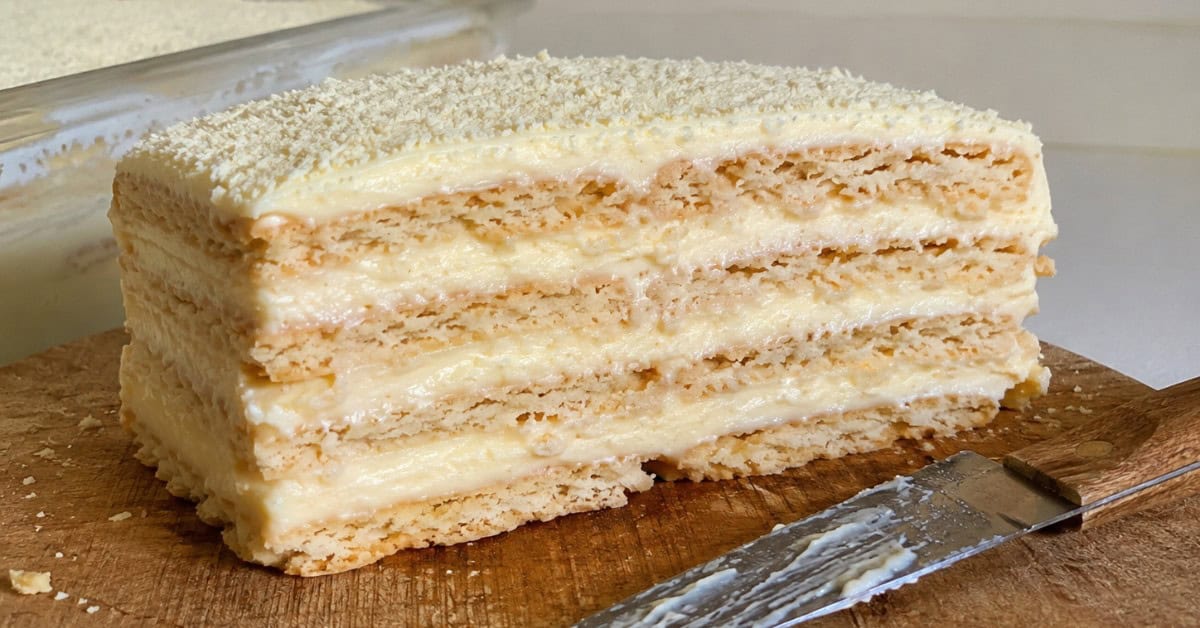
It’s the little details that make a good cake memorable. The consistency of the filling, the way you build the layers and how you serve each slice all make a difference to the look and flavour of the finished cake.
Getting the filling consistency right
For a firm filling that supports the layers, use fresh cream whipped to stiff peaks. Long-life cream from a carton gives a softer filling that may lose its shape when sliced. If you need to use long-life cream, use less and chill the cake for longer before serving. Make sure the cooked Leite Ninho mixture is completely cold before folding in the whipped cream. The temperature makes all the difference to how well the two combine.
Keeping the layers in place
For a cake that holds its shape, pay attention to the thickness of the milk-dipped biscuit layer. Dip each biscuit for just 1 second on each side. That really is all it takes. A soggy biscuit will fall apart and leave you with a mushy base that slips. If you’re using a loose-bottomed tin, line the sides with acetate so you can remove the cake cleanly and keep the layers intact.
How to get a glossy ganache
For a patisserie shine, let the white chocolate and Leite Ninho ganache cool to 35–38°C before pouring it over the cake. If it’s too hot, it will seep into the layers and disappear. If it cools too far, it will start to set before you can spread it evenly. Use a flat spatula and work in long, gentle strokes, taking your time and using a light touch.
Slicing and serving
For neat slices, dip the knife in hot water, dry it and make your cut. Repeat between slices. This patisserie trick stops the filling sticking to the blade and spoiling the finish. Serve the cake well chilled, straight from the fridge. Decorate each slice on its plate with an extra dusting of Leite Ninho milk powder and a small mint leaf for a splash of colour.
The history of German biscuit cake and a few facts about its origins
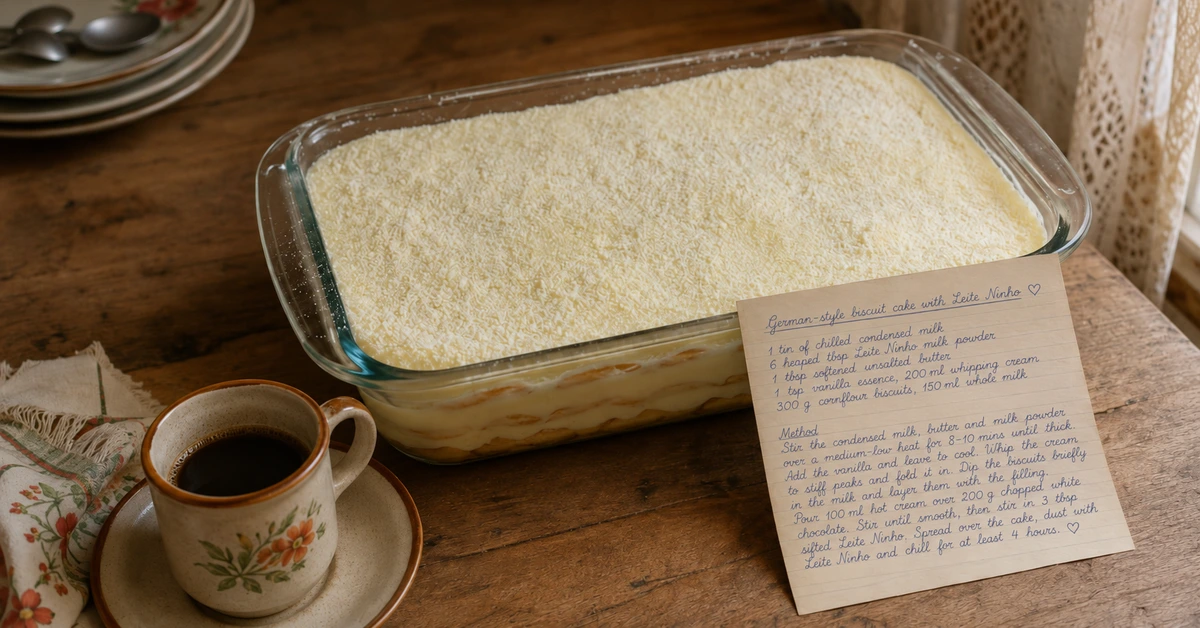
Did you know that the famous ‘German biscuit cake’ is actually far more Brazilian than German? It’s one of those stories that stays with you once you’ve heard it.
Roots in southern Brazil
German biscuit cake as we know it today is thought to owe much to the German immigrants who settled mainly in southern Brazil from the XIX century onwards. They brought European patisserie techniques and a taste for creamy desserts, layers and generous amounts of chocolate. Over the generations, these traditions blended with tropical ingredients and the local food culture.
Why call it ‘German’ if it’s Brazilian?
The name ‘German’ tells us more about the cultural background of the people who created it than about a recipe brought over from Germany. Creamy layered biscuit cakes are common in German and Austrian baking, with the famous Schichttorte among their layered specialities. The version made with milk-soaked cornflour biscuits and chocolate cream is a distinctly Brazilian adaptation. Today it’s one of the most frequently made desserts in Brazil, found at parties, in bakeries and on food blogs from north to south.
The Leite Ninho version was born in the XXI century
The Leite Ninho version emerged as recipes began going viral on social media in the 2010s, particularly on Instagram and Pinterest. Leite Ninho was already a favourite in cakes, Brazilian brigadeiro sweets and mousses. It was only a matter of time before someone had the bright idea of swapping the chocolate in German biscuit cake for that familiar, nostalgic milky flavour. The result became a sensation, and deservedly so.
To finish
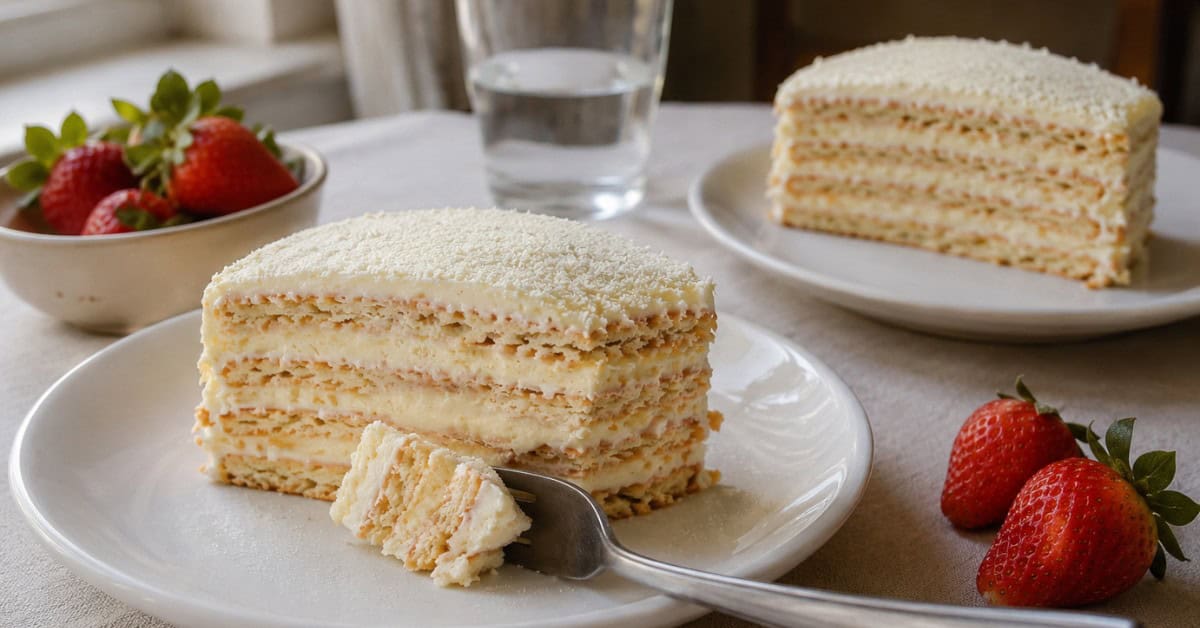
Leite Ninho German biscuit cake sounds simple on paper, yet it offers far more than you might expect. Each layer tells its own story. The biscuits soak up just enough milk, the filling is smooth and mellow, and the white chocolate ganache gives the cake an elegant finish. It’s a dessert that makes guests feel special and is a pleasure to make.
If you make this recipe, tell us how it turned out in the comments! If you’ve added an ingredient of your own or found a substitution that worked well, we’d love to hear about that too. Here at Mestre das Receitas, we believe the best recipes are passed from one cook to the next, with each adding their own touch. Enjoy!
Leite Ninho German biscuit cake FAQs
How long does the cake need to chill before serving?
Allow at least 4 hours, though overnight is ideal. Chilling lets the layers set, gives the biscuits time to soften until they’re neither crunchy nor mushy, and allows the flavours to come together. A cake that’s been rushed rarely turns out quite as well.
Can I use biscuits other than cornflour biscuits?
Yes. Milk biscuits, sponge fingers, vanilla wafers and even rice biscuits for a gluten-free version all work well. Cornflour biscuits are the classic choice because they’re just the right thickness, absorb milk without falling apart and have a mild flavour that lets the filling shine. Adjust the dipping time if you use a different biscuit. Thinner ones need less time in the milk.
How should I store the cake, and how long will it keep?
Keep the cake in the fridge, covered with cling film or in a sealed container. It keeps well for up to 4 days. I don’t recommend freezing it, as the whipped cream filling tends to turn grainy and watery when thawed.
Can I make this cake ahead for a special occasion?
Absolutely – it’s a good idea! Assemble the cake the day before the event and leave it undecorated. Just before serving, dust it with Leite Ninho milk powder and decorate it with fruit or chocolate shavings. That way, the decorations look fresh and the filling has had time to set.
How can I stop the filling from becoming too runny?
Use fresh whipping cream and whip it until it forms stiff peaks. Don’t use long-life cream from a carton. Let the Leite Ninho mixture cool completely before folding the two mixtures together. If it’s still warm, the whipped cream will lose its volume and the filling will turn runny. On very hot days, prepare the cake in an air-conditioned kitchen.
What’s the best way to slice the cake without disturbing the layers?
Use a knife with a long, smooth blade. Avoid serrated knives. Dip the blade in hot water for a few seconds, dry it thoroughly and make the cut in one stroke, without sawing. Dip and dry the blade again before cutting each slice. Professional pastry chefs use this trick to give each slice a clean edge that shows off the layers.