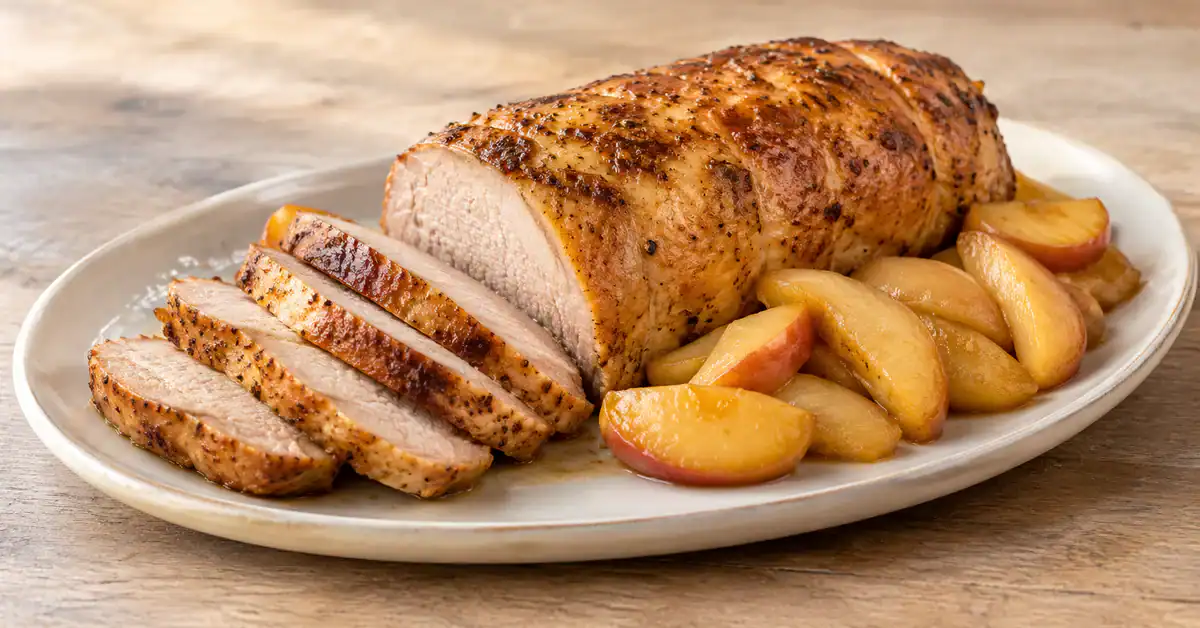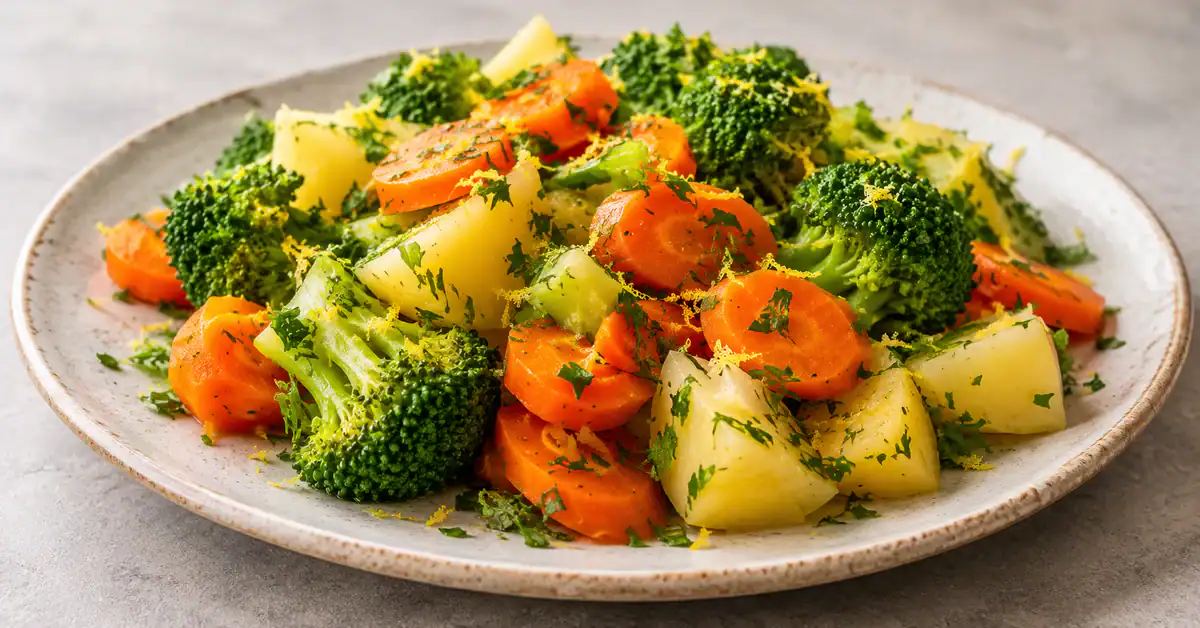

This gremolata for vegetables combines chopped fresh parsley, lemon zest and garlic, without any lemon juice. Chop the parsley finely without bruising it, then scatter the gremolata over cooked vegetables while they’re still warm.
Finely chopped parsley and lemon zest give vegetable side dishes a fresh finish while letting their flavour come through. Chop and combine the ingredients evenly so the gremolata spreads easily and each serving gets a little of everything.
Ingredients and quantities
Ingredients
- 20 g fresh parsley leaves, washed and thoroughly dried, thick stalks removed
- Finely grated zest of 1 medium lemon, yellow part only
- 1 small garlic clove, peeled
This makes about ½ cup of gremolata, enough to finish several portions of vegetables. Dry the parsley thoroughly so the mixture doesn’t become too wet.
How to make the gremolata
Chop the parsley and prepare the lemon
- Gather the dry parsley leaves on a board and chop them into small pieces with a sharp knife. Avoid crushing them, which releases moisture.
- Finely grate the yellow zest from the lemon, avoiding the white pith, which can taste bitter. Chop the small garlic clove very finely.
Combine the ingredients
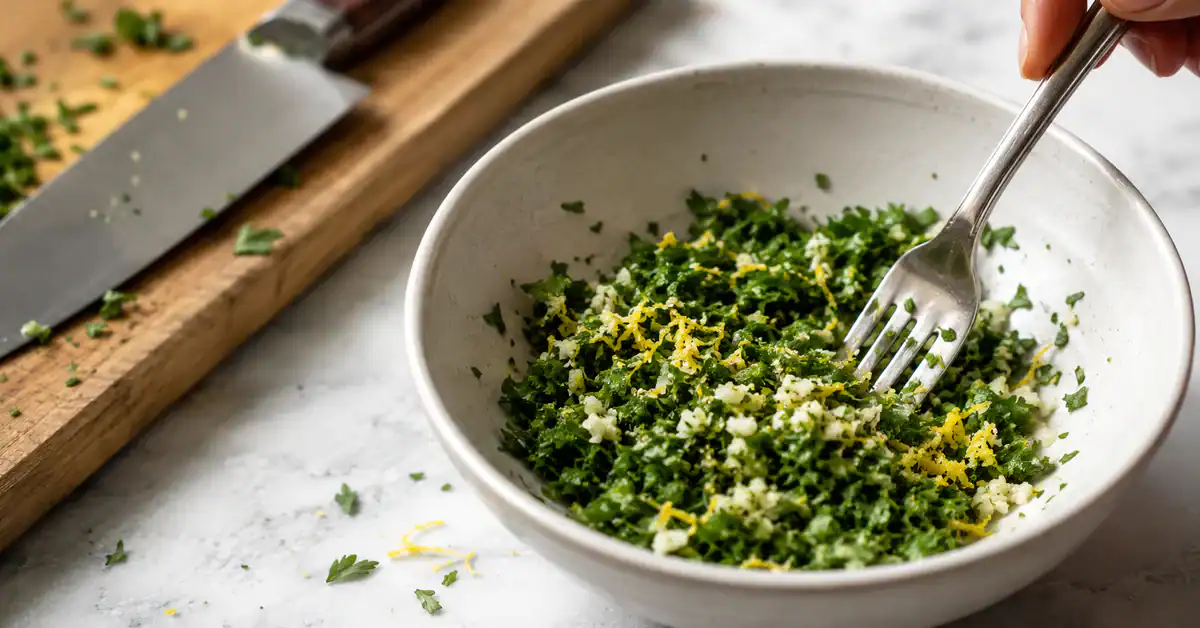
- Put the parsley, lemon zest and garlic in a small bowl. Mix with a fork or spoon until evenly distributed. The gremolata is ready to scatter over the vegetables.
How finely should you chop the ingredients?
The parsley should still be in small, visible pieces. Stop well before it turns into a paste. The lemon zest and garlic should be dotted evenly throughout, with no clumps.
If you still see large leaves or long strips, gather them on the board and chop a little more. Avoid pressing or rubbing the ingredients. Bruised, damp parsley loses the light texture that makes gremolata easy to scatter.
When and how to add it to vegetables
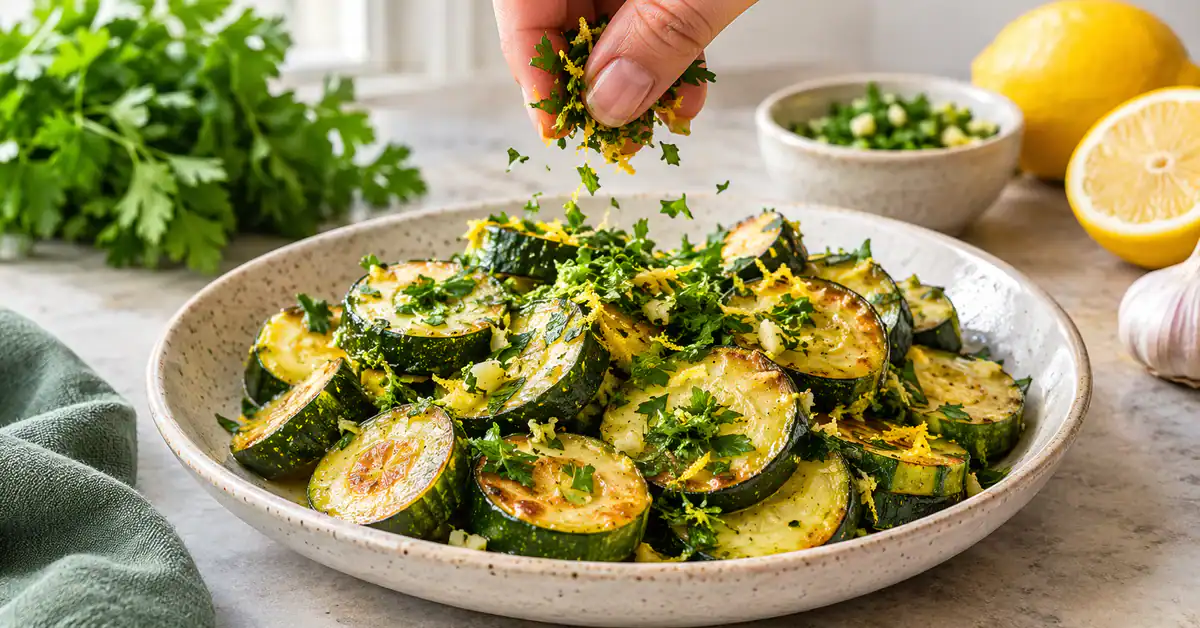
Add the gremolata after cooking, preferably while the vegetables are still warm. The warmth releases the aromas of lemon and parsley. The garlic and zest retain their freshness because they don’t cook with the vegetables.
Scatter the mixture over the vegetables a little at a time and gently fold it through with a spoon or spatula. For delicate vegetables such as courgettes or leafy greens, sprinkle it on top to keep them intact. Toss firmer pieces lightly. Serve straight away.
How to balance the flavours
Taste a piece of vegetable with a little gremolata. The lemon should give it a fresh lift, with the parsley and garlic still noticeable without overpowering the vegetables.
If the garlic tastes too strong or the zest dominates, use less gremolata per serving. If the flavour seems mild, sprinkle over a little more. As this mixture contains no lemon juice or other seasonings, adjust the amount you use on the vegetables rather than adding ingredients.
How to store gremolata
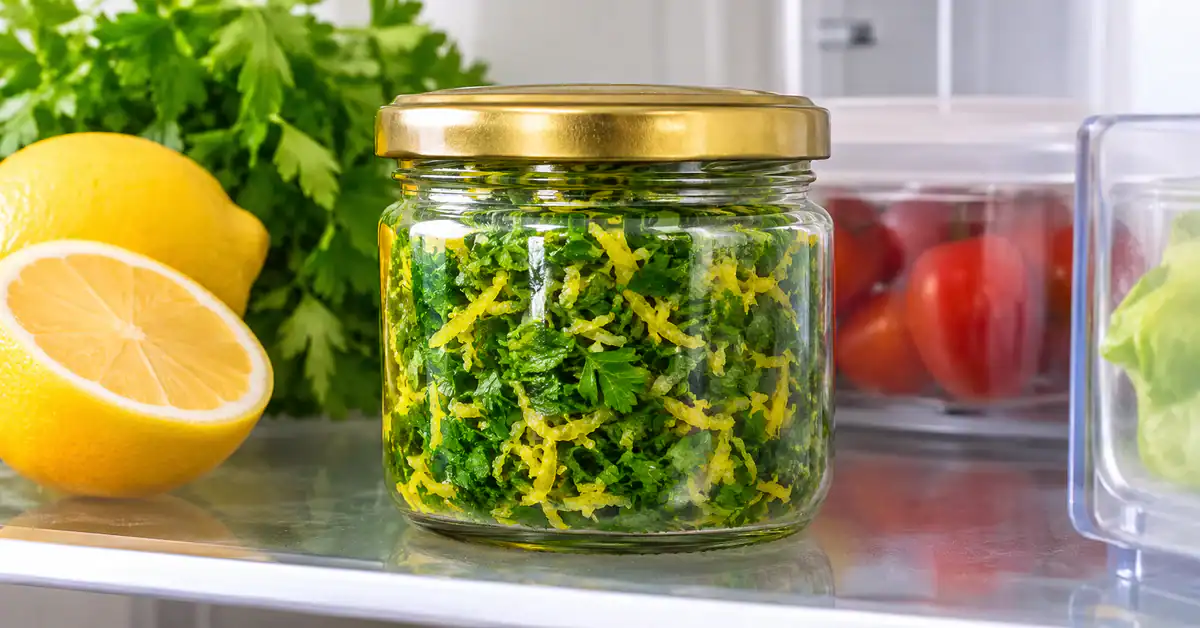
Gremolata has the best aroma just after it’s made. If you need to keep it, transfer it to a clean, tightly sealed container and refrigerate. Avoid leaving it out at room temperature for long.
The parsley is chopped and the mixture contains no preservatives, so make only what you’ll use soon. Check that the parsley still looks fresh and discard the gremolata if its smell or appearance has changed. Lemon and parsley lose freshness in storage, so make a fresh batch next time you want to finish some vegetables.
Finish and serve
Add the gremolata to the cooked vegetables and serve straight away. Sprinkle it on top of delicate vegetables such as courgettes or greens to keep them intact and distribute the seasoning lightly.
Questions about gremolata
Can I make gremolata ahead?
It’s best used straight away, when the parsley and lemon are at their most aromatic. If you need to store it, refrigerate in a clean, tightly sealed container. The recipe gives no specific storage time. Discard it if its appearance or smell has changed.
Why might the mixture taste bitter?
Grate only the yellow part of the lemon peel. The white pith can make the gremolata bitter.
Do I need to add lemon juice?
No. This version uses only finely grated lemon zest. Adjust the flavour by using more or less gremolata on the vegetables without adding anything else to the mixture.
Can I chop everything in a food processor?
A sharp knife is best for keeping the pieces small and distinct. Avoid crushing the parsley or turning it into a paste, as it can become too wet.