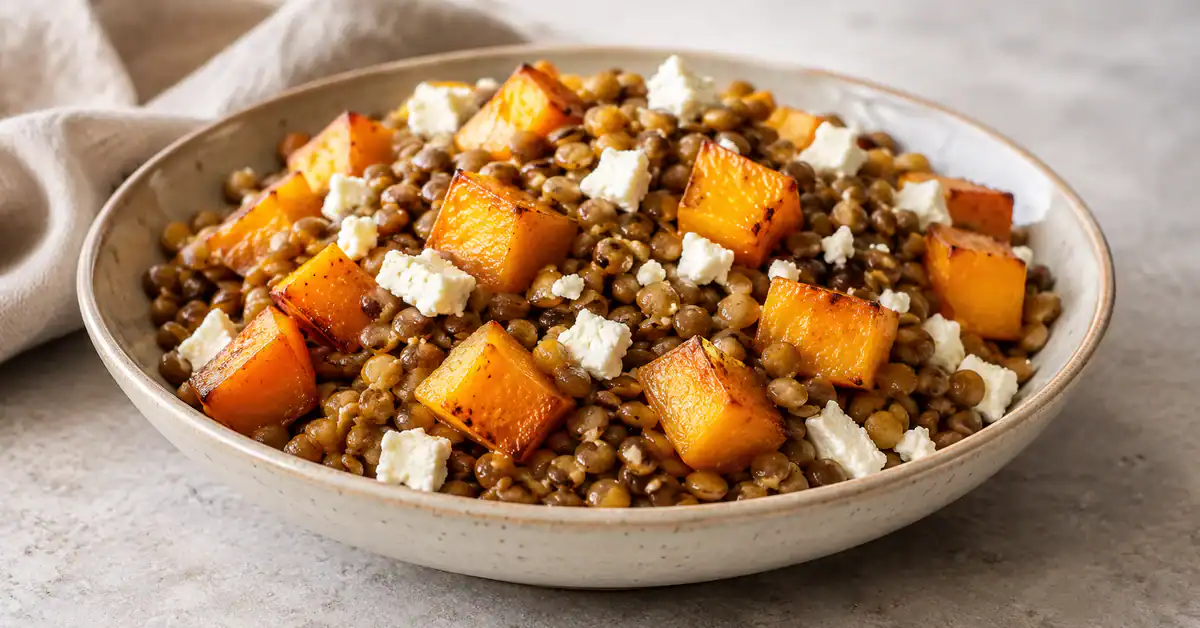

Tender lentils that hold their shape and golden cubes of roast squash come together in this feta salad. Dress with lime, Dijon mustard and olive oil and serve warm or at room temperature.
Tender lentils, golden roast squash and salty feta make a salad to serve warm or at room temperature. Cook the lentils just until tender so they stay whole, and roast the squash until soft with lightly browned edges.
Ingredients and quantities
These quantities serve about 4. Use green or brown lentils, which tend to hold their shape well once cooked.
- 200 g dried green or brown lentils
- 1 litre water for cooking the lentils
- 1 teaspoon salt for the cooking water, plus more to taste for the remaining ingredients
- 600 g kabocha squash, peeled and cut into roughly 2 cm cubes
- 4 tablespoons (60 ml) olive oil, divided between the squash and dressing
- 150 g feta, crumbled
- ½ small red onion, thinly sliced
- 2 tablespoons chopped fresh parsley
- 2 tablespoons (30 ml) lime juice
- 1 teaspoon Dijon mustard
- 1 small garlic clove, grated or finely chopped
- Black pepper to taste
Making the salad, from cooking to assembly
Cook the lentils so they stay whole
- Rinse the 200 g of dried lentils under running water and drain. Put in a saucepan with 1 litre of water and 1 teaspoon of salt. Bring to the boil, reduce the heat and simmer gently, uncovered, for about 20–25 minutes. Start checking early. The lentils should be tender to the bite but still whole. Drain and set aside.
Roast the squash until golden at the edges
- While the lentils cook, heat the oven to 220°C. Put the squash cubes on a baking tray, drizzle with 2 tablespoons of olive oil and season with salt and black pepper to taste. Toss to coat and spread out without crowding.
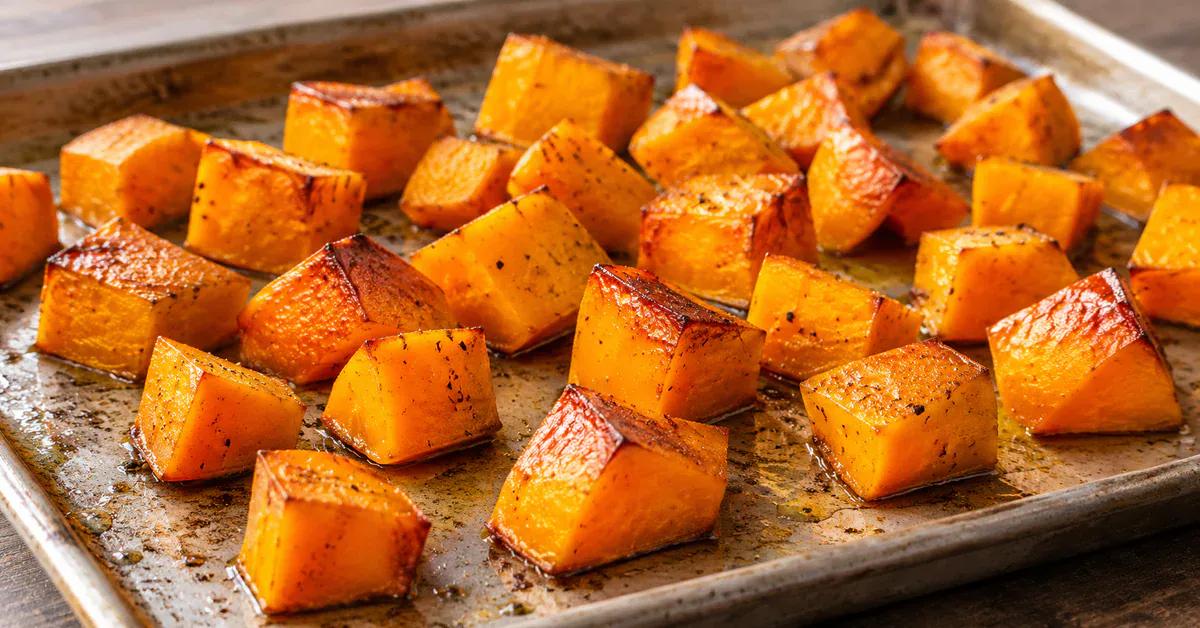
- Roast for about 25–35 minutes, turning the cubes halfway through. Remove when easily pierced with a fork and golden on some edges. Leave to cool slightly.
Combine the ingredients and add the feta
- In a small bowl, mix the remaining 2 tablespoons of olive oil with the lime juice, Dijon mustard and garlic. Taste and season with salt and pepper as needed.
- Put the drained lentils, warm squash, red onion and parsley in a large bowl. Pour over the dressing and toss gently to keep the cubes intact. Add the crumbled feta last and fold in gently, or scatter it over the top. Serve warm or at room temperature.
How to tell when the lentils and squash are ready
Tender lentils that still hold their shape
Taste a drained lentil. It should be tender through the centre without a hard core, yet hold its shape when pressed lightly. If still hard inside, return to a gentle simmer and check at short intervals. Split or mushy lentils are overcooked for this salad.
Squash that is tender inside and golden outside
Pierce a cube with a fork. It should slide in easily without the squash falling apart. Lightly golden edges show the outside has roasted too. If tender but pale, check the cubes are not crowded before roasting further.
Substitutions and adjustments
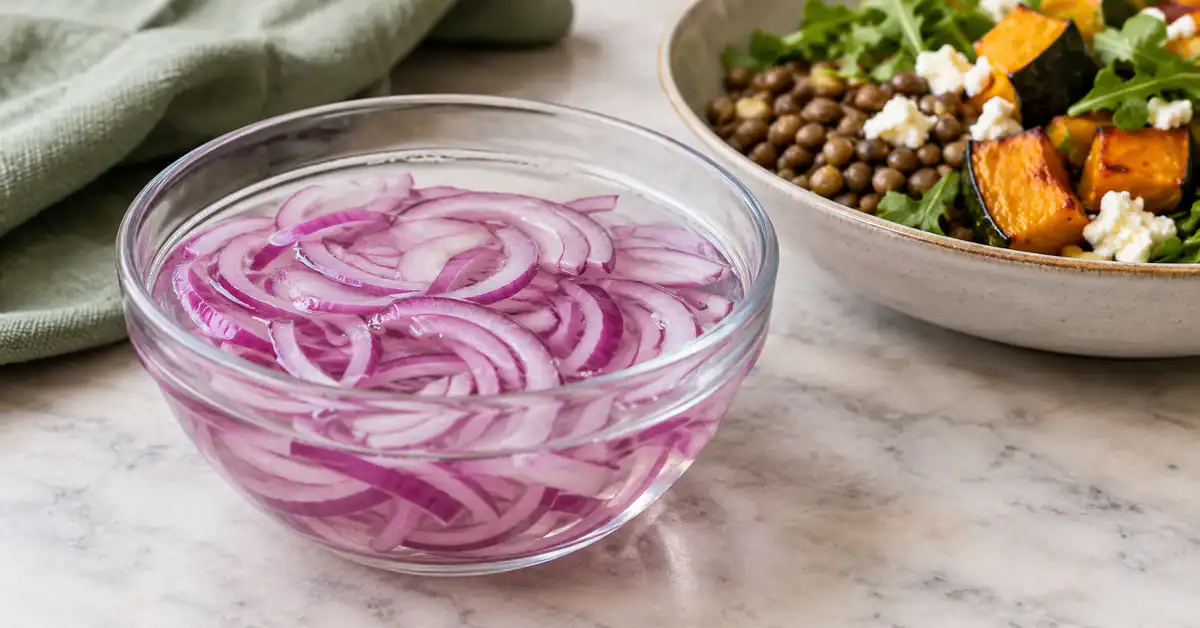
Substitutions change the texture and balance of flavours slightly. The main recipe uses green or brown lentils, kabocha squash and feta.
- If kabocha is unavailable, use another firm-fleshed squash, cut into cubes of a similar size. Moisture levels vary, so judge doneness in the oven as well as watching the time.
- Fresh goat’s cheese also works, though it tends to be creamier and may be less salty than feta. Taste the dressing before adding more salt.
- For a milder red onion, soak the thin slices in cold water for a few minutes, then drain well before adding. This takes away some sharpness while keeping the crunch.
Avoid red lentils, which tend to break down as they cook and make the salad mushy. For a different herb, replace the parsley with chopped mint for a more pronounced freshness.
How to serve the salad
Serve warm or at room temperature on a shallow platter to distribute the lentils, squash and feta evenly. Warm, the salad is comforting and the cheese softens slightly. At room temperature, the squash cubes hold their shape better as you serve.
Serve as a light main or a side. If the salad has been standing, toss gently to redistribute the dressing without breaking up the squash and lentils.
Storing leftovers
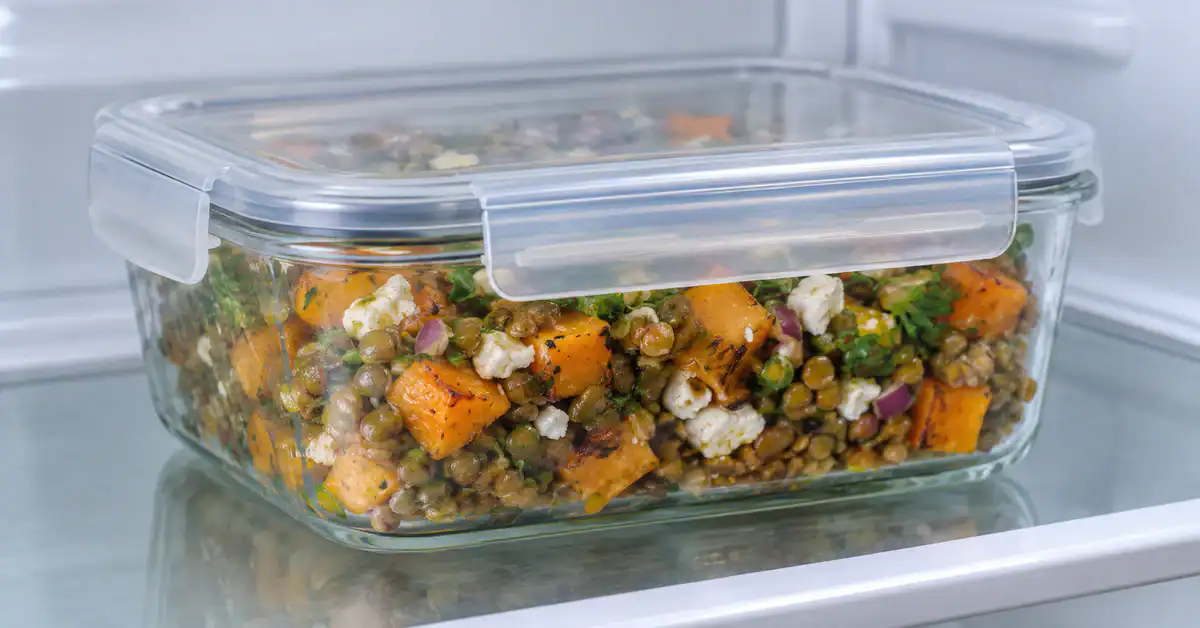
Refrigerate leftovers in a tightly sealed container without leaving them at room temperature for long. The lentils may absorb the dressing and the squash and feta may soften.
When serving again, take out only the portion you need and let it lose some of its chill if you prefer. Toss gently to redistribute the dressing without breaking up the squash cubes.
Bringing the dish to the table
Serve warm or at room temperature, as you prefer. If the salad has been standing, gently toss to redistribute the dressing without breaking up the squash.
Questions about cooking and serving
What if the lentils are still hard after the suggested cooking time?
Return the pan to a gentle simmer and cook a little longer, checking at short intervals. Drain when tender to the centre but still whole.
My squash is tender but pale. What should I do?
Check the cubes are spread out without crowding and continue roasting until some edges turn golden. Cooking time varies by squash, so check the texture as well as the clock.
Can I use red lentils instead of green or brown lentils?
Avoid red lentils here because they tend to break down as they cook, making the salad mushy. Green or brown lentils hold their shape better.
Should I adjust the salt if I use fresh goat’s cheese instead of feta?
Taste the dressing before adding more salt. Fresh goat’s cheese tends to be less salty than feta. It is creamier too, so fold it in gently.
How do I keep the squash cubes intact when serving?
Use a shallow platter and toss the salad only enough to redistribute the dressing. The squash holds its shape better at room temperature. In a warm salad, the feta may soften slightly.