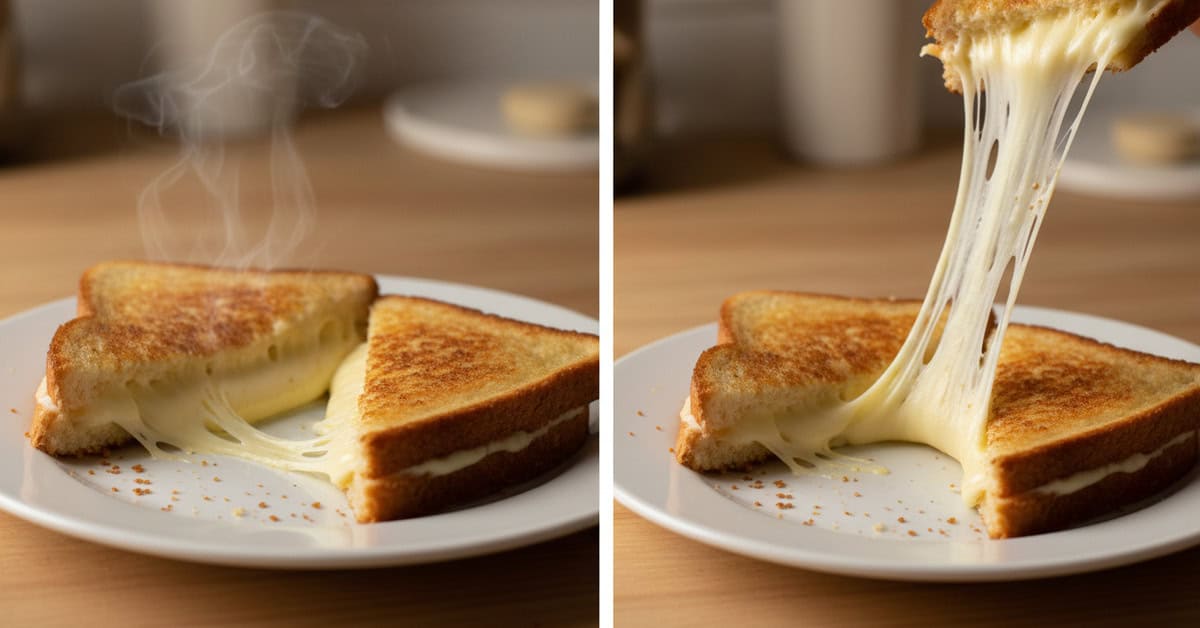

A Midwestern grilled cheese pairs Cheddar and Colby with buttered rustic bread. Cooking it slowly gives the bread a golden crust and the cheese time to melt into a creamy, stretchy filling.
Bite through the crisp crust of this Midwestern grilled cheese and you’ll find warm, melted cheese. Here’s how to make it at home, with the chef’s tips and a few easy variations.
Ingredients for a Midwestern grilled cheese

- 2 slices of rustic bread, about 60–80 g each. A dense sandwich loaf also works.
- 1 tablespoon unsalted butter, for toasting. Use mayonnaise for a different kind of crunch.
- 60 g grated Cheddar. Choose mature Cheddar for a stronger flavour or mild Cheddar for a gentler one.
- 60 g grated Colby, for a softer texture and a little colour. For an even creamier filling, try Monterey Jack.
- 2 slices of American cheese to help the filling melt evenly. Thinly sliced Brazilian queijo prato or mozzarella also works.
- 1 tablespoon mayonnaise (optional). Spread it on the outside of the bread to help it brown. You can leave it out or use butter.
- 1 teaspoon Dijon mustard (optional). Spread it inside for a sharper flavour or use mild yellow mustard.
- 2–3 slices of tomato (optional). Choose a firm tomato, remove the seeds and pat the slices dry so the bread stays crisp.
- Salt and pepper to taste. Fine salt and freshly ground black pepper work well.
- 2 rashers of crisp bacon or 1/4 cup caramelised onions (optional). They add texture, and bacon gives the filling a smoky note. For a vegetarian option, try strips of grilled pepper.
Substitutions and quick tips
- Cheese. Combine Cheddar and Colby, or mix Cheddar with mozzarella for a stretchier filling.
- Bread. Choose a loaf with a close crumb so it can hold the melted cheese without turning soggy.
- For toasting. Butter gives the bread its classic flavour, while mayonnaise helps it brown evenly.
- Extras. Allow about 120–150 g cheese in total so the filling melts without spilling out.
How to make a Midwestern grilled cheese

These steps take you through assembling and toasting the sandwich, even if you’ve never made one before.
Step-by-step instructions
- Prepare the ingredients. Grate 60 g Cheddar and 60 g Colby. If using tomato, cut 2–3 slices and pat them dry with kitchen paper.
- Heat the pan. Warm a cast-iron or non-stick frying pan over a medium-low heat for 2–3 minutes. It should be hot but not smoking.
- Butter the bread. Spread 1 tablespoon softened unsalted butter or 1 tablespoon mayonnaise over the outward-facing sides of the bread.
- Assemble the sandwich. Lay 1 slice of American cheese on the bread. Spread 120–140 g of the grated Cheddar and Colby evenly over it. Add 2–3 well-dried tomato slices if you like, then top with the second slice of bread.
- Toast the first side. Place the sandwich in the hot pan and leave it undisturbed for 2–3 minutes, until the base is golden and crisp.
- Press and cover. Gently press the sandwich with a spatula, then cover the pan for 30–60 seconds to trap the heat and melt the cheese evenly.
- Turn carefully. Flip the sandwich with the spatula and toast the second side for another 2–3 minutes, until golden and the cheese has visibly melted.
- Adjust the heat if needed. If the cheese hasn’t fully melted, turn the heat down to low and cover for another 30 seconds. Turning the heat up could burn the crust.
- Rest briefly. Transfer to a board and leave for 1 minute so the cheese firms up a little and stays inside when you cut.
- Slice and serve. Cut diagonally with a sharp knife to reveal the stretchy filling. Serve hot with pickles or tomato soup if you like.
Chef’s tips
Freshly grated cheese melts more evenly. Choose bread with a firm crumb to keep it from going soggy. A little mayonnaise with the butter on the outside helps the crust brown evenly. For a vegetarian filling, replace the bacon with caramelised onions or grilled peppers.
Cheese combinations to try

Try these combinations to balance flavour, colour and melt in your Midwestern grilled cheese.
- 40 g mature Cheddar + 40 g Colby + 1 slice of American cheese. A classic combination with a bold flavour that melts beautifully.
- 50 g mild Cheddar + 50 g mozzarella. A mild, stretchy filling that’s especially good for children.
- 40 g Monterey Jack + 40 g provolone. Creamy with a slightly smoky note, this blend goes well with spicy additions.
- 60 g grated Gruyère. Use it on its own for a velvety filling with a more complex flavour.
- 30 g Cheddar + 30 g Colby + 30 g queijo prato. This blend balances colour, flavour and creaminess.
Tips for mixing cheeses
- Allow about 120–150 g cheese per sandwich for an even layer.
- Pair a strong-flavoured cheese such as mature Cheddar with one that melts easily, such as mozzarella or Colby.
- Freshly grate hard cheeses so they mix well and melt quickly.
- Spread the cheese evenly to avoid clumps or filling leaking out.
- Slip a very thin slice of American cheese or queijo prato beneath the grated cheese to help the filling melt.
Substitutions and variations
- For a lower-fat sandwich, try partly skimmed cheeses. Reduced-salt cheeses are also an option. Keep the total amount of cheese the same.
- For a more aromatic vegetarian sandwich, swap the bacon for caramelised onions or sautéed mushrooms.
- For a smoky flavour without bacon, add 10–15 g smoked provolone to the blend.
- If you can’t find Colby, use the same amount of Monterey Jack.
Finishing touches
A little butter or a thin layer of mayonnaise on the outside of the bread gives it a golden crust. Try small amounts of the blends above to find your favourite.
Chef’s tips for a crisp, golden crust

For a crisp Midwestern grilled cheese, pay attention to the heat, the fat on the bread and the cooking time. Start with firm bread and freshly grated cheese.
Tips for toasting
- Cast-iron pan. Preheat it over a medium-low heat for 2–3 minutes. Cast iron distributes heat evenly, helping the crust brown all over.
- Butter or mayonnaise. Spread 1 tablespoon softened butter over the outsides of the bread, or use 1 tablespoon mayonnaise for a deeper golden colour.
- Keep the heat gentle. Cook over a medium-low heat for about 2–3 minutes per side so the cheese melts before the bread burns.
- Amount of cheese. Allow about 120–150 g cheese per sandwich. Grate hard cheeses so they melt more easily.
- Press and cover. Press gently with a spatula and cover the pan for 30–60 seconds to help the cheese melt in the centre.
- Slice thickness. Choose bread with a close crumb and cut it 1–1.5 cm thick so it can hold the filling without getting soggy.
How to keep the bread from going soggy
- Dry any wet ingredients. Remove the tomato seeds and pat the slices dry with kitchen paper before you assemble the sandwich.
- Add a protective layer. Put a thin slice of American cheese or queijo prato between the bread and the grated cheese to keep moisture away from the bread.
- Avoid overfilling. Keep the cheese and extras in proportion so the filling stays inside.
- Lightly toast the bread. Toasting the insides for 30 seconds helps form an initial barrier against moisture.
Finishing the sandwich
- Rest briefly. Leave the sandwich for 1 minute before slicing so the cheese can firm up slightly.
- Grate the cheese yourself. Freshly grated cheese melts more readily than pre-sliced cheese.
- Adjust as you go. The pan and the bread both affect how fast the crust forms. Adjust the heat and timing to suit them.
Recommended tools
- A wide spatula to turn the sandwich without pulling it apart.
- A cast-iron or heavy non-stick frying pan to distribute heat evenly.
- A medium grater to give the cheese a texture that melts well.
Cheese and the traditions of the American Midwest

The American Midwest is known for its dairy farms and for turning everyday cheeses into dishes such as this grilled cheese sandwich.
Traditional Midwestern cheeses
- Wisconsin Cheddar. Its bold, earthy flavour gives the sandwich character, and it grates well.
- Colby. This soft-textured orange cheese blends well with Cheddar to make a filling that melts evenly.
- American cheese. These slices melt evenly, giving the filling a creamy texture without clumps.
- Cheese curds. These small, fresh morsels have a slight spring to them. Popular at fairs, they make a crunchy accompaniment when fried.
Traditions and festivals
- State fairs feature cheese competitions, food trucks and grilled cheese stalls serving regional recipes.
- Family dairy farms. Many farms make artisan cheeses using methods passed down through the generations.
- Cheese as a local emblem. Midwestern towns celebrate their cheeses at festivals and farmers’ markets.
A few facts about Midwestern cheese
- Some communities blend cheeses for flavour and texture. A common ratio is around 60% Cheddar to 40% Colby or Monterey Jack.
- Cheese curds form when the curds separate from the whey early in cheesemaking. Fresh curds squeak when you bite into them.
- In the Midwest, grilled cheese often comes with tomato soup or pickles.
- Local cheese changes with the seasons. Fresh spring grass gives the milk, and the cheese made from it, a more complex flavour.
What this means for your sandwich
For a balanced sandwich in the Midwestern tradition, pair a bold cheese with one that melts readily. Choose firm bread and keep the cheese and extras in proportion.
Putting it all together
This Midwestern grilled cheese turns simple ingredients into a satisfying snack with a few small adjustments to the way you toast it. Try different cheeses and proportions to find the combination you like best.
Thanks for reading! Follow us on social media for quick tips and new recipes. Visit the Mestre das Receitas blog for our latest recipes and updates.
Frequently asked questions about Midwestern grilled cheese
Which cheeses work best in a Midwestern grilled cheese?
Pair a strongly flavoured cheese such as mature Cheddar with one that melts easily, such as Colby or mozzarella. Allow about 120–150 g cheese per sandwich.
How can I get the cheese to melt evenly without burning the bread?
Use a heavy pan over a medium-low heat and cover it for 30–60 seconds. Press the sandwich gently with a spatula to distribute the heat.
Can I use something other than butter to toast the sandwich?
Yes. Mayonnaise produces an evenly browned crust, while butter gives the bread its classic flavour. Choose whichever you prefer.
How do I keep tomato or other wet ingredients from making the bread soggy?
Remove the tomato seeds and pat the slices dry with kitchen paper. Add a thin slice of American cheese or queijo prato between the filling and the bread.
What’s the best way to store and reheat leftovers?
Wrap the sandwich in cling film and refrigerate for up to 24 hours. Reheat it in a frying pan over a low heat for a few minutes to crisp the bread and melt the cheese again.