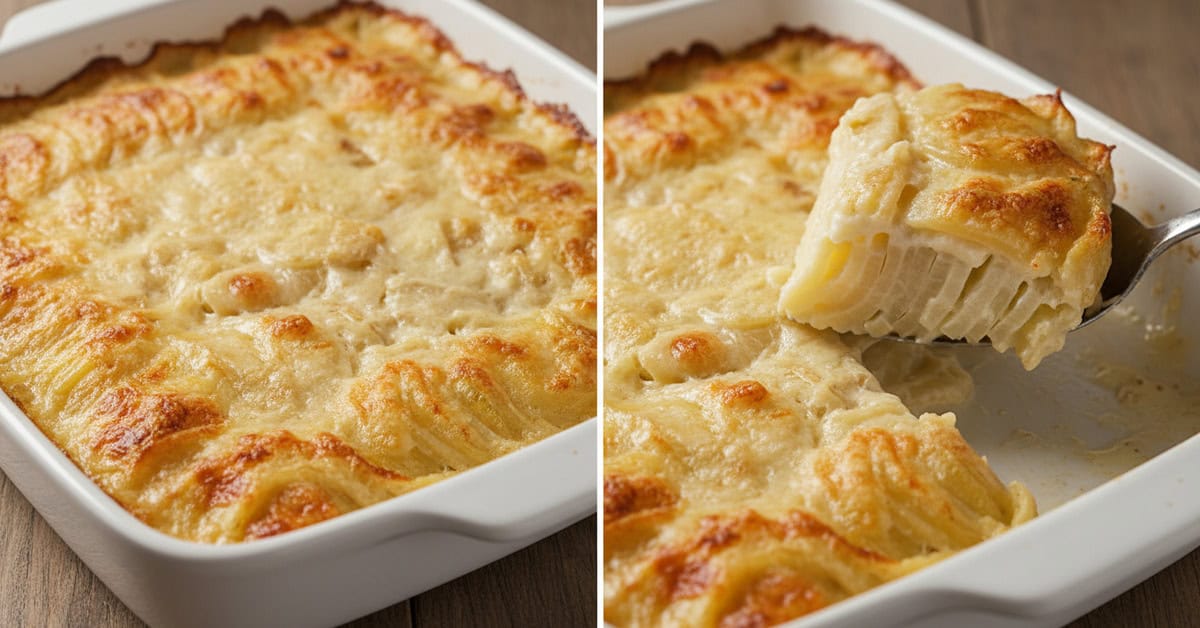

Scalloped potatoes are thin slices of potato baked in layers with a creamy white sauce and cheese. A thick sauce and an initial spell under foil give the potatoes time to soften. Uncover the dish towards the end for crisp edges and a golden top. It makes a lovely side for a family meal.
Midwestern scalloped potatoes bring comfort to the table in a bubbling, golden dish. How do you get tender layers, a velvety sauce and crisp edges? Here’s how to make them at home.
Ingredients for Midwestern scalloped potatoes
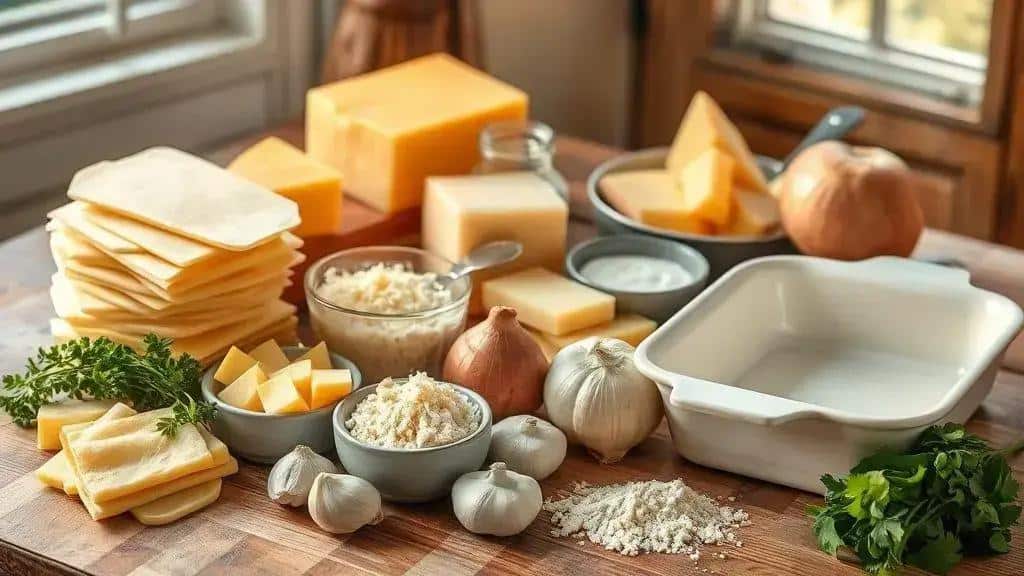
These traditional Midwestern scalloped potatoes call for simple, versatile ingredients. The quantities below serve about 6.
Ingredients
- 1.5 kg potatoes (about 6), preferably Yukon Gold or Russet, peeled and very thinly sliced. Any firm potatoes will do.
- 3 tablespoons (45 g) butter, for softening the onion and starting the sauce. Margarine or vegetable oil also works.
- 3 tablespoons (30 g) plain flour, to thicken the white sauce. For a gluten-free alternative, use gluten-free flour or cornflour, adjusting the amount as needed.
- 2 cups (480 ml) whole milk, for the sauce. Use semi-skimmed or plant milk for a lighter version.
- 1 cup (240 ml) cream or half-and-half, optional, for a richer sauce. For less fat, use more milk instead.
- 1 medium onion, thinly sliced to spread its flavour through the layers. Substitute a red onion or 1 teaspoon onion powder.
- 2 garlic cloves, finely chopped or crushed, optional. Alternatively, use ½ teaspoon garlic powder.
- 200 g grated Cheddar, half for the sauce and half for the top. Gruyère, mozzarella or Brazilian prato cheese are alternatives.
- 50 g grated Parmesan, optional, to sprinkle on top for a golden crust.
- 1 teaspoon salt, adjusted to the saltiness of your cheese.
- ½ teaspoon ground black pepper, or to taste.
- ¼ teaspoon grated nutmeg, optional, to flavour the white sauce.
- 2 tablespoons chopped fresh parsley to finish. Chives also work.
- 1 extra tablespoon butter or oil, to grease the baking dish.
- 2 tablespoons dried breadcrumbs or panko, optional, for a crisp topping. Use crushed almonds for a gluten-free alternative.
Use a mandoline or sharp knife for even slices. Thick, uneven pieces can take longer to cook.
How to make Midwestern scalloped potatoes, step by step
- Preheat the oven to 180°C (350°F). Grease a 22 × 30 cm baking dish with 1 tablespoon butter.
- Use a mandoline or sharp knife to slice the potatoes about 2 mm thick. Pat them dry with a clean tea towel to remove excess moisture.
- Soften the onion and garlic. Melt 3 tablespoons butter in a medium saucepan over medium heat. Cook the sliced onion for 4–5 minutes until translucent, then add the 2 chopped garlic cloves and cook for 30 seconds.
- Make the white sauce. Sprinkle 3 tablespoons flour over the buttery onions and stir for 1–2 minutes. Gradually whisk in 2 cups (480 ml) milk until smooth. For a richer sauce, add 1 cup (240 ml) cream. Cook for 2–3 minutes until thickened. Season with 1 teaspoon salt, ½ teaspoon pepper and ¼ teaspoon nutmeg. Take off the heat and stir in 100 g grated Cheddar.
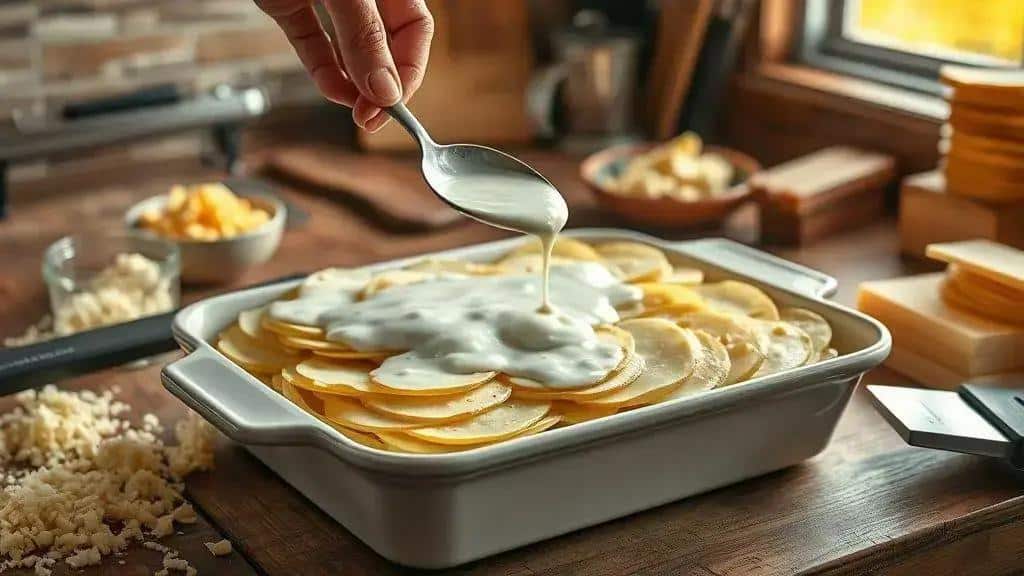
- Arrange an even layer of potato slices in the dish and season lightly with salt and pepper. Spoon over about one-third of the sauce, including some of the softened onion. Repeat the layers, finishing with the remaining sauce and the remaining 100 g grated Cheddar.
- Cover the dish loosely with foil and bake for 45 minutes so the potatoes cook evenly.
- Remove the foil and sprinkle over 50 g grated Parmesan and 2 tablespoons breadcrumbs or panko for crunch. Bake for another 15–20 minutes until golden and bubbling.
- Test the potatoes with a fork. It should slide easily through the tender slices. If needed, bake for another 5–10 minutes.
- Let the dish stand for 8–10 minutes so the layers settle. Sprinkle with 2 tablespoons chopped parsley and serve hot.
Baking and browning the top
How to slice potatoes and bake the layers evenly
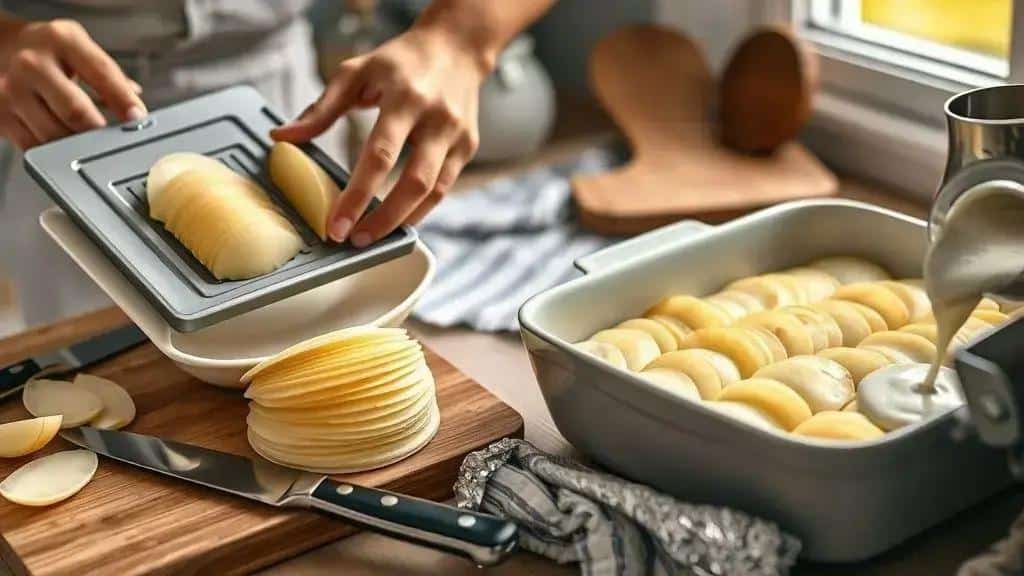
For uniformly tender scalloped potatoes, pay attention to the cut, how you layer the slices and where you put the dish in the oven.
Tools and slicing tips
- Mandoline – set it to about 2 mm for thin, even slices and use the hand guard.
- Sharp knife – if you don’t have a mandoline, steady the potato on a chopping board. Make long, even cuts, keeping the blade tip steady.
- Peeler – peel the potatoes before slicing for more uniform layers.
- Potato variety – Yukon Gold or Russet potatoes have a good texture for this dish. Pick firm potatoes of similar size.
How to cut even slices
- Secure the potato in the mandoline guard or cut a flat base to steady it on the board.
- Slice with an even rhythm and consistent pressure. Set aside any end pieces too small to slice safely.
- Feel a few finished slices to check the thickness. At about 2 mm they should be almost translucent.
- Pat dry with a clean tea towel or kitchen paper so excess moisture won’t thin the sauce.
Layering and baking
- Overlap the slices slightly in even rows so heat spreads through the dish.
- Pour the warm sauce over the layers, easing the slices apart a little so it can run between them.
- Cover with foil at first so the potatoes cook without drying out. Uncover for the final 15–20 minutes to brown.
- Bake at 180°C (350°F) on the middle shelf. If one edge browns quickly, turn the dish halfway through.
- A medium- or thick-walled ceramic or glass baking dish distributes heat evenly.
How to tell when the potatoes are done
- Push a fork into the centre. It should slide in and out easily.
- Look at the sauce. It should bubble around the edges when the potatoes are ready.
- If the potatoes are still firm, cover and bake for another 5–10 minutes, then check again.
- For crisper edges, turn the oven up to 200°C for the last 5–10 minutes, or brown briefly under the grill, keeping a close eye on the top.
Quick tips for an even bake
- Cut potatoes of a similar size so they cook evenly.
- Spread slices evenly rather than piling them up in one spot. This gives heat room to circulate.
- With starchier potatoes, let the assembled dish stand for 10 minutes before baking to allow the sauce to settle.
- Turn the dish once during baking to compensate for oven hot spots.
Midwestern scalloped potato variations with cheese, herbs or a lighter sauce
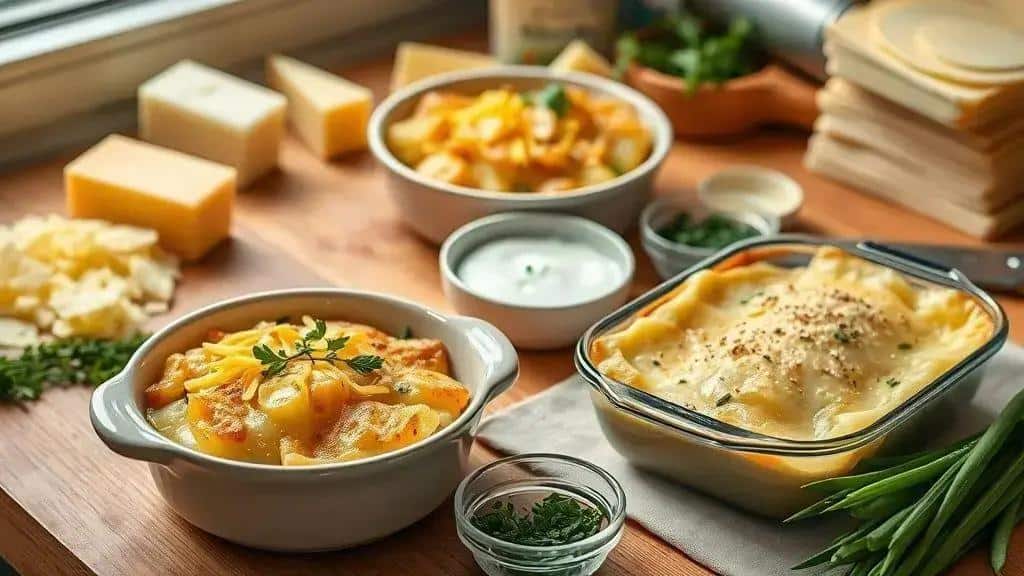
Make these Midwestern scalloped potatoes richer, more fragrant or lighter with a few simple variations.
Cheese combinations
Changing or blending cheeses affects both texture and flavour. Try different combinations for a golden top or a smoother sauce.
- 200 g grated Cheddar and 100 g Gruyère melt well together and have a rich, rounded flavour.
- 300 g Cheddar on its own makes an economical, full-flavoured option.
- 200 g mozzarella and 100 g grated Parmesan give you a stretchy melt and a browned crust.
- 200 g Brazilian prato cheese or Emmental gives a mild flavour children may enjoy.
Herbs and aromatics
Fresh herbs bring out the flavours without making the dish heavier. Use a light hand so the cheese still comes through.
- 2 tablespoons chopped fresh parsley for a fresh finish.
- 1 tablespoon fresh thyme for an earthy flavour that goes well with Gruyère.
- 1 teaspoon finely chopped rosemary. A little goes a long way.
- 1 teaspoon chopped chives for gentle onion flavour and colour.
A lighter version with less fat
A few swaps keep the sauce creamy while cutting back on fat and calories.
- 1 tablespoon butter for softening the onion, instead of the full amount.
- 2 cups (480 ml) skimmed milk in place of whole milk.
- ½ cup (120 g) plain Greek yoghurt for creaminess with less fat. Stir it into the warm sauce.
- 150 g grated reduced-fat cheese for flavour with less fat.
- 2 tablespoons wholemeal breadcrumbs or panko for a light, crisp topping.
Extras and flavour variations
These additions work whether you’re serving the potatoes as a side dish or a main course.
- 100–150 g chopped crisp bacon for a salty crunch. Use sautéed mushrooms for a vegetarian version.
- 150 g sautéed spinach for colour and nutrients.
- 1 thinly sliced green apple for a sweet-tart contrast to strong cheeses.
- ½ teaspoon Dijon mustard stirred into the sauce for gentle heat.
Quick substitutions
- For a gluten-free dish, thicken the sauce with cornflour and top with crushed almonds instead of breadcrumbs.
- For a dairy-free version, use creamy soya or oat milk and grated vegan cheese. Use oil for the butter and plant cream if adding cream.
- For extra crunch, toss panko with a little olive oil and scatter on top before browning.
- For deeper flavour, stir 1 teaspoon unsalted concentrated stock into the sauce.
What to serve with scalloped potatoes and how to plate them
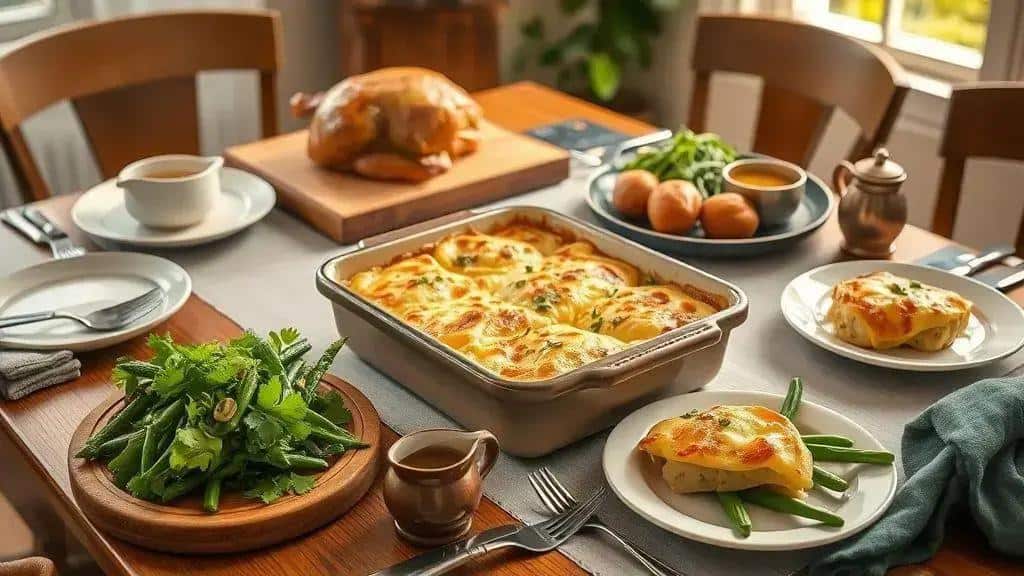
Serve Midwestern scalloped potatoes with something crisp, fresh or tart to balance the rich sauce.
What goes well with scalloped potatoes?
- Roast chicken – juicy chicken seasoned with a few herbs balances the richness of the potatoes.
- Roast beef or pork leg – serve thin slices with a light sauce for a special occasion.
- Sautéed greens – green beans, asparagus or broccoli with garlic and olive oil add freshness.
- Green salad with vinaigrette – mixed leaves, red onion and a citrus dressing cut through the richness.
- Roasted Brussels sprouts – their crisp edges contrast with the creamy potatoes.
- Light gravy – pass it at the table for anyone who likes a little extra sauce.
- Pickles – pickled cucumbers or beetroot add refreshing acidity.
How to portion and serve
- Take the dish out of the oven and let it stand for 8–10 minutes so the layers set and you can cut neat portions.
- Use a wide serving spatula and slide it under the bottom layer to lift out squares intact.
- Place a portion in the centre of each plate and arrange your chosen accompaniment alongside, leaving a little space between them.
- Add a small green salad or a few green vegetables for colour and freshness.
- Scatter chopped parsley or chives over the potatoes. Add a thin drizzle of extra virgin olive oil if you like.
- Serve gravy or extra sauce in a jug so everyone can add as much as they like.
Portions, reheating and presentation
- A dish made with 1.5 kg potatoes serves about 6 as a side or 4 as a main.
- Make it up to 24 hours ahead, cover and refrigerate. Take the dish out 30 minutes before returning it to the oven.
- To reheat, preheat the oven to 180°C. Cover with foil and heat for 20–25 minutes, uncovering for the last 10 minutes to brown. Heat until piping hot throughout.
- For individual portions, microwave for 2–3 minutes on medium power, or until hot throughout. The oven keeps the top crisper.
- For a party, place the baking dish on a warming stand in the middle of the table, or bake in individual dishes for easy serving.
- Try a light wine such as unoaked Chardonnay or a mild beer. For a soft drink, serve sparkling water with lemon or iced herbal tea.
About scalloped potatoes and the potatoes that go into them
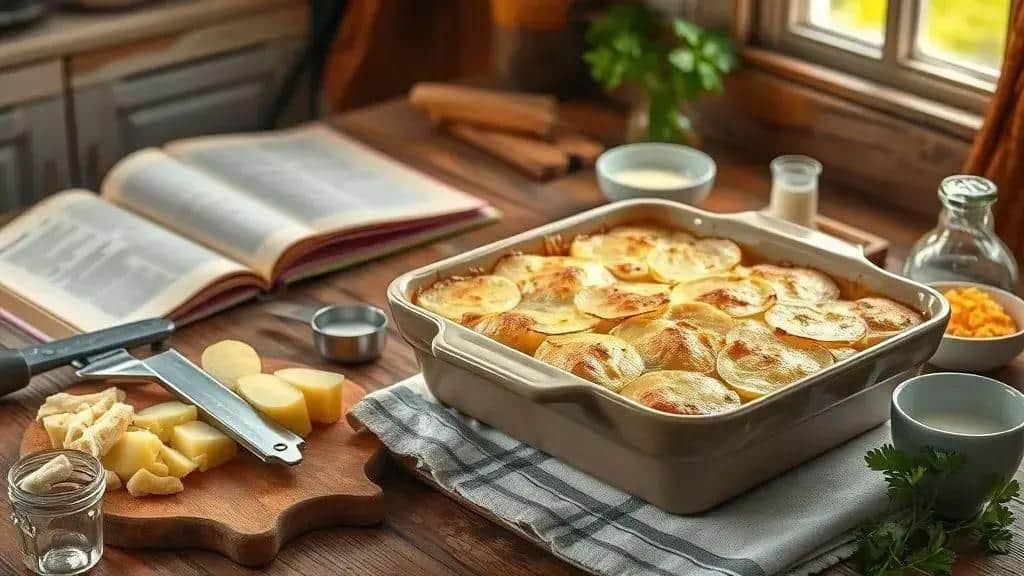
A few details about scalloped potatoes and their main ingredient help explain the dish’s enduring appeal.
- Scalloped potatoes became a favourite home-cooked dish for family dinners in the American Midwest.
- Potatoes au gratin and scalloped potatoes are often confused. The former generally have more cheese and a browned topping, while the latter emphasise the white sauce between the layers.
- The overlapping slices can resemble the curves of a shell. You don’t need a special scalloped cut to make the dish.
Kitchen notes
- For a good texture, slice the potatoes thinly, about 2 mm, so the sauce can run between the layers.
- A little nutmeg in white sauce is a traditional way to deepen the flavour without overpowering the dish.
- Two cheeses, one for a creamy sauce and one to brown on top, improve the colour, flavour and texture.
Potatoes and nutrition
Potatoes are an affordable source of carbohydrates, vitamin C and potassium. The more fat and cream you add, the more energy-dense the finished dish becomes.
- Carbohydrates supply much of the energy in the dish.
- Potatoes contain vitamin C and potassium, some of which remain after cooking.
- To reduce calories, replace some of the cream with Greek yoghurt and use skimmed milk.
What happens in the oven?
- Starch and texture – thin slices release starch that helps bind the sauce. Thick, uneven slices may cook at different rates.
- Temperature and covering – cover the dish at first for an even bake, then uncover to brown the top.
- Resting – wait 8–10 minutes before cutting so the sauce settles and the portions hold their shape.
Common mistakes
- Cutting uneven slices can leave some potatoes underdone while others fall apart.
- Adding too much cheese at the start makes the sauce heavy and difficult to pour.
- Leaving the slices wet can thin the sauce.
Traditions and serving ideas
- In the United States, scalloped potatoes are a favourite for holiday meals and Sunday lunches.
- Regional variations include bacon, green apple or locally grown herbs.
- Serve with something tart, such as salad with a sharp dressing or pickles, to balance the creamy sauce.
Conclusion
Midwestern scalloped potatoes make a comforting side for lunch or dinner. A few simple techniques give you even slices, a velvety sauce and a golden crust.
Thanks for cooking along! Follow us on social media for more easy, creative ideas. Visit the Mestre das Receitas blog for more recipes, tips and kitchen inspiration.
Frequently asked questions about Midwestern scalloped potatoes
Which potatoes work best for scalloped potatoes?
Yukon Gold or Russet potatoes have a good flavour and texture. Choose firm potatoes of similar size for even cooking.
How can I slice the potatoes without a mandoline?
Use a very sharp knife and make long, even cuts. Cut a flat base on the potato first so it sits securely.
Can I make the dish ahead?
Yes. Assemble, cover and refrigerate for up to 24 hours. Take the dish out 30 minutes before baking and allow slightly more time in the oven if it is still cold.
How do I crisp the top without burning it?
Remove the foil for the last 15–20 minutes and sprinkle on Parmesan and panko. Bake on the middle shelf and keep an eye on the colour.
How can I make lighter scalloped potatoes?
Replace some of the cream with Greek yoghurt, use skimmed milk and cut back on the butter. Use reduced-fat cheese or a smaller amount of your usual cheese.
How do I know when the potatoes are ready?
A fork should slide in and out of the centre without resistance. The sauce should bubble around the edges.