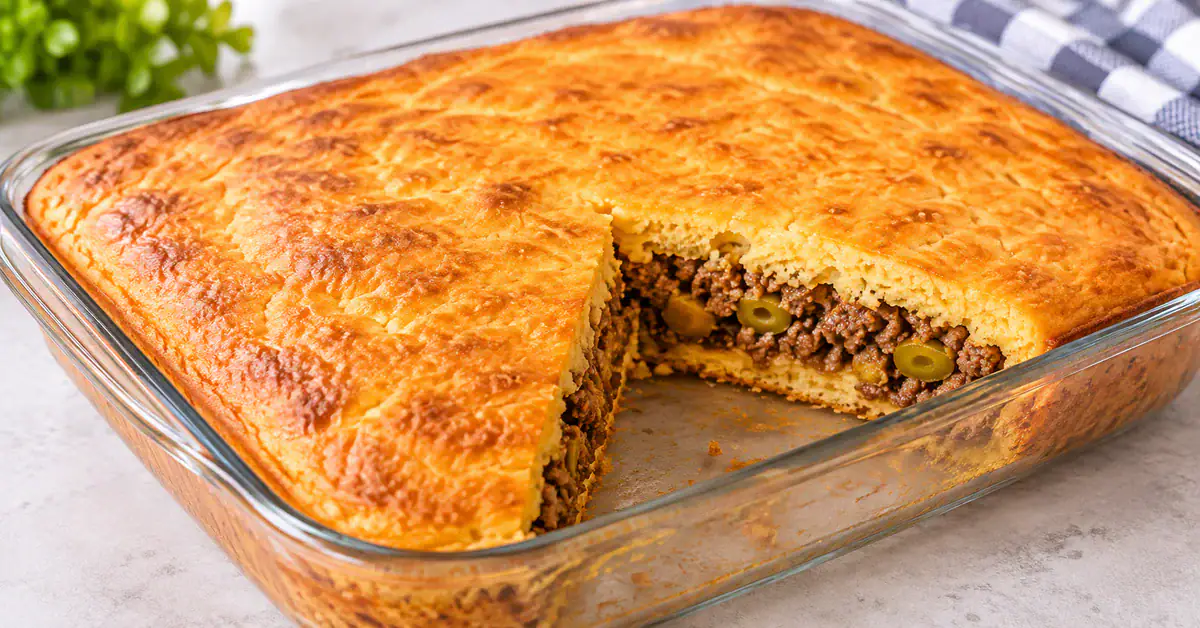

This blender pie with minced beef and olives has a pourable batter made in a blender and a pan-cooked filling of beef, tomato and olives. Assemble it in layers and bake at 180°C until risen, golden and firm in the centre.
This minced beef and olive pie combines a simple blender batter with a savoury filling for lunch or dinner. Take care with the consistency of the batter and the cooking of the beef so the layers are easy to spread evenly.
Make the filling, blend the batter and assemble the pie before baking, following the steps below.
Ingredients for the batter and filling
For the batter
- 2 cups plain flour (240 ml per cup)
- 2 cups milk (480 ml)
- ½ cup oil (120 ml)
- 3 eggs
- 1 tablespoon baking powder (12 g)
- 1 teaspoon salt
- 1 teaspoon oil to grease the tin
- 1 tablespoon plain flour to dust the tin
For the filling
- 1 tablespoon oil
- 500 g raw minced beef
- 1 medium onion, chopped
- 2 garlic cloves, chopped
- 1 medium tomato, deseeded and chopped
- ½ cup pitted green olives (about 70 g), drained and chopped
- ½ teaspoon salt
- Black pepper to taste
- 2 tablespoons chopped Brazilian cheiro-verde (parsley and spring onion), optional
Prepare the minced beef and olive filling
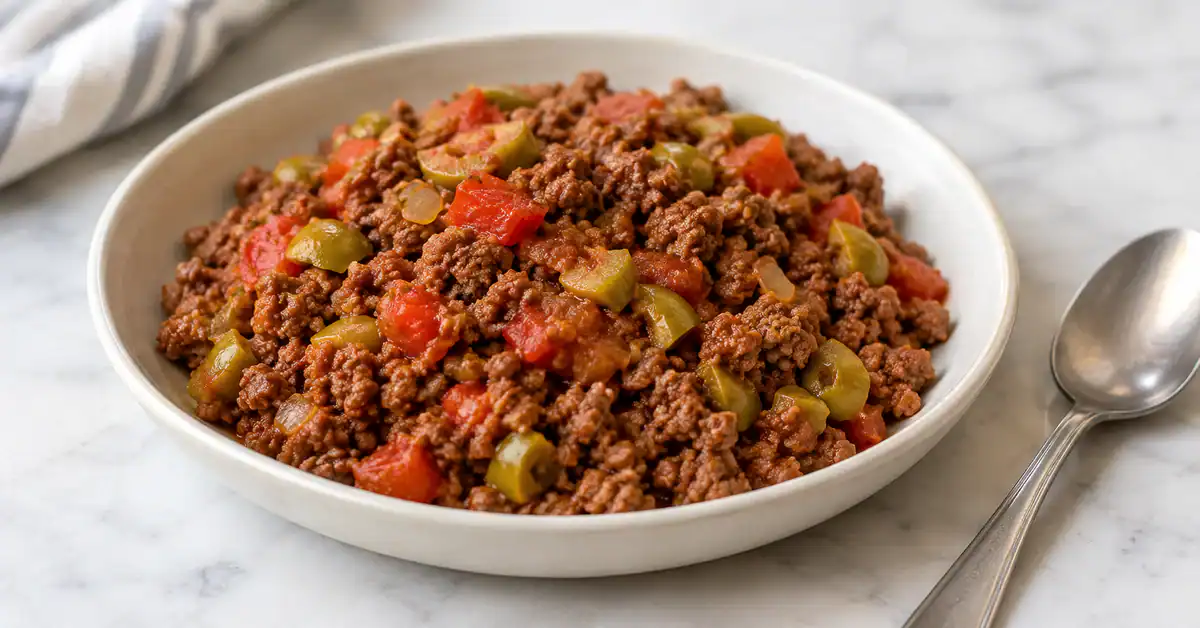
Make the filling first and let it cool while you prepare the batter. It will be easier to spread and will not heat the batter before the pie goes into the oven.
- Soften the onion and garlic: heat 1 tablespoon of oil in a large saucepan or frying pan over a medium heat. Add the chopped onion and stir until it begins to soften. Add the garlic and stir for about 30 seconds, just until fragrant, without letting it brown too much.
- Cook the beef: put the 500 g of raw minced beef in the pan and break up any clumps with a spoon. Cook over a medium heat, stirring occasionally, until the liquid has evaporated. Use a food thermometer to check that the beef reaches at least 71°C in the centre, keeping the tip clear of the pan. Continue cooking and check again if needed.
- Add the tomato and seasoning: stir in the chopped tomato, salt and black pepper to taste. Cook for a few minutes, stirring, until the tomato softens and the filling is moist without liquid pooling in the bottom of the pan.
- Finish with the olives: stir in the drained, chopped pitted green olives. If using the chopped herbs, stir them in now.
- Let it cool: transfer the filling to a plate or wide dish and leave it until cool or just lukewarm before assembling the pie.
Make the batter in a blender
While the filling cools, make the batter shortly before assembling the pie so the baking powder can get to work just as the pie is ready to bake.
- Blend the liquid ingredients: put the 3 eggs, 2 cups milk (480 ml), ½ cup oil (120 ml) and 1 teaspoon salt in the blender. Blend on medium speed until combined.
- Add the flour: add the 2 cups of plain flour, preferably in two batches. Blend just until smooth with no dry patches. The batter should be runny and easy to pour. Avoid blending any longer than necessary.
- Mix in the baking powder: add 1 tablespoon of baking powder (12 g) and pulse for a few seconds, just enough to distribute it. Alternatively, fold it in with a spatula. The batter is now ready to use.
Assemble and bake the pie
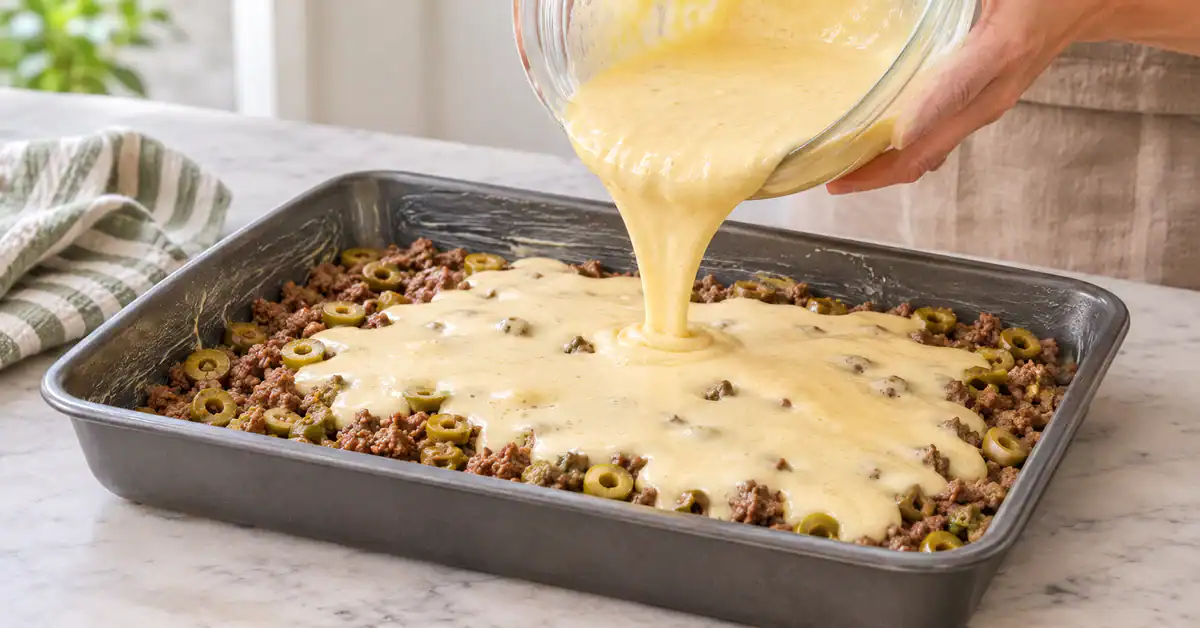
Once the filling has cooled or is just lukewarm and the batter is ready, assemble the pie promptly to make the most of the baking powder. Use a rectangular tin about 20 × 30 cm and preheat the oven to 180°C.
- Prepare the tin: grease the base and sides with 1 teaspoon of oil and dust with 1 tablespoon of plain flour. Tilt the tin to spread the flour and shake out the excess.
- Make the first layer: pour about half the batter into the tin and spread it over the base with a spoon or spatula.
- Distribute the filling: spread the beef evenly over the batter without pressing down. Leave a narrow border around the edges to keep the filling clear of the sides of the tin.
- Cover with the remaining batter: pour it gradually over the filling, aiming to cover the entire surface. If a few pieces of beef show through, leave them as they are.
- Bake: place in the preheated oven for about 35–45 minutes. The pie should rise and turn golden. As ovens vary, check the centre before taking it out.
How to tell when the pie is baked through
After about 35 minutes at 180°C, check the pie before taking it out. The surface should be golden and the centre firm. When you gently shake the tin, the batter should no longer look liquid or ripple.
To check the middle, insert a skewer into a batter-covered area clear of the beef. It should come out without any raw batter sticking to it. A few moist crumbs are fine. If the centre still looks glossy or feels soft, bake for a few more minutes and check again. The pie usually takes 35–45 minutes in total, depending on the oven.
Adjust the salt and spread the filling evenly
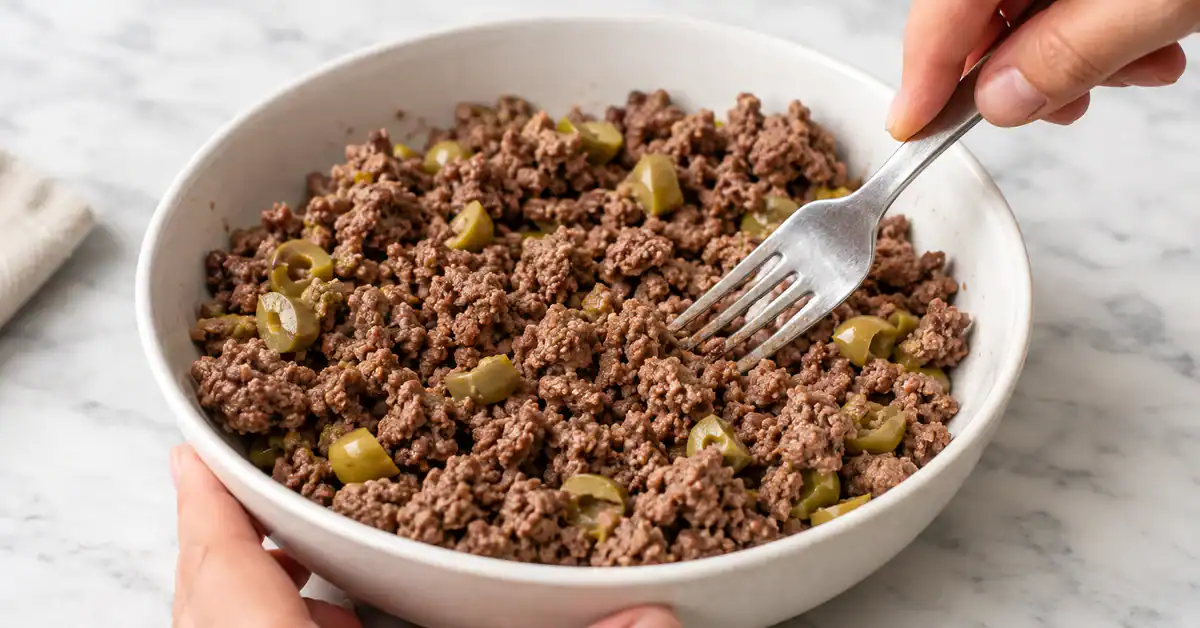
Taste the filling after stirring in the olives. They already add salt, so adjust only if it really needs it. If it is well seasoned, leave it as it is. An overly salty filling will stand out in every slice.
If the beef has formed tight clumps, break them up with a fork before assembling the pie. This makes the filling easier to spread and prevents some pieces from having almost no beef.
Serving and storing leftovers
Leave the pie to rest for a few minutes after baking. The slices will firm up and be easier to serve. Serve warm or at room temperature with salad if you like.
To store leftovers, let the pie stop steaming, then put the pieces in a lidded container and refrigerate. Reheat only what you plan to serve, in the microwave or oven, until hot in the centre.
To serve
Wait a few minutes before cutting so the slices hold together better. Serve the pie warm with a salad on the side if you like.
Questions about making the pie
Can I blend the batter before making the filling?
Make the batter shortly before assembling the pie, once the filling is ready and cooling. That way the baking powder does not have to wait while you finish the other steps.
My batter looks quite runny. Is that right?
Yes. It should be runny and easy to pour into the tin. Blend just until smooth with no dry patches. There is no need to blend it any longer.
Does it matter if a few pieces of beef show through?
No. Leave the layers as they are if a few pieces show on the surface. Spread the filling evenly and cover it gradually with the remaining batter.
How do I check the middle without catching the beef on the skewer?
Insert the skewer into an area covered only by batter. It should come out without raw batter sticking to it. A few moist crumbs are fine.
Should I add more salt after adding the olives?
Taste the filling after stirring them in and adjust the salt only if it tastes underseasoned. The olives already contribute salt, so taste before adding more.