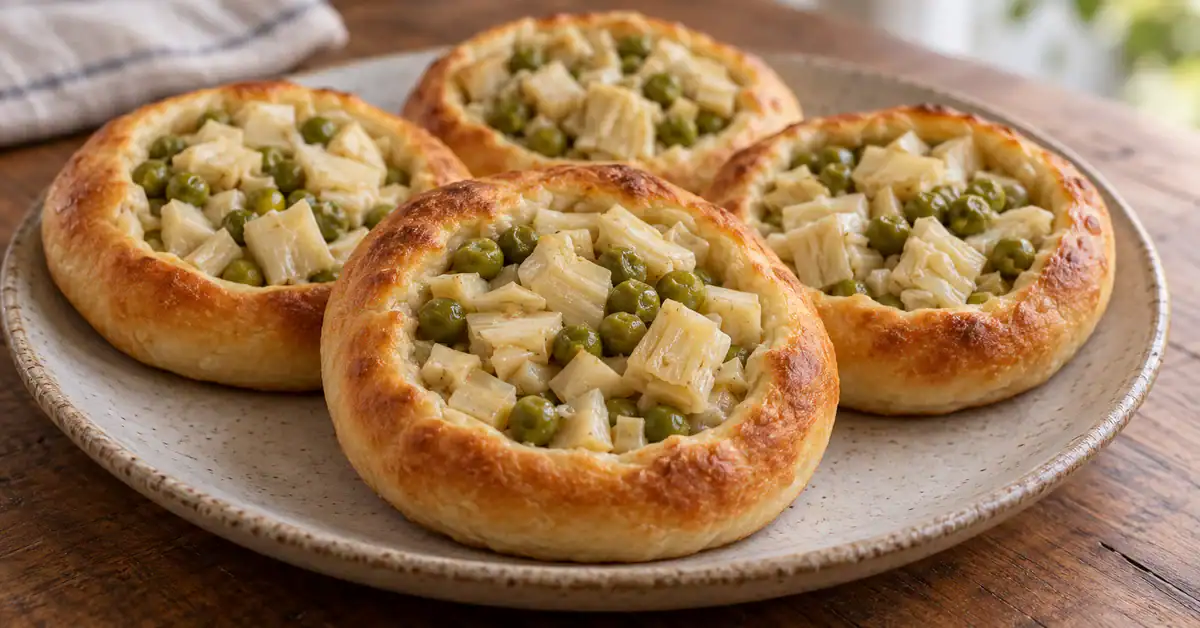

These open esfihas have a homemade dough that is left to rest and a creamy heart of palm and pea filling, thickened in the pan and cooled before it goes onto the rounds of dough. Bake at 220 °C for about 12 to 15 minutes, until the bases are cooked and the edges begin to brown.
These open esfihas have a savoury heart of palm and pea topping that’s easy to spread on the dough before baking. Make the filling, shape the bases and assemble the esfihas, taking care to get the dough right and spread the topping evenly so they bake at the same rate.
Ingredients for the dough and filling
Makes about 12 open esfihas, each roughly 9 cm across. Set out the dough and filling ingredients before you begin.
Dough
- 500 g plain flour
- 250 ml lukewarm water, not hot
- 7 g instant dry yeast
- 12 g sugar
- 5 g salt
- 45 ml oil
Heart of palm and pea filling
- 15 ml oil
- 1 small onion, about 80 g, chopped
- 2 garlic cloves, chopped
- 300 g preserved hearts of palm, drained and chopped
- 140 g frozen peas, thawed
- 15 g plain flour
- 100 ml milk
- 2 g salt
- Black pepper to taste
- 2 tablespoons chopped fresh parsley
Prepare the filling, shape the bases, and bake the esfihas
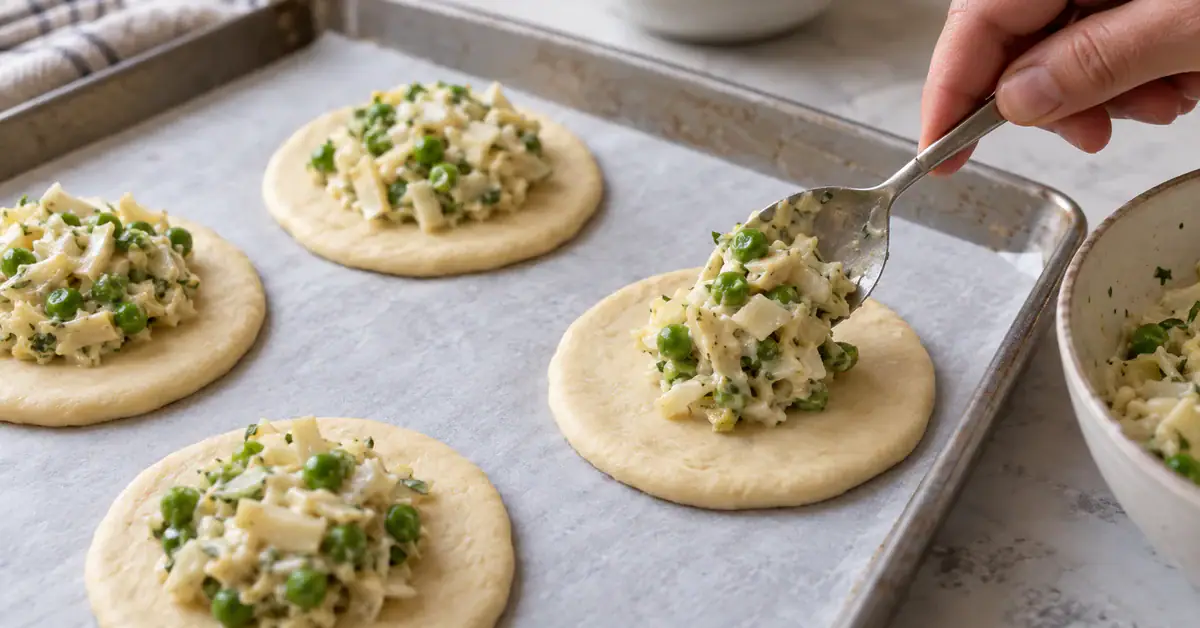
Make the filling
- Heat the 15 ml oil in a pan over a medium heat. Add the onion and cook for about 4 minutes, stirring until tender. Add the garlic and stir for a further 30 seconds, taking care not to brown it too much.
- Add the drained, chopped hearts of palm and the thawed peas. Stir for 2 minutes to warm them through and distribute the onion and garlic.
- Thicken the filling: sprinkle the 15 g of plain flour and stir until the pieces are coated. Pour the 100 ml of milk slowly, stirring to avoid lumps. Cook for a few minutes until the liquid thickens and the filling becomes creamy, but not runny; season with salt and black pepper to taste.
- Take the pan off the heat, stir in the parsley and transfer the filling to a plate or wide bowl. Let it cool before adding it to the dough so the hot filling doesn’t soften the bases before baking.
- Prepare the dough: in a large bowl, mix the flour, yeast, sugar, and salt. Add lukewarm water and 45 ml of oil; stir until a dough forms. Knead for about 8 to 10 minutes on a clean surface, pressing and folding the dough, until it is smooth and elastic. Cover the bowl and let it rest in a draught-free place for about 1 hour, or until the dough has doubled in size.
Shape, fill and bake the esfihas
- Gently press some of the air out of the dough and divide it into 12 similar portions. Roll each into a ball, cover and rest for 10 minutes. This makes the dough easier to shape without springing back.
- Shape the bases: flatten each ball with your hands or roll it out until it forms a disc about 9 cm in diameter. Leave the centre a little lower than the edge to accommodate the filling.
- Divide the cooled filling among the rounds, leaving a clear rim of dough. Arrange the esfihas in a single layer on a non-stick baking tray or one lined with baking paper.
- Bake: with the oven preheated to 220 °C, bake for about 12 to 15 minutes until the edges firm up and start to brown and the bottom of the dough is cooked. Remove the baking tray and let the esfihas rest for a few minutes before serving.
How to tell when the esfihas are baked
Start checking after about 12 minutes in the oven at 220 °C. The edges should be firm and just starting to brown, and the underside should be lightly golden, with no signs of raw dough. The filling should be hot and set, with no liquid pooling on top of the esfihas.
If you’re unsure, lift one esfiha with a spatula and check the base. If it is pale or looks wet, return the tray to the oven for a few more minutes, checking before the edges get too dark. Timing varies with the oven and tray.
How to keep the filling from making the dough soggy
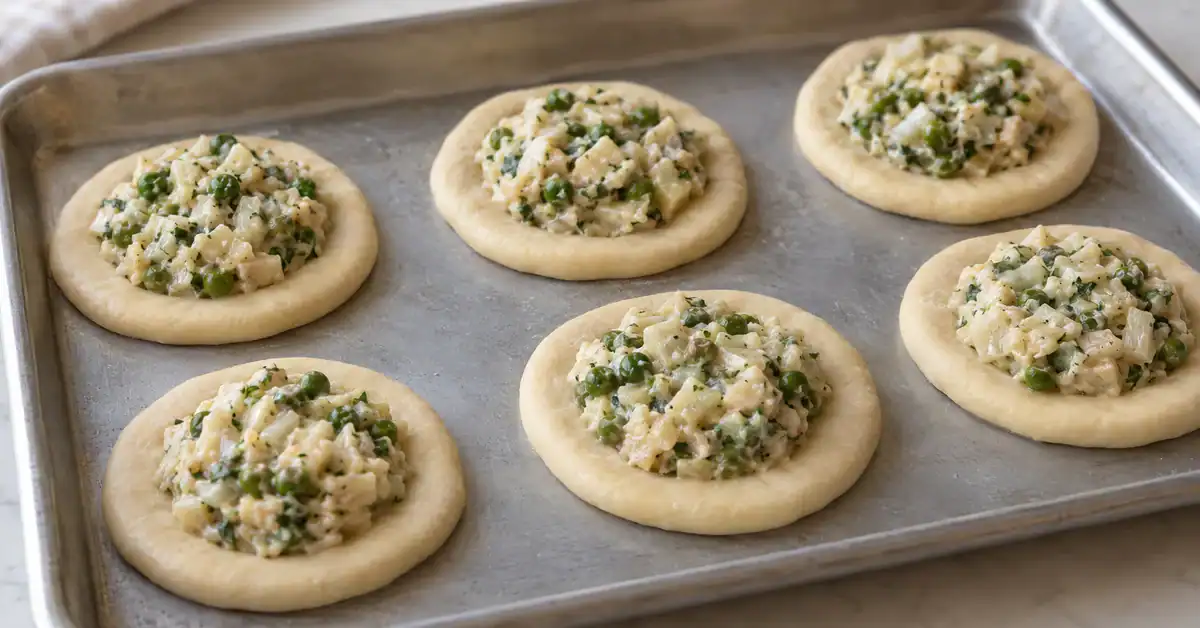
For firm bases, drain the hearts of palm well and thaw the peas before making the filling. If the cooled filling still releases liquid or spreads like a sauce, return it to the pan over a low heat and stir until creamy with no liquid pooling. Let it cool again before assembling the esfihas.
Distribute the filling in the centre of the discs and leave the edge of the dough free. A very high layer or one that reaches the edge can release moisture over the dough and make it difficult for the dough to bake evenly.
Serving and storing the esfihas
Serve the esfihas after a few minutes of rest, when the filling is no longer bubbling and they are easier to handle. They can also be served with a fresh salad, which contrasts with the dough and creamy filling.
If there are leftovers, let them cool completely and store in a sealed container in the refrigerator. To restore the dough texture, reheat them in the oven until warm; in the microwave, the base tends to become softer.
To serve
When the bases are cooked and the edges begin to brown, take the esfihas out of the oven. Rest them for a few minutes and serve with a fresh salad.
Questions about making the esfihas
How do I know the dough has risen enough?
Observe the volume: it should double in size, which takes about 1 hour. Time may vary, so use the rise as a reference.
Why leave the dough balls to rest before shaping?
The 10-minute rest makes it easy to shape the discs without the dough shrinking. Keep the portions covered while resting.
Can I roll out the rounds with a rolling pin?
Yes. Use your hands or a rolling pin to shape each piece into a round about 9 cm across, leaving the centre slightly lower than the rim.
Do I need to line the baking tray with baking paper?
A non-stick baking tray also works. In either case, arrange the esfihas in a single layer without overlapping them.
How can I reheat leftover esfihas without softening the bases too much?
Heat them in the oven until warm; the base tends to retain its texture better. In the microwave, it usually becomes softer.