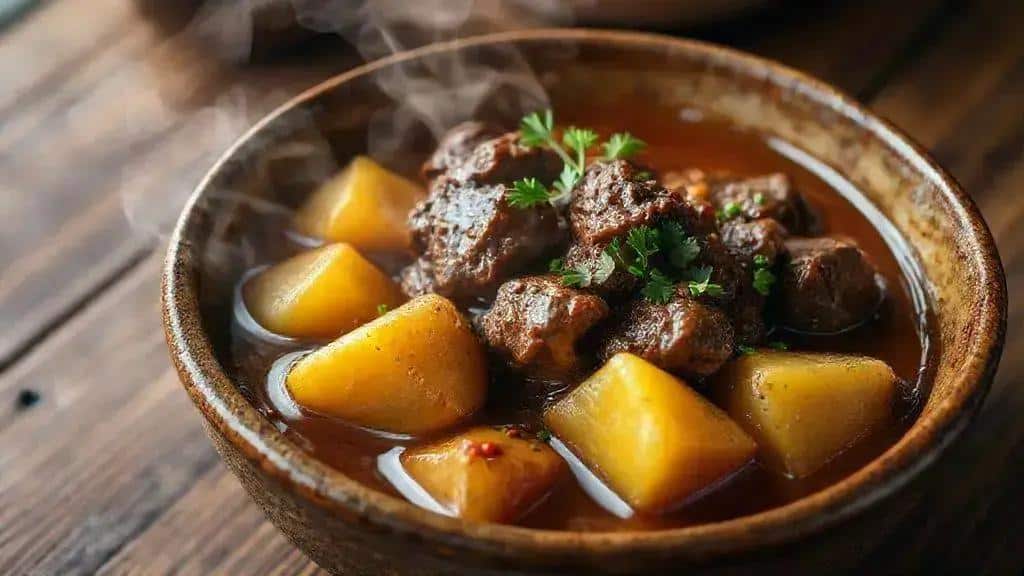

A pressure cooker makes it easy to cook beef until tender and get a rich, full-bodied gravy. Brown the beef, gently fry the onion and garlic, then deglaze with stock or wine. Cook under pressure for as long as the cut needs, adding the potatoes in the final few minutes so they retain their texture and flavour.
Pressure cooker beef stew is a handy standby. It’s quick, economical and full of flavour. Ever wondered how much difference a change of cut or seasoning can make? Here you’ll find a step-by-step recipe, tips from the chef and simple ways to vary the dish.
Ingredients for pressure cooker beef and potato stew
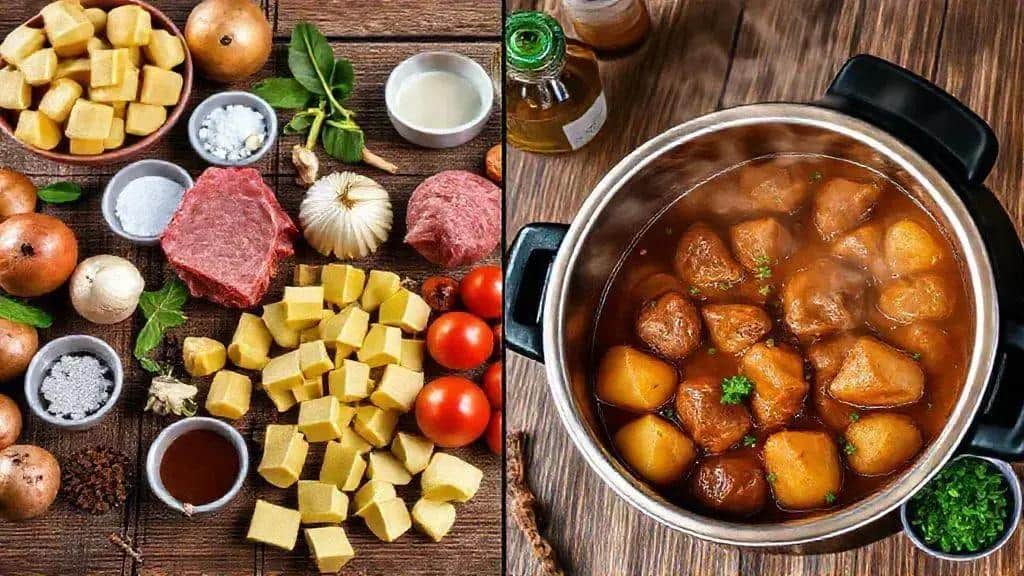
Before you start making the pressure cooker beef and potato stew, measure out the ingredients and have them ready. Suggested alternatives are given in brackets.
Ingredients
- 1 kg beef chuck, cut into 3–4 cm cubes. Chuck is ideal for pressure cooking (or use beef shoulder or shin).
- 600 g potatoes, peeled and quartered. Use Asterix or ordinary white potatoes. If using cassava instead, cook it separately as directed below.
- 2 tablespoons vegetable oil for browning the beef (or use olive oil).
- 1 medium onion, chopped. Fry gently to form the base of the stew.
- 3 garlic cloves, chopped or crushed.
- 2 ripe tomatoes, skinned, deseeded and chopped (or 2 tablespoons tomato purée).
- 1 bay leaf to flavour the stew as it cooks.
- 1 teaspoon ground annatto or paprika for colour and a mild flavour.
- 1 teaspoon ground cumin (optional) for a deeper flavour.
- 1 tablespoon salt. Adjust to taste at the end, depending on how salty the stock is.
- 1/2 teaspoon ground black pepper, or to taste.
- 250 ml hot water or beef stock for pressure cooking (stock gives the stew more flavour).
- 1/2 cup chopped parsley and spring onion, to finish.
- 1/2 cup dry red wine (optional) for deglazing. You can use a little diluted balsamic vinegar instead.
Quick tip – cut the beef into even pieces so they cook at the same rate, and pat them dry before browning to get a good crust.
How to make pressure cooker beef and potato stew, step by step
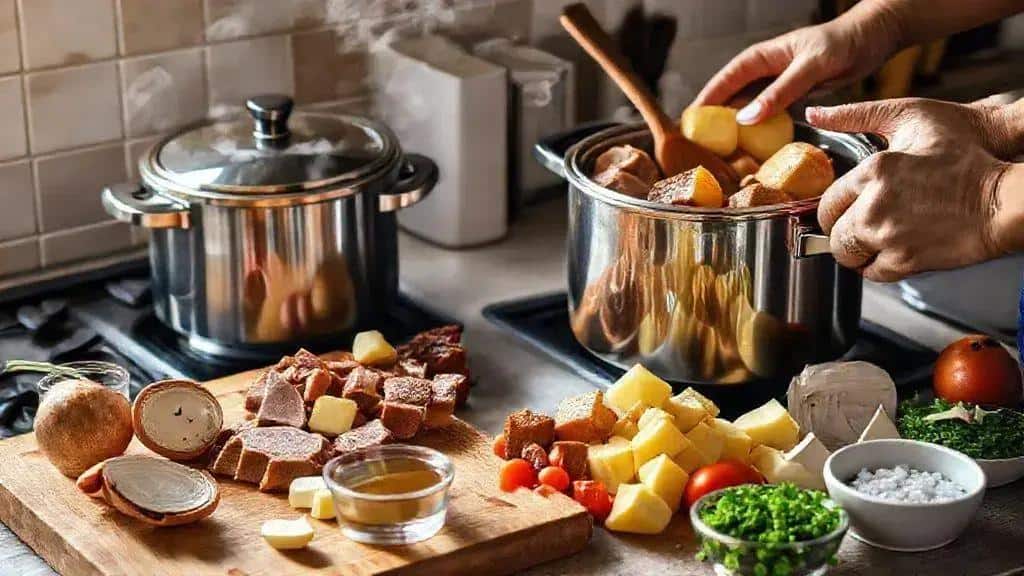
- Season 1 kg cubed beef chuck with 1 tablespoon salt and 1/2 teaspoon black pepper. Pat the cubes dry with kitchen paper to help them brown.
- Heat 2 tablespoons vegetable oil in the uncovered pressure cooker over a medium-high heat until the oil starts to shimmer.
- Brown the beef over a high heat in batches, allowing 4–6 minutes per batch, until well browned. Leave space between the pieces so they don’t steam. Set the browned beef aside.
- Reduce the heat to medium. Add 1 chopped medium onion and fry gently for 3–4 minutes until translucent. Add 3 chopped garlic cloves and cook for 30–45 seconds, taking care not to burn them.
- Add 2 chopped tomatoes (or 2 tablespoons tomato purée) and 1/2 cup red wine or 250 ml beef stock. Scrape the browned bits off the base with a spoon. Return the beef to the cooker, add 1 bay leaf, 1 teaspoon ground annatto and the cumin, if using, then pour in 250–300 ml hot water or stock to partly cover the meat.
- Secure the lid according to the manufacturer’s instructions, then turn up the heat to bring the cooker up to pressure. Cook at high pressure for 25 minutes, allowing 30–35 minutes for a particularly fibrous cut.
- Turn off the heat and use the quick-release method specified by the manufacturer, keeping your face and hands clear of the steam.
- Add 600 g peeled, quartered potatoes. Secure the lid again and cook at high pressure for 6–8 minutes, until the potatoes are tender but still hold their shape.
- Use a quick release or allow a short natural release. Once the pressure has dropped fully, open the cooker, taste the gravy and adjust the salt and pepper. If it’s too thin, simmer uncovered over a medium heat for 5–7 minutes until it reduces and thickens.
- Stir in 1/2 cup chopped parsley and spring onion, turn off the heat and leave the stew to stand for 5 minutes before serving so the flavours can settle.
Practical tips
- Cut the beef into even pieces so they cook at the same rate.
- Brown the beef in batches to build flavour. Avoid adding all the meat at once.
- Wait until the beef is tender before adding the potatoes so they don’t fall apart.
- Use beef shoulder or shin in place of chuck. If you prefer, replace the wine with 1 tablespoon diluted balsamic vinegar.
- Never force the pressure cooker open. Always follow the manufacturer’s instructions.
Variations and substitutions
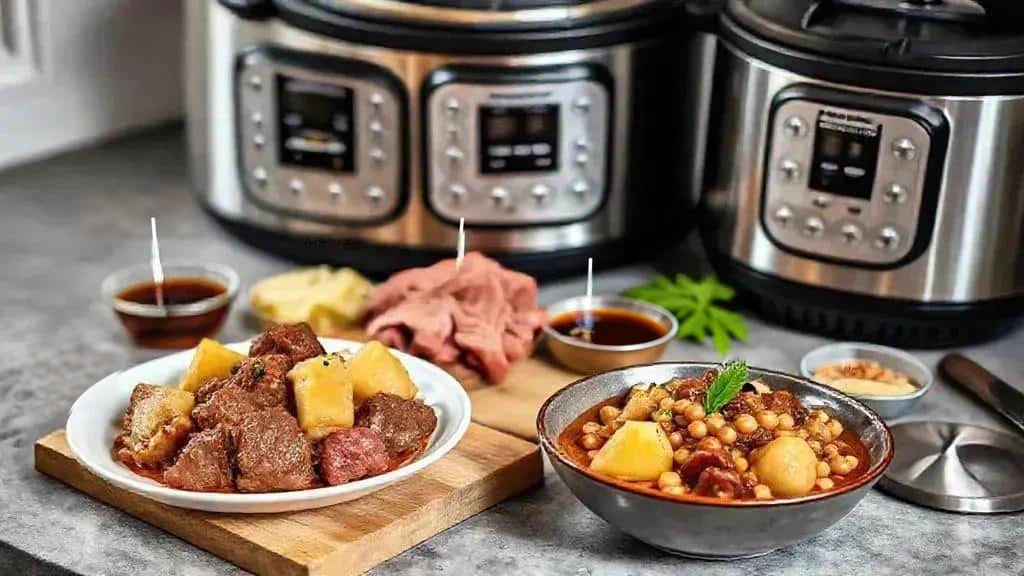
You can adapt this pressure cooker beef and potato stew to suit what you have at home or meet different dietary needs. These variations show how to make substitutions while keeping the flavour and texture of the dish.
Cuts of beef
- Beef chuck (1 kg) becomes tender and flavourful under pressure. Use shoulder or shin if you prefer a cut with a coarser grain.
- Beef shoulder is a good choice if you want a cut with more collagen, which gives the gravy body. Allow an extra 5–10 minutes of cooking time if needed.
- Beef shin is ideal if you like meat that pulls apart. Give it an extra 5–10 minutes until very tender.
Potato choices and alternatives
- White or Asterix potatoes (600 g) hold their shape. Choose whichever is available locally.
- Sweet cassava (600–700 g): use in place of the potatoes for a creamier stew. Peel the cassava, cut it into pieces and cook it separately in water until tender. Drain and discard the cooking water. Add the cooked cassava to the stew at the end and heat it just long enough to warm it through so the pieces stay intact.
- Sweet potatoes give the stew a sweeter flavour. Cut them into larger chunks and cook them for a little less time so they don’t turn mushy.
Cooking liquids and flavourings
- Beef stock (250–300 ml) gives the gravy a deeper flavour than water alone.
- Red wine (1/2 cup) lifts the browned bits from the pan and deepens the aroma. For an alcohol-free version, use 1 tablespoon diluted balsamic vinegar.
- Worcestershire sauce or soy sauce (1 tablespoon) adds savoury depth. Use less salt if you choose soy sauce.
Spices and herbs
- Ground annatto or paprika (1 teaspoon) adds colour. Smoked paprika gives the stew a smoky flavour.
- Ground cumin (1/2–1 teaspoon) is optional. Use it sparingly so it doesn’t overpower the stew.
- Add chopped parsley and spring onion (1/2 cup) at the end for freshness. Try coriander instead if you like a more pronounced herbal flavour.
Variations for different dietary needs
- For a lower-sodium stew, use unsalted homemade stock and adjust the salt at the end.
- For a gluten-free stew, check the label on shop-bought stock. Use homemade stock or choose one labelled gluten-free.
- For a vegetarian or vegan version, replace the beef with large chunks of portobello or shiitake mushrooms and use vegetable stock. Add pulses such as cooked chickpeas for extra protein.
Alternative cooking methods and timings
- In a hob-top pressure cooker, cook the beef under pressure for 25 minutes, then add the potatoes and cook for a further 6–8 minutes.
- In an electric pressure cooker such as an Instant Pot, cook the beef on the Manual or Pressure Cook setting for 20–25 minutes. Use a quick release, add the potatoes and cook for a further 6 minutes, then use a quick release again.
- If using a slow cooker, brown the beef first for a richer flavour. Cook on low for 6–8 hours, adding the potatoes for the final 2 hours.
Quick tips for a good stew
- Cut the beef and potatoes into similar-sized pieces so they cook evenly.
- Pour in just enough liquid to partly cover the ingredients during pressure cooking. This keeps the gravy concentrated.
- Pierce a potato with a fork. It’s ready when it feels tender but still holds its shape.
Tips on cutting and seasoning the beef and timing the pressure cooking
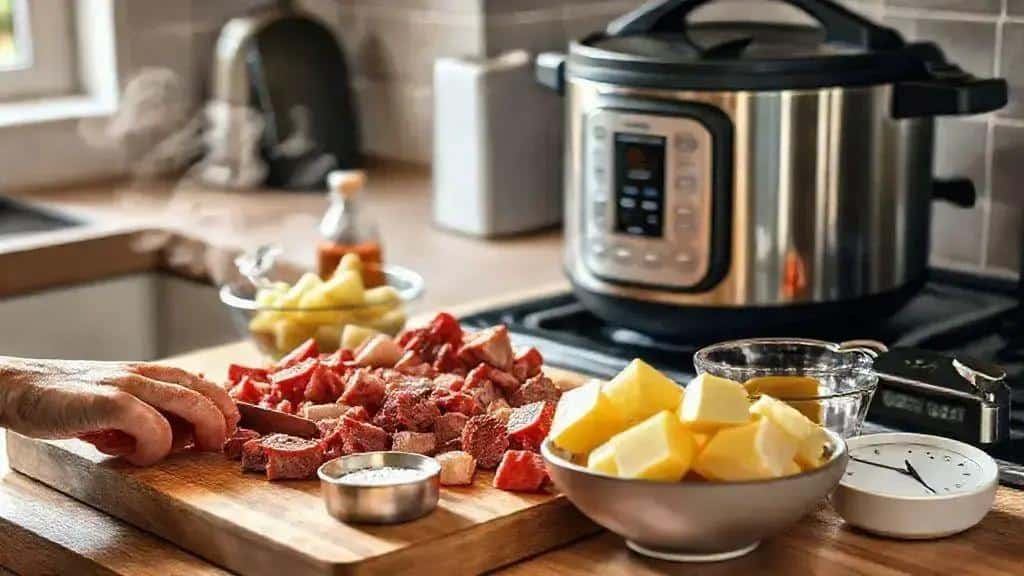
Small changes to how you cut and season the beef or how long you cook it under pressure can make a big difference to the finished stew. Try these simple tips.
How to cut the beef
- Cut the beef into even 3–4 cm cubes so the pieces cook at the same rate.
- Trim off any thick layers of fat that could make the gravy greasy, leaving a little for flavour.
- When preparing cuts such as shoulder, slice across the grain for a more tender bite.
- Pat the cubes dry with kitchen paper before frying. Removing surface moisture helps the beef develop a good brown crust.
Seasoning tips
- Season the beef with 1 tablespoon of salt per 1 kg of meat, then adjust to taste at the end.
- Use 3 garlic cloves and 1 medium onion as the base. Fry them gently before adding the beef.
- Use 1 teaspoon ground annatto or paprika for colour. Smoked paprika adds a smoky aroma.
- Deglaze with 1/2 cup red wine or 250–300 ml beef stock to bring the flavour of the browned bits into the gravy.
- For a savoury boost, add 1 tablespoon Worcestershire sauce or soy sauce. Reduce the salt if using soy sauce.
- Add 1/2 cup chopped parsley and spring onion at the end to keep the herbs fresh. Add the bay leaf during cooking so its aroma infuses the gravy.
Pressure cooker timings and use
- At high pressure, allow 20–25 minutes for chuck and 25–35 minutes for more fibrous cuts of shoulder or shin.
- After the first stage of pressure cooking, add the quartered potatoes and cook for a further 6–8 minutes at high pressure.
- Use a quick release to preserve the texture of the potatoes. For a fuller-bodied gravy, allow 5 minutes of natural release. Open the cooker only once the pressure has dropped fully.
- If the beef is still tough, bring the cooker back up to pressure and cook for a further 5–10 minutes.
Common problems and how to fix them
- If the potatoes fall apart, cut them into larger pieces or wait until the end to add them. Give them less time under pressure.
- If the gravy is too thin, simmer it uncovered over a medium heat for 5–7 minutes until it reduces and thickens.
- If the beef tastes bland, make sure you brown it thoroughly and deglaze the base of the cooker to give the stew a more concentrated flavour.
Quick finishing tips
- Taste the stew once you’ve opened the cooker, then adjust the salt and pepper.
- Let the stew stand for 5 minutes before serving so the meat juices can redistribute.
- Use a wooden spoon to loosen the browned bits from the base as you deglaze so they don’t burn.
Getting the best from the beef and potatoes
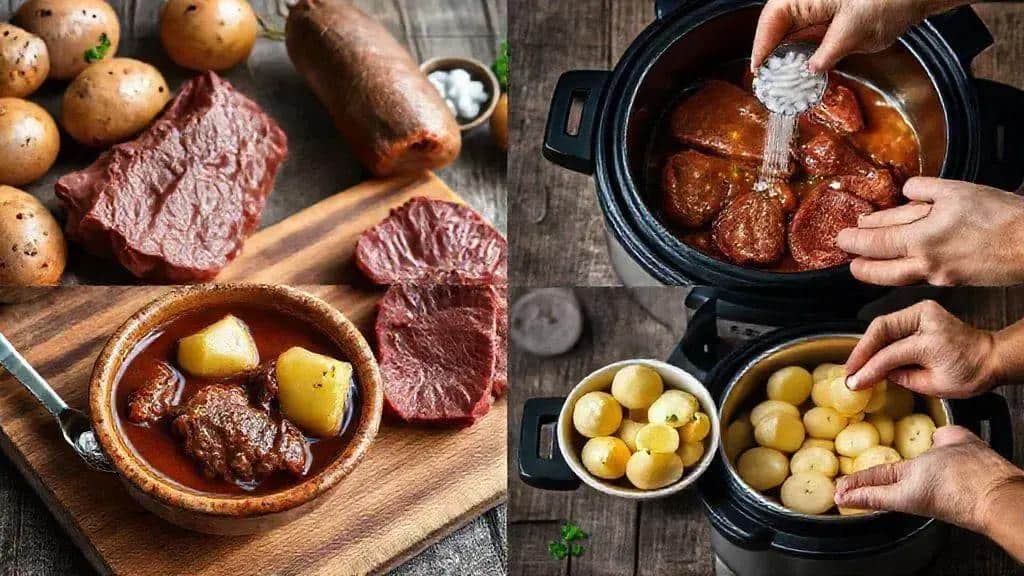
Beef and potatoes each have qualities that can make a simple stew memorable. Knowing how they behave as they cook helps you choose the ingredients and techniques that bring out their flavour and texture.
Why does browning the beef make such a difference?
As the beef browns, the Maillard reaction gives it colour and produces aromatic compounds. Although some of that flavour passes into the gravy during cooking, the finished stew has a deeper, more complex flavour.
Collagen and tenderness
- Cuts such as shoulder and shin contain more collagen. As they cook slowly, the collagen turns into gelatine, giving the gravy more body.
- Too much time under pressure can make the muscle fibres fall apart. The right cooking time keeps the beef juicy and preserves its texture.
How potatoes behave as they cook
- Floury potatoes such as Asterix release more starch and can break up. Buttery-fleshed varieties and ordinary white potatoes hold their shape better.
- Potatoes absorb stock and seasoning as they cook. Cutting them into larger pieces helps them take on flavour while keeping their shape.
When to add salt and adjust the seasoning
Adding salt early gives it time to penetrate the beef. Taste and adjust the seasoning at the end, as the salt becomes more concentrated when the stock reduces. Tasting as you go helps you avoid adding too much salt.
Cooling and resistant starch
As the potatoes cool, some of their starch may reorganise to form resistant starch. Cooling and reheating may also change the texture of the potatoes slightly.
Small touches that make a difference
- Pat the beef dry to remove surface moisture and help it brown.
- Deglaze with wine or stock to loosen the flavourful browned bits from the base of the cooker.
- Add the potatoes last so the pieces stay firm and hold together.
- Stir in the parsley and spring onion at the end to keep their fresh flavour and aroma.
Conclusion
We hope these tips and step-by-step instructions make your pressure cooker beef and potato stew easier to prepare, with juicy beef and plenty of flavour. Try a small variation and see how it changes the finished dish.
Thanks for reading! Follow us on social media for more easy recipes, kitchen tips and weekly inspiration. You can also visit the Mestre das Receitas blog for more articles, videos and updates.
Share your version in the comments or tag us in your photos. We love seeing what our readers cook. See you for the next recipe!
Frequently asked questions about pressure cooker beef stew
Which cut of beef is best for pressure cooking?
Cuts with plenty of connective tissue, such as chuck, shoulder or shin, are ideal. They become tender and give the gravy a rich flavour.
How long do the beef and potatoes need under pressure?
For beef chuck, allow 20–25 minutes at high pressure. Add the potatoes and cook for a further 6–8 minutes so they hold their shape.
How do I stop the potatoes falling apart as they cook?
Cut the potatoes into larger pieces, wait until the beef is tender before adding them, and shorten their time under pressure.
Can I use an electric pressure cooker such as an Instant Pot, or a slow cooker?
Yes. In an electric pressure cooker, use the Pressure Cook setting for 20–25 minutes, then add the potatoes and cook for a further 6 minutes. In a slow cooker, cook on low for 6–8 hours, adding the potatoes for the final 2 hours.
How can I thicken the gravy without losing flavour?
Remove the lid and simmer the gravy over a medium heat for 5–7 minutes to concentrate its flavour, or adjust the amount of liquid you add at the start.