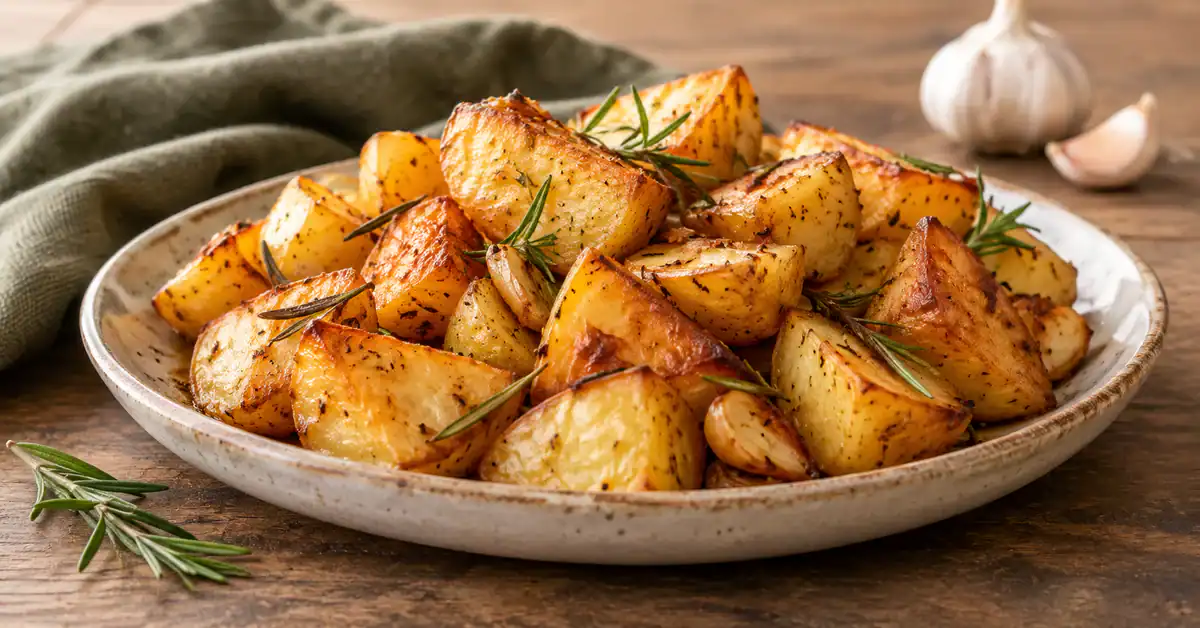

Roast potatoes coated in a paste of soft roast garlic, rosemary, olive oil and pepper. Add the seasoning after the first 20 minutes so it coats the potatoes without burning. The recipe serves about 4, and the potatoes take roughly 40–50 minutes to roast.
Roasting makes garlic mellow and easy to spread, while rosemary gives the potatoes a distinctive aroma. This simple paste brings those flavours together.
Learn how to prepare the paste and when to add it so it flavours the potatoes without overpowering them.
Ingredients for the seasoning and potatoes
These quantities make about 4 portions. Set out the ingredients for the paste and the potatoes separately so you add each at the right stage.
For the roast garlic and rosemary paste
- 1 whole bulb of garlic
- 1 teaspoon (5 ml) olive oil, for roasting the garlic
- 1 tablespoon (15 ml) olive oil, for the paste
- 1 tablespoon chopped fresh rosemary leaves
- 1/2 teaspoon salt
- 1/4 teaspoon ground black pepper
For the potatoes
- 1 kg medium potatoes, washed and cut into roughly 3 cm chunks
- 2 tablespoons (30 ml) olive oil
Roasting the garlic until soft
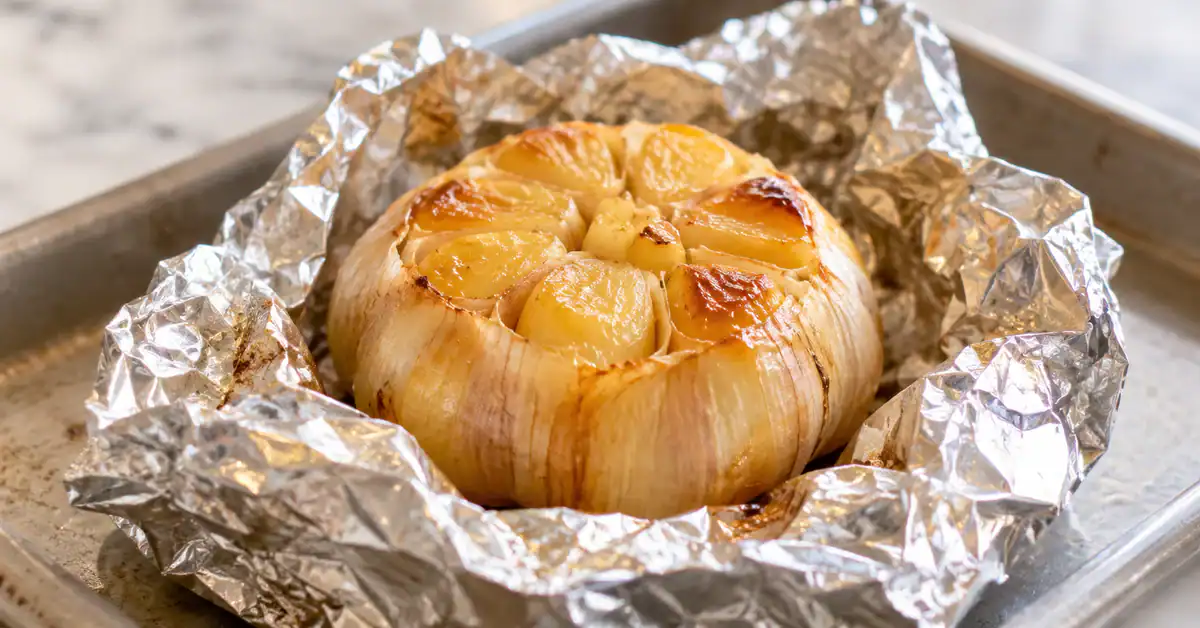
- Preheat the oven to 200 °C. Remove only the loose outer skin from the bulb, then cut a thin slice off the top to expose the tips of the cloves.
- Place the bulb on a piece of foil, drizzle the cut surface with 1 teaspoon (5 ml) olive oil and wrap the foil around it. Roast for about 35–40 minutes, until the cloves are soft and lightly golden.
- Carefully take the garlic out and wait a few minutes before opening the foil. Set aside the roasted bulb until ready to squeeze the cloves into the paste.
Making the rosemary paste
Once the garlic is warm enough to handle, turn the soft cloves into a paste that will spread easily over the potatoes.
- Squeeze the cloves into a small bowl. Discard the skins and mash the flesh with a fork until no large pieces remain.
- Add 1 tablespoon (15 ml) olive oil, 1 tablespoon chopped fresh rosemary leaves, ½ teaspoon salt and ¼ teaspoon ground black pepper.
- Mix and mash with a fork until the oil is incorporated and the paste is moist and spreadable, with the rosemary evenly distributed. Set aside for the potatoes.
Coating and roasting the potatoes

Add the paste to the potatoes
- Toss the 3 cm potato chunks with 2 tablespoons (30 ml) olive oil. Spread them over a roasting tin without crowding and roast in the preheated oven at 200 °C for about 20 minutes.
- Carefully take out the tin and transfer the potatoes to a large bowl. Add the reserved paste and gently toss with a spoon or spatula until coated. The potatoes will already be softening, so handle them carefully.
Roast until golden and tender
- Return the potatoes to the tin and roast at 200 °C for a further 20–30 minutes, turning once. They are ready when golden on several sides and tender when pierced with a knife. Total roasting time is about 40–50 minutes, depending on the oven and size of the pieces.
Checking the potatoes without burning the garlic
Look for golden sides and a centre that a knife tip slides through without resistance. If still firm, roast a few minutes longer and test again. Larger chunks may need more time.
Check the garlic and rosemary as well. The paste can turn golden, but it should not become dark brown or smell burnt. If it darkens before the potatoes soften, loosely cover with foil and continue roasting until tender. Foil reduces browning and crispness, so remove it as soon as the potatoes are ready.
Adjusting the flavour and possible substitutions
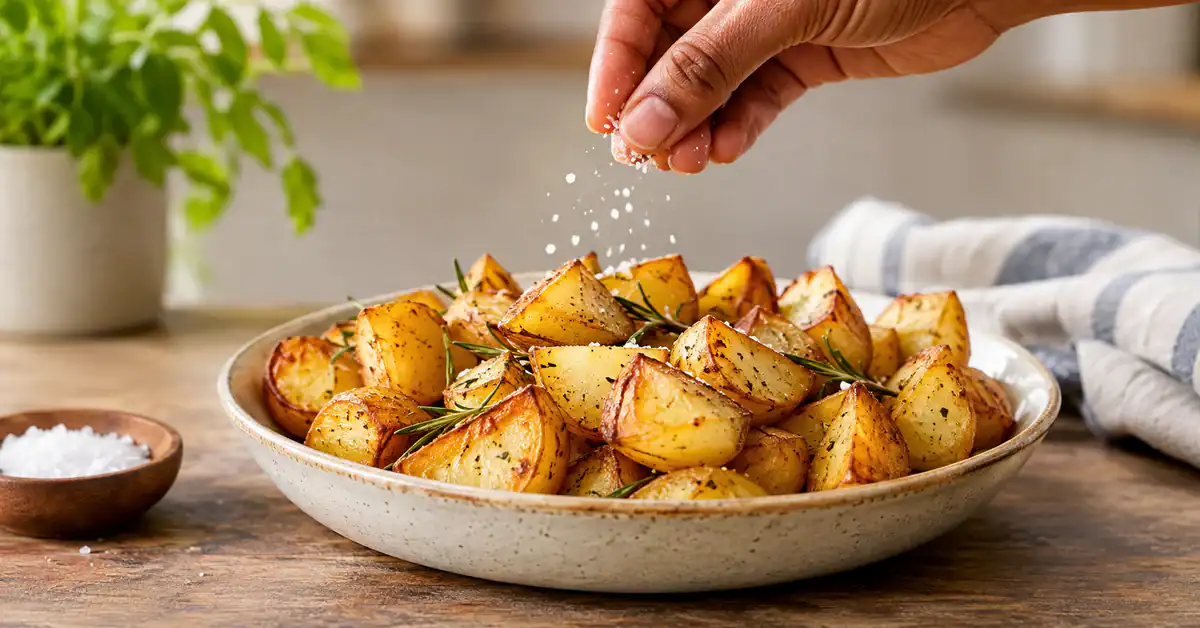
Replace the tablespoon of fresh rosemary leaves with 1 teaspoon dried rosemary. The dried herb is more concentrated. The paste will look less green and the needles will be more noticeable.
For a milder flavour, reduce the rosemary or black pepper a little. If you like more salt, taste the potatoes after roasting and add it gradually.
Storing leftover paste
Put leftover roast garlic and rosemary paste in a clean, lidded container and refrigerate promptly once cool. Because it contains garlic and oil, never store it at room temperature.
Use a clean spoon to take out what you need. Do not return paste that has touched the potatoes to the container. Discard refrigerated leftovers after 4 days even if they look and smell normal. Discard sooner if you notice a change in smell, appearance or texture.
Serve while hot
When golden and tender, take the potatoes out and serve as a side dish. For a different aroma next time, try the stated amount of dried rosemary.
Questions about preparing the potatoes
Why add the garlic paste after the first 20 minutes?
This keeps the garlic and rosemary from spending too long in the oven and burning. Mix gently, as the potatoes will already be starting to soften.
The potatoes are brown but still firm. What should I do?
Roast for a few minutes more and test the centre with a knife tip. Larger pieces can take longer. They are ready when the knife slides in without resistance.
What if the paste darkens before the potatoes are tender?
Cover the tin loosely with foil and continue roasting until the potatoes are tender. Take it off once they are ready because it reduces browning and crispness.
Can I use dried rosemary instead of fresh?
Yes. Replace 1 tablespoon fresh leaves with 1 teaspoon dried rosemary. The paste will be less green and the dried needles more noticeable.
How can I help the potatoes brown evenly?
Spread the pieces over the tin without crowding and turn once during the final roasting stage. Closely packed pieces have less room to brown.