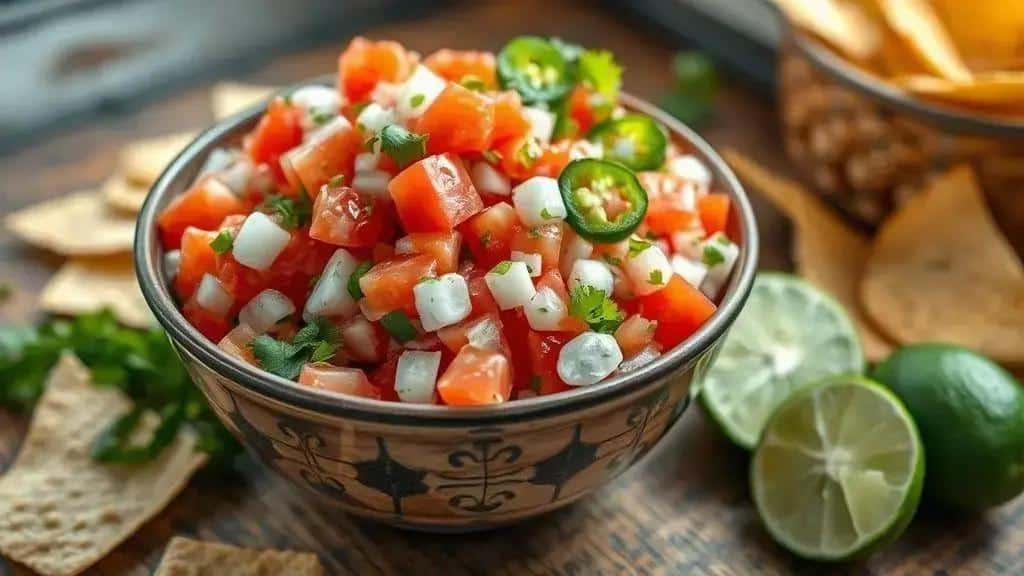

Pico de gallo is a fresh Mexican salsa made with tomatoes, onion, coriander, chilli and lime juice. It’s easy to make and served raw as an accompaniment to tacos, grilled dishes or nachos. You can vary the heat and texture to suit your taste. Texas and Southwestern versions include grilled sweetcorn, cumin or avocado.
Pico de gallo brightens up any dish. It’s fresh, simple and full of character. Fancy turning tomatoes, onion and coriander into something everyone asks for more of? I’ll show you how to make Texas and Southwestern versions, with tips on chopping, seasoning and getting the heat just right.
Ingredients for the fresh salsa (pico de gallo)
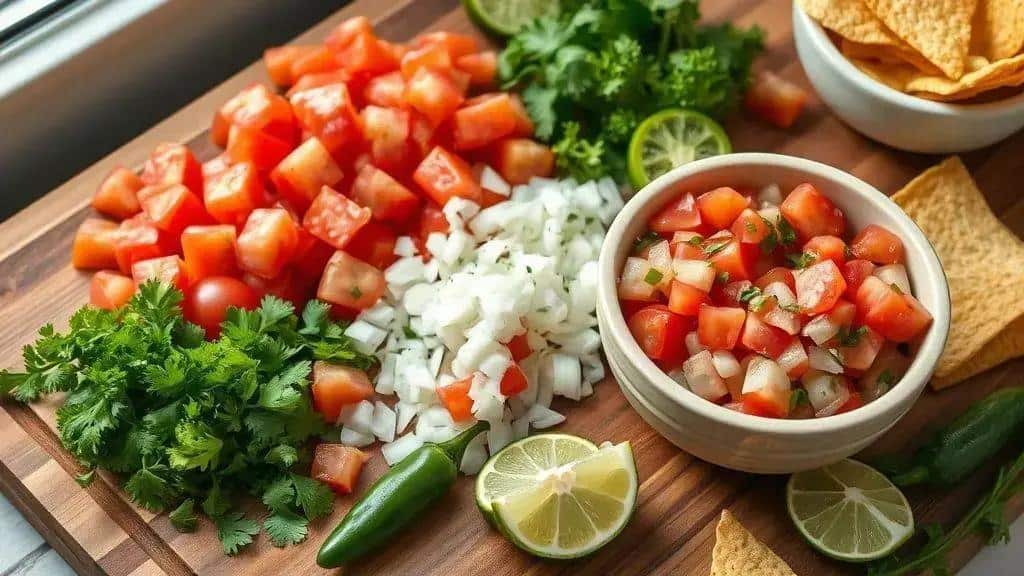
Gather the fresh ingredients for the pico de gallo and chop them evenly so you get a good balance of flavours and textures in each bite.
- 3 medium Roma tomatoes (about 400 g), deseeded and diced. Choose firm, ripe tomatoes, or use halved cherry tomatoes if you prefer.
- 1/2 medium white onion (about 80 g), finely chopped. Red onion is a milder alternative.
- 1/2 cup chopped fresh coriander (about 15 g). Use less if you find the flavour too strong.
- 1 small jalapeño, deseeded and chopped, or 1 serrano chilli for more heat. Remove the seeds for a milder salsa.
- 2 tablespoons of fresh lime juice (about 30 ml), from a Persian lime or a sweet lime. You can use a little cider vinegar in place of the lime juice.
- 1 teaspoon salt, or to taste. Adjust to suit the acidity of the tomatoes.
- 1/4 teaspoon ground black pepper, optional, for a peppery aroma.
- Optional extra: 1 medium avocado, diced, for a creamy texture. Add it just before serving to prevent browning.
Tips for choosing and preparing the ingredients
Choose firm tomatoes to keep the salsa from getting watery. If necessary, scoop out the seeds and some of the juice before dicing. Finely chop the onion and coriander so their flavours are evenly distributed. Taste as you add the salt and lime juice a little at a time. A good balance of salt and acidity brings out the fresh flavours. If you’re preparing ahead, keep the ingredients separate and mix them shortly before serving to preserve their texture and colour.
How to make fresh tomato and onion salsa in the Texas and Southwestern styles
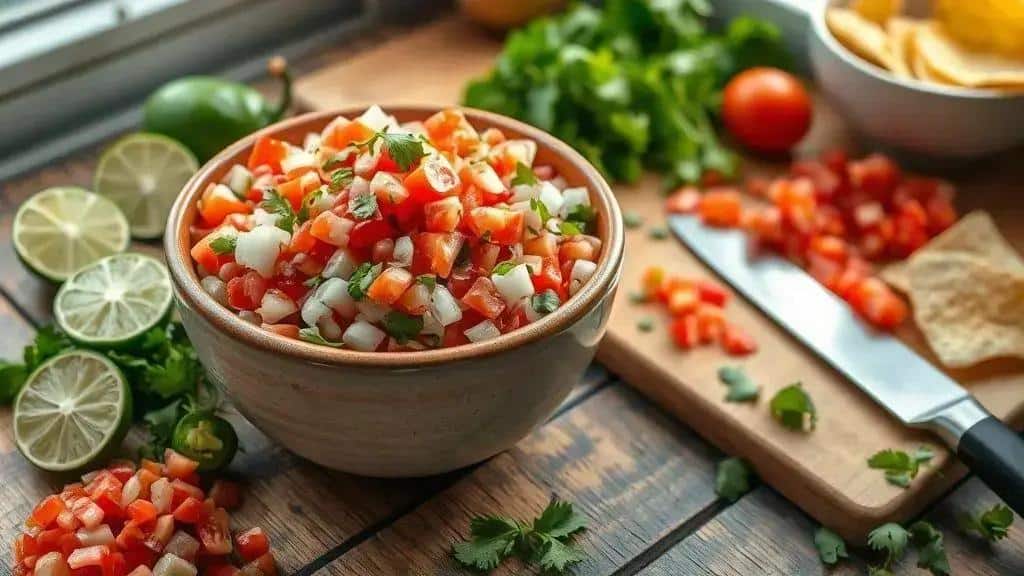
- Get everything ready. You’ll need a chopping board, a sharp knife, a medium bowl and a citrus squeezer. Measure out the ingredients and keep them to hand.
- Wash 3 Roma tomatoes and cut them in half. Scoop out the seeds and excess juice with a spoon, then cut the flesh into roughly 1 cm cubes.
- Finely chop 1/2 white onion. For a gentler flavour, soak the chopped onion in iced water for 5 minutes, then drain before using.
- Discard the thick coriander stalks and chop 1/2 cup of coriander. Chop 1 jalapeño, removing the seeds first unless you prefer more heat. Wash your hands after handling the chilli.
- Put the tomatoes, onion, coriander and jalapeño in the bowl. Add 2 tablespoons of lime juice, 1 teaspoon of salt and 1/4 teaspoon of black pepper. Stir gently to avoid crushing the tomatoes.
- Taste the salsa and add more salt or lime juice a little at a time until the salt and acidity are balanced.
- Leave the salsa to stand at room temperature for 10–15 minutes so the flavours can mingle. If you’re serving it later, keep it in the fridge and stir it shortly before serving.
- If you like, fold in 1 diced avocado just before serving. Serve with tortilla chips, with tacos or alongside grilled dishes.
- Store the salsa in an airtight container in the fridge and eat it within 24–48 hours. If it becomes watery, drain off the excess liquid before serving.
- Use a sharp knife for clean cuts. Avoid touching your face after chopping chillies, and wash your hands and utensils thoroughly.
Quick variations
- For a Texas version, add 1/2 cup of grilled sweetcorn for sweetness and a little bite.
- For a Southwestern version, mix in 1/4 teaspoon of cumin and 1 extra tablespoon of coriander. The cumin adds an earthy aroma and the coriander a fresh herbal note.
- For a coriander-free version, use parsley or spring onion if you’re making it for someone who dislikes coriander.
- For a creamier, milder salsa, fold in diced avocado just before serving.
Variations and heat levels to suit every taste
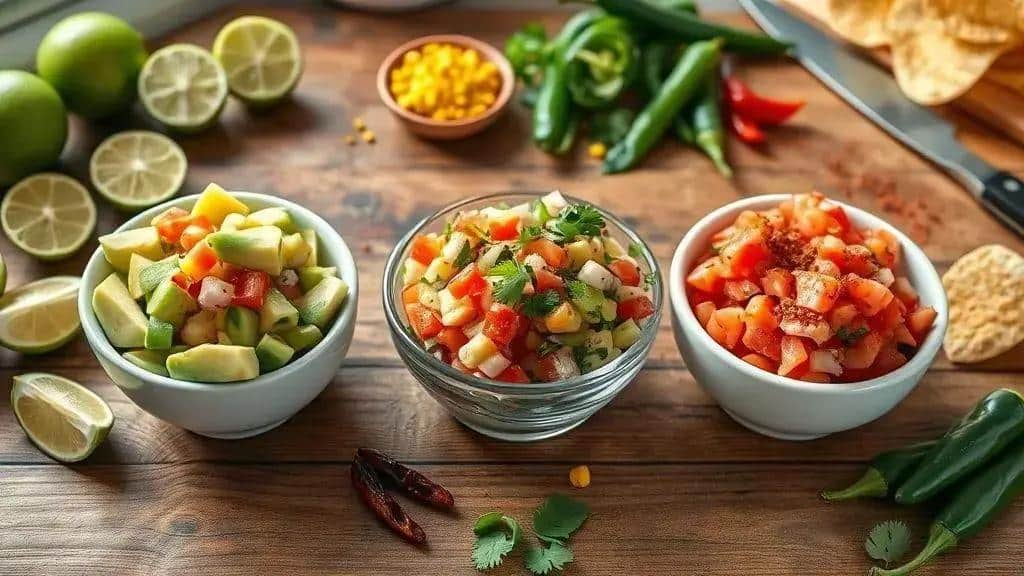
- For a mild salsa, combine 3 diced Roma tomatoes, 1/2 chopped white onion, 2 tablespoons of chopped coriander, the juice of 1 lime (about 30 ml) and 1/2 teaspoon of salt. Leave out the chilli and add 1/2 a diced avocado for creaminess.
- For a classic, medium-hot salsa, use 3 diced Roma tomatoes, 1/2 an onion, 1/2 cup of coriander, 1 deseeded and chopped jalapeño, 2 tablespoons of lime juice and 1 teaspoon of salt. Adjust the amount of jalapeño to suit your taste.
- For a hot salsa, use 3 tomatoes, 1/2 an onion, 1 chopped serrano or 1/2 a chopped habanero, 2 tablespoons of lime juice and 1 teaspoon of salt. Leave the seeds in unless you want to take the heat down a little. Wear gloves when chopping hotter chillies.
- For a Texas version, add 1/2 cup of grilled sweetcorn to the classic salsa for extra texture and sweetness, along with 1/4 teaspoon of cumin. The finished salsa has a hint of smokiness.
- For a more aromatic Southwestern salsa, add 1/4 teaspoon of cumin, 1 extra tablespoon of coriander and 1 tablespoon of red onion.
How to adjust the heat, step by step
- Taste a small piece of jalapeño or serrano before chopping the whole chilli to gauge its heat.
- Remove the seeds and the pale ribs inside the chilli to reduce the heat.
- Start with 1/4 of a chopped chilli and add more gradually, tasting after each addition.
- Balance the heat with a little more lime juice, adding half a tablespoon at a time.
- To take the edge off the heat, stir in diced avocado or serve the salsa with yoghurt, such as Greek yoghurt, on the side.
- Adjust the salt a little at a time. If the salsa tastes particularly hot, a pinch of sugar can make the heat feel less intense.
- If you’re preparing the salsa ahead, leave it to stand for 10–20 minutes. The heat can build over time, so taste and adjust before storing.
Quick tips on substitutions and handling chillies
- If you’re cooking for someone who dislikes coriander, use parsley or spring onion instead.
- For medium heat, use a dedo-de-moça chilli in place of the jalapeño, or choose a milder chilli if you prefer less heat.
- To keep the salsa from getting watery, deseed the tomatoes and drain off the excess juice.
- Wash your hands and utensils thoroughly after handling chillies, and avoid touching your eyes.
Storing, serving and pairing pico de gallo
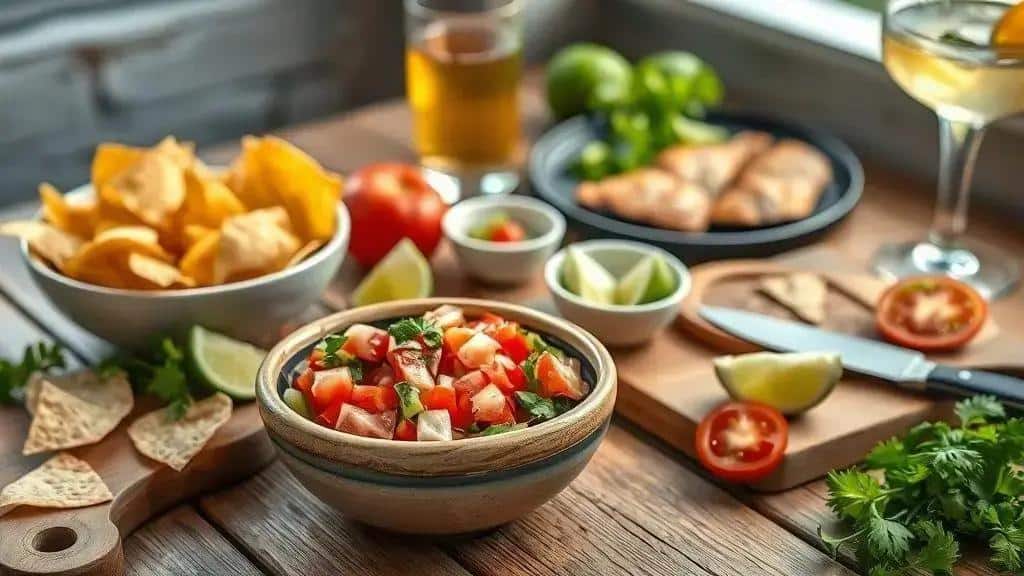
Storage
- Store the pico de gallo in an airtight container in the fridge at 4 °C or below.
- Eat within 24–48 hours for the best texture and colour. The tomatoes release juice over time.
- Avoid freezing fresh pico de gallo, as freezing changes the texture of the tomatoes.
- If you’re preparing ahead, keep the avocado and chilli separate and fold them in just before serving.
- Scoop out the tomato seeds and some of the juice before dicing to keep the salsa from getting watery.
Serving
- Serve at room temperature or slightly chilled. For slightly chilled salsa, take it out of the fridge 10–15 minutes before serving.
- Serve in small bowls or ramekins and garnish with coriander sprigs and lime slices.
- Serve with tortilla chips, tacos, grilled fish, chicken or beef, or burritos. The salsa also goes well with salads and eggs.
- Allow 2–3 tablespoons per person as a side dish. For parties, keep several fresh portions ready to serve.
- To keep the salsa crisp, add the onion and coriander shortly before serving if possible.
Food and drink pairings
- Try a classic margarita, a light Mexican beer, a chilled rosé or an aromatic white wine such as Sauvignon Blanc.
- Serve with fish tacos, grilled prawns, barbecued meats, nachos or Tex-Mex bowls.
- Lime brings out the fresh flavours. In the Texas and Southwestern versions, grilled sweetcorn adds sweetness and cumin adds depth.
- For a contrast in texture, pair the salsa with creamy avocado, soured cream or Cotija cheese to balance the acidity.
- Just before serving, adjust the salt and acidity. Taste the salsa with the main dish to make sure the flavours work well together.
Facts about pico de gallo, its origins and its ingredients
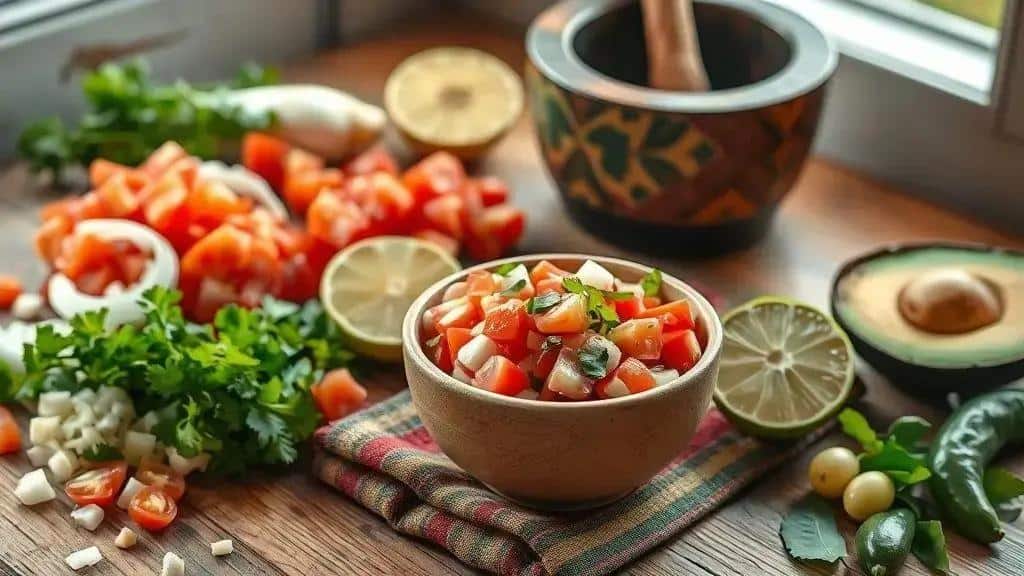
Pico de gallo originated in Mexico. It’s a fresh, uncooked salsa made just before serving and eaten as a side dish or condiment.
Where the name comes from and what it means
Pico de gallo is often translated as ‘cockerel’s beak’. There are several popular explanations. Some say the chopped pieces look as though a bird has pecked at them. Others link the name to the pinching movement you make when picking them up with your fingers. The dish originated in central Mexico as a simple accompaniment to tortillas and grilled meats.
A closer look at the ingredients
- Local tomato varieties were originally used. Roma tomatoes are a popular choice today because they release less juice.
- White onion is traditional. Red onion adds colour and has a milder flavour.
- Coriander is traditional, though it divides opinion. Some people perceive a metallic taste because of genetic differences.
- Jalapeños and serranos are the most commonly used chillies. Removing the seeds helps tone down the heat.
- Lime juice helps preserve the colour and gives the salsa an immediate lift.
How the dish spread
As people migrated and Mexican cooking grew in popularity, regional versions of pico de gallo emerged in the United States, particularly in Texas and the Southwest. Some include grilled sweetcorn for bite, cumin for flavour or avocado for a creamy texture.
Practical and nutritional facts
- The salsa needs no cooking, so the ingredients retain their vitamins and crisp texture.
- It’s light, low in calories and rich in vitamin C and fibre.
- Serve it as a side dish or starter, or spoon it into bowls and tacos.
- Fresh pico de gallo is best eaten within 48 hours.
Pico de gallo in Mexican life
At parties and markets, people enjoy pico de gallo for its simple, fresh flavours. Many Mexican families have their own little variations and family secrets for making it, passed down from one generation to the next.
Pico de gallo is a simple way to bring fresh flavour to a meal. In just a few steps, you can adjust the heat and make Texas or Southwestern versions to suit different dishes.
Try the tips, taste as you go and feel free to adapt the ingredients to your liking. Trial and error is part of learning to cook, and the results may surprise you.
Thanks for reading! Follow us on social media for more recipes, tips and videos, and keep up with the Mestre das Receitas blog for the latest news and inspiration.
Frequently asked questions about pico de gallo
How does pico de gallo differ from other salsas?
Pico de gallo is a fresh, uncooked salsa with distinct pieces of tomato, onion and coriander. Other salsas may be runnier or cooked.
How can I reduce the heat without losing flavour?
Remove the seeds and pale ribs from the chillies and start with a small amount of chilli. A little more lime juice or some diced avocado can help take the edge off the heat.
Can I make pico de gallo ahead of time?
Yes. For the best texture and colour, make it no more than 24 hours ahead and add the avocado and fresh chilli just before serving.
How do I keep the salsa from getting watery?
Scoop out the seeds and excess juice before dicing the tomatoes, then drain off any liquid before storing the salsa in an airtight container.
Which substitutions work well in this recipe?
Use red onion in place of white, parsley or spring onion in place of coriander, or a dedo-de-moça chilli in place of jalapeño for less heat. If necessary, replace the lime juice with a splash of cider vinegar.
Which dishes go best with pico de gallo?
It goes well with tacos, nachos, grilled fish and meat, and burritos. It also makes a light accompaniment to salads and eggs.