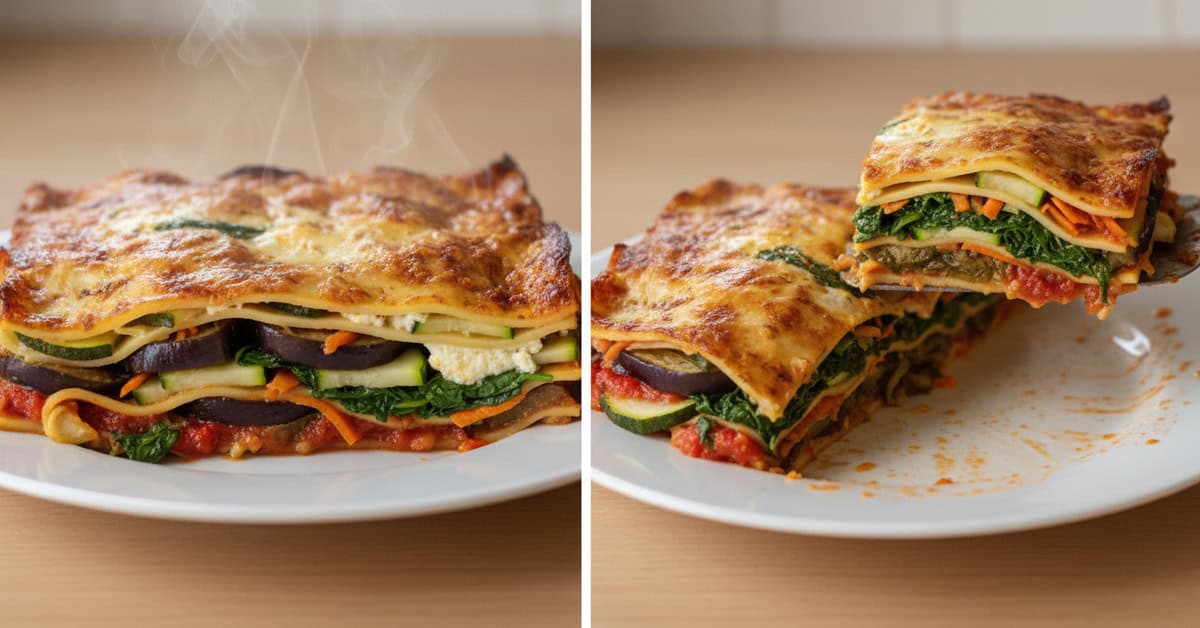

Vegetable lasagne is a flavourful alternative to meat lasagne, layering fresh vegetables with cheeses and homemade tomato sauce. It makes a nourishing meal for the family.
Fresh vegetables, cheese and tomato sauce make a colourful lasagne for all kinds of occasions. Here are the ingredients and a step-by-step method to make it at home and bring more vegetables to the table.
Vegetable lasagne ingredients

For the vegetable lasagne, you will need the following.
- 300 g lasagne sheets, fresh or dried
- 1 courgette, 1 aubergine, 1 carrot and 1 red pepper, all thinly sliced
- 500 ml good tomato sauce, homemade or shop-bought
- 250 g ricotta, for a light, creamy filling
- 300 g mozzarella, for a golden cheese topping
- 100 g grated Parmesan to finish
- Salt and black pepper to taste, dried oregano and fresh basil leaves
With the ingredients ready, you can start the vegetable lasagne for your family.
Method

Follow these steps to make the vegetable lasagne.
- Heat the oven to 180°C for even baking.
- Warm a little olive oil in a frying pan. Briefly sauté the courgette, aubergine, carrot and pepper until slightly softened. Season with salt, black pepper and oregano.
- If making the tomato sauce from scratch, prepare it before assembling for a fresher, fuller flavour.
- Spread tomato sauce over the base of a baking dish. Add a layer of pasta, then sautéed vegetables and pieces of ricotta. Repeat until the ingredients are used up.
- Cover the final layer with tomato sauce, mozzarella and grated Parmesan for a crisp, golden top.
- Bake in the preheated oven for about 30 minutes, until the pasta is tender and the cheese is melted and golden. Rest for 5 minutes before slicing.
The vegetable lasagne is now ready to bring to the table.
Making homemade tomato sauce

This simple homemade tomato sauce gives the lasagne a fresh flavour. Here is how to make it.
- What you will need
- 500 g fresh, ripe tomatoes
- 1 onion, finely diced
- 2 garlic cloves, finely chopped
- 2 tbsp olive oil for frying
- Salt and black pepper to taste
- Fresh basil leaves, optional, for aroma
- Step by step
- Score a small cross in the base of each tomato and dip in boiling water for 1–2 minutes to loosen the skins.
- Transfer the tomatoes to iced water. Peel and cut into cubes.
- Warm the olive oil in a saucepan and soften the chopped onion until translucent.
- Add the chopped garlic and cook for 1 minute more without letting it burn.
- Add the diced tomatoes, stir well and season with salt and black pepper.
- Cook over a medium heat for about 15–20 minutes until the tomatoes break down and the sauce thickens. Add basil during the final few minutes if you like.
- Start with a layer of homemade tomato sauce in the base of the baking dish to add flavour and stop the pasta sticking.
- Arrange an even layer of pasta over the sauce. For dried sheets, follow the packet instructions for pre-cooking if required.
- Spread some sautéed vegetables evenly over the pasta, alternating the courgette, aubergine and carrot for contrasting colours.
- Scatter pieces of ricotta and grated mozzarella over the vegetables.
- Repeat the order of tomato sauce, pasta, vegetables, ricotta and mozzarella. Finish with tomato sauce, mozzarella and Parmesan.
- Cover the top thoroughly so it browns evenly. Add a little oregano if you like.
- Try provolone, Gouda or goat’s cheese for a different cheese flavour.
- Season the sauce with chilli flakes or nutmeg. A little fresh basil also makes a difference.
- Add spinach, broccoli or mushrooms for more varied textures and flavours.
- For a crisp top, scatter breadcrumbs or crushed grissini over the lasagne before browning.
- Try adding a layer of béchamel between the pasta sheets for a richer, creamier lasagne.
- Rest the baked lasagne for a few minutes before cutting so the layers settle and the portions hold together.
- Lasagne is an Italian dish with medieval roots. Meat versions are traditional, and vegetable versions are popular today too.
- Many vegetables work well, including squash, spinach and cauliflower. Use what you have available.
- The dish makes it easy to include more vegetables in a meal and use whatever is in season.
- Even layers improve the presentation and bring the different flavours together in each slice.
- Many families have their own version, adjusting the vegetables and seasonings to taste.
- A large dish is easy to share at a family gathering and offers something for different tastes.
Use the freshly made sauce between the lasagne sheets for a full tomato flavour.
Assembling the vegetable lasagne

Once everything is ready, assemble the layers as follows.
The layered lasagne is now ready for the oven.
Ways to vary your lasagne

Try these ideas to bring different flavours and textures to the dish.
These ideas let you personalise your vegetable lasagne.
A little background on vegetable lasagne

Here are a few things to know about the dish.
These are a few good reasons to try vegetable lasagne in your own kitchen.
Thanks for joining us!
We hope the recipe and tips have inspired you to make your own vegetable lasagne. Each time you cook it is a chance to try a new variation.
For more recipes and cooking tips, follow our Mestre das Receitas cooking blog and keep up with new dishes. Join our community and share your enthusiasm for cooking.
Thank you for visiting. Follow us on social media and join the community at the Mestre das Receitas website!
Frequently asked questions about vegetable lasagne
Which vegetables work best?
Try courgettes, aubergines, carrots, spinach and peppers. Choose according to the season and your taste.
Can I use dried lasagne sheets?
Yes. Check the packet for the cooking time and whether the sheets need pre-cooking.
Should I cook the vegetables before layering?
Yes. A quick sauté brings out the flavour and helps stop the lasagne becoming watery.
Which cheeses can I use?
Ricotta, mozzarella and Parmesan are classic choices. Try Gouda or goat’s cheese for a different flavour.
Can I freeze vegetable lasagne?
Yes. Wrap the assembled lasagne well before baking and freeze for up to 3 months. Thaw in the fridge, then bake.
How can I add more flavour?
Add béchamel, combine cheeses, use fresh herbs or vary the vegetables.