

Tomato soup is a comforting, savory soup made from cooked tomatoes, aromatics, and stock, finished smooth or rustic; roasting tomatoes, concentrating flavors with tomato paste, and balancing acidity with a touch of sugar or vinegar create depth, while cream or coconut milk adds silkiness for classic or vegan versions.
tomato soup can be humble or luxurious — have you ever wondered what makes one bowl silky and another bright? I’ll share quick techniques and ingredient choices to turn pantry tomatoes into a soup you’ll crave.
Ingredients of tomato soup
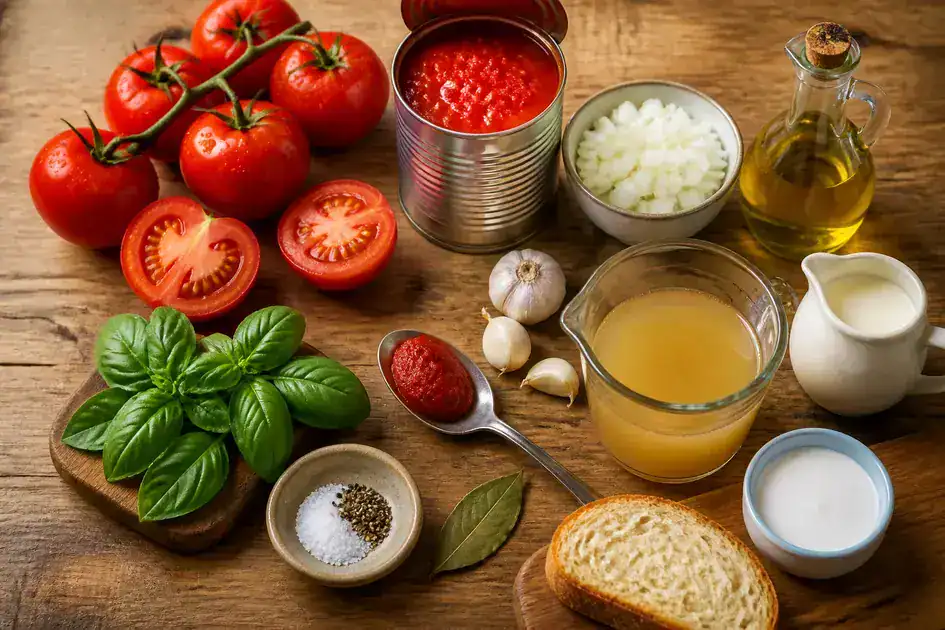
For a flavorful tomato soup, gather the ingredients below so you have everything ready before cooking.
- 800 g (about 1.7 lb) ripe tomatoes — peeled and chopped (substitute: 2 cans [28 oz/800 g] crushed tomatoes).
- 1 medium onion — finely chopped (substitute: 2 tbsp dried onion flakes).
- 2 cloves garlic — minced (substitute: 1 tsp garlic powder).
- 2 tbsp olive oil — for sautéing (or 2 tbsp butter for richer flavor).
- 3 cups (720 ml) vegetable or chicken stock — low-sodium preferred.
- 1 tbsp tomato paste — boosts color and depth.
- 1 tsp sugar — balances tomato acidity (optional).
- Salt and freshly ground black pepper — to taste.
- 1 bay leaf — optional for subtle aroma.
- Handful fresh basil leaves — plus extra for garnish (or 1 tsp dried basil).
- 1/4 cup (60 ml) heavy cream — optional for creamier texture (substitute: full-fat coconut milk for a vegan version).
- Crusty bread or croutons — for serving (optional).
Notes and substitutions
Use canned tomatoes when fresh are out of season; the soup will still be bright and flavorful. Choose vegetable stock to keep the recipe vegetarian, or chicken stock for a richer base. Add the cream at the end to avoid curdling; for a lighter soup, skip the cream and finish with a drizzle of good olive oil. Taste and adjust salt, pepper, and a pinch of sugar to balance sweetness and acidity.
How to prepare tomato soup step by step
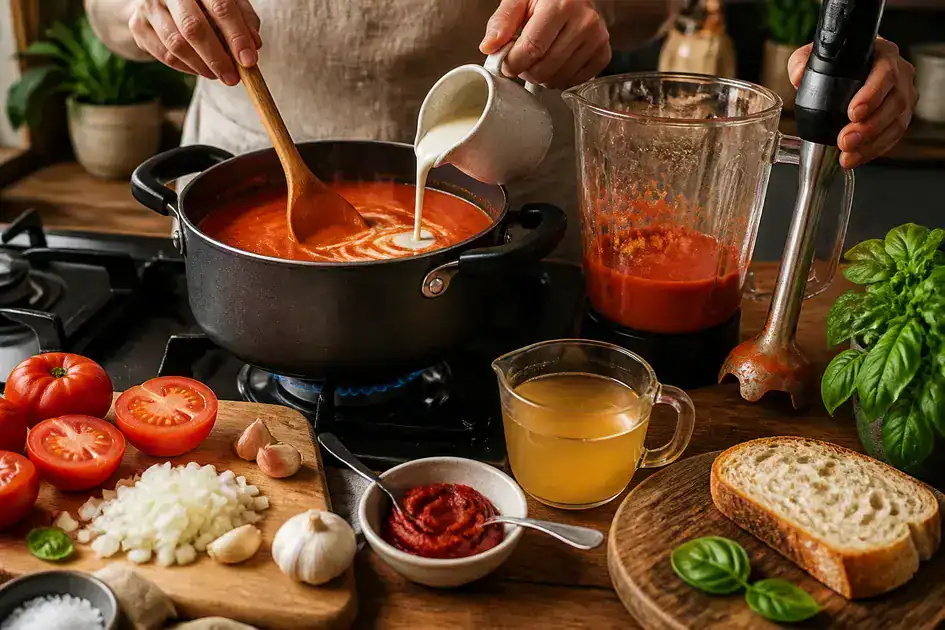
- Prepare the tomatoes: Score the bottoms of 800 g ripe tomatoes, blanch in boiling water 30–60 seconds, then transfer to ice water and peel. Roughly chop.
- Prep aromatics: Finely chop 1 medium onion and mince 2 cloves garlic so they cook evenly.
- Sauté the base: Heat 2 tbsp olive oil in a medium pot over medium heat. Add the onion and cook 4–5 minutes until translucent, then add garlic and cook 30 seconds.
- Add tomato paste: Stir in 1 tbsp tomato paste and cook 1–2 minutes to deepen the flavor and color.
- Combine tomatoes and stock: Add the chopped tomatoes and 3 cups (720 ml) vegetable or chicken stock, plus 1 bay leaf and 1 tsp sugar if tomatoes taste very acidic.
- Simmer gently: Bring to a simmer, reduce heat, and cook uncovered 20–25 minutes until tomatoes break down and flavors meld.
- Blend until smooth: Remove the bay leaf. Use an immersion blender in the pot or transfer in batches to a blender; blend until silky. For extra smooth texture, pass the soup through a fine-mesh sieve.
- Adjust texture and creaminess: Return to low heat and stir in 1/4 cup (60 ml) heavy cream or full-fat coconut milk for a vegan option. Warm gently—do not boil once cream is added.
- Season and add herbs: Taste and season with salt and freshly ground black pepper. Stir in a handful of torn fresh basil leaves or 1 tsp dried basil at the end for fresh aroma.
- Serve: Ladle into bowls, garnish with extra basil and a drizzle of olive oil or cream. Serve with crusty bread or croutons.
Finishing and blending
Techniques to enhance flavor and texture

These practical techniques will improve both the flavor and texture of your tomato soup without adding fuss.
- Roast the tomatoes: Roast halved tomatoes at 425°F (220°C) for 25–35 minutes until caramelized to intensify sweetness and depth.
- Concentrate flavors by reduction: Simmer the soup uncovered 15–30 minutes to thicken and concentrate taste; stir occasionally to prevent sticking.
- Use tomato paste early: Fry 1 tbsp tomato paste with the aromatics for 1–2 minutes to deepen color and add umami.
- Add controlled acidity: Brighten the soup with a splash (1–2 tsp) of red wine vinegar or lemon juice at the end, tasting as you go.
- Balance acidity with a pinch of sugar: If tomatoes taste sharp, add 1/2–1 tsp sugar to round the flavor without making it sweet.
- Layer umami: Boost savory depth with small amounts of soy sauce (1 tsp), Worcestershire sauce (1 tsp), or a pinch of nutritional yeast for vegetarian dishes.
- Timing for herbs: Add dried herbs early for body and fresh herbs (a handful torn basil) right before serving for aroma.
Blending and texture
- Blend carefully: Use an immersion blender in the pot or a countertop blender in batches; blend until smooth but avoid overblending if you want a rustic texture.
- Strain for silkiness: Pass the blended soup through a fine-mesh sieve for an ultra-smooth finish, pressing gently with a spatula.
- Create creaminess: Stir in 1/4 cup (60 ml) heavy cream or full-fat coconut milk at low heat. For a lighter option, finish with 1 tbsp olive oil per bowl.
- Thicken without dairy: Blend a peeled cooked potato or a slice of day-old bread into the soup for body and smooth mouthfeel.
- Add texture contrasts: Top with crisp croutons, toasted seeds, or a spoonful of pesto to add bite and interest.
Practical tips
- Season gradually: Salt in stages—during cooking and again at the end—to build balanced flavor.
- Control heat: Simmer gently; high heat can flatten flavors and break down delicate aromatics.
- Finish off-heat: Add delicate ingredients like cream or fresh basil off the heat to preserve flavor and avoid curdling.
- Taste and adjust: Always taste before serving and tweak salt, acid, or sweetness in small increments.
Variations of tomato soup (cream, roasted, and vegan)
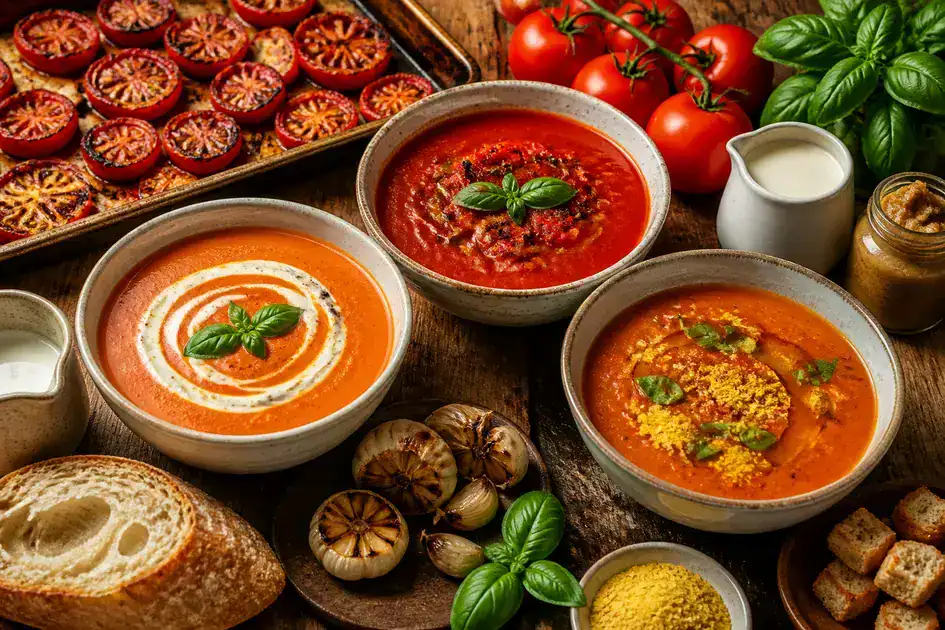
Choose a style that fits your mood: creamy, roasted, or light vegan — each gives tomato soup a distinct flavor and texture.
Cream variation
A rich, silky soup finished with cream or butter for comfort and body.
- 800 g ripe tomatoes — peeled and chopped (or 2 cans 28 oz crushed tomatoes).
- 1 medium onion — finely chopped.
- 2 cloves garlic — minced.
- 2 tbsp olive oil or 1 tbsp butter.
- 1 tbsp tomato paste — optional for depth.
- 3 cups (720 ml) chicken or vegetable stock — low sodium.
- 1/4 cup (60 ml) heavy cream — or 1/4 cup full-fat coconut milk for dairy-free.
- Handful fresh basil — plus extra for garnish.
- Salt and freshly ground pepper — to taste.
- Sauté aromatics: Heat olive oil or butter, cook onion 4–5 minutes until soft, add garlic 30 seconds.
- Add tomato paste: Stir in paste and cook 1–2 minutes to deepen flavor.
- Add tomatoes and stock: Pour in tomatoes and stock, bring to a gentle simmer for 15–20 minutes.
- Blend and finish: Purée until smooth, return to low heat and stir in cream. Warm gently and mix in torn basil.
- Season: Taste and adjust salt, pepper, and a splash of vinegar or sugar if needed.
Roasted variation
Roasting brings caramelized notes and a smoky sweetness that brightens the soup.
- 800 g tomatoes — halved or quartered for roasting.
- 4 cloves garlic — left in skins or peeled for roasting.
- 2 tbsp olive oil — to coat tomatoes.
- 1 medium onion — optional, roasted or sautéed.
- 1–2 tbsp tomato paste — optional for extra color.
- 2½–3 cups (600–720 ml) stock — adjust for desired thickness.
- Fresh herbs — thyme or basil for roasting and garnish.
- Salt, pepper, and 1 tsp sugar — to balance acidity.
- Roast tomatoes and garlic: Toss tomatoes and garlic with oil, roast at 425°F (220°C) for 25–35 minutes until caramelized.
- Sauté onion and paste: In a pot, sauté onion and tomato paste briefly to build base flavors.
- Add roasted veg and stock: Add roasted tomatoes and garlic, pour in stock, simmer 10–15 minutes.
- Blend and strain: Purée until smooth; strain for a cleaner texture if desired.
- Finish and season: Stir in fresh herbs, adjust seasoning, and serve with crunchy croutons or a drizzle of olive oil.
Vegan variation
A plant-forward version that keeps creaminess using coconut milk, miso, or blended vegetables.
- 800 g tomatoes — fresh or canned.
- 1 medium onion — chopped.
- 3 cloves garlic — minced.
- 2 tbsp olive oil — or a neutral oil.
- 1 tbsp tomato paste — optional.
- 3 cups (720 ml) vegetable stock.
- 1/4 cup (60 ml) full-fat coconut milk — or 1/4 cup blended cooked potato or cashews for creaminess.
- 1 tsp white miso — optional for umami (dissolve off heat).
- 1–2 tsp nutritional yeast — boosts savory depth.
- Fresh basil — to finish.
- Sauté base: Heat oil, cook onion until soft, add garlic and tomato paste briefly.
- Add tomatoes and stock: Add tomatoes and vegetable stock, simmer 15–20 minutes.
- Blend with creamy element: Purée and stir in coconut milk or blended potato/cashews for a smooth mouthfeel.
- Add umami: Off heat, whisk in miso and nutritional yeast to taste.
- Adjust and serve: Add fresh basil, check seasoning, and serve hot with crusty bread or a vegan pesto dollop.
Fun facts about tomatoes and their role in the soup
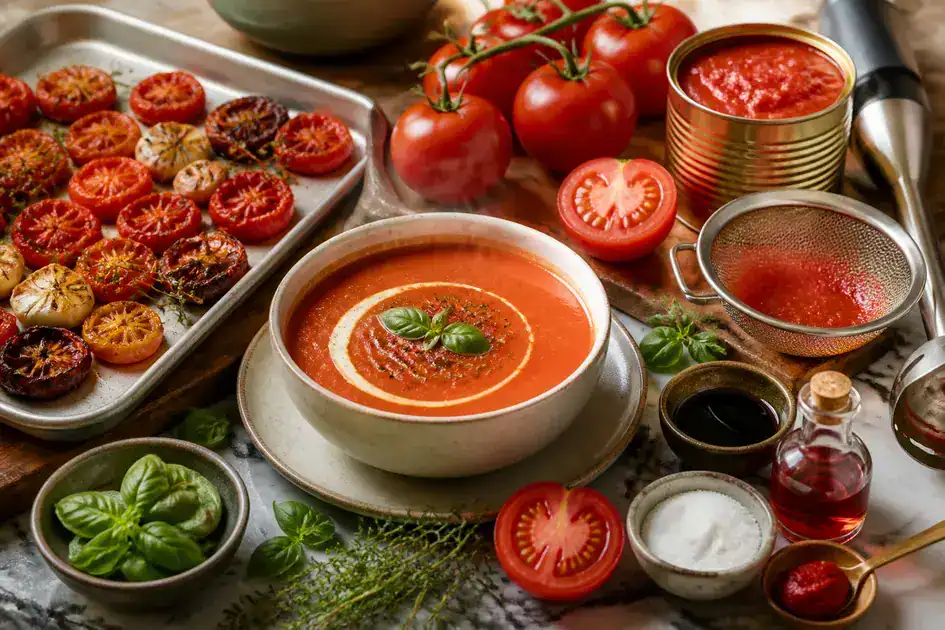
Tomatoes bring flavor, color, and body to tomato soup in simple, powerful ways. Read these easy facts to cook smarter.
- Lycopene: Ripe tomatoes are high in lycopene, a pigment and antioxidant that deepens the soup’s rich red color when cooked.
- Natural acidity: Tomatoes add bright acidity; balance it with 1/2–1 tsp sugar or a 1–2 tsp splash of vinegar if soup tastes sharp.
- Umami boost: Cooking concentrates glutamates, giving tomato soup a savory depth without needing lots of salt.
- Texture from solids: Tomato flesh, seeds, and skin (when blended) add natural thickness; strain for silkiness or keep solids for a rustic mouthfeel.
- Fresh vs canned: Use fresh ripe tomatoes in season for brightness; canned crushed tomatoes (28 oz/800 g) offer consistency and convenience year-round.
- Roasting magic: Roasted tomatoes and garlic caramelize sugars and add smoky-sweet notes that lift the whole soup.
- Pairing power: Herbs like basil and thyme, a little tomato paste, or a dash of Worcestershire/soy sauce layer flavors for a fuller profile.
How these facts guide your cooking
- Choose tomatoes by purpose: Use extra-ripe for fresh soups, canned for steady flavor, and roasted for smoky depth.
- Control acidity: Taste during cooking and add sugar or acid slowly—small changes make a big difference.
- Decide texture: Blend and strain for a silky finish, or blend less for a chunky, homey soup.
- Add umami smartly: A teaspoon of tomato paste early, or a splash of soy or Worcestershire at the end, deepens flavor without masking tomato taste.
- Finish with care: Stir in cream or olive oil off the heat to keep bright flavors and avoid curdling.
Wrapping up
Tomato soup is simple, comforting, and full of flavor when you use the right techniques. Try roasting, blending, or a creamy finish to see which you prefer.
Thanks for reading — we hope you feel ready to cook. Follow us on social media for quick tips, new recipes, and behind-the-scenes kitchen moments, and visit our Master of Recipes Blog for more ideas and step-by-step guides.
We appreciate your support; share your soup photos and tag us so we can celebrate your cooking. Happy cooking and see you soon!
FAQ – Tomato Soup Tips and Questions
What type of tomatoes work best for tomato soup?
Use ripe, meaty tomatoes like Roma or vine-ripened for bright flavor. Canned crushed tomatoes work well year-round for consistency.
Can I make tomato soup vegan without losing creaminess?
Yes. Substitute heavy cream with full-fat coconut milk, blended cooked potato, or soaked cashews for a rich, dairy-free texture.
How do I get a silky smooth texture?
Blend thoroughly with an immersion or countertop blender, then pass the soup through a fine-mesh sieve for an ultra-smooth finish.
What are quick ways to boost flavor if soup tastes flat?
Add a splash of red wine vinegar or lemon juice for brightness, 1 tsp tomato paste for depth, or a pinch of sugar to balance acidity.
How should I store and reheat leftover tomato soup?
Refrigerate in an airtight container for up to 3 days or freeze up to 3 months. Reheat gently on low heat, stirring and adding a splash of stock or water if too thick.