



gluten free croissants deliver flaky, buttery layers by using precise gluten-free flour blends, cold laminated butter or firm vegan substitutes, correct xanthan or psyllium binders, measured hydration, and careful folding and chilling to reproduce lamination while managing proofing times and avoiding cross-contamination for celiac-safe baking.
gluten free croissants can seem impossible — flaky, buttery, and free of gluten. Curious how bakers recreate those layers? I’ve tested recipes and tricks that make croissants puff, crisp, and taste like the real deal — here’s a clear, hands-on guide that won’t waste your time.
Ingredients of gluten-free croissants
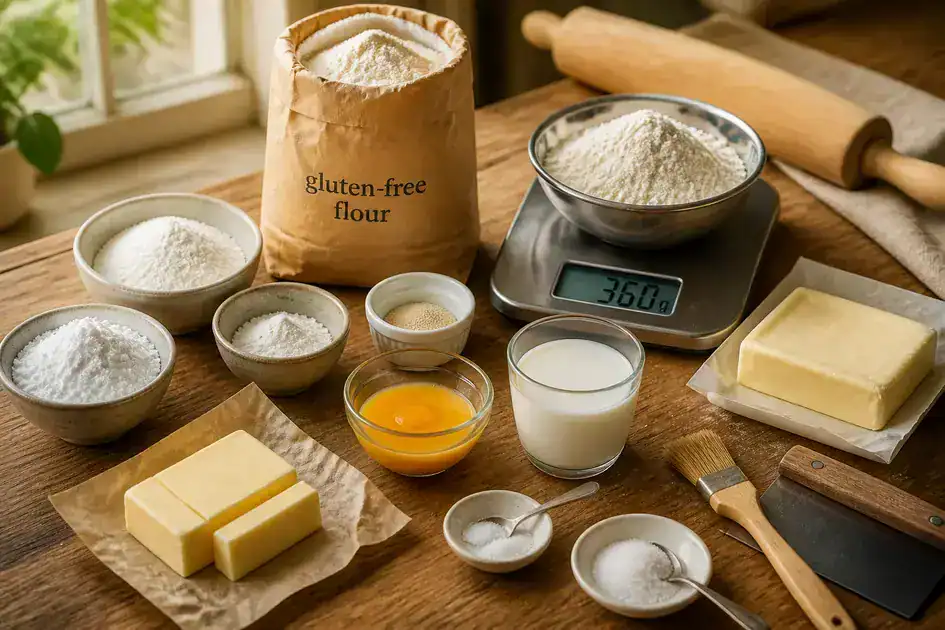
For flaky gluten-free croissants, precise ingredients matter. The list below yields about 8 croissants and includes easy substitutions.
- 360 g (3 cups) gluten-free all-purpose flour blend – use a 1:1 baking blend; substitute a homemade mix (2 parts rice flour : 1 part tapioca starch : 1 part potato starch).
- 50 g (1/3 cup) tapioca starch – adds chew and crispness; substitute arrowroot starch if needed.
- 8 g (1 tbsp) xanthan gum – improves elasticity; omit or reduce if your blend already contains it.
- 10 g (2 tsp) fine sea salt – balances flavor.
- 25 g (2 tbsp) granulated sugar – feeds the yeast and adds light sweetness; use coconut sugar as a swap.
- 10 g (2 tsp) instant dry yeast – or use 2 1/4 tsp active dry yeast dissolved in warm liquid.
- 180 ml (3/4 cup) warm milk (about 100°F / 38°C) – use whole milk for richness; substitute unsweetened oat or almond milk for dairy-free croissants.
- 1 large egg (room temperature) – adds structure and color; replace with 3 tbsp aquafaba or a flax egg for vegan versions (texture will vary).
- 60 g (1/4 cup) unsalted butter – incorporated into the dough for tenderness; use vegan butter if dairy-free.
- 250 g (about 1 cup + 2 tbsp) cold unsalted butter – for the laminated butter block to create layers; use a firm vegan butter block as a substitute.
- 1 tbsp lemon juice or white vinegar – helps strengthen the dough and improve rise (optional).
- Extra milk or egg wash for glazing – 1 egg beaten with 1 tbsp water or a splash of plant milk to brush before baking.
Ingredient notes
Flour blend: choose a blend labeled for baking. If you mix your own, keep ratios consistent and sift starches for even texture. Xanthan gum amount depends on your blend — reduce if already included. Butter: keep both the dough butter and laminate butter cold; temperature control is key to layers. Yeast: active dry yeast requires proofing in the warm milk; instant yeast can be mixed with dry ingredients.
Small swaps (like plant milk or vegan butter) work, but expect slight changes in flavor and flake. Measure by weight for best and consistent results.
How to prepare gluten-free croissants step by step
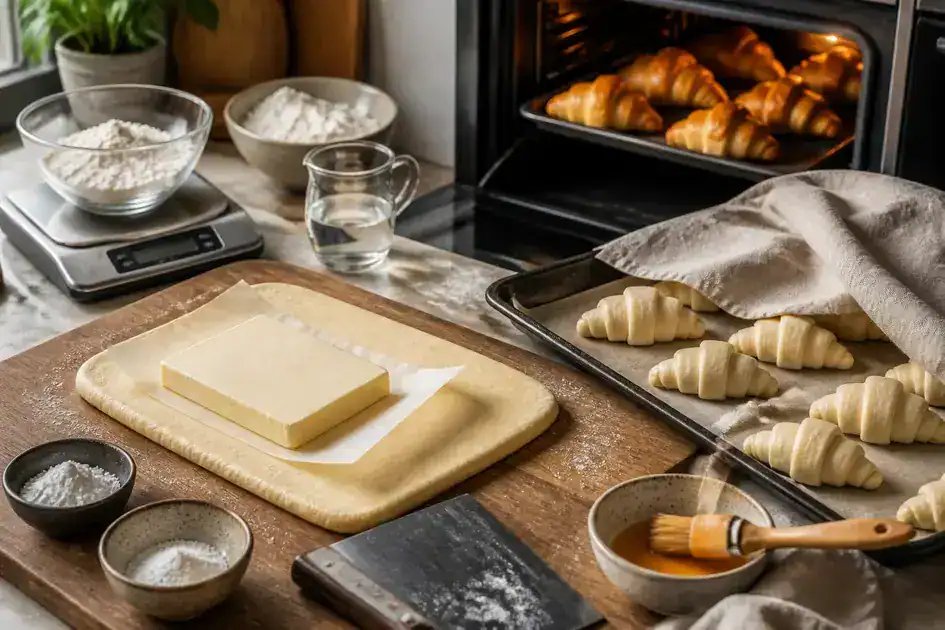
- Combine dry ingredients: In a large bowl mix 360 g gluten-free all-purpose flour, 50 g tapioca starch, 8 g xanthan gum, 25 g sugar, 10 g salt, and 10 g instant yeast until even.
- Warm liquids: Heat 180 ml milk to about 100°F (38°C). Whisk in 1 large room-temperature egg and 1 tbsp lemon juice or vinegar if using.
- Make the dough: Pour the wet mix into the dry ingredients and stir until a shaggy dough forms. Add 60 g cold, cubed unsalted butter and mix just until combined — do not overwork.
- Chill the dough: Shape the dough into a rough rectangle, wrap in plastic, and chill for at least 1 hour so butter firms and flour hydrates.
- Prepare butter block: Place 250 g cold butter between parchment, beat and roll into a flat rectangle about 7 x 5 inches. Keep it cold but pliable in the fridge.
- Encapsulate the butter: Roll chilled dough to roughly 10 x 8 inches. Center the butter block on the dough and fold the dough over to fully encase the butter in a neat packet.
- First fold (turn): Roll the packet to a 12 x 8-inch rectangle and fold into thirds like a letter. Wrap and chill 30–45 minutes to firm the butter.
- Repeat turns: Perform two more letter folds, chilling 30–45 minutes between each. Aim for a total of 3 turns to create visible layers.
- Final roll and shape: After the last chill, roll dough to about 6 mm (1/4 inch) thick, roughly 12 x 10 inches. Trim edges and cut into triangles about 4 x 6 inches for standard croissants.
- Roll croissants: Gently stretch the base of each triangle, then roll toward the tip to form a tight crescent. Tuck the tip under the croissant to secure shape and place on a parchment-lined tray.
- Proof carefully: Cover loosely with plastic or a towel and proof in a warm draft-free spot until croissants rise ~50–75% and feel pillowy, about 45–90 minutes. Do not overproof.
- Preheat and egg wash: Preheat oven to 400°F (200°C). Whisk 1 egg with 1 tbsp water and lightly brush each croissant for shine and color.
- Bake: Bake on the middle rack for 15–20 minutes until deep golden and well puffed. Rotate the tray halfway for even browning.
- Cool briefly: Transfer to a rack and cool 10–15 minutes so layers set. Serve warm to enjoy best texture.
Practical tips
- Keep everything cold: Cold butter and short chill times prevent butter from melting into the dough and preserve layers.
- Measure by weight: Weigh ingredients for consistent results, especially flour and butter.
- Temperature matters: If your kitchen is warm, chill longer between turns and proof in a slightly cooler spot.
- Vegan options: Use vegan butter and plant milk; expect slightly different flake and flavor.
Tips for achieving flaky layers and buttery flavor
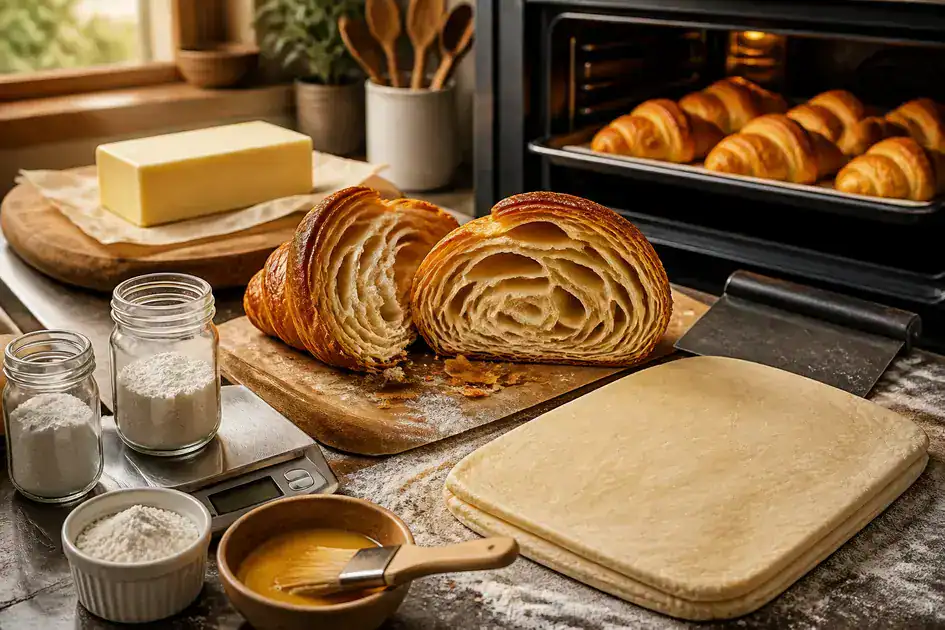
Cold, patience, and precise measures matter. Small choices make big differences for flaky layers and real buttery flavor in gluten-free croissants.
- Measure by weight: Weigh flour, butter, and starch for consistent texture—cups vary too much.
- Keep everything cold: Cold dough and cold butter prevent the butter from melting into the dough, preserving distinct layers.
- Use a reliable flour blend: Pick a gluten-free blend labeled for pastries or make a mix of rice flour, tapioca starch, and potato starch for better lift.
- Adjust xanthan gum: Add a small amount to mimic gluten’s elasticity, but don’t overdo it—too much makes dough gummy.
- Make a firm butter block: Beat and roll cold butter into an even rectangle so it laminates smoothly between dough layers.
- Perform three turns: Fold and chill three times to build visible layers without overworking the dough.
- Chill between turns: Chill 30–45 minutes after each fold so butter firms and layers stay distinct.
- Roll gently and evenly: Apply even pressure; thin, even sheets create more layers and a uniform rise.
- Control proofing: Proof until croissants are slightly puffy (about 50–75% larger). Overproofing reduces oven spring and flake.
- High initial oven heat: Start at a hot temperature (around 400°F / 200°C) for good oven spring, then lower if needed for even browning.
- Add steam early: Place a small pan of hot water or mist the oven in the first minutes to encourage lift and glossy crust.
- Use quality butter or vegan block: Real butter gives the best flavor and mouthfeel; choose a high-fat, cold block for laminating.
- Brush lightly: Use an egg wash or milk wash for color, but don’t soak the surface—too much wash can weigh layers down.
- Rest before serving: Cool 10–15 minutes so the interior sets and layers finish crisping.
Troubleshooting and quick fixes
- Dough too crumbly: Add 1–2 tbsp cold milk or water and knead briefly to bring dough together.
- Butter leaking during lamination: Chill longer between turns and work on a cooler surface.
- Dense texture: Check yeast freshness and proof time; underproofed croissants stay tight.
- Gummy crumb: Reduce xanthan gum slightly or ensure starches are well mixed and sifted.
Variations: fillings and dietary adjustments

Choose fillings and simple swaps to match taste and dietary needs; use about 1 tsp–1 tbsp filling per croissant for best balance.
Filling ideas
- Chocolate hazelnut: 1 tbsp chocolate spread or 1 tbsp dark chocolate chips. For vegan, use dairy-free chocolate spread; for lower sugar, use 70%+ dark chocolate or a sugar-free spread.
- Almond frangipane: 1 tbsp almond paste or frangipane. For nut-free, replace with 1 tbsp sunflower seed paste or tahini mixed with a touch of maple syrup.
- Jam & cream cheese: 1 tbsp fruit jam + 1 tbsp cream cheese. For dairy-free, swap to vegan cream cheese or coconut yogurt and reduce jam to 1 tsp for less sweetness.
- Ham & cheese (savory): 1 thin slice of ham + 1 tbsp grated cheese. For vegetarian, use roasted mushroom slices; for dairy-free, use firm tofu or a vegan cheese alternative.
- Spinach & feta: 2 tbsp well-drained cooked spinach + 1 tbsp crumbled feta. For vegan, use crumbled tofu seasoned with lemon and salt as a feta substitute.
- Cinnamon butter: 1 tbsp softened butter mixed with 1 tsp cinnamon and 1 tsp sugar (or coconut sugar). Use vegan butter for dairy-free versions.
- Plain buttery: No filling; brush with extra melted butter or vegan butter before baking for a rich finish.
Dietary adjustments and practical swaps
- Vegan / dairy-free: Use high-fat vegan butter for the laminate, plant milk for the dough, and aquafaba or a plant milk glaze instead of egg wash. Expect slightly different color and flavor.
- Nut-free: Avoid almond-based fillings and flours. Substitute almond paste with sunflower seed paste or extra tapioca starch blends to maintain texture.
- Low-sugar: Reduce sugar in dough to 10–15 g or use erythritol/stevia in fillings. Choose unsweetened chocolate or low-sugar jams.
- Keto / low-carb: Traditional gluten-free croissant dough is starch-based and not keto-friendly. For a low-carb version, use almond flour + high-fat cheese dough recipes (results differ from classic croissant layers).
- Shortcuts and allergen-safe options: Use a store-bought gluten-free puff pastry sheet as a time-saver; check ingredients for hidden allergens and choose unbranded or clearly marked allergen-free products.
- Cross-contamination: Keep dedicated utensils and surfaces if baking for those with celiac disease; store-bought fillings may also carry traces of gluten or nuts.
Techniques for success with fillings
- Don’t overfill: Use small amounts (1 tsp–1 tbsp) so the croissant seals and puffs properly.
- Drain wet fillings: Pat cooked spinach or fruit fillings dry to avoid soggy layers.
- Seal edges well: Brush triangle edges with a little water or egg/plant-milk wash to prevent leaks during baking.
- Chill if needed: If a filling softens butter during shaping, chill filled croissants 15–30 minutes before proofing or baking.
- Adjust bake time: Savory croissants with moist fillings may need an extra 2–4 minutes; watch for deep golden color and firm interior.
Fun facts about croissants and gluten-free baking

- Origins: The croissant evolved from the Austrian kipferl and became a Parisian staple known for its crescent shape and buttery layers.
- Layer math: Three single letter folds typically produce about 27 thin layers, which puff into flaky sheets during baking.
- Steam is the lift: Tiny pockets of steam from butter and dough create the dramatic oven spring that separates layers.
- Butter matters: High-fat, cold butter gives the richest flavor and best lamination; vegan butter works but the result can be slightly different.
Science behind the layers
Temperature control: Cold butter prevents mixing with dough, so layers stay distinct. Warm kitchens need longer chill times between turns.
Hydration and starches: In gluten-free dough, starches (rice, tapioca, potato) and added water form the crumb. Proper hydration keeps the interior tender without collapsing layers.
Gluten-free differences
- Elasticity substitute: Xanthan gum or psyllium adds stretch lost without gluten, but use small amounts to avoid gumminess.
- Starch behavior: Tapioca adds chew and shine; rice flour gives structure. Balancing starches improves flake and mouthfeel.
- Proofing cues: Gluten-free croissants may need shorter or more careful proofing; look for slight puffiness, not a large rise.
- Freezing helps: Freezing shaped croissants before baking can improve lift and make timing easier for home bakers.
- Cross-contamination: For celiac-safe baking, use dedicated tools, surfaces, and clearly labeled ingredients.
Quick tips and curiosities
- Egg wash trick: A light egg or plant-milk wash boosts color but avoid soaking the surface.
- Flavor boost: A bit of high-quality butter rubbed on warm croissants after baking heightens buttery aroma.
- Storage note: Keep croissants in a paper bag at room temperature for a day, then freeze for longer storage to retain texture.
- Fun fact: Despite their French fame, croissants celebrate an older Central European baking tradition adapted in France.
Wrapping up
Making flaky, buttery gluten-free croissants takes practice, but the right flour blend, cold butter, and careful turns make a big difference. Measure by weight, keep ingredients cold, and chill between folds to build layers.
Try small swaps like vegan butter or different fillings, and practice the shaping and proofing steps — each bake teaches you something new.
Thanks for reading! Follow us on social media for quick tips and baking shortcuts, and visit Mestre das Receitas Blog for more recipes, guides, and inspiration.
FAQ – Frequently Asked Questions about Gluten-Free Croissants
What makes gluten-free croissant dough different from regular dough?
Gluten-free dough relies on starches and binders like xanthan gum instead of gluten for structure. It needs precise weights and extra chill time to form layers.
Can I use regular butter alternatives for laminating?
Yes, use a high-fat vegan butter block for dairy-free croissants. Expect slightly different flavor and flake, so keep it very cold and firm during lamination.
How much xanthan gum should I use?
Start with about 8 g for the recipe scale used here and adjust by your flour blend. Too much can make the dough gummy, so reduce if your blend already contains binder.
Why are my croissants dense instead of flaky?
Common causes are warm butter, underproofing, or uneven laminating. Chill between turns, proof until slightly puffy, and bake at high initial heat for good oven spring.
Can I freeze shaped croissants before baking?
Yes, freeze shaped croissants on a tray until firm, then store in airtight bags. Bake from frozen, adding a few extra minutes to the bake time for best results.
Are gluten-free croissants safe for people with celiac disease?
They can be if all ingredients and surfaces are certified gluten-free and you avoid cross-contamination. Use dedicated tools and clearly labeled products to ensure safety.