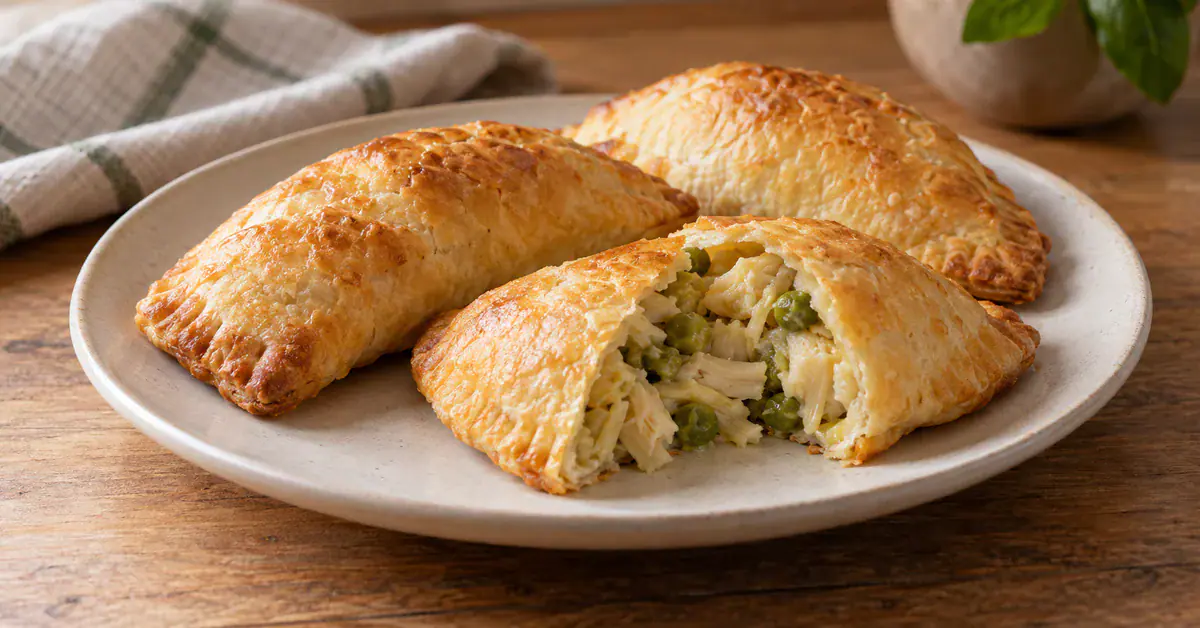

These baked turnovers have a creamy heart of palm and pea filling. Thicken it in the pan and cool it before assembling so it doesn’t soften the pastry. Make the pastry with butter, seal the turnovers and bake at 200 °C until golden.
Serve these baked heart of palm and pea turnovers as a snack or starter. The filling needs to be thick enough to stay inside the pastry. Start with the filling, assemble the turnovers and bake until golden.
Ingredients for the pastry and filling
Makes about 12 turnovers from rounds of pastry about 10 cm across. Set out the ingredients for the pastry, filling and glaze before you begin.
Pastry
- 360 g plain flour
- 150 g of unsalted butter, chilled and cut into cubes
- 1 egg
- 60 ml cold water
- 3 g salt
For the filling
- 15 ml olive oil
- 1 small, chopped onion
- 1 garlic clove, finely chopped
- 120 g tomatoes, deseeded and chopped
- 300 g preserved hearts of palm, drained and chopped
- 100 g of frozen peas, thawed
- 15 g plain flour
- 150 ml milk
- Salt and black pepper to taste
To finish
- 1 egg, for brushing the pastry
Make a thick filling that holds its shape
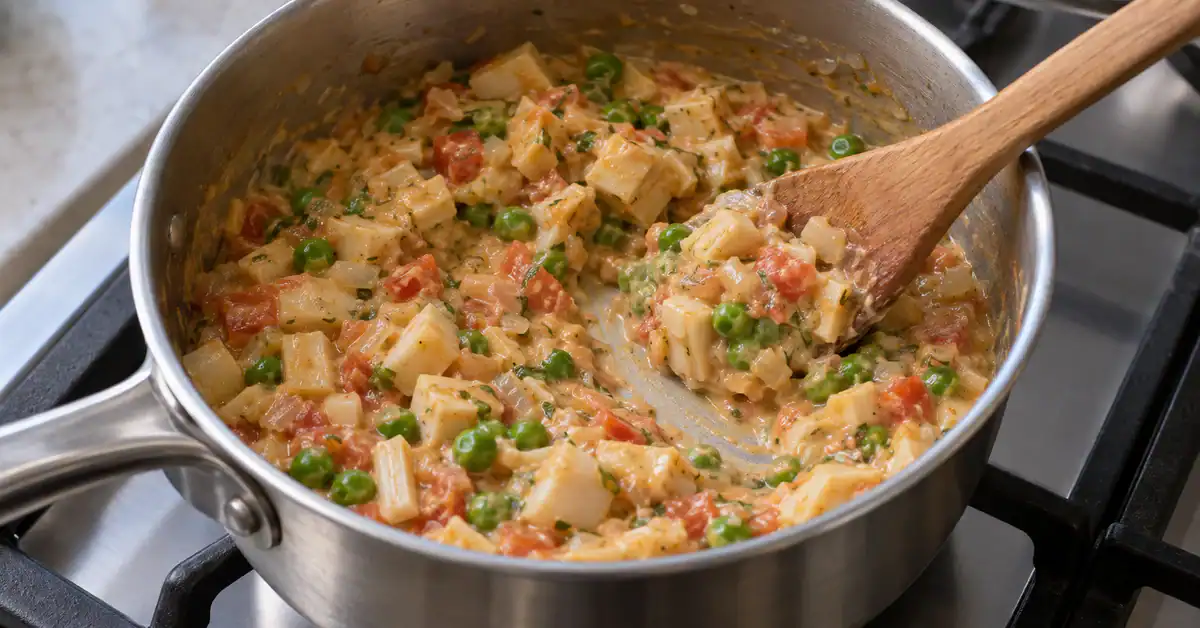
- Sauté the seasonings: heat the olive oil in a pan over medium heat. Add the onion and cook for about 3 minutes, stirring until it is tender. Add the garlic and stir for another 30 seconds, without browning it too much.
- Soften the tomato: add the chopped tomato and cook for about 4 minutes, stirring occasionally until it starts to break down and the mixture loses some of its liquid.
- Add the hearts of palm and peas to the pan and stir gently. Sprinkle the plain flour over them and stir for about 1 minute to distribute it evenly.
- Thicken the filling: pour the milk slowly, always stirring to avoid lumps. Cook over low heat for about 3 to 5 minutes, until it is creamy and thickened; when you sweep the spoon across the bottom, the path should remain visible for a moment. Season with salt and black pepper to taste.
- Let it cool: Transfer the filling to a bowl and wait for it to cool before assembling the pastries. The hot filling can soften the pastry and make sealing difficult.
Roll out and fill the pastry
- Mix the flour and salt in a bowl. Rub the cold butter into the flour with your fingertips until the mixture resembles crumbs with small pieces of butter still visible. Gradually work in the egg and cold water just until the pastry comes together. Avoid kneading or it may become tough.
- Flatten the pastry into a disc, wrap and refrigerate for about 20 minutes until firm but still easy to roll. Have the cooled filling ready.
- On a lightly floured surface, roll the pastry to about 2 to 3 mm thick. Cut out 12 rounds about 10 cm across. If the pastry softens while you work, return it to the fridge for a few minutes.
- Distribute the filling: place about 2 tablespoons of filling in the centre of each disc, without spreading to the edge. The amount should allow the pastry to fold without forcing; filling at the ends makes closing difficult and can escape in the oven. Leave the filled discs separate to close later.
Seal the turnovers and prepare them for the oven
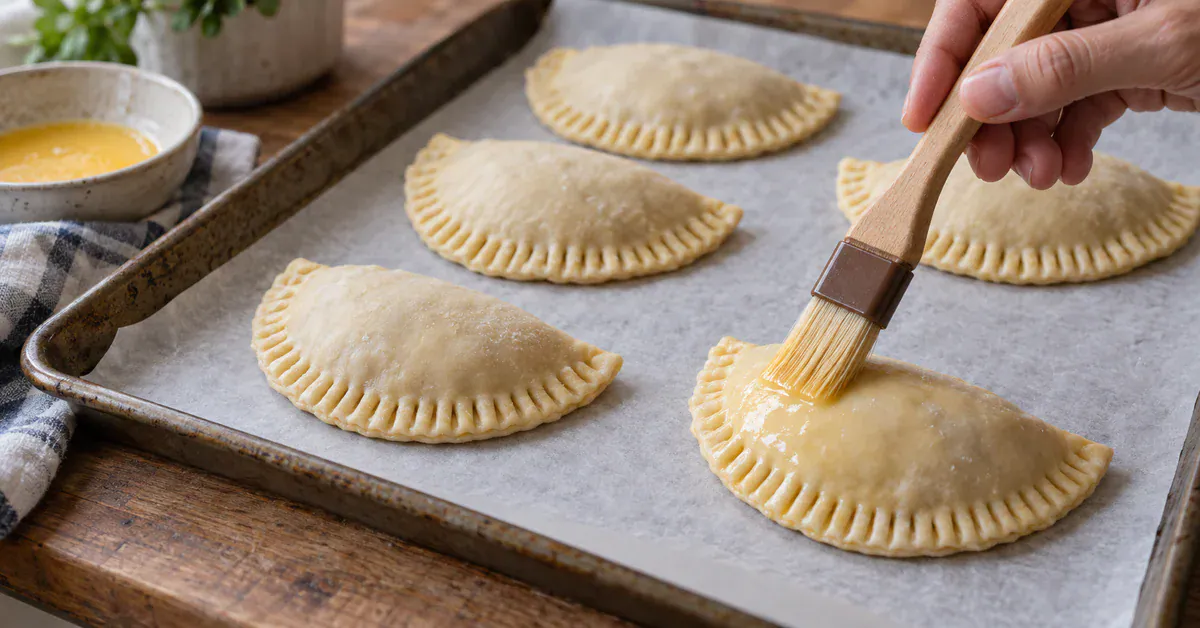
- Fold and close: fold each disc in half over the filling, aligning the edges. Press first with your fingers, from the centre to the edges, to remove the air and join the pastry without pushing the filling out.
- Crimp around the edge with a fork, taking care not to pierce the filled centre. Remove any filling caught on the edge before sealing so the pastry can stick together.
- Place them in the baking tray: arrange the closed pastries with some space between them. Beat the reserved egg in a small bowl and brush a thin layer over the surface of each pastry, without letting the liquid run to the sides.
Bake until the pastry is golden
- Preheat the oven to 200 °C while you finish assembling the turnovers. Put the tray in once the oven is hot so the pastry starts baking straight away.
- Bake the pastries: place the baking tray in the oven for about 20 to 25 minutes, until the surface is golden and the pastry appears firm. As oven power varies, start checking the colour around the 20-minute mark.
- Wait before serving: remove the baking tray from the oven and let the pastries rest for a few minutes. The pastry becomes less fragile as it cools slightly, and the filling will be very hot as soon as the pastries come out of the oven.
How to seal the edges and keep the filling inside
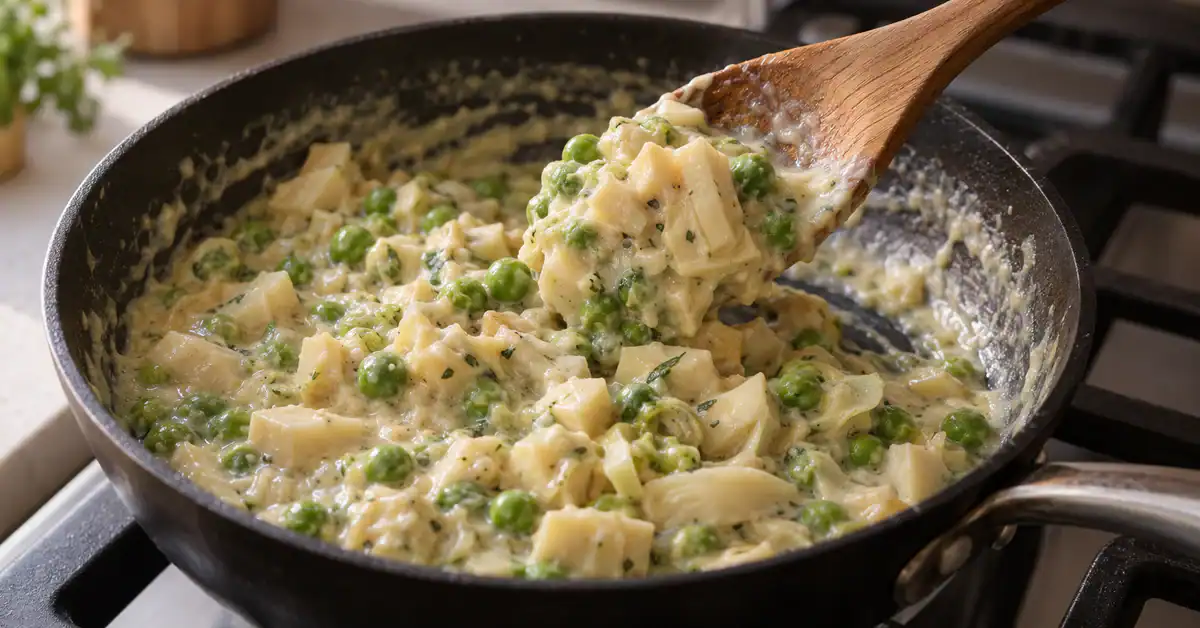
If the filling is still loose after cooling, return it to the pan and cook over low heat, stirring continuously until it thickens enough not to run from the spoon. Let it cool again before using; warm or overly moist filling can soften the pastry and make sealing difficult.
If a turnover opens in the oven, check whether filling was caught on the edge or the pastry stretched when you folded it. For the next batch, clear the edges, use a little less filling if needed and press the pastry from the centre towards the ends before crimping with a fork.
If the tops are still pale at around 20 minutes, leave them a few minutes longer, checking the colour without increasing the temperature. Take them out once golden and firm to the touch.
Serve while warm
Rest the turnovers for a few minutes before serving as a snack or starter. The pastry becomes less fragile and the filling has time to settle.
Questions about the recipe
How can you tell if the filling is thick enough?
Sweep the bottom of the pan with a spoon; the path should be visible for a moment. If the filling still runs from the spoon after cooling, cook it over low heat, stirring continuously, and allow it to cool again before assembling.
What if the pastry softens while I’m rolling it out?
Chill it for a few minutes until firm but still pliable. Very soft pastry is hard to cut and shape.
How can I prevent filling from leaking out at the edges?
Use about 2 tablespoons of filling per disc and leave the edges clean. When folding, press from the centre to the tips to remove air and join the pastry; then reinforce the edge with a fork.
How do I know the pastries are ready?
Remove them when the surface is golden and the pastry appears firm. If they are still pale around the 20-minute mark, bake for a few more minutes and check the colour without increasing the temperature.