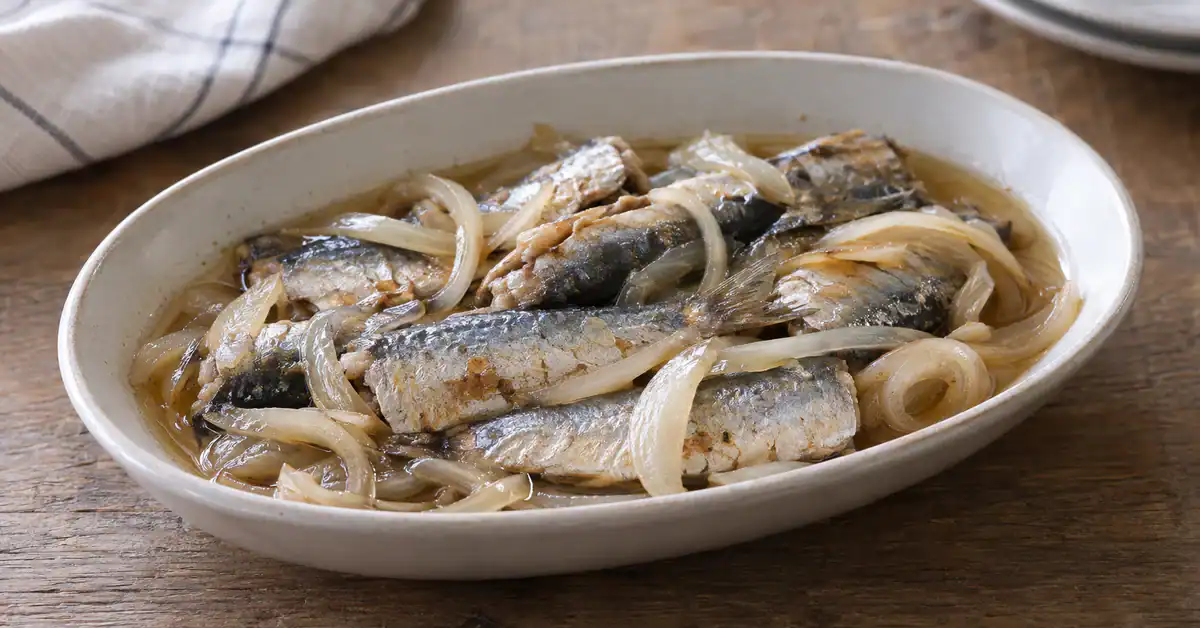

In this cold sardine escabeche, fresh sardines simmer gently in vinegar and water with onions softened in olive oil. Chill before serving with a little of the cooking liquid, as a starter or alongside rice and salad.
Served cold, sardine and onion escabeche offers a simple change from the usual fish dishes. Season the cooking liquid and give the onions time to soften so their flavour mingles with the fish. Here’s how to prepare, assemble and serve it.
Ingredients for the escabeche
This recipe serves about 4. Get everything ready before you start. The sardines should be cleaned, gutted and have their heads removed.
- 600 g fresh sardines, cleaned
- 2 medium onions (about 300 g), thinly sliced into rings
- 120 ml white wine vinegar
- 120 ml water
- 80 ml olive oil
- 2 garlic cloves, sliced
- 2 bay leaves
- 1 level teaspoon (5 g) salt
- ¼ teaspoon ground black pepper
Prepare the sardines and onions
Get the ingredients ready
- Check that the sardines have been cleaned, gutted and had their heads removed. Gently pat them dry with kitchen paper to avoid adding excess water. Handle them carefully so they stay whole.
- Cut the onions into thin rings and slice the garlic. Measure the vinegar, water and olive oil and set out the bay leaves, salt and pepper.
Cook and assemble the escabeche
- Heat the olive oil in a wide pan over a medium-low heat. Cook the onions for about 5 minutes, stirring occasionally, until soft and just starting to look translucent, without browning.
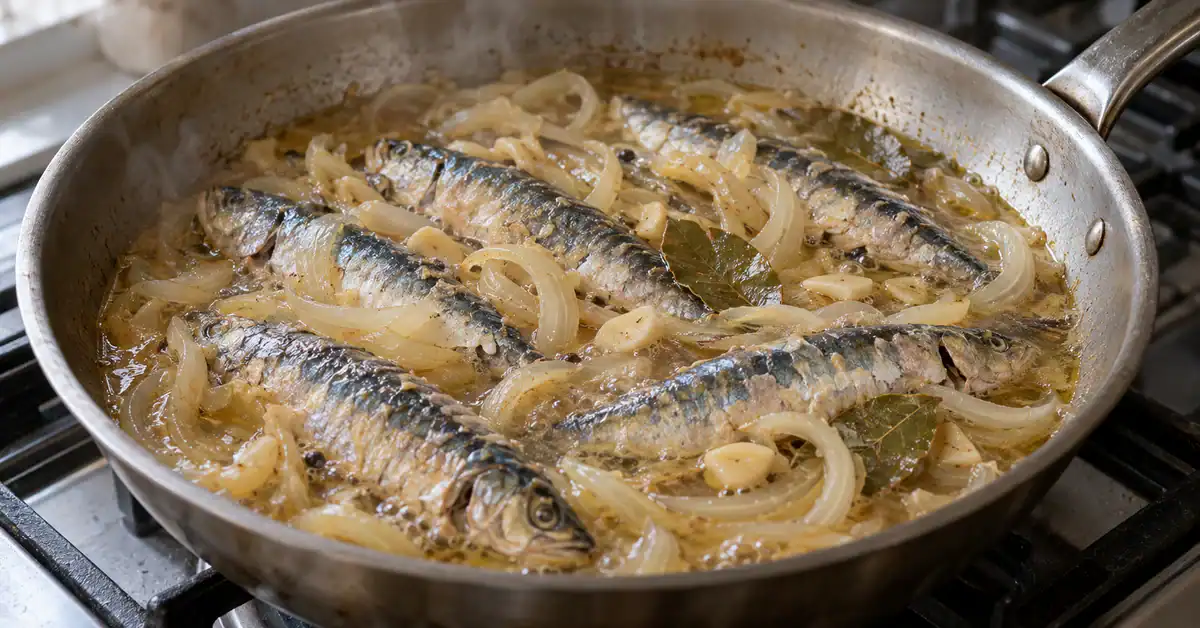
- Add the garlic and bay leaves and stir for about 1 minute. Pour in the vinegar and water, add the salt and pepper and raise the heat to medium. Bring to a gentle simmer with small bubbles breaking the surface.
- Nestle the sardines among the onions, keeping them covered with the liquid as far as possible. Cover, reduce the heat and cook gently for about 8–10 minutes without stirring. The fish should be opaque and flake easily when pressed lightly with a fork.
- Turn off the heat and carefully transfer the sardines and onions to a shallow container. Pour the cooking liquid over the fish to cover it, ready for chilling and storing as described below.
How to tell when the sardines are cooked
Look at the colour and texture. The flesh should be opaque even in the thickest part and flake under gentle pressure from a fork. It should still be moist. If the fish begins to fall apart in the pan, it may have cooked too long.
The fish may vary in size. Test one of the larger sardines without disturbing the others before turning off the heat. If the centre still looks translucent, cover and cook gently for another 1–2 minutes, then check again. Stop once the flesh turns opaque. It will continue to soften in the hot liquid as you transfer it.
Seasoning adjustments and substitutions
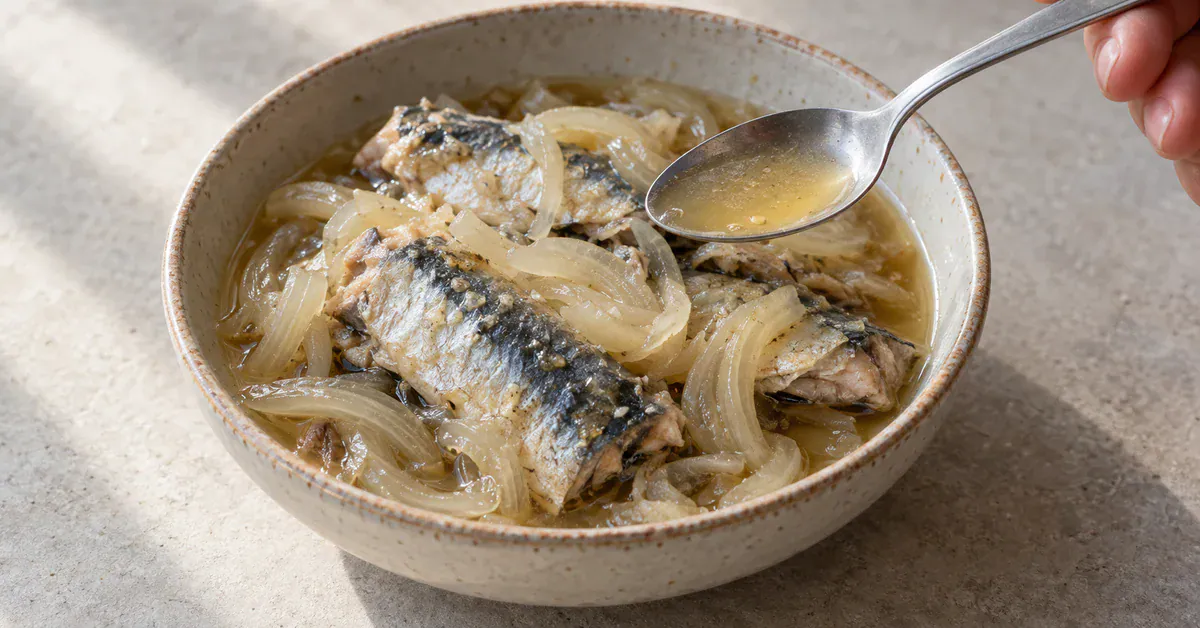
The ratio of vinegar to water gives a distinct but balanced tang. Once cold, taste a little of the liquid. For a milder result next time, replace 30 ml of the vinegar with 30 ml of water. This takes the edge off the vinegar flavour.
For a change, use the same weight of red onion in place of regular onion. It adds a different colour and a slightly different flavour. If the dish needs more seasoning at the table, add a little salt or pepper at a time, tasting after each addition.
Cooling and storage
After transferring the fish and liquid to the shallow container, let the steam escape for a few moments and refrigerate without waiting for it to cool completely on the worktop. Cover once cold. Keep the sardines submerged so they don’t dry out.
Keep the escabeche refrigerated at all times. The vinegar doesn’t make it shelf-stable. Use a clean utensil to take out portions and eat it soon. Avoid leaving the container at room temperature for long periods. Serve cold.
Serving cold sardine escabeche
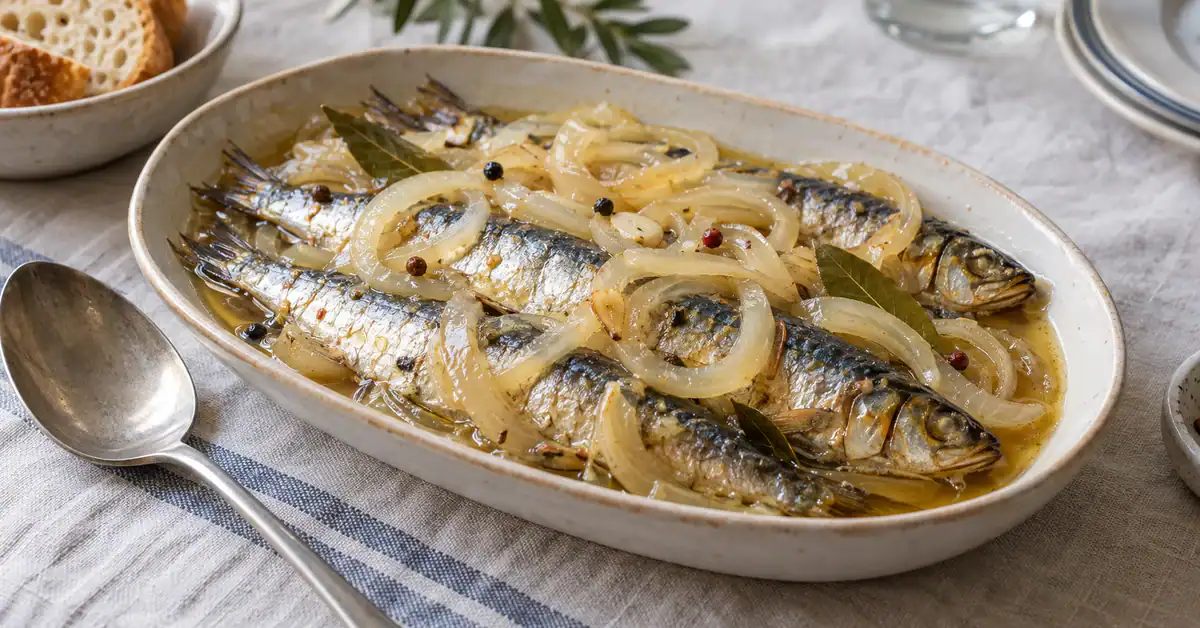
Lift out the cold sardines with a spatula or a broad spoon to keep them whole. Top with onion rings and a little of the cooking liquid to carry the seasoning and keep the fish moist.
Serve as a starter or with rice and salad. If taking a serving dish to the table, bring out only what you plan to eat and keep the rest refrigerated.
At serving time
Bring out only the portion you will eat and refrigerate the rest. Serve with rice and salad for a complete plate.
Questions about cooking and serving
What should I do if the sardines start falling apart in the pan?
Turn off the heat as soon as the flesh is opaque and flakes under gentle pressure from a fork. Avoid stirring during cooking and transfer the fish with a spatula or broad spoon.
What if a sardine is still translucent in the centre?
Cover and cook over a low heat for another 1–2 minutes, then check again. Test one of the larger sardines without disturbing the others.
Can I use red onions instead of regular onions?
Yes. Use the same quantity for a different colour and a slightly different flavour.
How do I make the escabeche less acidic?
Next time you make it, replace 30 ml of vinegar with 30 ml of water for a gentler, less vinegary flavour.
Should the sardines stay covered with liquid while they cool?
Keep the sardines covered with the cooking liquid in the shallow container, including during refrigeration, so they stay moist. Let steam escape briefly, then refrigerate without waiting for the dish to cool completely on the worktop.
Can I leave the whole dish on the table during the meal?
Bring only what you intend to eat to the table and keep the rest in the fridge. Serve the fish with a little cooking liquid and some onion rings.