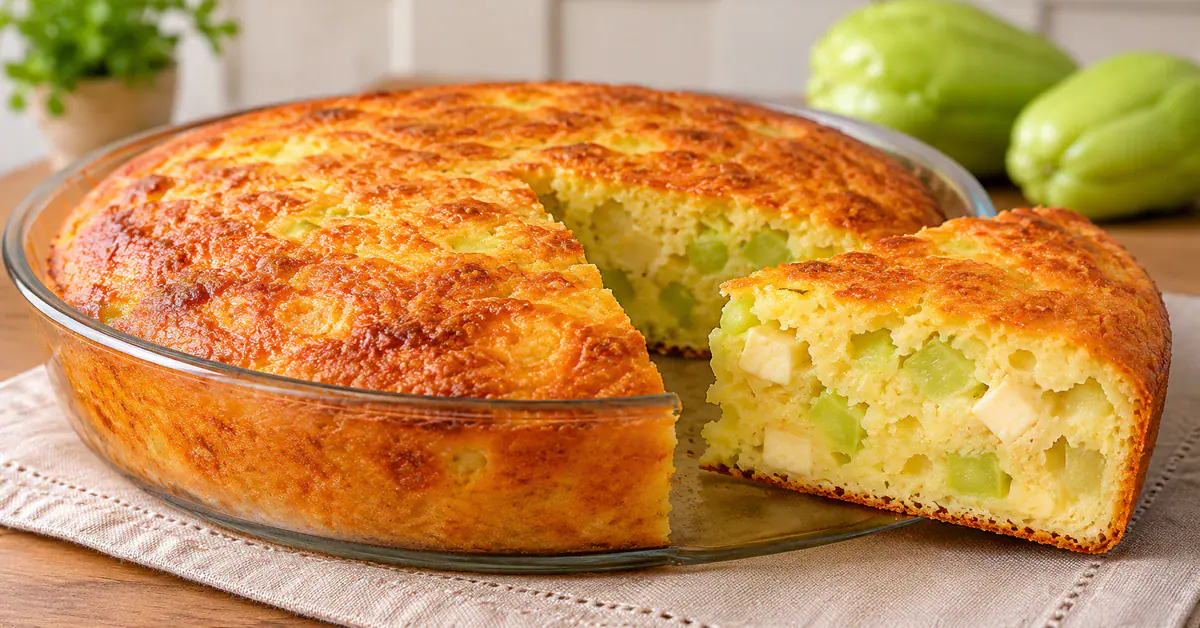

This Brazilian blender pie with chayote and queijo coalho combines a pourable batter with layers of parboiled chayote and diced cheese. Drain the filling well and bake at 180 °C until the top is golden and the centre is set.
This chayote and queijo coalho pie has an easy blender batter. The Brazilian cheese adds flavour and texture to the filling. The simple steps show how to judge the batter consistency and layer the chayote and cheese evenly, even if you’re new to cooking.
Ingredients for the batter and filling
Batter ingredients
- 2 cups plain flour (240 ml each), about 250 g
- 2 cups milk (240 ml each)
- 3 eggs
- ½ cup (120 ml) oil
- 1 teaspoon (5 g) salt
- 1 tablespoon (12 g) baking powder
For the filling
- 2 medium chayotes, about 500 g before peeling
- 200 g queijo coalho cheese, finely diced
- 1 small onion, about 70 g, chopped
- 2 tablespoons chopped parsley (optional)
- Black pepper to taste
- 1 teaspoon oil to grease the tin
Prepare the chayote and queijo coalho
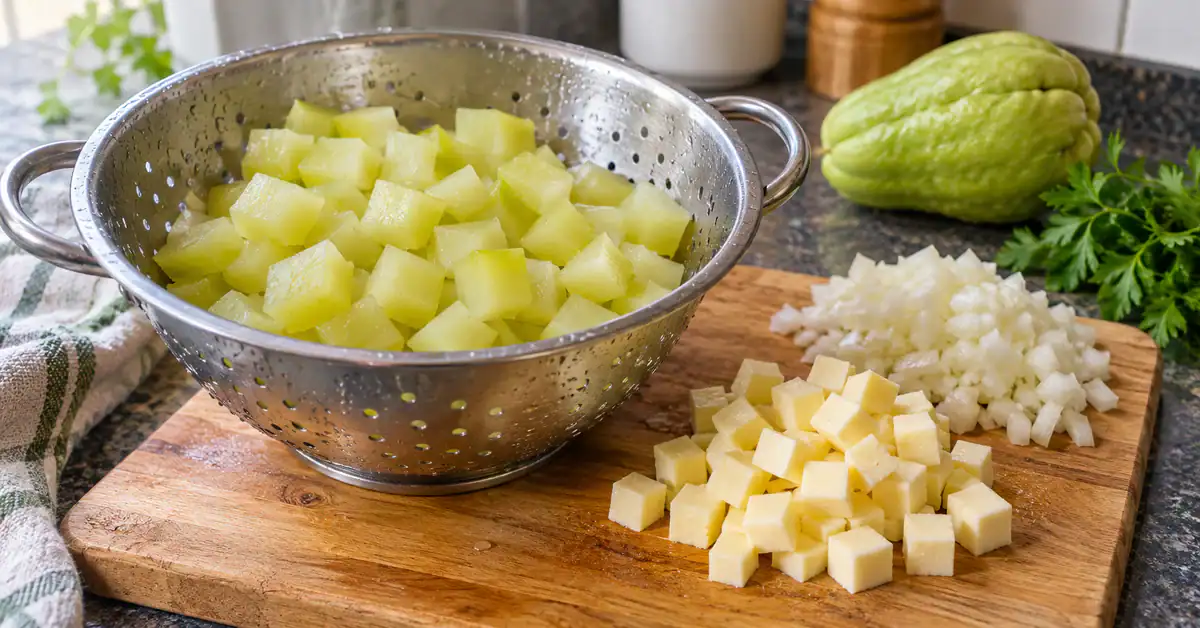
- Peel and halve the chayotes and remove the firmer centre. Cut into small cubes and cook in boiling water for about 4 minutes, until slightly tender but still holding their shape. Drain well and cool. If very wet, gently pat dry with kitchen paper before assembly.
- Cut the queijo coalho into small cubes about 1 cm across. Chop the onion and the parsley if using. Keep the filling ingredients separate until assembly and set the oil aside solely for greasing the tin.
Blend the batter
- Put the milk, eggs, oil and salt in the blender jug. Blend for a few seconds until smooth.
- Gradually add the flour, blending on low or in short pulses just until no lumps are visible. If needed, switch off the blender and scrape down the sides with a spatula. Overmixing can make the batter heavy.
- Add the baking powder and pulse two or three times to incorporate. The batter should be smooth and pourable, a little thicker than milk. It’s ready for assembly.
Assemble and bake the pie
- Heat the oven to 180 °C. Grease a medium rectangular tin, about 20 × 30 cm, with the reserved teaspoon of oil.
- Pour half the batter into the tin and spread with a spoon to cover the base.
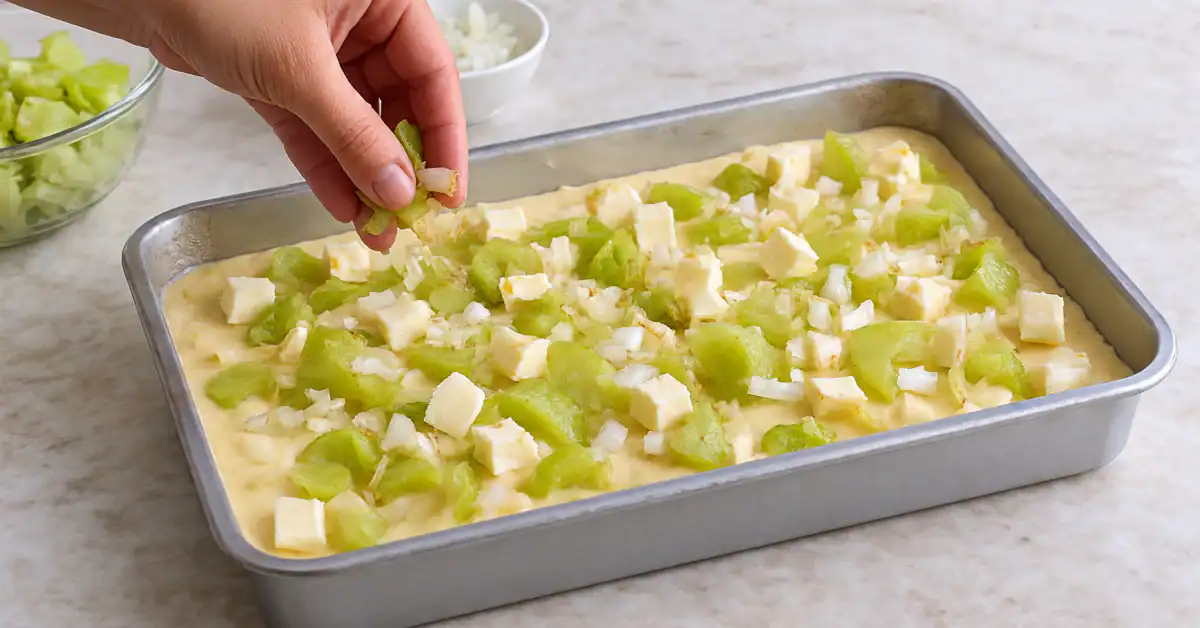
- Spread the cooled, drained chayote, diced cheese and chopped onion over the batter. Add the parsley if using and black pepper to taste. Cover the whole surface evenly, keeping the centre level.
- Gradually pour the remaining batter over the filling, gently spreading it to cover most of the ingredients. A few pieces can remain visible.
- Bake in the preheated oven for about 35–45 minutes. Timing depends on the oven. Watch the top brown and check the centre before taking it out.
How to tell when the pie is baked
After about 35 minutes at 180 °C, check the pie before taking it out. The top should be golden and the edges firm. When you move the tin gently, the centre shouldn’t wobble like liquid batter.
Insert a cocktail stick into the centre away from the cheese or chayote. It should come out without raw batter, though a few moist crumbs are normal. If liquid batter clings, bake for a few more minutes and retest. Timing varies by oven.
Keeping the batter from becoming soggy
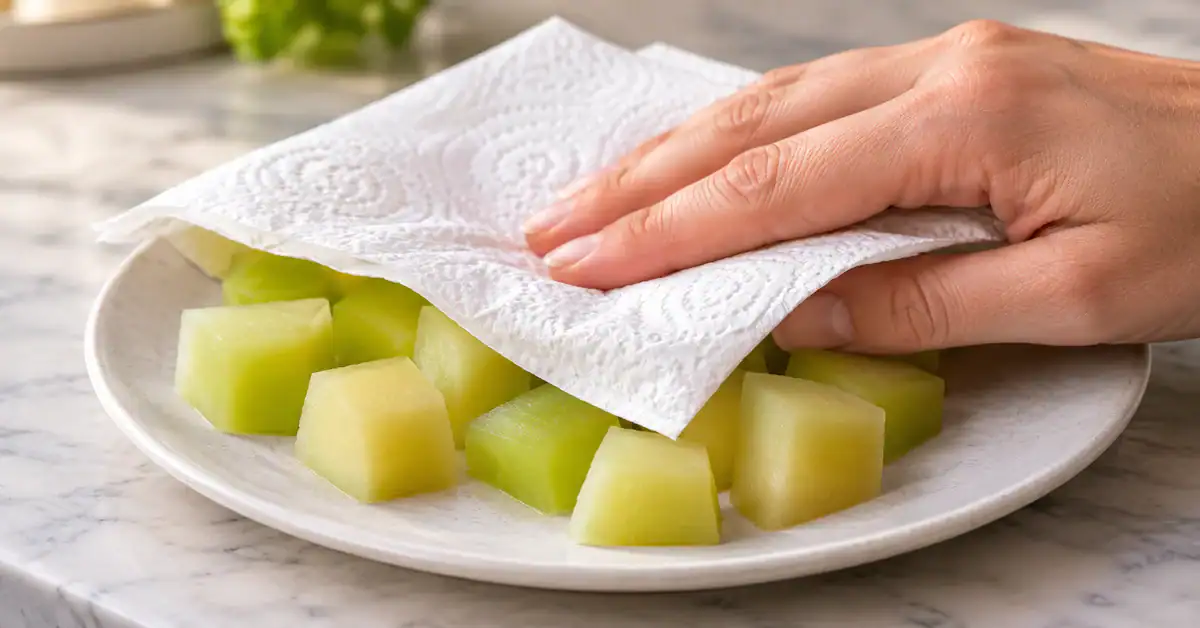
Remove excess water from the chayote before assembling the pie. Drain the cubes, let them cool and pat dry with kitchen paper if still wet. Water in the filling can leave the batter soggy near the base.
Let the chayote cool before setting it over the first layer of batter. Hot filling releases steam inside the tin and can interfere with even baking.
Measure the flour with a 240 ml cup without packing it down. Changing the proportions can affect the texture. If the centre seems damp, check for doneness before considering adding flour to the mixture.
Serving and storing leftovers
Rest the pie for a few minutes out of the oven before slicing. The slices will firm up and be easier to serve while the queijo coalho is still soft and flavoursome.
Once cool, store leftovers in a closed container in the fridge. Reheat in a low oven until the slice is hot in the centre. A microwave works too but can leave the batter softer.
At serving time
Let the pie rest a few minutes before cutting. Serve the slices warm, once they have firmed up enough to lift onto plates.
Questions about preparation and serving
How can I tell if the chayote has cooked enough before assembly?
Cook the cubes for about 4 minutes, until slightly tender but still holding their shape. If too soft, they may break apart as you spread the filling.
The pie is golden but the centre still looks damp. What should I do?
Test the centre with a cocktail stick. If liquid batter clings, bake a few minutes longer. A few moist crumbs are normal. Test in an area away from the cheese and chayote.
There’s cheese on the cocktail stick. Is the batter still raw?
Not necessarily. The stick may have gone through a cube of cheese. Test again away from the cheese and chayote and check that the centre is firm.
Does it matter if a few pieces of filling show on top?
No. A few pieces can show. Spread the batter carefully to cover most of the filling, without having to hide it entirely.
Can I slice the pie as soon as it comes out of the oven?
Wait a few minutes so the slices firm up and are easier to serve. Reheat leftovers in a low oven until hot in the centre, or microwave them for a slightly softer texture.