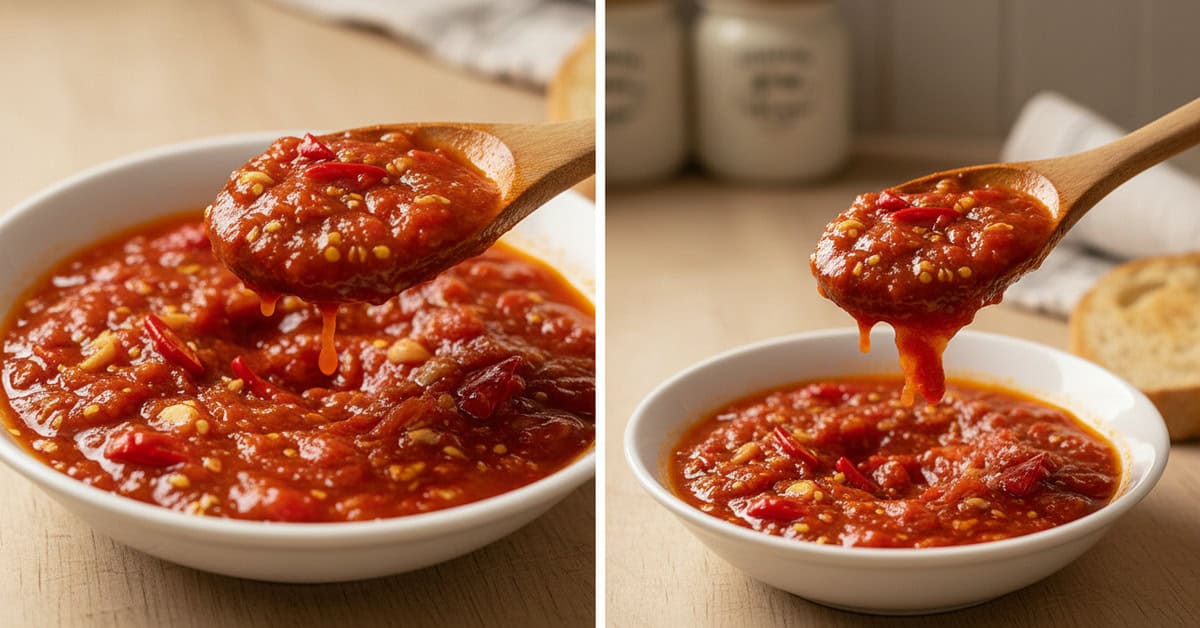

Salsa roja is a spicy red sauce typical of Texas and the American Southwest. It’s made with roasted tomatoes and chillies such as jalapeños and guajillos, with fresh coriander and lime. You can vary the smokiness and heat to suit tacos, grilled meats or snacks.
Salsa roja is the spicy red sauce that brings tacos, grilled food and snacks to life. Have you ever noticed the difference a little smokiness makes? I’ll share recipes, variations and simple tricks to help you strike the right balance between flavour and heat.
Ingredients for Texas and Southwestern salsa roja
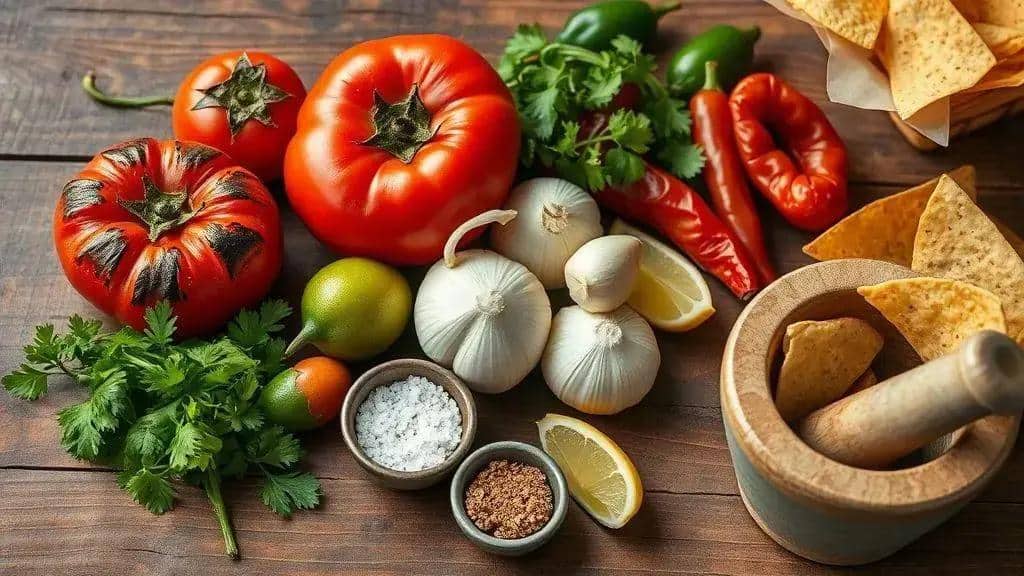
To make salsa roja in the style of Texas and the American Southwest, choose ripe tomatoes and chillies and take the time to roast them well for a balanced, smoky flavour.
Ingredients
- 5–6 medium Roma tomatoes (about 800 g), roasted or grilled until the skins are charred in places. Alternatively, use 2 tins of peeled tomatoes (400 g each).
- 3–4 jalapeño or serrano chillies, roasted. Remove the seeds for less heat. For a fruitier flavour, use dedo-de-moça chillies instead.
- 2 dried guajillo chillies for a smoky aroma. Soak them in hot water and remove the seeds. Alternatively, use 1 tablespoon of smoked paprika.
- 1 medium white onion, quartered and roasted with the tomatoes. For a little sweetness, use a red onion instead.
- 2 garlic cloves, roasted or grilled whole. Alternatively, use 1/2 teaspoon of garlic powder.
- 1/4 cup of chopped fresh coriander, including the leaves and tender stalks. Use parsley for a milder flavour.
- Juice of 1 lime (about 2 tablespoons), to adjust the acidity. Alternatively, use 1 tablespoon of cider vinegar.
- 1 teaspoon of fine salt. Adjust to taste at the end.
- 1/2 teaspoon of ground cumin (optional), to bring out the earthy notes.
- 1 tablespoon of vegetable oil or olive oil, for brushing the vegetables before roasting or searing them in a frying pan.
- 1 teaspoon of sugar or a touch of honey (optional), to balance the acidity.
- Tortilla chips or sliced bread, to serve.
Quick tips for roasting and seasoning. Roast the tomatoes and chillies until charred patches appear for the smoky flavour typical of Texas and the Southwest. Taste and adjust the salt, lime juice and cumin. For less heat, remove all the seeds or use only half the chillies.
How to make salsa roja step by step
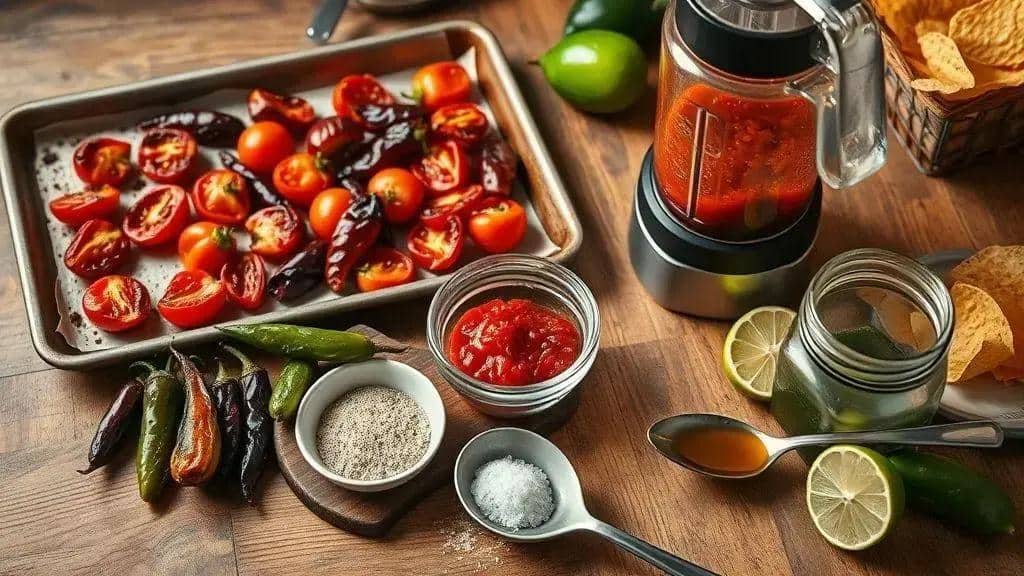
- Preheat the oven grill or barbecue to high so the ingredients cook evenly.
- Wash 5–6 Roma tomatoes and 3–4 jalapeño or serrano chillies. Halve the tomatoes and remove the stalks from the chillies, keeping the seeds if you like more heat.
- Remove the stalks and seeds from 2 dried guajillo chillies, then soak the chillies in a bowl of hot water for 15 minutes.
- Brush the tomatoes and chillies with 1 tablespoon of oil. Before roasting, sprinkle them with part of the teaspoon of salt and keep the rest for seasoning the salsa.
- Arrange everything on a baking tray and cook under the grill or on the barbecue for 8–12 minutes, turning to brown the vegetables on all sides, until the skins blister and blacken in patches.
- Quarter 1 white onion and roast it with 2 whole garlic cloves until the edges turn golden. Roasting mellows their flavour and brings out their sweetness.
- Leave to cool for 5 minutes. For a smoother salsa, pull away any loose tomato and chilli skins with your fingers or lift them off with a knife.
- In a blender or molcajete, combine the roasted tomatoes and chillies, drained rehydrated guajillo, onion, garlic, 1/4 cup of coriander, the juice of 1 lime (about 2 tablespoons) and 1/2 teaspoon of ground cumin. Add the reserved salt gradually to taste.
- Pulse for a chunky salsa or blend continuously until smooth. If it’s too thick, add 1–2 tablespoons of the guajillo soaking water or cold water.
- Taste and adjust the salt. Add more lime juice for acidity or 1 teaspoon of sugar for sweetness. To tone down the heat, add more tomato or a tablespoon of olive oil.
- If you like, heat 1 tablespoon of oil in a frying pan and cook the salsa for 2–3 minutes, stirring. This brings the flavours together and takes the edge off the raw taste.
- Transfer to a clean, shallow container and refrigerate within 2 hours. Eat within 3 days. Serve with tortilla chips, tacos or grilled meats.
Quick adjustments and variations
For a milder salsa, remove the seeds and use just 1 jalapeño. For a smokier flavour, replace one jalapeño with a chipotle in adobo sauce or add 1 teaspoon of smoked paprika. For a creamy texture, blend in 1/4 of an avocado.
Variations and ingredient substitutions
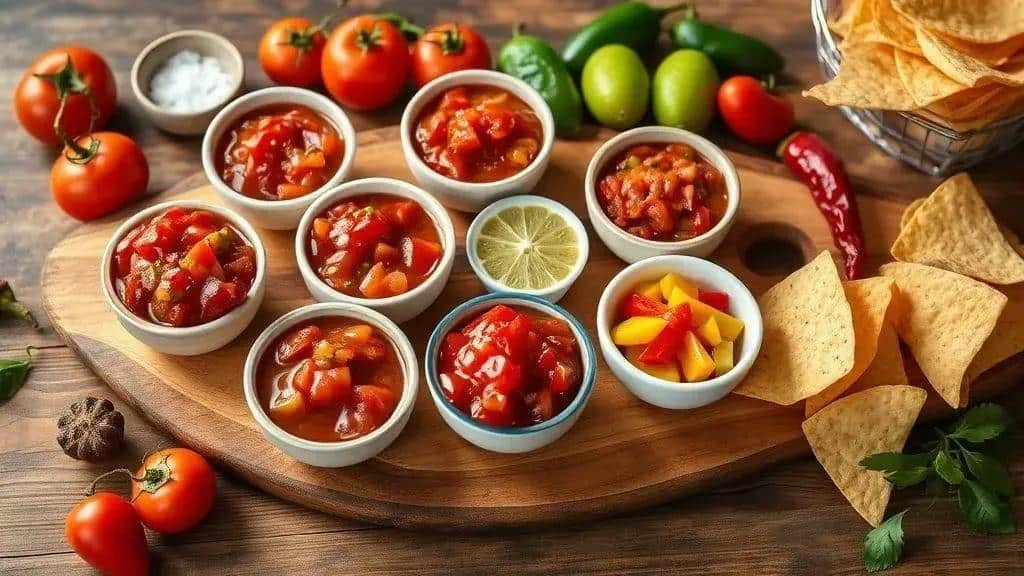
Try these variations to adjust the flavour, heat and texture of your salsa roja while keeping its Texas and Southwestern character.
Popular regional variations
- Classic Texas salsa combines roasted tomatoes, jalapeño, soaked guajillo and fresh coriander for a bold, smoky flavour.
- For a Southwestern chipotle salsa, add chipotle in adobo sauce for deep smokiness and concentrated heat.
- For a creamier version, blend in 1/4 of an avocado per cup of salsa for a velvety texture and a milder flavour.
Substitutes for individual ingredients
- Roma tomatoes (5–6, about 800 g). When tomatoes are out of season, use 2 tins of peeled tomatoes (400 g each).
- Jalapeño or serrano chillies (3–4). Use dedo-de-moça chillies for a fruitier flavour, or roasted red pepper for a salsa with no chilli heat.
- Dried guajillo chillies (2). If you can’t get dried chillies, use 1 tablespoon of smoked paprika.
- Roasted garlic (2 cloves). For convenience, use 1/2 teaspoon of garlic powder.
- Fresh coriander (1/4 cup). Use parsley for a more neutral flavour.
- Juice of 1 lime. For a quick way to add acidity, use 1 tablespoon of cider vinegar instead.
Ways to turn the heat up or down
- For less heat, remove the chilli seeds and white membranes, use just 1 jalapeño or use roasted sweet pepper instead.
- For more heat, add chilli seeds, use an extra serrano or blend in a soaked dried chipotle chilli.
- For a quick adjustment, add 1 teaspoon of sugar or a slice of avocado to make the salsa taste milder.
Ways to vary the texture and presentation
- For a chunky salsa, use short pulses in the blender so that some pieces stay intact.
- For a smooth salsa, blend until no chunks remain. If you prefer an even silkier texture, pass the salsa through a sieve.
- For a silkier grilled salsa, peel off any loose skins after roasting.
Creative flavour combinations and accompaniments
- For a fruity salsa roja, add diced mango or grilled pineapple for a sweet contrast to the chilli heat.
- Finish the salsa with crumbled fresh cotija cheese for a rich, salty flavour.
- Serve in small bowls with corn tortilla chips or grilled tacos, or spoon over smoked meats.
Quick tips for making substitutions
- If you haven’t got an oven, char the tomatoes and chillies in a frying pan.
- If you haven’t got a blender, grind the ingredients in a molcajete or chop them finely by hand for a rustic texture.
- Salsa with avocado doesn’t keep as long, so add the avocado just before serving.
How to adjust the heat
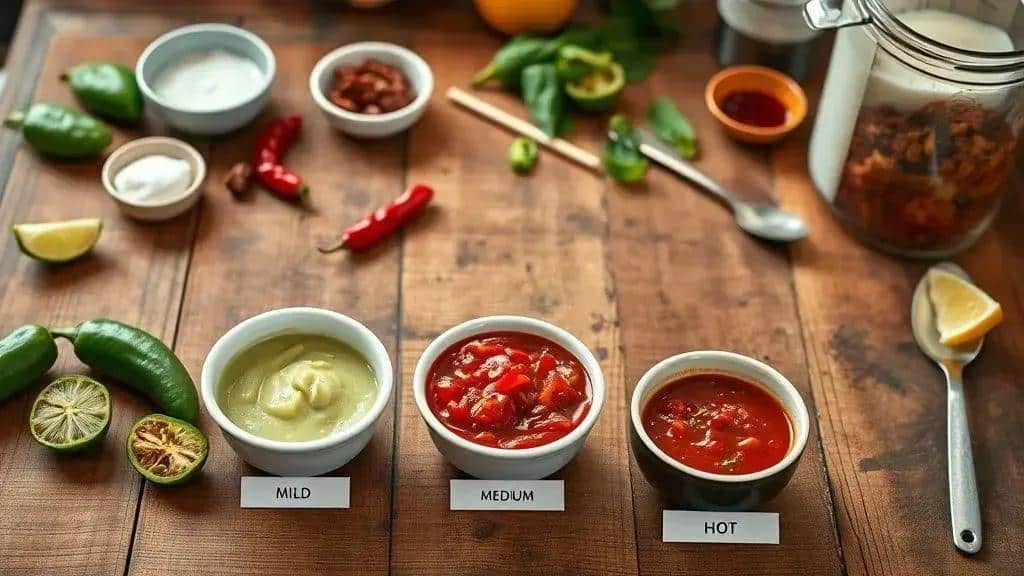
A few simple techniques make it quick and safe to adjust the heat of salsa roja. Make small changes and taste after each one.
Ways to make the salsa milder
- Remove the seeds and white membranes from the chillies before roasting or blending. This is the most effective way to reduce the heat.
- Halve the number of chillies and add more roasted tomato to dilute the heat.
- For a creamier, milder salsa, stir in 1–4 tablespoons of mashed avocado or 1–2 tablespoons of plain yoghurt per cup of salsa.
- Add 1 teaspoon of sugar or honey per cup of salsa to soften the heat without making it too sweet.
- Balance the heat with lime juice, adding 1/2 teaspoon at a time and tasting as you go.
- Add extra roasted tomato, roasted red pepper or a little of the guajillo soaking water to dilute the capsaicin.
- Gently fry the salsa over a low heat for 2–3 minutes to mellow its raw flavour. This can also make the chilli heat feel less intense.
How to make the salsa hotter
- For more heat, leave the seeds and white membranes in the chillies when blending.
- Choose hotter chillies. Swap the jalapeño for a serrano or carefully add 1 small habanero.
- Dried chillies add concentrated flavour. Add 1 soaked guajillo for smokiness or 1 chipotle in adobo sauce for both smokiness and heat.
- Add 1/4 to 1/2 teaspoon of cayenne pepper or hot paprika per cup of salsa for more heat without changing the texture.
- Add hot sauce 1/2 teaspoon at a time until the salsa is as hot as you like.
How much chilli to use and when to taste
- For 800 g of tomatoes (about 1 jugful of salsa), use 1 deseeded jalapeño for mild heat or 2 jalapeños with some of the seeds left in for medium heat. For a hot salsa, use 2 serranos or 1 serrano and 1 jalapeño with the seeds left in.
- To tone down the heat quickly, add 1/4 of an avocado or 1 tablespoon of yoghurt per cup of salsa.
- To turn up the heat quickly, add 1/4 teaspoon of ground chilli per cup of salsa and wait 5 minutes before tasting again.
- Taste with a small, clean, cool spoon. Wait 10–20 seconds for the heat to come through fully before adjusting.
Tips for handling chillies and balancing the heat
- Wear gloves when handling very hot chillies and avoid touching your eyes.
- Make small additions and wait before tasting. The heat from the capsaicin can take time to come through.
- Combine techniques. Removing some of the seeds and adding a little fat or sweetness can give the most balanced flavour.
Smoking and roasting techniques for authentic flavour
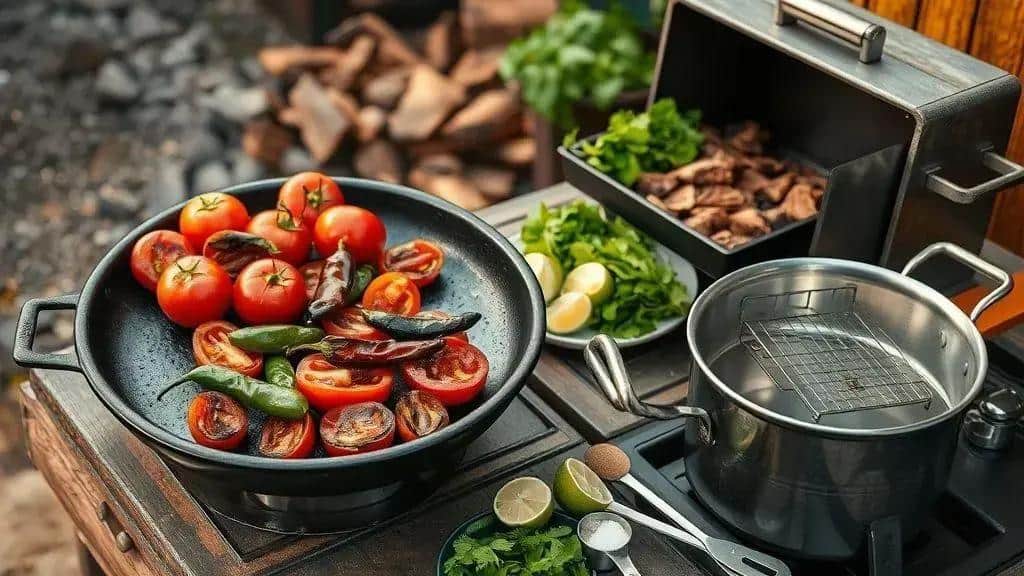
Use these simple smoking and roasting techniques to give salsa roja the distinctive smoky flavour of Texas and the Southwest.
Choosing wood for smoking
Mesquite and hickory produce intense smoke and give the salsa the earthy notes typical of Texas. Fruitwoods such as apple and cherry produce a milder, sweeter smoke that suits the more delicate flavours of the Southwest.
How to toast and char on a comal, in a frying pan or under the grill
- Heat a comal (flat griddle) or cast-iron frying pan over a high heat until it just starts to smoke. Add the tomatoes and chillies in a single layer, turning until the skins blister and blacken in patches.
- Set the oven grill to high (230–260°C). Grill the tomatoes and chillies for 8–12 minutes, turning so they char evenly.
- Take them off the heat as soon as the skins begin to split and blister. A little charring adds flavour, but too much makes the salsa bitter.
- Once cool, remove any loose skins for a smoother texture or leave some on for a more rustic flavour.
How to smoke outdoors and char on the hob
- Outdoors, set up a charcoal barbecue for indirect cooking. Place mesquite, hickory or applewood chips on the embers.
- Use a gas barbecue outdoors and follow the manufacturer’s instructions for using wood chips.
- Follow the manufacturer’s instructions for your smoker. Outdoors, smoke the tomatoes and small chillies at 95–120°C for 20–40 minutes.
- For the quick 5–10-minute method, use a smoker designed for the hob. Follow the manufacturer’s instructions, including where to use it. If you don’t have one, use the dry frying pan method described below.
Soaking and using dried chillies
Soak guajillos and other dried chillies in hot water for 15–20 minutes. Reserve the soaking water to adjust the texture and flavour. For a more intense smoky note, use a little chipotle in adobo sauce.
Timing, temperature and signs to look for
- Allow 8–12 minutes for Roma tomatoes, until the skins split and start to blacken.
- Allow 5–10 minutes for fresh chillies, until the skins blister and blacken in patches.
- Heat soaked dried chillies just until pliable, taking care not to burn them.
- Look for charred skins, a soft centre and a distinct smoky aroma.
How to avoid bitterness and balance the flavour
- Watch the vegetables closely over charcoal or a direct flame. They can burn quickly and turn bitter.
- Balance strong smoky flavours with lime juice or vinegar.
- A drizzle of olive oil or some avocado mellows the salsa and brings the flavours together.
- Taste as you go and adjust the smoking time and choice of wood to suit your taste.
How to char the vegetables quickly on the hob
- Switch on the extractor fan and have a plate ready for the roasted vegetables.
- Heat a cast-iron frying pan over a high heat for 2–3 minutes.
- Arrange the tomatoes and chillies in a single layer and turn them when the skins blister and blacken in patches.
- Quarter the onion and add it to the frying pan along with the garlic. Cook them alongside the tomatoes and chillies. The garlic sweetens as it browns.
- Leave to cool for 5 minutes before handling. Pull off any loose skins if you prefer a smoother texture.
- Put the smoked ingredients in a blender with the coriander, lime juice and salt. Blend until the salsa is as chunky or as smooth as you like.
Safety precautions
- Only use barbecues and hot coals outdoors, away from open doors and windows. In the kitchen, char the vegetables in a cast-iron frying pan with the extractor fan on.
- Use tongs and gloves to avoid direct contact with the chillies and hot embers.
- Keep the flame under control to prevent flare-ups and excessive charring.
Storing salsa safely
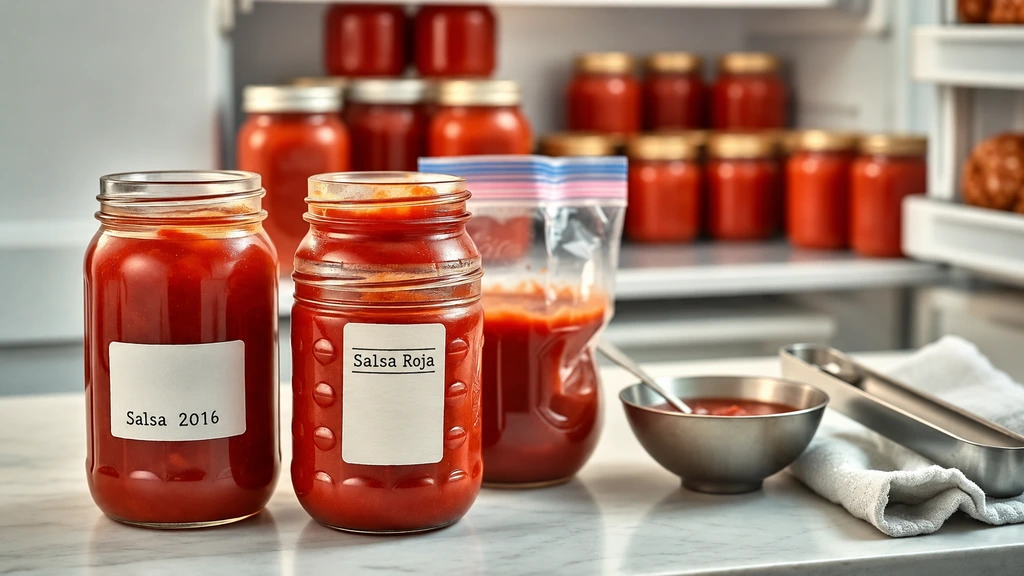
Good hygiene and careful storage help keep salsa roja safe and flavourful. Always label it with the date before putting it away.
Storing salsa in the fridge
- Use clean glass jars with lids or food-safe plastic containers.
- Keep the fridge at 4°C or below.
- Keep the traditional salsa in the fridge at 4°C or below and eat within 3 days. If it contains avocado, it’s best eaten within 24–48 hours.
- Always use a clean spoon to serve the salsa to avoid cross-contamination.
Freezing
- Use freezer bags or freezer-safe containers, leaving 1–2 cm of space for expansion.
- The salsa will keep well for up to 3 months. Write the date on the bag or container.
- Defrost overnight in the fridge and stir before serving.
Safe home preserving
This salsa is for storing in the fridge or freezer. To make a salsa you can store at room temperature, follow a tested preserving recipe that specifies the ingredient proportions, the acid to add and the processing instructions for your altitude.
A quick guide to filling jars for the fridge
- Wash the jars and lids thoroughly, then boil them for 10 minutes to sterilise them. Alternatively, wash them in the dishwasher on a hot cycle.
- While the salsa is still hot, spoon it into the jars, leaving 1 cm of space at the top.
- Divide the salsa between shallow containers and refrigerate within 2 hours of making it. If the room temperature is above 32°C, refrigerate within 1 hour.
- Label the containers with the date you made the salsa and eat it within 3 days.
Good hygiene and signs of spoilage
- Wash your hands and utensils before you start, and avoid handling the salsa with dirty hands.
- Discard the salsa if you notice an unusual sour smell, froth, bubbles, an unexpected colour change or mould.
- In warm weather, fresh salsa should spend no more than 2 hours out of the fridge.
- Divide the salsa between smaller jars so you don’t risk contaminating a large jar by repeatedly dipping into it.
Final storage tips
- Keep a record of the dates and the tested recipes you use so you can repeat what worked.
- For long-term preserving, consult a reliable home-preserving source, such as a food safety agency, for precise instructions.
Serving suggestions and pairings
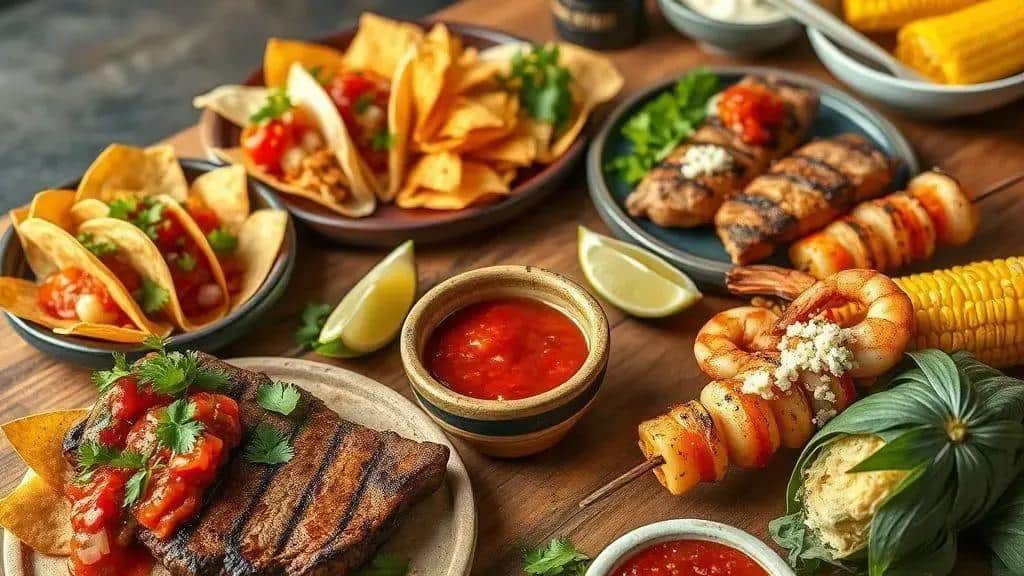
Salsa roja is a versatile accompaniment that brings out the flavour of simple dishes and adds contrast to richer ones. Serve it in small portions on the side and adjust the texture to suit the dish.
Everyday ways to use salsa roja
- As a dip, allow 1 cup of salsa for 4–6 people and serve with tortilla chips or vegetable sticks.
- Add 1–2 tablespoons of salsa per taco so its acidity balances the protein in the filling.
- Spoon 1–2 tablespoons over a grilled pork chop, chicken or ribs just before serving.
- For seafood, mix 2 tablespoons of salsa with olive oil and use it to marinate prawns or dress grilled fish.
- Spoon 2–3 tablespoons over bowls of rice, beans and vegetables for freshness and heat.
- For a quick glaze, mix 3 tablespoons of salsa with 1 tablespoon of honey. Brush over vegetables or chicken wings before grilling.
What to serve with salsa roja
- With red meat, salsa flavoured with mesquite smoke or chipotle stands up to the bold flavour of grilled cuts.
- With poultry or pork, extra lime juice gives the salsa a citrus tang that cuts through the fat and brightens the dish.
- A lighter salsa without guajillo brings out the flavour of prawns and white fish.
- Fresh, salty cheeses such as cotija and feta contrast nicely with the acidity and heat of the salsa.
- Salsa with smoked paprika brings out the flavour of grilled vegetables.
Drinks pairings
- The tartness and salt in a classic margarita complement the freshness of the salsa.
- A light beer such as a pilsner or lager refreshes the palate between spicy mouthfuls.
- For an alcohol-free option, sparkling water with lime or a lightly brewed iced tea helps balance the heat.
Presentation and portion sizes
- For a party, set out small bowls of chunky and smooth salsa near the food and label each flavour.
- Allow 1–2 tablespoons of salsa per serving to bring out the flavours without overpowering the dish.
- Finish with coriander leaves, lime zest or crumbled cheese for a contrast in colour and flavour.
More flavour combinations
- For a sweet and spicy salsa to serve with fish tacos, stir in diced mango or pineapple.
- For a creamy salsa to go with drier dishes, stir in mashed avocado.
- Stir the salsa into quinoa or brown rice for Mexican-inspired grain bowls.
A quick serving tip
Always taste the salsa alongside the dish it will accompany. Before serving, make any small adjustments to the lime juice, salt or sweetness.
Conclusion
Texas and Southwestern-style salsa roja brings smoky flavour and as much heat as you like to tacos, grilled food and snacks. Experiment with roasting, different chillies and textures until you find the balance you like.
Make small changes, taste as you go and note what works so you can make it again. Follow the storage tips to keep the salsa safe and flavourful for longer.
Thanks for reading! Follow us on social media for more recipes and quick tips, and keep an eye on the Mestre das Receitas Blog for news and step-by-step recipes.
Frequently asked questions about Texas and Southwestern salsa roja
What makes Texas and Southwestern-style salsa roja distinctive?
Roasted tomatoes and chillies give this version its smoky notes. It also features dried chillies such as guajillo and has a balance of acidity and heat.
How should I store salsa roja in the fridge or freezer?
Store the salsa in a clean container with a lid at 4°C or below for up to 3 days. If freezing it, pack it in freezer bags and eat it within 3 months for the best flavour and texture. Defrost in the fridge.
What are some quick ways to make the salsa milder?
Remove the seeds and membranes from the chillies. To balance the heat, add extra tomato, 1/4 of an avocado per cup of salsa or a teaspoon of sugar.
Can I use tinned tomatoes instead of fresh Roma tomatoes?
Yes. Use 2 × 400 g tins of peeled tomatoes in place of about 5–6 Roma tomatoes. Adjust the acidity and roast the tomatoes briefly to bring out some of that roasted flavour.
How can I smoke or roast the ingredients safely at home?
Indoors, char the vegetables in a cast-iron frying pan or on a comal with the extractor fan on. If you’re smoking them with wood chips, use the barbecue outdoors and keep the fire under control.
Does salsa with avocado keep as long as the traditional version?
No. Keep salsa made with avocado in the fridge and eat it within 24–48 hours, as it oxidises and loses quality more quickly.