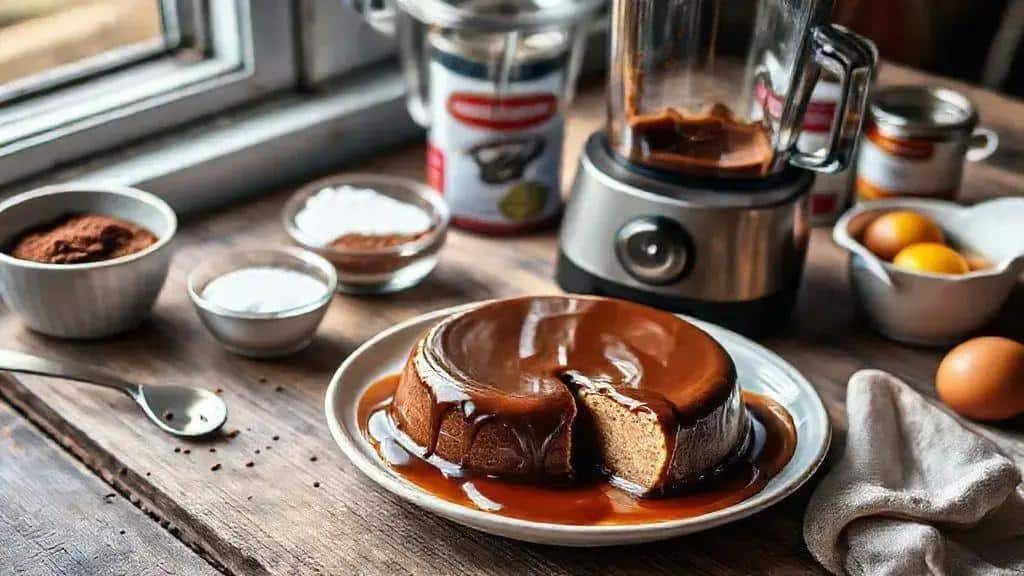

This easy chocolate crème caramel has a smooth, creamy texture. Use a blender to mix the condensed milk, milk, eggs and cocoa. Strain the mixture into a caramel-lined mould, then bake in a water bath or cook in a pressure cooker. Chill for at least four hours.
This chocolate crème caramel is just the thing when you want an elegant dessert that’s quick to prepare. Have you ever tried making a smooth, creamy custard mixture using just a blender? I’ll show you how, with practical tips and variations that really work. Try it today and surprise everyone at the table.
Ingredients for chocolate crème caramel made in a blender
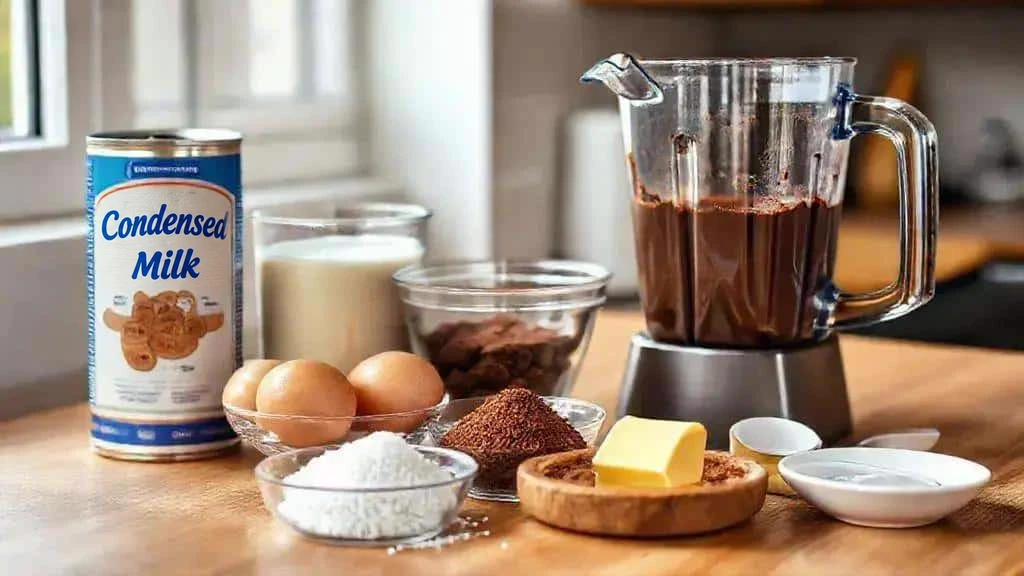
To make this chocolate crème caramel using a blender, gather the following ingredients.
- 1 tin of condensed milk (395 g), preferably full-fat. Use a reduced-fat version if you’d like to cut the calories.
- 1 tin of milk, measured in the empty condensed milk tin. Whole milk gives a creamier result. Almond or oat milk will give a slightly different texture.
- 3 large eggs at room temperature to help the mixture emulsify.
- 6 tablespoons (about 50 g) of 100% cocoa powder, or 150 g of melted semi-sweet dark chocolate
- 1 teaspoon of vanilla essence (optional) to bring out the chocolate flavour.
- 1 pinch of salt to bring out the flavours.
- For the caramel sauce, use 1 cup of sugar (200 g) and 1/4 cup of water. For a quicker option, melt 6 tablespoons of sugar directly in the mould over a low heat.
- A little butter or neutral oil to grease the mould and help the custard turn out easily. Alternatively, use baking release spray.
Quick tips
Use the empty condensed milk tin to measure the milk and keep the proportions right.
Cocoa powder gives a purer chocolate flavour. Melted chocolate makes the custard richer and less bitter. For a lactose-free version, replace both the milk and the condensed milk with plant-based alternatives suitable for cooking.
Room-temperature eggs help prevent bubbles and give the custard a smoother texture.
How to make chocolate crème caramel using a blender, step by step
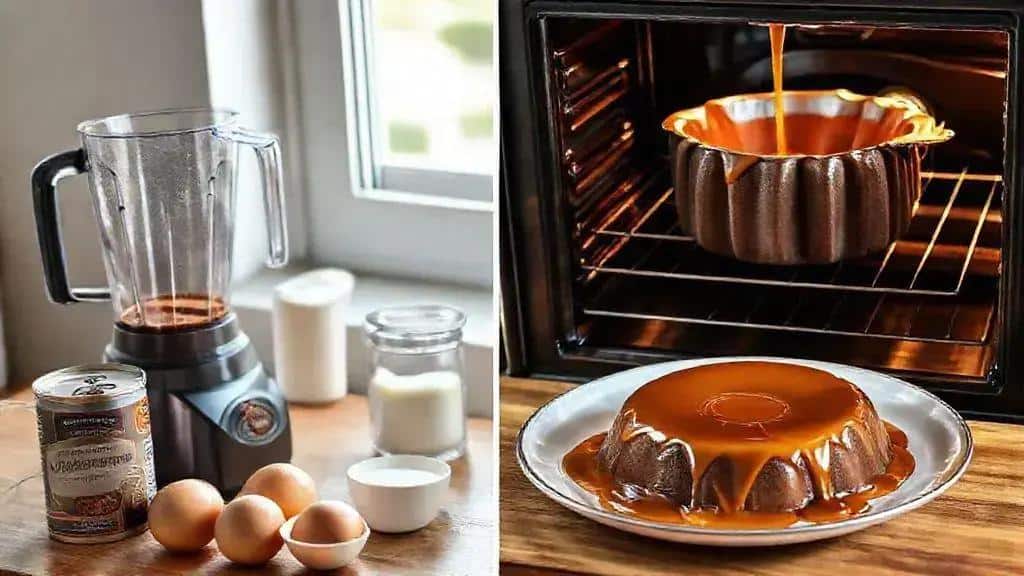
- Put 1 cup (200 g) of sugar and 1/4 cup (60 ml) of water in a medium saucepan over a medium heat. Stir only at the start to help the sugar dissolve. When the caramel turns amber, carefully pour it into the mould and tilt it to coat the base and sides.
- Preheat the oven to 180°C (160°C fan) and position a shelf in the middle.
- Put 1 tin of condensed milk (395 g), 1 tin of milk (measured in the empty condensed milk tin), 3 room-temperature eggs, 6 tablespoons (about 50 g) of cocoa powder, 1 teaspoon of vanilla essence (optional) and 1 pinch of salt in the blender jug. Blend on medium speed for 1 minute until smooth.
- Pour the mixture through a fine sieve to remove bubbles and any lumps of cocoa for a smoother custard.
- Slowly pour the strained mixture over the caramel in the mould.
- Stand the mould in a larger roasting tin. Pour hot water into the tin until it comes halfway up the sides of the mould, taking care to keep splashes out of the custard.
- Loosely cover the mould with foil if you wish. Bake for about 50 to 60 minutes, until the custard is set around the edges and still has a slight wobble in the centre.
- Carefully lift the mould out of the water bath and leave to cool at room temperature. Refrigerate for at least 4 hours, preferably overnight, so the custard sets fully.
- Run a thin knife around the sides to loosen the custard. Warm the base of the mould for a few seconds in a water bath or with a hot cloth, then turn the custard out onto a plate. Give the caramel a few seconds to run over it before serving.
Practical tips for beginners
To reduce bubbles, blend the mixture only as long as needed, then strain it. If any bubbles remain, pop them with a spoon before baking.
Ovens vary, so start checking after 45 minutes. The edges should be set and the centre still slightly soft. It will firm up as it cools.
For the no-oven version, cover the mould with foil and stand it on a trivet in a pressure cooker with water to a depth of 2 finger-widths. Cook for about 20–25 minutes once the cooker reaches pressure, then let the pressure drop naturally before opening.
For a lactose-free version, use plant-based milk and plant-based condensed milk suitable for cooking. For a more intense chocolate flavour, replace some of the cocoa with 100 g of melted semi-sweet dark chocolate.
Keep covered in the fridge for up to 3 days. The custard tends to be even creamier the next day.
How to get a creamy texture and turn the custard out neatly
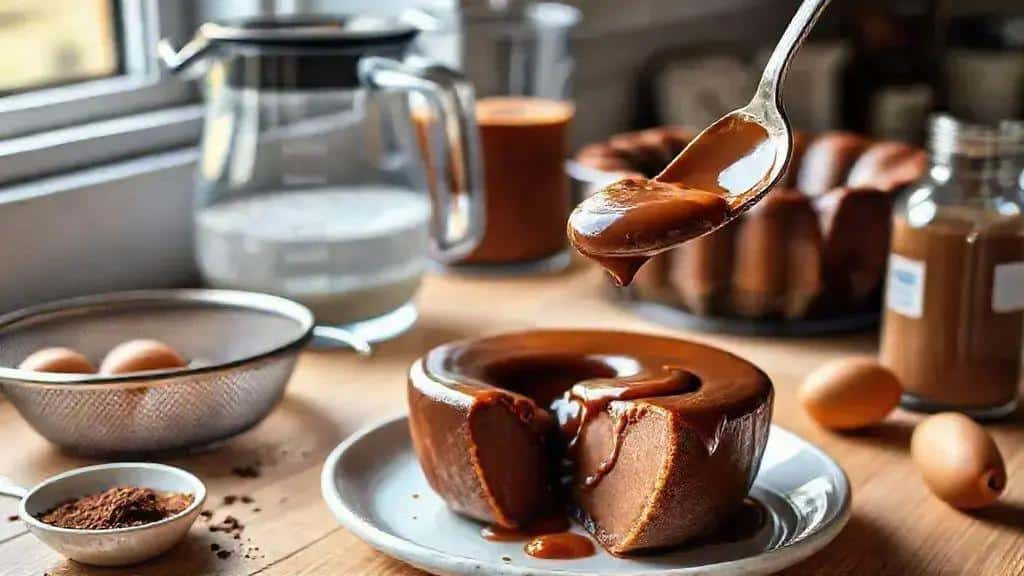
- Take the eggs out of the fridge 20–30 minutes before using them. Bringing them to room temperature helps the mixture emulsify and helps prevent cracks in the custard.
- Blend on medium speed for 40–60 seconds. Overblending draws air into the mixture and creates bubbles that spoil the texture.
- Pass the mixture through a fine sieve before pouring it into the mould. This removes lumps and bubbles for a smooth surface.
- For the water bath, pour hot (not boiling) water into the roasting tin until it comes halfway up the sides of the mould. Take care not to splash any water into the custard.
- Bake at 160–180°C as directed, using the lower temperature if your oven tends to run hot. The custard should set around the edges and retain a slight wobble in the centre.
How to tell when the custard is ready
Gently touch the edge of the custard. If it feels set and the centre wobbles a little, it’s ready. It will firm up as it cools. Baking it until it’s firm all the way through will dry it out.
How to turn the custard out in one piece
- Gently run a thin knife between the custard and the mould to loosen the edges.
- Dip the base of the mould in hot water for 5–10 seconds or warm it with a hot cloth to loosen the caramel.
- Place the serving plate over the mould and turn them over together in one firm movement. Wait a few seconds before lifting off the mould to give the caramel time to run out.
How to prevent bubbles and cracks
Blend briefly and strain the mixture to reduce bubbles. Before baking, pop any surface bubbles with the tip of a knife. To prevent cracks, keep the oven temperature steady and avoid opening the door frequently during baking.
Storing and serving
Chill for at least 4 hours before turning out for a creamy texture. Serve chilled in neat slices. Use a hot spoon to cut clean portions that show off the glossy caramel.
Chocolate crème caramel variations: no-oven, coffee and lactose-free
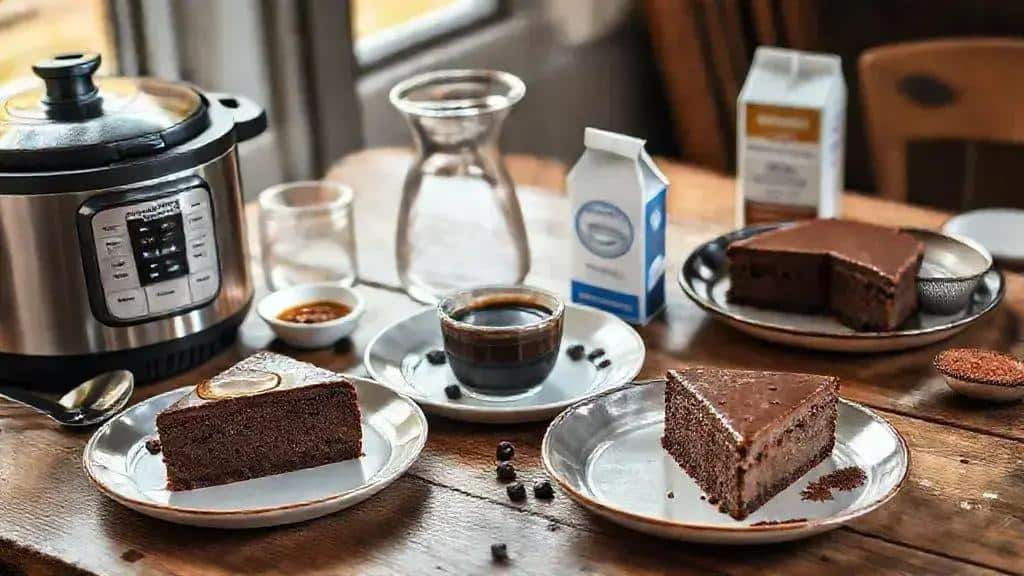
No-oven version (pressure cooker)
- 1 tin of condensed milk (395 g)
- 1 tin of milk (measured in the empty condensed milk tin)
- 3 large eggs
- 6 tablespoons (about 50 g) of cocoa powder
- 1 pinch of salt
- 1 cup (200 g) of sugar and 1/4 cup (60 ml) of water for the caramel
- Heat the sugar and water in a small saucepan until the caramel turns amber. Carefully pour it into the mould to coat the base.
- Blend the condensed milk, milk, eggs, cocoa and salt until smooth.
- Pass the mixture through a fine sieve to remove bubbles and lumps.
- Cover the mould tightly with foil to keep the water out.
- Place a rack or a folded cloth in the base of the pressure cooker. Add water to a depth of about 2 finger-widths and stand the mould on the rack or cloth.
- Close the pressure cooker and place over a medium heat. Once it reaches pressure, cook for 20–25 minutes. Turn off the heat and let the pressure drop naturally.
- Carefully lift out the mould, leave to cool at room temperature, then refrigerate for at least 4 hours.
- Run a knife around the sides and briefly dip the base of the mould in hot water to loosen the caramel before turning out.
Coffee version for a more intense flavour
- 1 tin of condensed milk (395 g)
- 1 tin of milk (measured in the empty condensed milk tin)
- 3 large eggs
- 5 tablespoons of cocoa powder (a little less to balance the coffee flavour)
- 1 to 2 tablespoons of instant coffee dissolved in 2 tablespoons of hot water, or 30–40 ml of espresso
- 1 pinch of salt
- For the caramel, 1 cup of sugar and 1/4 cup of water
- Make the caramel as usual and grease the mould.
- To make the strong coffee, dissolve the instant coffee in hot water or make a short espresso.
- Put the condensed milk, milk, eggs, cocoa and cooled coffee in the blender. Blend until smooth.
- Strain the mixture for a smooth surface.
- Bake in a water bath at 160–180°C for 50–60 minutes, or use a pressure cooker and follow the timings for the no-oven version.
- Chill for at least 4 hours before turning out to allow the custard to set and the flavours to come together.
Lactose-free version with plant-based alternatives
- 1 tin of plant-based condensed milk suitable for cooking, such as condensed coconut milk.
- 1 tin of plant-based milk suitable for cooking (oat, almond or soya), measured in the empty condensed milk tin
- 3 large eggs
- 6 tablespoons of cocoa powder
- 1 teaspoon of vanilla essence (optional)
- For the caramel, 1 cup of sugar and 1/4 cup of water, or ready-made lactose-free caramel
- Coat the mould with caramel as usual or use ready-made lactose-free caramel.
- Put the plant-based condensed milk, plant-based milk, eggs, cocoa and vanilla in the blender and blend until smooth.
- If the mixture is too thin, add 1 extra tablespoon of cocoa or reduce the amount of plant-based milk by 1/4 of a tin.
- Pass the mixture through a fine sieve for a smooth texture.
- Bake in a water bath for 50–60 minutes or, if you prefer, use a pressure cooker and cook for 20–25 minutes once it reaches pressure.
- Chill for at least 4 hours before turning out for a creamy texture.
Practical tips for adapting recipes
Keep the basic proportions of condensed milk, milk and eggs the same to preserve the texture. When using plant-based alternatives, adjust the amount of cocoa or chocolate to balance the flavour and consistency.
Check that the edges are set and the centre still has a slight wobble. The custard will firm up as it cools.
Test small changes on a smaller batch before adjusting the whole recipe, especially when using plant-based milk or strong coffee.
Getting to know the main ingredients and how to use them
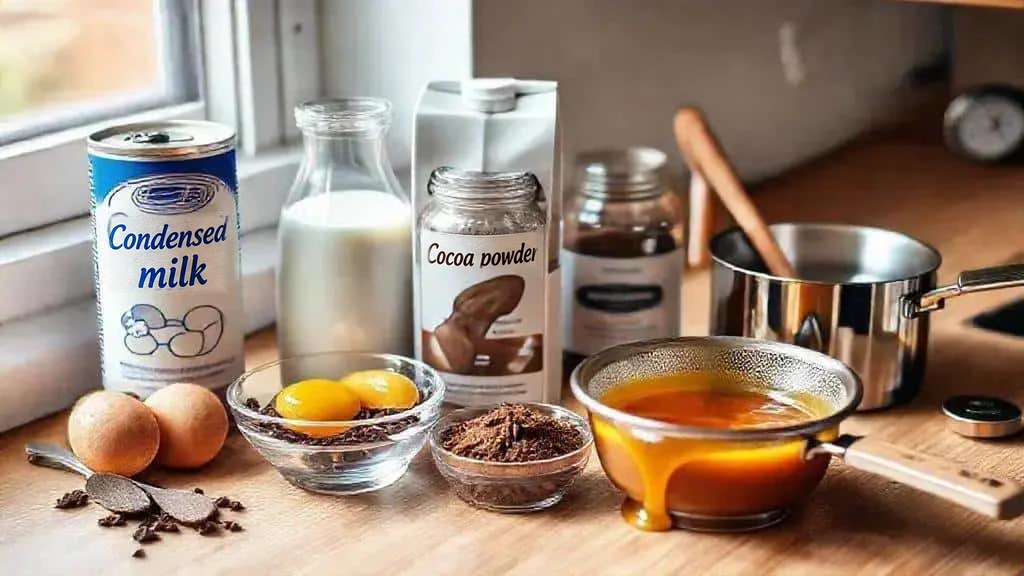
A closer look at the ingredients
Condensed milk was developed to preserve milk without refrigeration. Its sweetness and creaminess make it the base of this custard. Plant-based versions aim to give vegan recipes a similar texture, though the final set can vary.
100% cocoa powder gives a more intense chocolate flavour with less sugar. Melted chocolate makes the custard more velvety and less bitter. Choose whichever you prefer.
Eggs bind the mixture and determine its texture. The proportion of eggs affects whether the custard is firmer or creamier.
The flavour of caramel depends on how far you cook the sugar. A pale amber caramel tastes sweeter, while a dark amber caramel has a slight bitterness that balances the chocolate.
Choosing and handling the ingredients
- Take the eggs out of the fridge 20–30 minutes before using them. Room-temperature eggs help the mixture emulsify and reduce the number of air bubbles.
- Choose cocoa powder without additives. If you’re using chocolate, melt it in a bowl over a pan of gently simmering water to keep it from burning.
- Whole milk gives a creamier result. Oat, almond and soya milk also work, though you may need a little more or less cocoa to balance the flavour.
- Check the label when choosing plant-based condensed milk. Some brands have a thinner consistency, which affects how firmly the custard sets.
- To keep the caramel free of crystals, avoid stirring once the sugar starts to melt. If necessary, brush down the sides of the pan with a damp pastry brush.
- For a gentle water bath, use hot water below boiling point. This avoids a sudden change in temperature and helps prevent cracks in the custard.
- Use a fine sieve to remove lumps and bubbles from the mixture for a smooth surface.
- Use a moderate oven temperature and bake until the edges are set and the centre has a slight wobble. It will firm up as it cools.
- Once cool, cover and keep in the fridge for up to 3 days. Avoid freezing, as it can change the texture.
Quick tips that make a difference
Use the empty condensed milk tin to measure the milk and keep the proportions right. Blend briefly and strain to reduce air bubbles. Before turning out, dip the base of the mould in hot water for a few seconds to loosen the caramel and keep the custard in one piece.
Conclusion
With these instructions, you’re ready to make a creamy chocolate crème caramel with a glossy caramel sauce using your blender. Follow the tips on texture, straining the mixture and baking in a water bath for a smoother custard and more consistent results.
Keep in the fridge for up to 3 days. Briefly warm the base of the mould, then carefully turn the crème caramel out. Small changes to the ingredients affect how firmly the custard sets, so experiment to find the texture you like.
Thanks for following the recipe! Follow us on social media for more easy, practical tips, and be sure to follow the Mestre das Receitas blog for updates and delicious recipes.
If you enjoyed the recipe, share it, tell us about your version in the comments and tag us in your photos. We love seeing what you make!
Frequently asked questions about making chocolate crème caramel in a blender
Can I use plant-based milk instead of whole milk in the custard?
Yes. Use the same amount of oat, almond or soya milk. If the mixture is too thin, adjust the amount of cocoa or chocolate.
How do I avoid bubbles and get a smooth surface?
Blend only as long as needed, pass the mixture through a fine sieve and pop any bubbles with a spoon before baking.
How long should I bake the custard, and how do I know when it’s ready?
Bake in a water bath at 160–180°C for 50–60 minutes. The edges should be set and the centre should still have a slight wobble. It will firm up as it cools.
Can I make the custard without an oven?
Yes. Cover the mould with foil and stand it on a trivet in a pressure cooker with water in the base. Cook for 20–25 minutes once the cooker reaches pressure. Let the pressure drop naturally before opening.
How do I stop the caramel from crystallising?
Avoid stirring once the sugar starts to melt. Use a medium heat and brush down the sides of the pan with a damp pastry brush to prevent crystals from forming. When the caramel turns amber, carefully pour it into the mould.