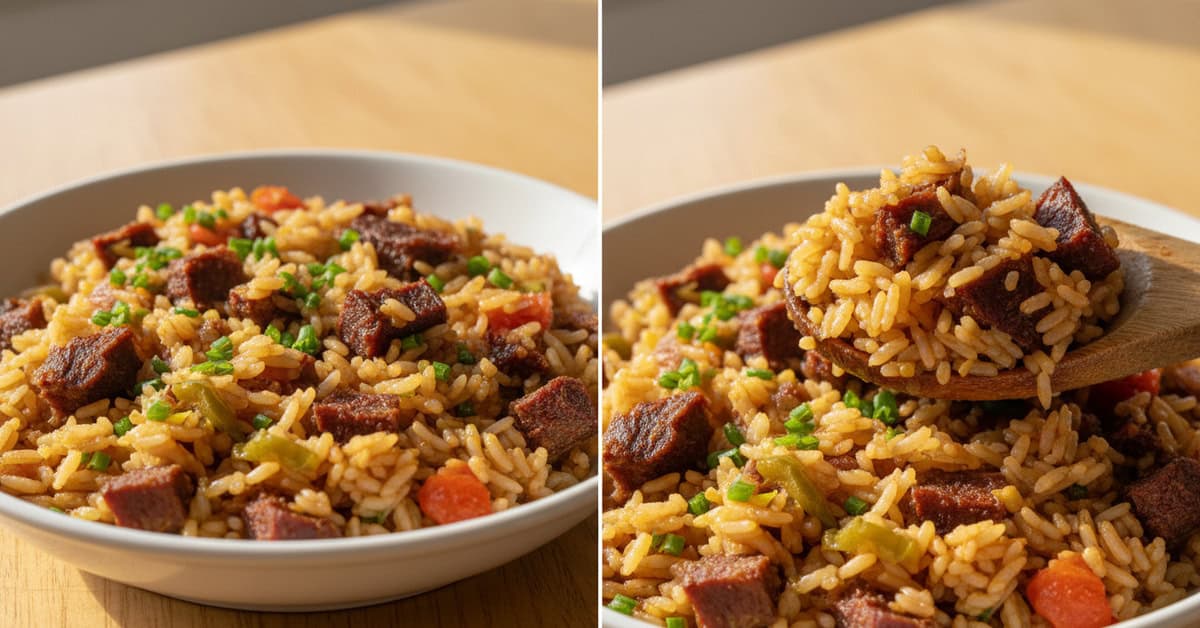

Arroz carreteiro is a traditional one-pot dish from southern Brazil made with rice, charque (salt-cured, dried beef), bacon and sausage. Carne de sol (lightly salt-cured beef) can be used in place of charque. Soak the beef to draw out excess salt, fry the bacon and sausage to release their fat, then cook the rice using a 1:2 ratio of rice to liquid for fluffy, separate grains and a rich flavour.
Arroz carreteiro is a southern Brazilian classic that brings hearty flavours and the comfort of home cooking together in one pot. Want to discover the secrets, ingredients and variations that really work in the kitchen? I’ll show you tried-and-tested techniques that are easy to put into practice.
Ingredients for traditional arroz carreteiro

For 4 portions of authentic, traditional arroz carreteiro, you’ll need the following ingredients.
- 2 cups white rice, rinsed and drained.
- 300 g charque (salt-cured, dried beef), soaked to remove excess salt, cooked and shredded. You can also use carne de sol or freshly prepared Brazilian dried beef.
- 150 g bacon, chopped.
- 150 g Brazilian calabresa sausage, thinly sliced into rounds.
- 1 medium onion, chopped.
- 3 garlic cloves, chopped or crushed.
- 1 medium tomato, deseeded and chopped (optional).
- 1/2 red pepper, chopped (optional, for colour and sweetness).
- 4 cups hot water or beef stock, for cooking the rice.
- 2 tablespoons oil or lard, for frying.
- Salt to taste. Add sparingly if the charque is still salty.
- Black pepper to taste, freshly ground if possible.
- Chopped parsley and spring onions, to finish.
Recipe notes and quick tips
To remove excess salt, soak the charque (Brazilian salt-cured dried beef) in cold water in the fridge for 4 to 8 hours, changing the water 2 or 3 times. Cook until tender before shredding.
If you can’t find charque, use carne de sol or cooked beef seasoned with a little salt. For a less salty dish, leave out the bacon and adjust the seasoning.
These quantities make about 4 portions. To serve more people, increase the rice and liquid proportionally, keeping to 1 part rice to 2 parts liquid.
How to make arroz carreteiro step by step

- Keep the charque in cold water in the fridge for 4 to 8 hours, changing the water 2 or 3 times. Then cook for 20 to 30 minutes until tender and shred the meat.
- Rinse and drain 2 cups of rice. Chop 1 onion, 3 garlic cloves, 1 tomato and 1/2 pepper. Measure out 4 cups of hot water or beef stock.
- Heat 2 tablespoons of oil or lard in a large pan. Fry 150 g of bacon until golden, then add 150 g of sliced sausage and brown it too.
- Add the chopped onion and fry gently until translucent. Add the garlic and cook for 1 to 2 minutes until fragrant.
- Add the shredded charque and chopped tomato to the pan. Fry gently for 3 to 4 minutes to bring the flavours together.
- Add the rinsed rice and stir for 1 to 2 minutes to coat the grains in the fat and seasonings.
- Pour in 4 cups of hot water or stock. Taste carefully and adjust the salt, bearing in mind that the charque may already be salty.
- Once the liquid comes to the boil, turn the heat down low, cover and cook for 15 to 18 minutes until the liquid has been absorbed. Avoid stirring too much.
- Turn off the heat and leave the rice to stand, covered, for 5 minutes. Fluff with a fork, add the chopped parsley and spring onions, then adjust the black pepper to taste.
Essential tips
- For fluffy grains, use 1 part rice to 2 parts liquid.
- Adjust the salt at the end. Soaking the beef thoroughly helps keep the dish from becoming too salty.
- Avoid stirring the rice as it cooks so the grains don’t turn mushy.
- If you’re short of time, use rinsed rice and charque that’s already cooked. Reduce the cooking time by 3 to 4 minutes.
Tips and techniques for fluffy, flavoursome rice

Rinse the rice under running water until the water runs almost clear. This washes away excess starch and helps keep the grains separate.
Frying and browning
Gently fry the onion and garlic in oil or lard until translucent. Brown the bacon and sausage before adding the rice. Stir the rice for 1–2 minutes to coat each grain in the fat and seasonings.
Rice-to-liquid ratio and cooking temperature
Use 1 cup of rice to 2 cups of liquid. Add hot water or stock and bring to the boil over a medium heat. As soon as it boils, turn the heat down low and cover.
Cooking and resting the rice
- After adding the liquid, bring it to the boil over a medium-high heat, keeping an eye on the pan.
- Once it boils, turn the heat down low and cook for 15–18 minutes without stirring.
- Turn off the heat and leave the lid on for 5–10 minutes so the rice finishes cooking in the steam.
- To finish, gently lift the grains from the bottom of the pan with a fork to keep them light and separate.
Practical tips
- For a richer flavour, replace some of the water with hot beef stock.
- Taste the cooking liquid to check how salty it is before cooking the rice, especially if you’re using charque that’s been soaked to remove excess salt.
- Choose a heavy-based pan to distribute the heat evenly.
- Leave the rice undisturbed as it cooks. This limits the amount of starch the grains release and helps stop the rice turning stodgy.
Common problems and how to fix them
- If your rice turns out stodgy, rinse it more thoroughly next time, use a little less liquid and avoid stirring as it cooks.
- If the grains on top are still undercooked, extend the resting time to 7–10 minutes, keeping the lid on.
- If the rice catches on the bottom, use a lower heat and a heavier-based pan. Wait until serving before scraping the bottom.
Meat, vegetable and vegetarian versions of arroz carreteiro

Try these three variations on arroz carreteiro for different tastes and occasions, each with straightforward instructions and easy substitutions.
Meat version
Ingredients for 4 portions
- 2 cups white rice, rinsed and drained.
- 300 g charque, soaked to remove excess salt and shredded, or carne de sol soaked to remove excess salt.
- 150 g bacon, chopped.
- 150 g calabresa sausage, sliced into rounds.
- 1 medium onion, chopped.
- 3 garlic cloves, chopped.
- 1 medium tomato, deseeded and chopped (optional).
- 4 cups beef stock or hot water.
- 2 tablespoons oil or lard.
- Parsley and spring onions, to finish.
Method
- Soak the charque in the fridge for 4–8 hours to remove excess salt, changing the water during the soak. Then cook until tender and shred the meat.
- Heat the oil and fry the bacon until golden. Add the sausage and brown it too.
- Add the onion and garlic and fry gently until translucent. Stir in the tomato and shredded charque and fry for 3–4 minutes.
- Add the rinsed rice and stir for 1–2 minutes to coat the grains.
- Pour in the hot stock, adjust the salt carefully and bring to the boil.
- Turn the heat down low, cover and cook for 15–18 minutes. Turn off the heat and leave to stand for 5 minutes.
- Fluff the rice with a fork and scatter the parsley and spring onions over the top.
Vegetable version
Ingredients for 4 portions
- 2 cups white rice.
- 100 g carrot, finely diced.
- 100 g peas (frozen are fine).
- 100 g sweetcorn (drained tinned sweetcorn is fine).
- 1/2 red pepper, chopped.
- 1 small courgette, diced.
- 1 medium onion and 3 garlic cloves, chopped.
- 4 cups hot vegetable stock, in place of beef stock.
- 2 tablespoons oil and salt to taste.
Method
- Heat the oil and fry the onion and garlic until soft and golden.
- Add the carrot and red pepper and fry gently for 3–4 minutes.
- Add the courgette, peas and sweetcorn. Fry briefly so the vegetables keep their bite.
- Add the rinsed rice and stir for 1 minute to coat it in the seasonings.
- Pour in the hot stock, taste and adjust the salt.
- Cover and cook over a low heat for 15–18 minutes. Turn off the heat and leave to stand for 5 minutes before fluffing with a fork.
Add sautéed mushrooms for a deeper savoury flavour. If you use quinoa or brown rice instead of white rice, adjust the cooking time and the ratio of grain to liquid.
Vegetarian version
Ingredients for 4 portions
- 2 cups white rice.
- 200–300 g smoked tofu or tempeh, diced. Alternatively, use shiitake or portobello mushrooms.
- 1 carrot, diced.
- 1/2 cup peas, frozen or fresh.
- 1 tomato, chopped.
- 1 onion and 3 garlic cloves, chopped.
- 4 cups hot vegetable stock.
- 2 tablespoons vegetable oil, plus salt and pepper to taste.
Method
- Heat the oil in a non-stick frying pan. Sear the tofu or tempeh cubes until golden, then set aside.
- In the pan you’ll use for the rice, gently fry the onion and garlic until translucent.
- Add the carrot and tomato, fry gently for 3 minutes, then stir in the peas.
- Add the rice and stir for 1–2 minutes.
- Pour in the hot stock, add the browned tofu and adjust the salt and pepper.
- Cover and cook over a low heat for 15–18 minutes. Leave to stand for 5 minutes, then fluff with a fork.
For a smokier flavour, grill the tofu briefly first. For extra protein, add cooked chickpeas.
Quick suggestions
- To adjust the number of portions, scale the ingredients up or down, keeping to 1 part rice to 2 parts liquid.
- For a version with both meat and vegetables, cook them together with the rice.
- Try ground cumin or smoked paprika to vary the seasoning.
The story of arroz carreteiro in southern Brazil

Arroz carreteiro began as a practical meal for wagon drivers in southern Brazil, who cooked it in a single pot on long journeys through the region’s ranchlands.
Origins and historical background
In the XIX and early XX centuries, the lack of refrigeration led cooks to use charque and carne-seca, both forms of salt-cured, dried beef. They were easy to transport and kept well, so they became the basis of the dish.
A closer look at the ingredients
- Charque gets its concentrated flavour from salting and drying. Today, cooks soak it to remove excess salt before use.
- Bacon and sausage provide fat and aroma. Modern alternatives include chicken bacon and meat-free options.
- Rice was chosen because it was readily available and quick to cook. The traditional ratio of rice to liquid is 1:2.
Traditions and customs
Arroz carreteiro is a dish for sharing. At rural gatherings, barbecues and festivals celebrating gaucho traditions, it’s served from large iron pots so a whole crowd can eat at once.
Notes on cooking and flavour
- Originally, cooks made the dish over a fire built on the ground or on a wood-burning stove, which gave it a smoky aroma.
- In some regions, cooks add chimichurri or pepper for extra flavour.
- Some regional versions combine several meats, while others make the most of local vegetables.
The place of arroz carreteiro in Brazilian culture today
Today you’ll find the dish in traditional restaurants, at markets and on contemporary menus. Home cooks keep older techniques alive by using iron pots and giving the rice time to rest.
Tips for using charque and other traditional ingredients

Charque needs a little care. Soak it thoroughly and cook it before adding it to the dish so its flavour comes through without making the rice too salty.
How to soak and prepare charque
- Put the charque in a container, cover with cold drinking water and refrigerate.
- Keep the charque in the fridge for 4 to 8 hours, replacing the water with fresh cold water every 2–3 hours.
- Plan ahead so the meat stays in the fridge for the entire soak. Follow the instructions on the packet before cooking the meat.
- Cook in a pressure cooker for 20–30 minutes until tender, then shred with a fork.
Substitutions and ratios
- Carne de sol soaked to remove excess salt can be used in the same way as charque.
- You can substitute cooked fresh beef in a 1:1 ratio if you adjust the salt.
- For a less salty dish, leave out the bacon or use less of it, and use smoked sausage sparingly.
Quantities for 4 portions
- 300 g charque, soaked to remove excess salt, or 300 g carne de sol.
- 150 g chopped bacon adds fat and flavour. For less fat, you can use chicken bacon.
- 150 g calabresa sausage, sliced into rounds.
- 2 cups white rice, using a 1:2 ratio of rice to liquid.
Getting the seasoning right
- Taste the stock before cooking the rice, but wait until the end to adjust the salt.
- For a deeper flavour, use hot beef stock in place of plain water.
- Reserve the fat from the bacon and sausage and use it to fry the rice. It adds flavour without the need for extra salt.
Storage and using up leftovers
- Refrigerate cooked charque for up to 3 days or freeze it in portions for up to 3 months.
- Keep cooked arroz carreteiro in the fridge for up to 2 days. Reheat with a little water to loosen the grains.
- Use leftover charque as a filling, bake it into a savoury pie or tuck it into Brazilian fried pastries.
Quick kitchen tips
- Use lard or vegetable oil for frying. Lard gives the dish its traditional aroma.
- A heavy-based or cast-iron pan distributes the heat more evenly and helps prevent the rice from burning.
- Leave the rice undisturbed as it cooks to prevent it turning stodgy. Fluff it only at the end.
Final thoughts
Arroz carreteiro shows how a simple dish can come to embody the flavours and traditions of southern Brazil. With the right ingredients and a few simple techniques, the rice turns out fluffy and full of flavour.
Thanks for following along! Try the variations, share photos of your dish and tell us in the comments how it turned out. If you have any questions, come back and look through the steps again.
Follow us on social media for more recipes and quick tips, and be sure to visit Mestre das Receitas blog to discover more traditional and modern recipes. Until next time, enjoy your meal!
Frequently asked questions about arroz carreteiro
What’s the best way to remove excess salt from charque?
Soak the meat in cold drinking water in the fridge for 4 to 8 hours, changing the water every 2–3 hours. Then cook until tender and shred the meat.
Can I use another meat instead of charque?
Yes. Use carne de sol that’s been soaked to remove excess salt, cooked beef or even sausage and bacon. Adjust the salt as needed.
How do I get fluffy rice with separate grains?
Rinse the rice until the water runs almost clear. Use 1 part rice to 2 parts liquid and add the stock while it’s hot. Leave the rice undisturbed as it cooks, then let it stand, covered, for 5–10 minutes.
How many portions does this make, and how should I store leftovers?
The recipe makes about 4 portions. Store leftovers in the fridge for up to 2 days or in the freezer for up to 3 months. Reheat with a little water to loosen the grains.
Is there a vegetarian version of arroz carreteiro?
Yes. Replace the meat with smoked tofu, tempeh or shiitake mushrooms, use vegetable stock and add chickpeas for extra protein.