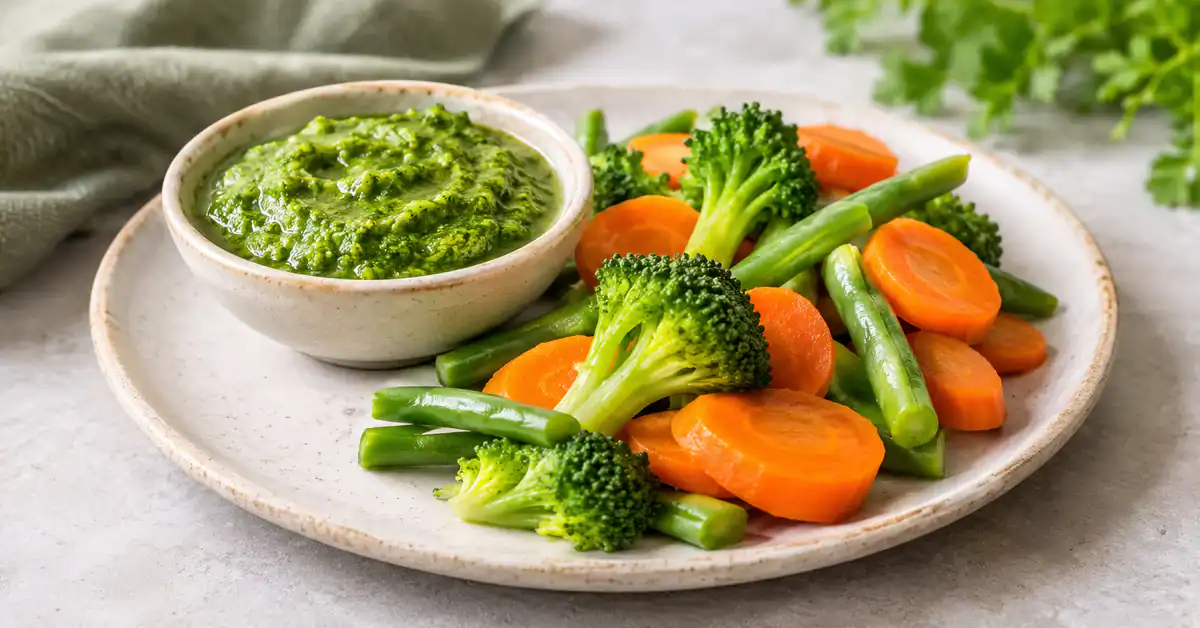

Blitz carrot tops with walnuts, Parmesan, garlic, olive oil and lemon to make a pesto as chunky or smooth as you like. Spoon over roasted or cooked vegetables, or serve as a dip for raw vegetable sticks.
Fresh-tasting carrot top pesto is a homemade sauce with a texture you can adjust to complement vegetables. Learn how to make it as you like it and serve alongside vegetables or spoon over the finished dish.
Ingredients for carrot top pesto
This makes about 1 cup of pesto. Pick out the leaves and finest stems. Thick stalks can make the sauce fibrous.
- 2 tightly packed cups carrot top leaves, using a 240 ml cup
- ¼ cup (30 g) walnuts
- 30 g finely grated Parmesan
- 1 small garlic clove, peeled
- ⅓ cup (80 ml) olive oil
- 1 tablespoon (15 ml) lemon juice
- 1/4 teaspoon salt
- Black pepper to taste (optional)
Making the pesto step by step
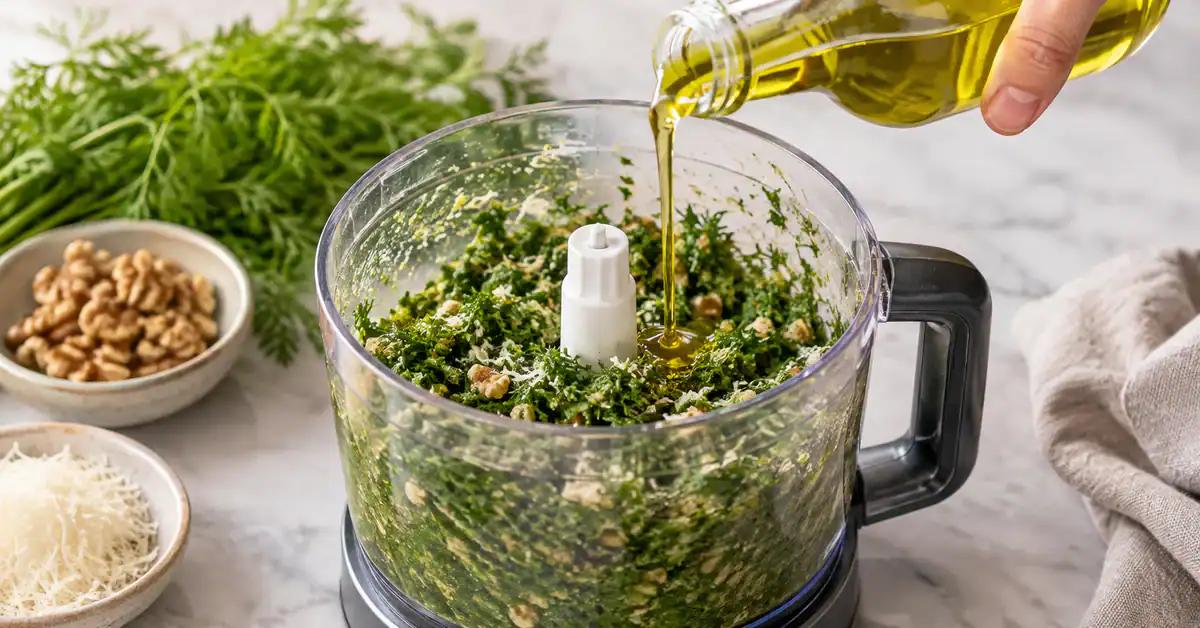
- Pick off the leaves and finer stems, discarding the thick stalks. Wash and dry thoroughly, since wet leaves can make the pesto watery. The next section explains how.
- Put the 30 g walnuts and the small peeled garlic clove in a food processor. Pulse into small pieces, stopping before the walnuts form a paste.
- Add the 2 cups of carrot top leaves and 30 g grated Parmesan. Pulse a few times, stopping to scrape the sides with a spatula, until the leaves are finely chopped.
- With the motor running or pulsing, gradually pour in the ⅓ cup olive oil. Add the tablespoon of lemon juice and ¼ teaspoon salt. Pulse just until evenly combined, leaving some texture.
- Taste and add black pepper if you wish. Transfer to a bowl or jar and serve with vegetables.
Wash and dry the carrot tops thoroughly
Once sorted, rinse the leaves and fine stems under running water, gently opening the leaves to remove soil. Discard coarse stalks to avoid a fibrous pesto.
Drain and dry with a salad spinner or press gently between clean tea towels without bruising the leaves. Trapped water can thin the sauce, so check the folds before putting the leaves into the processor.
Adjusting the texture
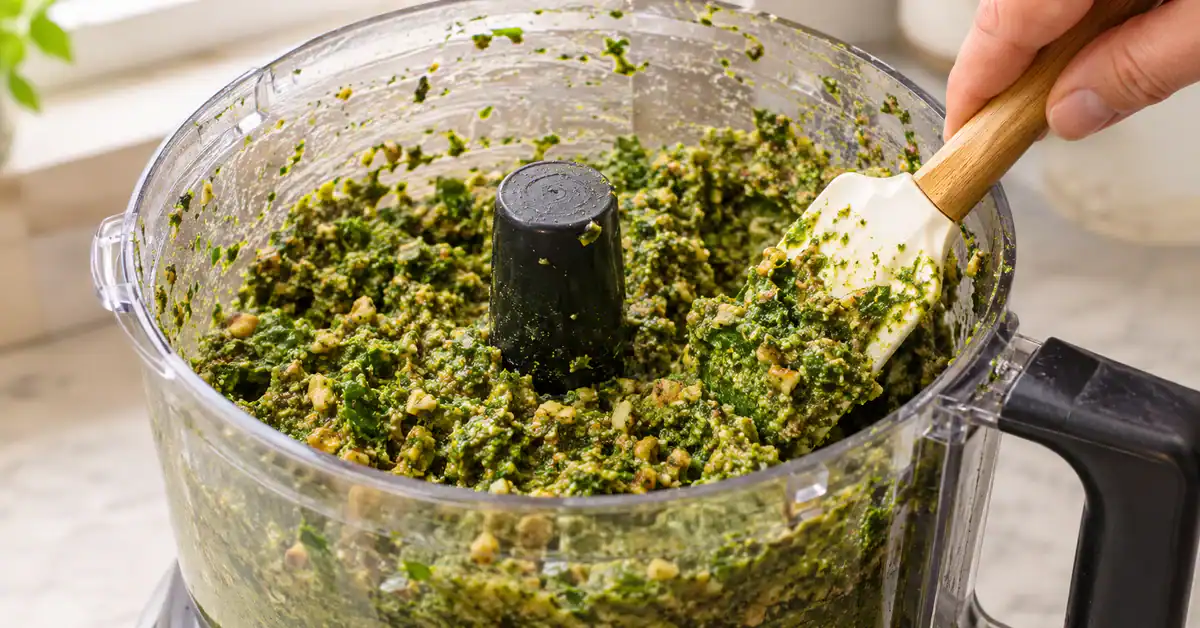
The texture depends mainly on processing time. For a rustic pesto with visible walnut and leaf pieces, pulse just until finely chopped. For a smoother sauce, process for a few seconds longer, scraping the sides with a spatula to incorporate anything stuck there.
Add the full quantity of olive oil gradually to help the sauce blend evenly. Use short bursts so the pesto does not heat up. If it seems thick, stop, scrape down the sides and pulse for a few more seconds before deciding whether to blend further.
Serving with vegetables
Spoon the pesto over cooked vegetables, preferably after taking them off the heat. Residual heat helps it spread without cooking it further. Toss gently or add a spoonful to each portion.
- Roast vegetables such as carrots, courgettes, cauliflower and potatoes go well with pesto added at the end, when tender and golden.
- Spoon pesto over steamed broccoli, green beans or potatoes while still hot, just before serving.
- For raw vegetables, cut cucumber, carrots and peppers into sticks and use the pesto as a dip.
Start with a little and add more to suit the vegetables. The recipe makes about 1 cup, so take the rest to the table for everyone to help themselves.
Add the pesto just before serving
To preserve its flavour and texture, add the pesto to cooked vegetables off the heat. For raw vegetables, serve the sauce on the table for dipping.
Questions about pesto and vegetables
Do I need to remove all the stems?
Remove the thick stalks and use the leaves with their finest stems. Thick stalks can make the pesto fibrous.
Should I heat the pesto with the vegetables?
There is no need. Take the vegetables off the heat before adding the sauce. The residual heat helps the pesto spread without overcooking it.
How can I make the pesto smoother?
Process for a few seconds longer and scrape the sides with a spatula. Pause between bursts to stop the motor warming the sauce.
My pesto is thick. Should I add more oil?
Before adding anything, scrape down the sides and pulse for a few seconds more. Add the oil gradually up to the stated ⅓ cup.