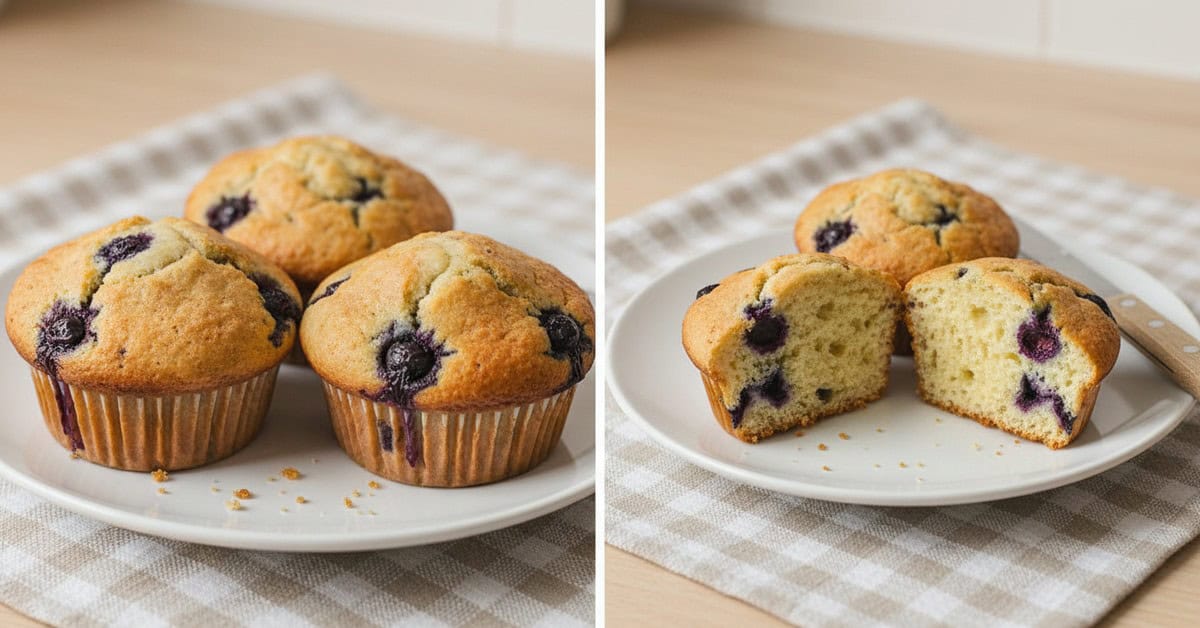

New England blueberry muffins have a tender, moist crumb, a golden top, and whole berries throughout. Flour, buttermilk, butter, and leavening come together with gentle mixing and a hot oven. Try a streusel topping, a vegan variation, or frozen berries.
Blueberry muffins pair a golden crust with a soft center and juicy berries in every bite. Here’s how to make the New England version at home, with a few practical tips from the chef.
Ingredients for New England blueberry muffins
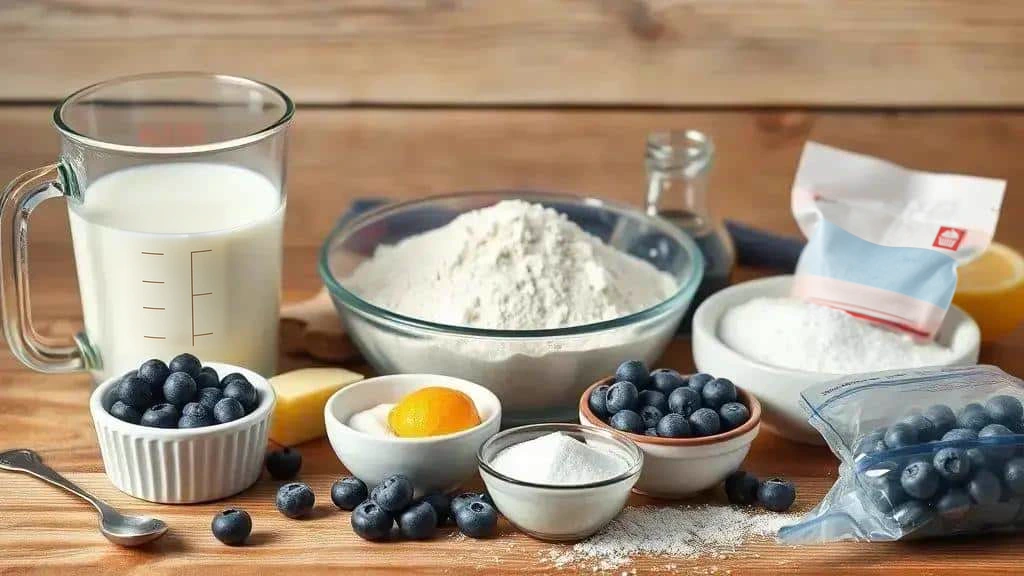
Gather these ingredients for the muffins. You’ll also find substitutions to suit your pantry.
- 2 cups (250 g) all-purpose flour. For a little whole grain, replace up to ¼ cup with finely milled whole wheat flour.
- ¾ cup (150 g) granulated sugar, or reduce to ⅔ cup for less sweetness. Coconut sugar can be used in the same measure.
- 2 teaspoons baking powder for an even rise.
- ½ teaspoon baking soda to react with the buttermilk for a soft crumb.
- ½ teaspoon salt to balance the flavors.
- 1 large egg, lightly beaten. For a vegan alternative, mix 1 tablespoon ground flaxseed with 3 tablespoons water per egg.
- 1 cup (240 ml) buttermilk, or 240 ml milk mixed with 1 tablespoon vinegar or lemon juice and left to stand for 5 minutes.
- ½ cup (115 g) unsalted butter, melted and cooled. Use the same volume of neutral vegetable oil for a dairy-free fat.
- 1 teaspoon vanilla extract for flavor.
- 1 tablespoon lemon zest, optional, for a bright citrus note.
- 1½ cups (180–200 g) fresh blueberries. Keep frozen berries frozen and lightly toss with 1 tablespoon flour before folding in to help distribute them.
- 2–3 tablespoons coarse or demerara sugar, optional, for a crisp top.
Substitutions and ingredient notes
- For a buttermilk substitute, add 1 tablespoon vinegar or lemon juice to 240 ml milk and let stand for 5 minutes.
- For a more rustic loaf-like crumb, replace up to 25% of the flour with whole wheat flour. Add a little liquid if needed.
- Toss frozen berries lightly in flour and fold in straight from the freezer to limit streaks in the batter.
- Mix only until the ingredients come together for light muffins.
- Makes about 12 medium muffins.
How to make New England blueberry muffins

- Preheat the oven to 200°C (390°F). Line a 12-cup muffin pan with paper liners or grease lightly.
- In a large bowl sift together 2 cups flour, ¾ cup sugar, 2 teaspoons baking powder, ½ teaspoon baking soda, and ½ teaspoon salt. Whisk to combine.
- In a separate bowl, lightly beat 1 egg, then whisk in 1 cup buttermilk, ½ cup melted and cooled butter, and 1 teaspoon vanilla. Add the optional lemon zest.
- Make a well in the dry ingredients and pour in the wet mixture. Fold lightly with a spatula just until combined. A few small lumps are fine.
- Gently fold in 1½ cups blueberries without breaking them. If using frozen berries, toss them while frozen with 1 tablespoon flour before adding.
- Divide the batter with a ladle or ice cream scoop, filling each muffin cup three-quarters full to leave room to rise.
- For a crunchy top, sprinkle a total of 2–3 tablespoons coarse or demerara sugar over the muffins.
- Bake for 18–22 minutes in the preheated oven until the edges are golden and a skewer comes out clean. For taller tops, start in an oven preheated to 220°C (425°F) for 5 minutes, then reduce to 180°C (355°F) and bake for another 12–15 minutes.
- Let the muffins stand in the pan for 5 minutes, then transfer to a rack to finish cooling and keep condensation from making them soggy.
- Store the cooled muffins airtight at room temperature for up to 3 days or freeze individually for up to 2 months.
Tips for success
- Spoon flour into the measuring cup and level with a knife to avoid dense muffins.
- Room-temperature egg and buttermilk blend more readily.
- Leave the tops room to expand, with enough space for heat to circulate evenly around the pan.
- Insert a skewer in the center of a muffin. A few moist crumbs are fine; there should be no raw batter.
Getting the texture and moisture right

A few small changes in mixing and baking give these muffins soft, moist centers without sogginess.
Measurements and ingredients
- Level the flour with a knife. Excess flour makes dense muffins.
- For 2 cups flour, use about 1 cup liquid, such as buttermilk or milk with an acid, for a balanced batter.
- ½ cup melted butter or vegetable oil retains moisture. Oil tends to make the crumb softer.
- Sugar and salt balance flavor and affect structure. If cutting sugar substantially, check the liquid balance.
Mixing and handling
- Fold only until the dry ingredients disappear. Small lumps are normal and help you avoid overworking the batter.
- Add the berries last and fold gently with a spatula so they stay whole and release less juice.
- For even hydration, let the batter rest for 5 minutes before baking.
Oven temperature and timing
- Start at 200°C (390°F) for a good rise and a light crust. Reduce the temperature if needed.
- Bake on the middle rack for even heat, allowing 18–22 minutes and testing with a skewer.
- The tester should come out with moist crumbs, without wet batter.
Extra moisture tips
- Buttermilk or yogurt adds acidity that reacts with the baking soda for a tender crumb.
- ¼ cup applesauce or mashed banana can add moisture without changing the taste too much.
- Coat frozen berries lightly with flour and add without thawing to limit excess juice.
Cooling and storage
- Let stand in the pan for 3–5 minutes, then move to a rack so steam can escape.
- Store airtight at room temperature for up to 3 days. Line the container with a paper towel to absorb excess moisture.
- Once cool, wrap and freeze individually for up to 2 months. Warm in the oven for a few minutes to refresh the texture.
Variations and easy substitutions
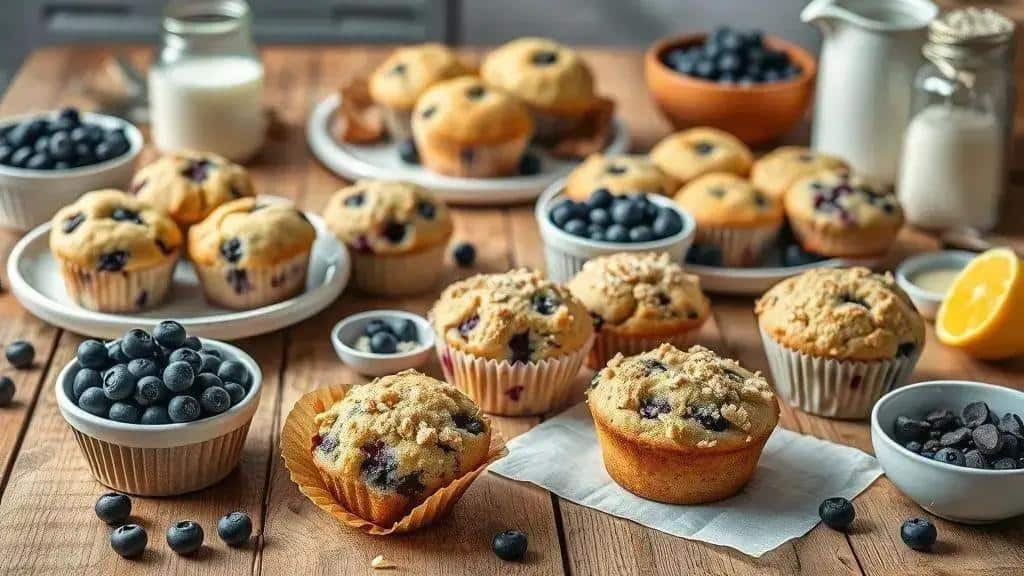
- Lemon blueberry. Add 1 tablespoon lemon zest and 1 tablespoon lemon juice to the batter. For a glaze, mix ½ cup powdered sugar with 1–2 teaspoons lemon juice.
- Crunchy streusel. Rub together ⅓ cup (45 g) flour, ¼ cup (50 g) brown sugar, and 3 tablespoons (42 g) cold butter until crumbly. Sprinkle on before baking.
- Part whole wheat. Replace up to ½ cup (60 g) white flour with whole wheat flour. If the batter is dry, add 1–2 tablespoons extra buttermilk.
- Vegan and dairy-free. Replace the butter with ½ cup (120 ml) vegetable oil and the egg with 1 tablespoon ground flaxseed mixed with 3 tablespoons water. Replace the buttermilk with 240 ml plant milk plus 1 tablespoon vinegar.
- Gluten-free. Use 240 g of a 1-to-1 gluten-free blend. Add ¼ teaspoon xanthan gum if the blend doesn’t contain it.
- Frozen berries or chocolate. Coat frozen blueberries in 1 tablespoon flour and fold in without thawing. For a chocolate version, replace 1 cup berries with ¾ cup (120 g) chocolate chips.
- Different sweeteners. Replace the ¾ cup sugar with honey (the recipe specifies 160 g) or ¾ cup (150 g) coconut sugar. With honey, reduce the liquid by 1–2 tablespoons.
- For extra moisture, add ¼ cup (60 g) unsweetened applesauce or ¼ cup plain yogurt. The flavor stays close to the original.
- Oat and demerara topping. Combine ¼ cup (20 g) rolled oats, 2 tablespoons demerara sugar, and 1 tablespoon melted butter. Sprinkle over the batter before baking.
How to adapt the recipe
- If you use honey or another liquid sweetener, reduce the other liquid by 1–2 tablespoons.
- Whole wheat flour or fruit purée may add 1–3 minutes to the baking time. Test the center with a skewer.
- If using chocolate and lemon zest together, use moderate amounts so the blueberry flavor comes through.
- For new substitutions such as gluten-free or vegan ingredients, try a test batch of 3 muffins to check the texture and baking time.
Blueberries and their growing season

Varieties differ in size, skin, flavor, and how they behave in muffin batter.
Types and origins
- Cultivated highbush blueberries have larger berries and firmer skins. They are common in gardens and markets.
- Wild lowbush blueberries are smaller with an intense flavor. They grow in parts of North America, including Maine and Massachusetts.
- Blueberries are native to North America. Indigenous peoples used them as food and in dyes and traditional remedies.
Growing seasons by region
- In New England the main season generally falls between June and August, often peaking in July. Local timing varies.
- Fresh berries are plentiful in season. Frozen blueberries are a good option during the rest of the year.
- In parts of the Southern Hemisphere the summer crop runs from November to February, helping keep blueberries available internationally much of the year.
Nutritional highlights
- Blueberries contain flavonoids with antioxidant properties.
- They provide vitamin C and fiber for relatively few calories.
- Fresh blueberries are a versatile way to add fruit and nutrients to a meal.
A few facts
- Bees are important pollinators of blueberry flowers.
- Indigenous peoples traditionally dried blueberries or added them to porridges.
- The English name “blueberry” covers a number of species and cultivars.
Choosing and storing blueberries
- Choose firm, evenly colored berries without mold.
- Wash just before using or eating to avoid excess moisture during storage.
- Refrigerate the berries in a ventilated container for up to 5 days.
- Freeze in a single layer on a baking sheet, then transfer to an airtight freezer bag. They keep their flavor for months.
Storing and freezing muffins
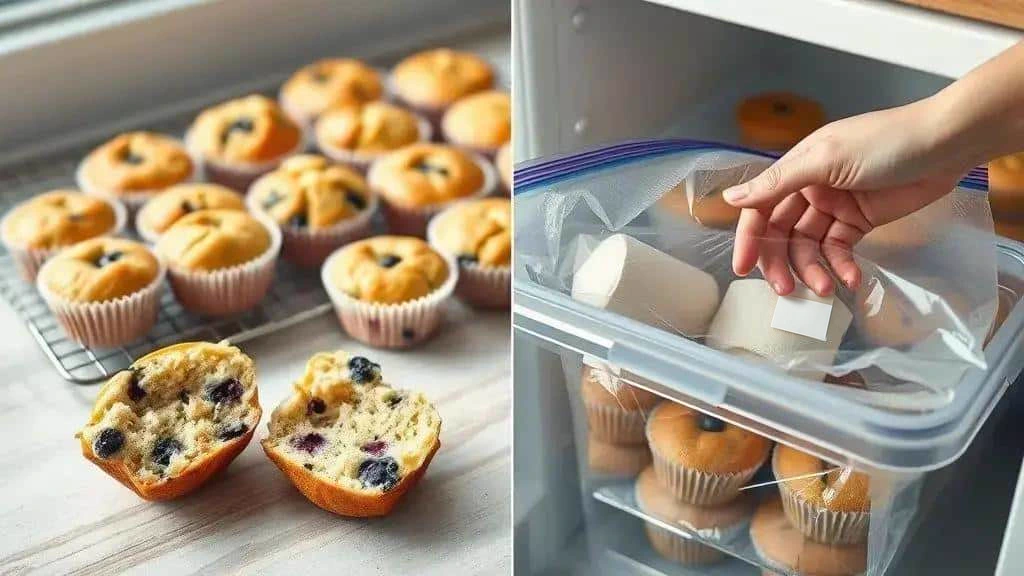
Good storage preserves the flavor and crumb and helps the muffins stay fresh without becoming damp.
Cooling before storage
Let the muffins stand in the pan for 5–10 minutes, then transfer to a rack to cool to room temperature. Packing them warm traps steam.
Room-temperature storage
For 2–3 days of storage, place the cooled muffins in an airtight container or a glass container with a lid.
- Line the bottom with a paper towel to absorb excess moisture.
- Keep in a cool place out of direct sunlight.
- Avoid high stacks that might crush the toppings.
Refrigeration
For up to 5 days, refrigerate in an airtight container. The refrigerator can dry the crumb slightly, so warm briefly before serving to soften.
Freezing step by step
- Cool completely. The muffins should be cool to the touch.
- Place in a single layer on a baking sheet and freeze for 1 hour to firm up.
- Wrap each muffin in plastic wrap or parchment to protect the surface from freezer burn.
- Transfer the wrapped muffins to a freezer bag, press out the air, and seal.
- Label the bag with the freezing date. Use within 2 months for best quality.
Thawing and reheating
- Thaw wrapped muffins in the refrigerator for 4–6 hours, or at room temperature for 1–2 hours.
- Warm in a 160°C (320°F) oven for 5–8 minutes, unwrapped on a baking sheet, to refresh the tops.
- Microwave on a paper towel for 12–20 seconds, depending on the appliance. Avoid overheating.
Practical tips
- Wrapping muffins separately makes it easy to thaw only what you need.
- Wash the fresh berries just before using them to limit moisture and mold during storage.
- Check the texture after thawing and adjust the warming time to restore softness.
To finish
We hope you enjoy baking New England blueberry muffins at home. A few simple techniques will give you tender muffins full of blueberry flavor.
If you try the recipe, share your photos on social media and tag us. We’d love to see your results and answer your questions.
Thanks for reading! Follow us on social media and visit the Mestre das Receitas cooking blog for more practical, dependable recipes.
Frequently asked questions about New England blueberry muffins
Can I use frozen blueberries instead of fresh?
Yes. Toss them lightly in flour and use them frozen so they stay distributed and release less juice into the batter.
How can I make the muffins moister without changing their flavor much?
Add ¼ cup plain yogurt or unsweetened applesauce. Both add moisture without a major change in flavor.
What oven temperature and baking time should I use?
Preheat to 200°C (390°F) and bake for 18–22 minutes. A skewer should come out with moist crumbs but no wet batter.
How do I store muffins to preserve their texture?
Cool completely. Store airtight with a paper towel underneath for up to 3 days at room temperature, or refrigerate for up to 5 days.
Can I make vegan or gluten-free muffins?
Yes. For vegan muffins, use ground flaxseed and water in place of the egg, vegetable oil in place of butter, and acidulated plant milk for the buttermilk. For gluten-free muffins, use a 1-to-1 blend with xanthan gum if needed.