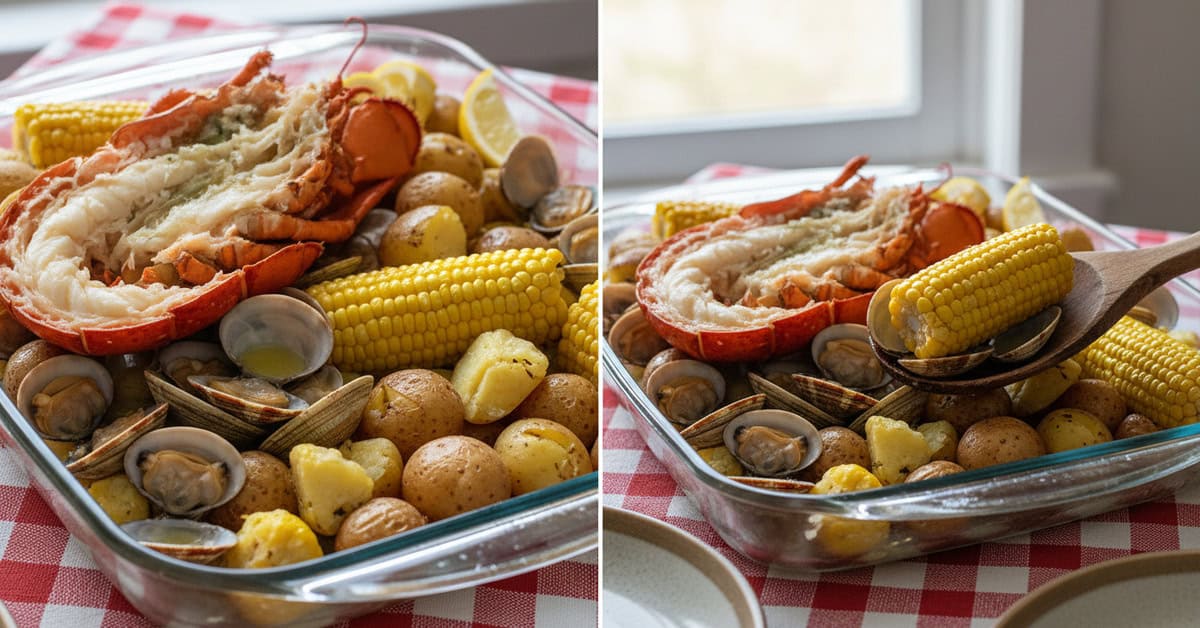

A traditional New England clambake brings clams, mussels, lobster, corn and small potatoes to the table. Steam them over seaweed and hot embers or use a pot or the oven at home. Stagger the layers so each ingredient cooks through, and pass the garlic butter and sauces around the table.
A clambake is as much a gathering as it is a recipe. Shellfish, corn and potatoes become a feast to share. Want to recreate a New England clambake at home? Here are the techniques I use to bring it all together.
Ingredients for a traditional clambake
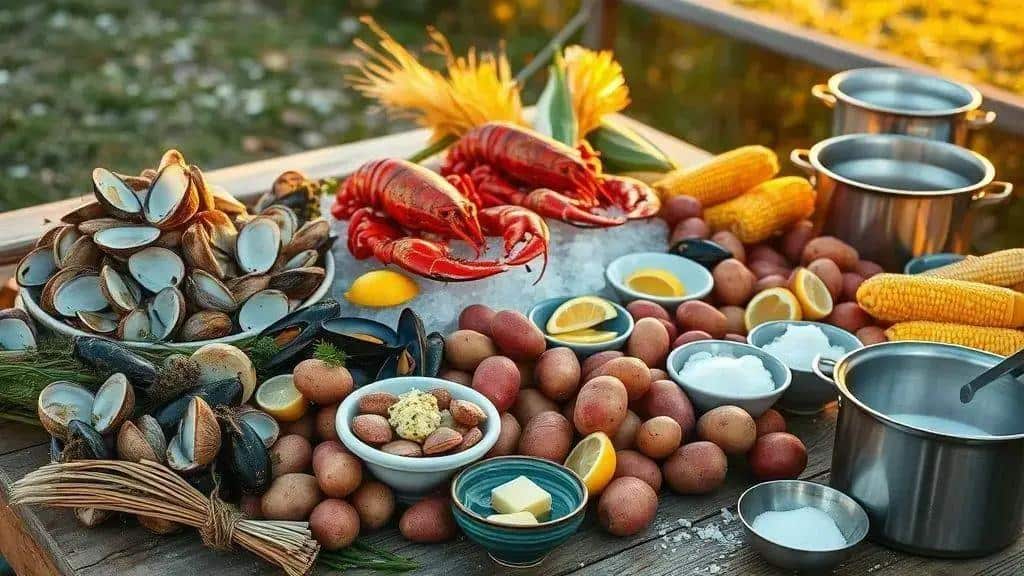
For a traditional clambake serving 6–8 people, gather the following fresh ingredients.
- 3 kg cleaned clams, such as littlenecks or larger quahogs. If clams are unavailable, substitute mussels.
- 1.5 kg mussels, cleaned and scrubbed. They can also replace some of the clams.
- 2 fresh lobsters, 600–900 g each, optional. Substitute extra clams, mussels or large shrimp if you prefer.
- 6–8 ears of corn, halved for smaller servings if desired. Frozen corn works when fresh is unavailable.
- 1.5 kg small red potatoes, scrubbed. Cubed white potatoes also work.
- 2 large onions, thinly sliced to season the layers.
- 200 g unsalted butter, melted, to serve. For a different finish, try clarified butter or olive oil with herbs.
- 4 garlic cloves, minced or crushed, for the butter.
- 4 lemons, cut into wedges, to serve with the shellfish.
- 1 cup (240 ml) salted water suitable for cooking. To make a supply, dissolve 2 tablespoons coarse salt in 1 liter of drinking water and use as much as needed for steam.
- About 2–3 kg food-grade seaweed, such as kelp or edible rockweed, for a traditional clambake. Without seaweed, use a covered steamer or seal a roasting pan with heavy-duty foil.
- 1 bunch of fresh herbs in total, such as parsley and thyme, chopped, to finish. Cilantro gives a different flavor.
- Salt and black pepper to taste. Adjust for the salt in the steaming liquid.
- Optional: 200 ml dry white wine to scent the steam. A pale lager works too.
Practical notes and substitutions
For your first clambake, start with fresh shellfish and treat the lobster as optional. Mussels are often less expensive and easier to clean. Without seaweed, use a covered pot with a steamer basket. Taste and adjust the seasoning after cooking.
How to assemble and cook a New England clambake
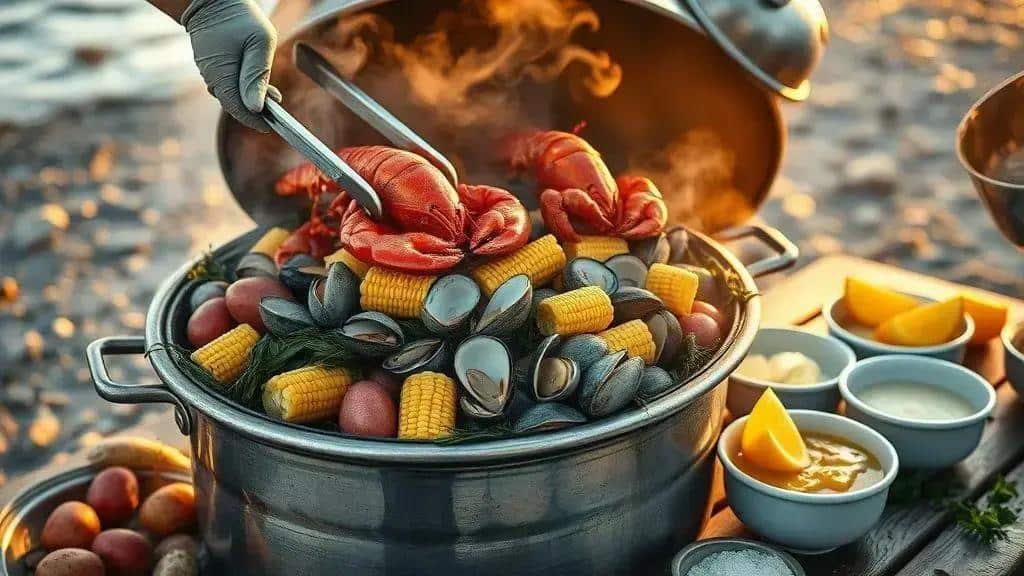
These steps will take you through a traditional clambake, even if this is your first one.
- Choose your site and method. Use an outdoor fire pit, a large covered pot on the stove or a roasting pan in the oven. Work on a stable surface away from flammable materials.
- Scrub the clams and mussels under cold running water. Discard any with open shells that do not close when tapped.
- Scrub the potatoes, remove the outer husks from the corn and slice the onions. Cut the lemons for squeezing and melt the butter with garlic and parsley for serving.
- Set up the equipment. For a fire pit, prepare a bed of embers. For a stockpot, fit a steamer basket over 1 cup (240 ml) water or 250 ml white wine.
- Spread 2–3 kg damp, food-grade seaweed over a metal rack above the embers or in the steamer basket. Without seaweed, use a covered steamer or a foil-sealed roasting pan. Keep fabric away from the fire.
- Start with the potatoes and onion slices in a single layer and add a little coarse salt. Give the potatoes a head start so the other ingredients can finish around the same time.
- Lay the ears of corn over the potatoes when the potatoes are about 10–15 minutes from tender. Adjust for your cooking method.
- Add the clams and mussels to a basket already filled with steady steam and cook for 4–9 minutes. Keep the layers shallow and work in batches if necessary. Discard any shells that stay closed.
- If using whole 600–900 g lobsters, add them early enough to start cooking before the clams and mussels. Begin checking after 8–12 minutes and continue until the center of the tail reaches 145°F (63°C). For large shrimp, start checking after 3–5 minutes. The flesh should be firm, pearly and opaque.
- Cover with seaweed and close the pot with its lid, cover the fire pit with a stable metal cover, or seal the roasting pan with heavy-duty foil. Maintain steady steam and open the cover carefully when adding each layer.
- Allow about 25–35 minutes for potatoes and 10–15 minutes for corn. Give clams and mussels 4–9 minutes in an already steaming basket and discard any that stay closed. Start checking lobsters after 8–12 minutes and cook to 145°F (63°C) at the center of the tail. Size, quantity and method affect timing.
- Lift the cover away from your face and stand clear of the steam. Test the potatoes with a fork. Discard unopened clams and mussels. Use oven mitts and long tongs.
- Tip the cooked food onto a table lined with food-safe paper or onto a platter. Dress with garlic butter and lemon, scatter parsley over the top, and set out shell bowls and seafood tools.
- Keep the food hot until serving. Discard shellfish left at room temperature for over 2 hours, or 1 hour above 90°F (32°C). Extinguish the fire completely and clean the site.
Quick tips
- Buy fresh shellfish on the day of the clambake and refrigerate until cooking.
- No seaweed? A covered steamer on the stove or a foil-covered pan in the oven will retain the steam.
- White wine lends aroma to the steam. Salted water gives a more traditional flavor.
Seafood pairings and sauces
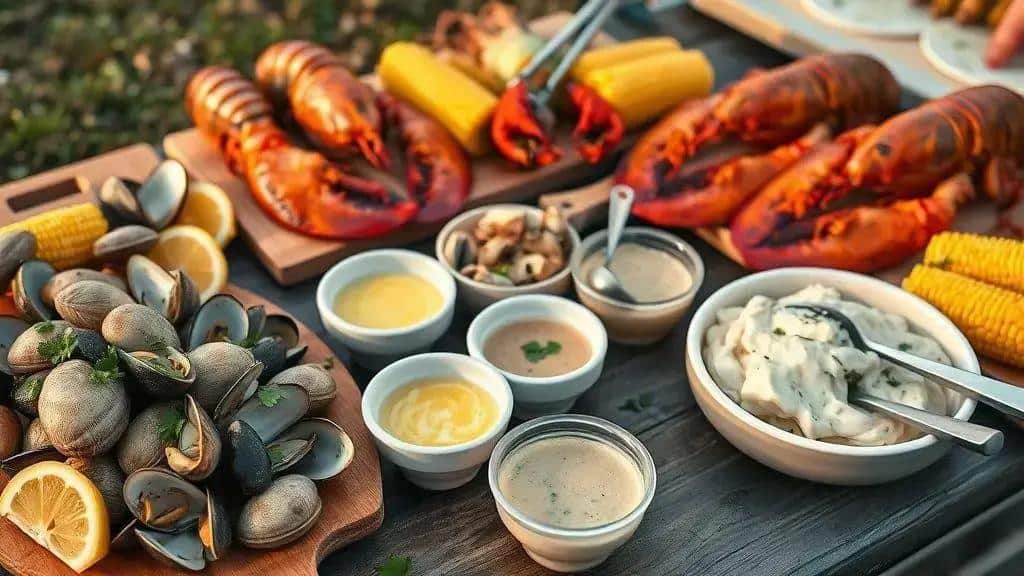
Combine shellfish with different textures. Clams and mussels bring briny juices, lobster adds sweet, rich meat, and corn and potatoes give the meal sweetness and substance.
Classic combinations
- Clams with garlic and lemon butter. The bright butter brings out their briny flavor without overpowering the meat.
- Mussels with white wine and herb sauce. Gentle acidity complements their flavor and refreshes the palate.
- Lobster with clarified butter. This traditional pairing highlights the firm, sweet meat.
- Large shrimp with spicy rémoulade. The tangy sauce plays off the juicy shrimp.
- Corn on the cob and small potatoes with seasoned butter. They round out the meal and soak up the shellfish juices.
Quick sauces to make
Garlic and parsley butter
- 200 g unsalted butter, melted
- 2 garlic cloves, finely minced
- 2 tablespoons chopped parsley
- 1 tablespoon lemon juice for brightness
- Salt and pepper to taste
- Melt the butter over low heat, taking care not to brown it.
- Add the garlic and cook for 30–45 seconds, until fragrant.
- Remove from the heat and stir in the parsley and lemon juice.
- Adjust the salt and serve warm in small dipping bowls.
White wine and garlic sauce
- 120 ml dry white wine, or vegetable stock for an alcohol-free sauce
- 2 tablespoons butter
- 2 garlic cloves, sliced
- 1 tablespoon chopped parsley
- Black pepper to taste
- Heat the wine in a small saucepan and reduce by half.
- Whisk in the cubed butter until it forms a smooth sauce.
- Add the garlic and cook for 1 more minute.
- Finish with parsley and pepper and serve hot.
Quick rémoulade for shrimp
- 120 g mayonnaise
- 2 tablespoons Dijon mustard
- 1 tablespoon finely chopped pickles
- 1 teaspoon sweet paprika
- Salt and pepper to taste
- Stir all the ingredients together in a bowl until smooth.
- Taste and add more mustard for tang or more paprika for a stronger spice flavor.
- Chill for 20 minutes before serving so the flavors can come together.
Serving and pairing tips
- Set the sauces out in small bowls so everyone can choose their own pairings.
- Offer lemon wedges and plain melted butter separately.
- A light beer or dry white wine refreshes the palate between bites.
- For a butter-free option, offer extra-virgin olive oil flavored with garlic and herbs.
Cooking methods for a fire pit, stockpot or oven
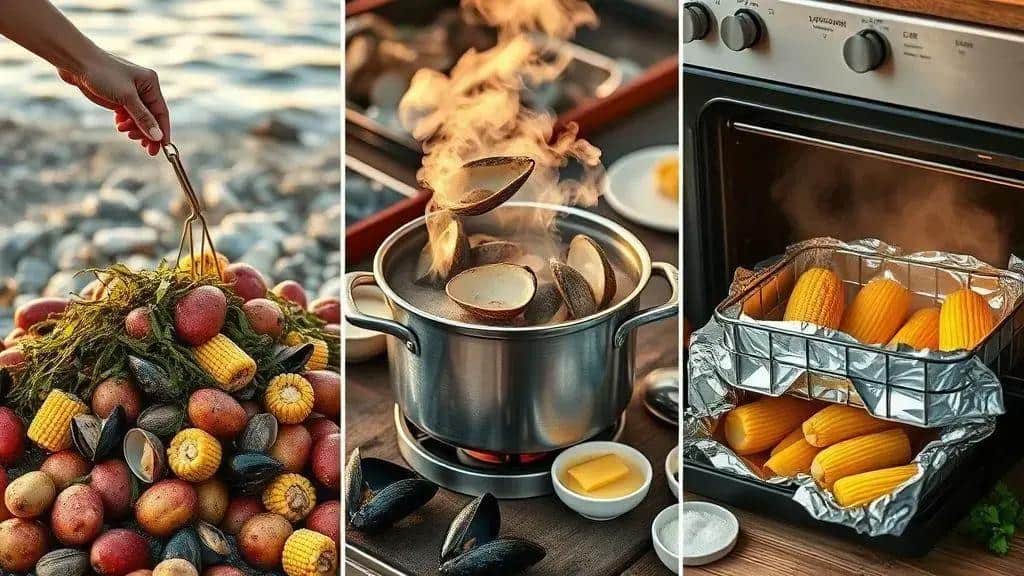
Fire pit for a traditional clambake
Embers heat the damp seaweed, creating steam to cook the food. This method suits outdoor gatherings.
- Choose a safe site where fires are permitted. Prepare a shallow pit, stack the firewood and let it burn down to embers.
- Set a stable metal rack above the embers and spread 2–3 kg damp, food-grade seaweed over it to generate steam. Keep towels away from the fire.
- Start with 1.5 kg small potatoes. Stagger the addition of 6–8 ears of corn and the optional lobsters according to their cooking times. Add 3 kg clams and 1.5 kg mussels last, in shallow layers in strong steam. Work in batches if necessary.
- Add more seaweed and a stable metal cover. Allow about 25–35 minutes for potatoes and 10–15 for corn. Give clams and mussels 4–9 minutes in established steam. Start checking lobsters after 8–12 minutes and continue until the center of the tail reaches 145°F (63°C).
- Wait 2–3 minutes before opening. Wear heatproof gloves and lift the cover away from your face. Discard clams and mussels that have not opened.
Large pot with steamer basket
This practical method works on the stove or an outdoor burner. It takes less space than a fire pit and makes it easier to control the steam.
- Choose a large stockpot with a steamer basket or a deep pot fitted with a rack and a tight lid.
- Add 240–500 ml salted drinking water or 250 ml white wine. Keep the liquid below the basket and top it up if necessary.
- Start the potatoes first, then add the corn and optional lobsters as their cooking times require. Add the clams and mussels last, in strong steam, without crowding the pot.
- Bring the liquid to a boil, cover and maintain steady steam over medium-high heat. Cook the clams and mussels for 4–9 minutes from the moment you add them to an already steaming basket.
- Lift the lid away from your face. Check that the potatoes are tender, the clams and mussels have steamed for 4–9 minutes, and the lobster tails have reached 145°F (63°C) in the center. Discard any tightly closed clams or mussels.
Oven method using a sealed roasting pan
A covered pan traps steam, making this a handy way to prepare a clambake at home.
- Preheat the oven to 390°F (200°C).
- Line a large roasting pan with heavy-duty foil and add 120–240 ml water or wine. Start with the potatoes and add the corn and lobsters according to their cooking times. Steam the clams and mussels separately for better timing.
- Cover the pan with another sheet of foil and crimp the edges to seal in the steam.
- Bake for about 20–35 minutes depending on the quantity. Open carefully and keep your face away from the escaping steam.
- Check the potatoes with a fork and confirm that the center of each lobster tail has reached 145°F (63°C). Cook the clams and mussels for 4–9 minutes in an already steaming pot, discard any that stay closed, and add the rest to the platter. Serve with butter.
Safety and timing tips
- Have heatproof gloves, long tongs and heat-resistant lids ready.
- Test the potatoes with a fork. Steam the clams and mussels for 4–9 minutes in established steam and discard any that remain closed. Check for 145°F (63°C) in the center of the lobster tails.
- Before cooking, discard shellfish with a strong, unpleasant smell and live clams or mussels that do not close when tapped. After cooking, discard any that stay closed.
- Keep water and a fire extinguisher nearby when cooking outdoors. Extinguish the embers fully afterward.
Variations for a simple spread or a special occasion
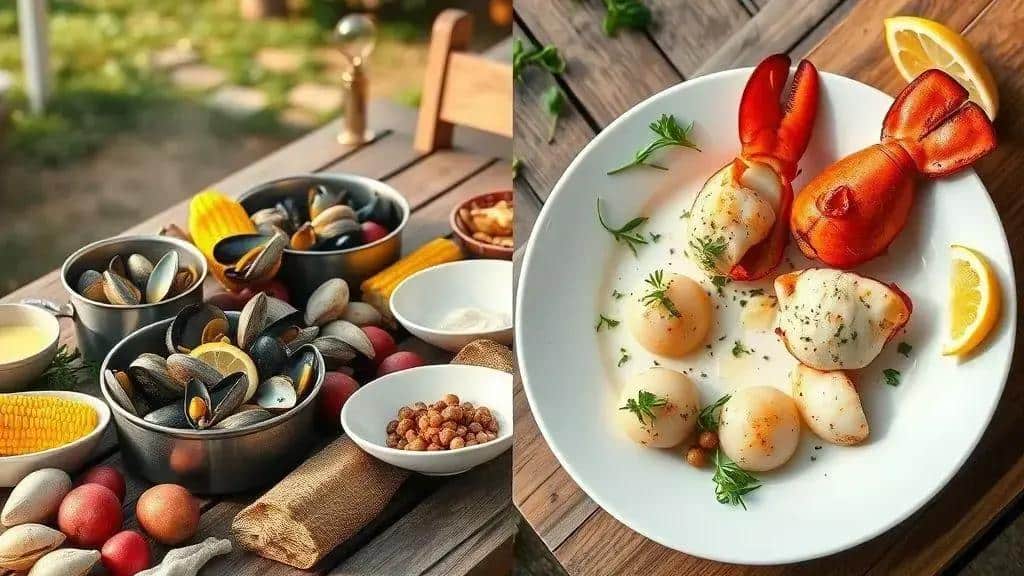
Adapt your traditional clambake to suit the gathering and the budget.
Simple, budget-friendly version
- 1.5 kg clams, such as littlenecks, or mussels if they are less expensive
- 1 kg mussels, cleaned and scrubbed
- 4 ears of corn, halved, or 600 g frozen corn
- 1 kg small red potatoes, scrubbed, or cubed white potatoes
- 100 g butter, melted with 1 garlic clove, to serve
- Juice of 2 lemons and coarse salt to taste
Special-occasion version
- 2 whole lobsters (600–900 g each) or 500 g large shrimp
- 2–3 kg choice shellfish in total, such as clams, scallops and mussels
- Herb butter made with 250 g clarified butter, thyme and lemon zest
- Optional garnishes such as microgreens, edible flowers or truffle oil
For a special presentation, steam in thin layers without crowding, finish with clarified butter and scatter fresh herbs over the top.
Vegetarian alternatives and other substitutions
- For a similar texture without shellfish, try smoked shiitake or oyster mushrooms.
- Salted vegetable stock with kombu gives a briny flavor without seafood.
- Keep the corn and potatoes as the base and add roasted chickpeas for protein.
Scaling up and preparing ahead
- Multiply the ingredients in proportion. Allow roughly 400–500 g mixed shellfish per person.
- You can precook the potatoes and corn 1 hour ahead and keep them hot. Add the shellfish toward the end so they stay juicy.
- Make sauces such as garlic butter and rémoulade the day before and refrigerate until needed.
Presentation and serving
- For a rustic meal, serve on food-safe kraft paper at a shared table, with bowls of butter.
- For a plated version, arrange portions in shallow bowls and finish with microgreens and a few drops of flavored oil.
- Serve the sauces separately so guests can choose their favorites.
Storing and reheating
- Refrigerate leftovers in a covered container for up to 2 days.
- Reheat leftovers in the steamer to 165°F (74°C) in the center, then remove promptly to keep the shellfish moist.
- For large crustaceans, use a covered pan with a little liquid or a covered oven dish. A microwave can make the meat tough.
Serving ideas, side dishes and food safety
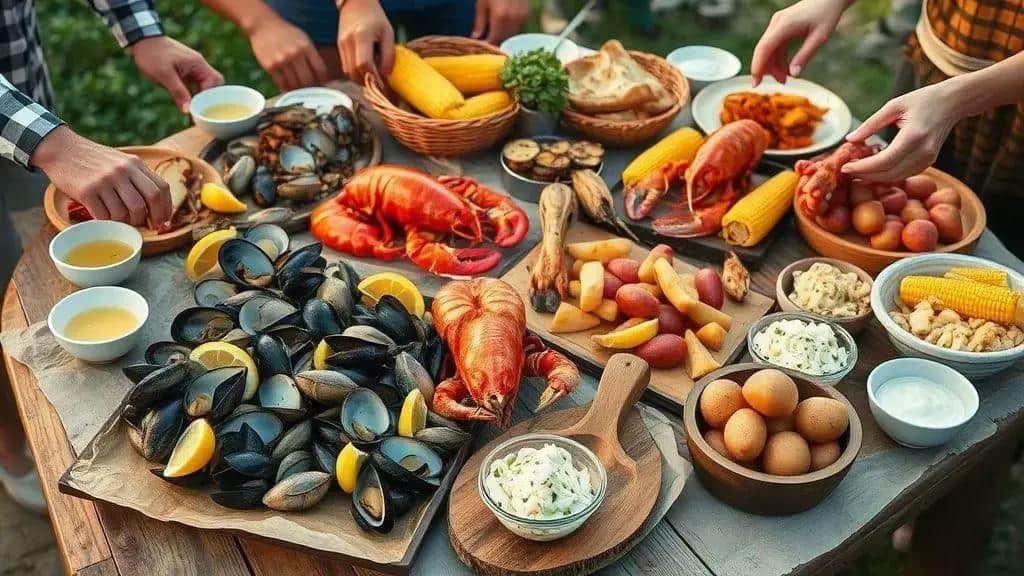
Set up a welcoming table where guests can easily help themselves to the clambake.
Setting the table
- Line the table with food-safe kraft paper or a disposable tablecloth for a rustic look and easy cleanup.
- Place shell bowls and dipping sauces within everyone’s reach.
- Provide long tongs and heatproof gloves for handling hot pots and seafood, plus appropriate tools for cracking the shells.
- Set out moist towels or finger bowls with water and lemon for guests to clean their hands after shelling.
Side dishes that work well
- Finely shredded coleslaw adds freshness alongside the rich butter.
- Rustic bread or ciabatta is ideal for soaking up sauces and cooking juices.
- Serve the potatoes from the clambake with seasoned butter, or add roasted or sautéed potatoes.
- Grilled asparagus or bell peppers make a light side dish.
- For a generous serving, allow about 400–500 g seafood per person.
Drinks to serve
- Dry white wines such as Sauvignon Blanc or Pinot Grigio refresh the palate between bites.
- Light beers and chilled ciders go well with the briny flavors.
- Lemon water and iced tea are good alcohol-free choices.
Serving tools and setup
- Provide small bowls for the garlic butter, rémoulade and white wine sauce so guests can choose.
- Offer shell crackers and seafood forks, with bowls for discarded shells.
- Set up separate areas for hot food, drinks and waste to keep guests moving comfortably.
Food safety
- Hold hot foods above 140°F (60°C) and cold foods at 40°F (4°C) or below to slow bacterial growth.
- Limit time at room temperature to 2 hours, or 1 hour if the air temperature is above 90°F (32°C).
- Discard any clams or mussels that stay closed after cooking and any seafood with a strong, unpleasant smell before cooking.
- Use a thermometer in the thickest part of the lobster tail to check for 145°F (63°C). Shrimp should have firm, pearly, opaque flesh.
- Keep utensils and cutting boards used for raw seafood away from cooked and ready-to-eat foods.
Reheating and storing leftovers
- Refrigerate leftovers within 2 hours in covered containers and use within 48 hours. In temperatures above 90°F (32°C), refrigerate within 1 hour.
- Steam leftovers or reheat in a covered dish at 320°F (160°C) until they reach 165°F (74°C) in the center. Start checking after 3–5 minutes in the steamer or 8–12 minutes in the oven. Timing depends on portion size.
- Avoid microwaving a whole lobster or other large crustacean as the meat can become rubbery.
Ready for your clambake?
I hope these tips make your traditional clambake easier to prepare and a pleasure to share. Try the variations and adjust the seasonings to your taste.
Thanks for reading! Follow us on social media for recipes, photos and cooking tips. Share your photos, tag us and tell us how your clambake turned out.
For more recipes and news, visit and follow the Mestre das Receitas food blog. Come back soon for another recipe to try!
Frequently asked questions about traditional clambakes
How long does it take to cook a clambake?
Allow 25–35 minutes for the potatoes and 10–15 for the corn. Add clams and mussels to an already steaming basket and steam for 4–9 minutes. Discard any that stay closed. Start checking the lobsters after 8–12 minutes, and continue until the center of the tail reaches 145°F (63°C).
Can I make a clambake without seaweed?
Yes. Use a steamer basket with a tight lid or seal a roasting pan with foil. For a briny flavor, add salt or food-grade kombu to drinking water.
How can I tell if the shellfish are fresh?
Choose shellfish with a mild sea smell. Live clams and mussels should be closed or close when tapped. Discard any with an unpleasant smell, any that fail to close when tapped before cooking and any that stay closed after cooking.
How should I store and reheat leftovers?
Refrigerate in covered containers within 2 hours, or 1 hour if the air temperature is above 90°F (32°C). Use within 48 hours. Reheat in a steamer or covered oven dish to 165°F (74°C) in the center.
What side dishes and drinks go with a clambake?
Coleslaw, crusty bread and seasoned butter are classics. Dry white wine, light beer, cider or iced tea refresh the palate between bites.